Category

Stock

Category

The US stock market is on edge today as investors focus on Thursday’s crash following the strong Nvidia earnings. Futures tied to the Dow Jones rose by 0.40%, while those linked to the Nasdaq 100 and S&P 500 indices barely moved. 

US stock market attempts to rebuild 

The US stock market is under intense pressure after the top indices reversed and crashed on Friday. The Dow Jones Index dropped by 388 points, while the S&P 500, Nasdaq 100, and the Russell 2000 indices dropped by 1.55%, 2.15%, and 1.8%, respectively.

This crash was mostly driven by technology companies, especially those linked to the artificial intelligence sector. For example, Micron stock price dropped by 10.8%, while Robinhood, Datadog, Western Digital, AMD, Palo Alto, and Seagate were among the top laggards.

Therefore, the hope is that the stock market will rebound as investors buy the dip or as a dead-cat bounce happens. A dead-cat bounce is a situation where an asset in a freefall bounces back briefly and then resumes the downtrend.

Federal Reserve speakers in focus 

The US stock market will also react to statements from some Federal Reserve officials as divisions on policy emerge.

Michael Barr, a top Fed governor, will talk today, a day after he warned about more interest rate cuts, now that inflation remains stubbornly above the 2% target. The most recent date showed that the headline Consumer Price Index (CPI) rose to 3% in September.

John Williams, the head for New York Fed, will also talk and deliver his views on the economy and the next monetary policy meeting. In his recent statement, he maintained a dovish tone, citing the financial strain among lower and middle-income Americans. He suggested that the bank may restart quantitative easing soon.

The other Federal Reserve officials who will talk today are Susan Collins, Lorie Logan, and Philip Jefferson.

Traders on Polymarket believe that the bank will cut interest rates by 0.25% in the upcoming meeting. Odds of a cut have remained at 69%, higher than this week’s low of 50%.

Warner Bros. Discovery acquisition progress 

The other important catalyst for the US stock market today will be progress on the Warner Bros. Discovery (WBD). The WBD stock price jumped by over 1% after the Wall Street Journal reported that companies like Paramount, Comcast, and Netflix had submitted bids for the company.

Analysts believe that Paramount has a better chance of buying the company because it is the only one interested in the entire company. Also, the deal has a higher chance of being accepted by the Trump administration, which has a good relationship with Larry Ellison.

A potential deal for the company will be a big one as it now has a market capitalization of over $56 billion, as the stock jumped by 140% in the last 12 months.

Ukraine and Russia news 

The other minor catalysts for the stock market will be the new developments on the Russian-Ukraine war. Donald Trump is pressing Ukraine to accept a deal with substantial concessions, including ceding land to Russia and limiting the size of the military.

The potential deal explains why the price of crude oil is tanking, with Brent and West Texas Intermediate (WTI) falling by over 2% to $62 and $57. 

The main stocks to watch today will be companies in the AI industry. Also companies like BitMine, Mara Holdings, Bitfarms, and MSTR will be in the spotlight as the crypto market crashes.

The post Top news to drive the US stock market today appeared first on Invezz
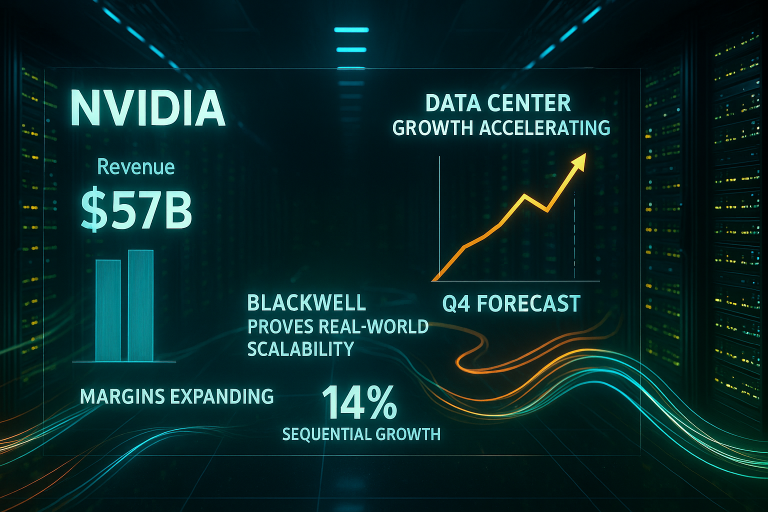
Top semiconductor ETFs like the Direxion Daily Semiconductor Bull 3x Shares (SOXL), VanEck Semiconductor (SMH), and iShares Semiconductor (SOXX) rebounded in the extended hours after the strong Nvidia earnings and guidance. 

SOXL jumped by over 8% in extended hours, while SMH and SOXX rose by 2.8% and 2.70%, respectively. This article explores why these funds are soaring and what to expect.

SMH vs SOXX vs SOXL ETFs jumped after Nvidia earnings | Source: TradingView

SOXL, SMH, and SOXX ETFs jump after Nvidia earnings 

Top semiconductor ETFs were under pressure in the past few weeks. SOXL ETF was down by over 27%, while SOXX and SMH ETFs were down by nearly 10% from their year-to-date highs.

These ETFs were down because of the ongoing fears of an AI bubble and concerns that the industry was starting to slow.

There fears eased on Wednesday after Nvidia, the biggest company in the world, published strong financial results and issued a robust forward guidance.

Nvidia’s revenue jumped to $57 billion in the third quarter, with Jensen Huang predicting that the growth momentum was continuing. He also adjusted his forward revenue estimate to show that the company will likely make over $65 billion in revenue in the fourth quarter.

This guidance means that the company will likely make over $66 billion in this quarter, as its management is often highly conservative. Analysts were expecting its revenue jumped to $55 billion in the third quarter. Jensen Huang said:

“Blackwell sales are off the charts, and cloud GPUs are sold out. We’ve entered the virtuous cycle of AI. The AI ecosystem is scaling fast — with more new foundation model makers, more AI startups, across more industries, and in more countries.”

Nvidia has also become a highly profitable company, with its net income soaring to $31 billion during the quarter. The EPS soared by 67% to $1.30, higher than what analysts were expecting.

It was easy to predict Nvidia’s strong financial results. As we wrote here, top hyperscalers like Microsoft, Meta Platforms, and Amazon are all continuing their spending. Other companies like CoreWeave, IREN, and Nebius are all accelerating their AI spending. 

Nvidia and other semiconductor stocks up

Top semiconductor ETFs like SOXL, SMH, and SOXX are soaring because of the ongoing Nvidia stock surge. Nvidia jumped by over 5% and moved close to $200. This surge triggered gains across other companies in the industry like AMD, which jumped by over 4%, and Intel, which rose by 2.5%.

Other large semiconductor companies like Qualcomm, Applied Materials, Broadcom, Micron, Lam Research, and KLA also continued their strong rally after the Nvidia earnings. 

The ongoing rally will likely continue as fears that the AI bubble is about to burst in the near term. Analysts worry that the burst will start to burst once some of the top hyperscalers start to pare back their investments. 

Another big worry about Nvidia is that of circular investments. This is a situation where the company invests in companies, which then buy its chips, and boost its stock price. Just this week, Nvidia announced a partnership with Microsoft that will see it invest $45 billion in Anthropic. 

This investment valued Anthropic at $350 billion. The hope is that Anthropc will now accelerate its purchase of Nvidia chips. Nvidia has done similar deals with companies like OpenAI and CoreWeave. 

Looking ahead, the most likely scenario is where chip stocks like SOXX, SOXL, and SMH continues their uptrend and retests the highest levels this year.

The post Very good news for semiconductor ETFs like SOXL, SOXX, and SMH appeared first on Invezz

Carvana stock price has pulled back in the past few months as investors worry about the rising delinquencies in the auto loan industry. It also slipped after its earnings missed what analysts were expecting. CVNA was trading at $330, down by 20% from its highest point this year. 

Still, Carvana’s stock is doing much better than it top competitors. CarMax stock has plunged by over 62% from its highest point this year, while Vroom is down by over 55%.

Carvana and the ongoing delinquencies in auto loans

One of the main reasons why the Carvana stock price has pulled back is that recent data shows that more Americans are defaulting on their vehicle obligations. 

A recent report showed that 6.65% of subprime borrowers were about 60 days late on their obligations, the highest rate on record. The soaring delinquency rates explain why Tricolor, a company that offered subprime auto loans filed for bankruptcy recently. 

The ongoing deinquencies are notable because of Carvana’s business model. In addition to selling cars, the company offers financing solutions, which are handled by Bridgecrest Credit Company, which DriveTime Automotive Group owns. DriveTime is owned by Carvana’s CEO dad. 

Therefore, there are concerns that the rising delinquencies will slow its business in the coming months.

Meanwhile, there are concerns about the company’s rising inventories. The most recent result showed that its inventory jumped to $2.3 billion from $1.6 billion in December last year. Soaring inventories could be a sign that the company is not moving its vehicles fast enough. 

There are also concerns about the company’s valuation, which has become stretched in the past few years. Data compiled by Seeking Alpha shows that the company’s forward PE ratio stands at 65, much higher than the industry median of 18. The forward PE based on non-GAAP metrics is 57, also higher than the sector median of 16.

Other valuation metrics show that the company trades at a premium valuation. For example, the forward EV to EBITDA metric has jumped to 21, also higher than the industry median of 15. 

Most importantly, these numbers are higher than those of Nvidia, a company whose revenue is growing by over 50%.

READ MORE: Carvana stock price could crash as risky pattern forms, insiders sell

Carvana revenue growth is continuing

The most recent results showed that Carvana’s business continued doing well in the third quarter. Its retail units sold jumped by 44% to 155,940, while its revenue jumped by 55% to $5.6 billion. This growth makes it the fastest-growing company in the industry. 

Most importantly, the company’s margins are now higher than most auto retailers. Its net income margin rose to 4.7%, bringing its profit to $263 million. 

The company expects that the business will continue thriving in the coming months. It expects that it will sell over 150,000 retail units in the fourth quarter. Also, the management expects that the adjusted EBITDA will be at or above the recent estimate of between $2 billion and $2.2 billion. These numbers may help to justify its premium valuation. 

Carvana stock price technical analysis

CVNA stock chart | Source: TradingView

The daily timeframe shows that the CVNA stock price has come under intense pressure in the past few months. It has dropped from $413 in July to $330 today. 

Carvana stock moved below the 50-day and 100-day Exponential Moving Averages, which are now about to cross each other. Such a crossover will be a mini death cross, which is a risky pattern.

Therefore, the most likely scenario is where the stock remains under pressure in the near term. If this happens, it will likely retest the key support at $285, its lowest level this month. This target price nearly coincides with the 50% Fibonacci Retracement level.  

The post Is the Carvana stock at risk as auto delinquencies jump? appeared first on Invezz

CoreWeave stock price has been in a free fall this year, erasing billions of dollars in value. CRWV plunged from the year-to-date high of $186 to the current $74, with its market cap falling from $87 billion to $37 billion today. 

The recent CoreWeave plunge has coincided with the performance of other companies in the AI industry. Nebius stock has plunged by over 32% from the year-to-date high, while IREN has dropped by over 40%. Other firms like Bitfarm and Hive Digital have also pulled back. 

CoreWeave’s business is thriving

The ongoing CoreWeave stock crash is happening as investors remain concerned about the AI bubble and depreciation of its GPUs. The argument that we are in an AI bubble is that many of the big spenders have not been able to demonstrate their profitability.

These fears eased a bit after the latest Nvidia earnings, in which Jensen Huang, the CEO insisted that the company was seeing strong demand. He also downplayed concerns about the AI bubble as he boosted his forward guidance for the company. This explains why the CRWV stock price jumped by over 10% in the pre-market.

The most recent results showed that CoreWeave’s business was doing well, helped by large deals with companies like Microsoft and OpenAI. It recently announced a large $14.2 billion deal with Meta Platform.

The company also has a $10 billion deal with Microsoft and another big one with OpenAI, the owner of ChatGPT. 

Its results showed that the revenue exploded upwards by 134% to $1.4 billion, with its backlog jumping by 271% to $55.6 billion. Also, the adjusted EBITDA was $831 million, while its net loss was just $41 million. 

CoreWeave believes that its business will continue thriving in the coming months. Precisely, the management believe that its annual revenue will be between $5.05 billion and $5.15 billion, much higher than the $1.92 billion it made in the same period last year. 

Still, this growth will come at a cost as the company continues with its spending spree. It expects that the capital expenditure will be between $12 billion and $14 billion. 

The company is raising money through credit and equity. Its outstanding shares have jumped from 317 million in April to 384 million today, and this growth will accelerate. 

In addition to dilution risks, the company is also facing elevated competition risks as more companies move into the industry. 

For example, Nebius recently reached a big deal with Microsoft, while IREN reached a $9.7 billion agreement with Microsoft. More companies like Bitfarms, Hive Digital, and TeraWulf are also expanding to the industry. 

Therefore, there is a likelihood that future deals with hyperscalers will have a low profit margin. Also, there are chances that the company’s deal flow will decelerate.

CoreWeave stock price technical analysis

CRWV stock chart | Source: TradingView

The 12-hour chart shows that the CRWV stock price has been in a strong downward trend in the past few weeks. It has crashed from $152 to $74 today, erasing billions of dollars in value. The stock recently dropped below the key support level at $84.46, its lowest level in September.

CoreWeave stock price has moved below the 61.8% Fibonacci Retracement level, while the Relative Strength Index and the MACD indicators have continued to retreat.

Therefore, the stock will likely continue have a brief relief rally after the latest Nvidia earnings and then resume the downward trend, potentially to the 78.6% retracement level at $65.

The post CoreWeave stock analysis: is this data center company a buy or sell? appeared first on Invezz

The crypto market crash continued its strong downtrend on Friday, with Bitcoin tumbling to $85,000. Ethereum plunged by 7.65% in the last 24 hours to $2,800, while XRP, BNB, Solana, and Dogecoin dived by over 5%. So, why is the crypto crash happening?

Crypto market crashes intensified as stocks plunged

The ongoing crypto crash intensified as American stocks erased their initial gains and plunged after Nvidia earnings. The blue-chip Dow Jones Index dropped by 385 points, while the S&P 500 and Nasdaq 100 plunged by 100 and 486 points, respectively. 

After jumping by 5% after earnings, Nvidia stock plunged by over 3%, erasing billions of dollars in value. Other top Magnificent 7 companies like Tesla, Microsoft, and Google also plunged. 

The stock market crashed as investors remained concerned about the artificial intelligence (AI) bubble and technology valuations. 

One major concern is that Nvidia is involved in circular investments, where it invests in companies and then those firms buys its chips. There are also concerns about the ongoing technology valuations.

Fear and Greed Index plunged 

The other main reason behind the crypto market crash is that there is increased fear in the industry. Data compiled by CoinMarketCap shows that the Crypto Fear and Greed Index has plunged to the extreme fear zone of 11.

Crypto Fear and Greed Index | Source: CMC

Similarly, the CNN Money Fear and Greed Index has plummeted to the extreme fear zone of 6, its lowest level since April. 

Notably, all major indices, including the stock price strength, put and call options,.market momentum, market volatility, safe haven and junk bond demand have all plunged to the extreme fear zone.

Historically, stock and crypto prices plunge when there is fear in the market as this normally leads to more panic selling among investors. However, on the positive side, bull runs normally starts when there is a sense of fear in the market.

Liquidation concerns remain 

The crypto market crash is also happening because of the ongoing concerns about liquidations in the market. The trigger of all this was the liquidations that happened on October 10 this year when over 20 billion worth of trades were wiped away.

Liquidations continued on Friday, with thousands of traders being wiped out. Data compiled by CoinGlass shows that the open interest jumped by 40% to over $943 million. One Bitcoin trader suffered a $31 million liquidation in the last 24 hours.

In a statement, Tom Lee, the founder of FundStrat, believes that these sell-offs after major events normally takes about 8 weeks and that we were on the sixth one. As such, Lee believes that the coin will eventually rebound.

ETF outflows continued this week 

The ongoing crypto market crash is also happening as investors remained concerned about the ongoing ETF outflows as some American investors started to capitulate. Data compiled by SoSoValue shows that Bitcoin ETFs shed over $550 million in outflows this week. Spot Ethereum ETFs have shed over $294 million in assets.

On the positive side, some recently launched ETFs continued to see inflows. All spot XRP ETFs have now had $410 million in inflows, while Solana ETFs have had nearly $500 million in inflows. 

Will the crypto market rebound?

The ongoing crypto market crash has led to a panic among investors who have seen their investments turn negative. 

Still, history shows that these crashes are often followed by rebounds. A good example of this is when Bitcoin dropped by double digits in April and then rebounded.

In an X post, Tom Lee, believes that Bitcoin will eventually rebound once the ongoing panic ends. Michael Saylor has also continued to accumulate, while Peter Brandt, the popular technical analyst, predicted that the coin will likely hit $200,000 in the near term.

The post Top reasons behind the crypto market crash today (Nov. 21) appeared first on Invezz

The Japanese yen continued its freefall after Japan approved a bigger-than-expected stimulus and after a report showed that inflation remained stubbornly high in October. The USD/JPY exchange rate was trading at 157.18, a few points below this week’s high of 157.73.

Japan passes a big stimulus package 

The USD/JPY exchange rate has been in a strong uptrend this year, a trend that accelerated after the recent leadership changes in the country. 

Japan’s ruling party elected Sanae Takaichi as the new prime minister, a notable thing considering that she supports Shinzo Abe’s policies.

One of her policy objectives were achieved on Friday when the cabinet approved a $135 billion stimulus package, bigger than the expected $112 billion. ¥17.7 trillion or $112 billion of the package will go to general account spending, while the rest will go towards price relief.

Some of the measures to be funded will be gas and electricity subsidies for each household in the next three months. Also, the government will provide about ¥20,000 or about $127 in handout per child and ¥2 trillion in funds to aid regions. The government will also raise the income tax-free threshold.

While a stimulus of this size may help to boost the economy, the risk is that it may help to fuel inflation in the country as we experienced in the United States, which provided handouts during the pandemic. 

Notably, the stimulus package came on the same day that Japan published strong inflation data. A report by the statistics agency showed that the headline Consumer Price Index (CPI) rose from 2.9% in September to 3.0% in October.

Similarly, core inflation, which excludes the volatile food and energy prices, rose from 2.9% to 3.0%. These numbers are significantly higher than Bank of Japan’s target of 2.0%. As such, analysts believe that the bank may decide to hike interest rates in the coming meetings.

Doubts about Fed cuts remain

The USD/JPY exchange rate remained in an uptrend as doubts about the Federal Reserve cuts remained. These doubts continued on Thursday after the Bureau of Labor Statistics (BLS) published the September jobs report. 

The report showed that the economy added over 110k jobs in September, a sign that the labor market stabilized before the government shutdown. 

Some Federal Reserve officials have warned about rate cuts. For example, Michael Barr, a governor, warned that the bank should be careful because inflation remains above 3%. He said:

“So we need to be careful and cautious now about monetary policy, because we want to make sure that we’re achieving both sides of our mandate.”

In another statement, Anna Paulson of the Philadelphia Central Bank said:

“Each rate cut brings us closer to the level where policy flips from restraining activity a bit to the place where it is providing a boost. So, I am approaching the December FOMC cautiously.”

USD/JPY technical analysis 

USDJPY chart | Source: TradingView

The daily timeframe chart shows that the USD to JPY exchange rate has been in a strong bullish trend. It has jumped from a low of 139.92 in April to 157.27 today. 

The pair has formed a golden cross pattern, which is a common bullish sign. It has remained above the Ichimoku and Supertrend indicator, a sign that bulls are in control.

Top oscillators like the Relative Strength Index (RSI) and the MACD have continued rising. Therefore, the most likely scenario is where it continues rising as bulls target the key resistance at 158. A move above that level will point to more gains, potentially to the resistance at 160. 

The post USD/JPY forecast as Japan unveils a new $135 billion stimulus appeared first on Invezz

Ocado share price continued its painful crash this week as it plunged to its lowest level since 2013. It has plunged from the pandemic high of 2,910p to the current 187p as setbacks accelerated. So, is it safe to buy the dip in this fallen angel?

Ocado in trouble amid Kroger woes

Ocado, a top British e-commerce and technology company, suffered a big blow this week as its biggest client started to pull back. In a statement, Kroger said that its warehouse network was not achieving its goals. 

As a result, the company said that it was closing three such plants, taking a $2.6 billion charge. It will shift its strategy to using its store networks. 

This is a big blow for Ocado, a company that has historically talked about its relationship with Kroger when making pitches to other retailers. With this relationship in limbo, the company could face pressure from its existing customers.

Also, it means that the company may struggle to onboard other clients into embracing its automated warehouses. In a statement, an analyst said:

“This is pretty devastating for Ocado Group because the USA is the flagship international market for its tech. No further new outlets would have been the central scenario, but to actually say they’re going to close them is devastating for Ocado Group.”

The Kroger announcement came as Ocado comes under pressure from other its clients. For example, Sobeys, another top Canadian retailer, paused the planned launch of its Vancouver expansion. It also changed its deal with Ocado, allowing it to use other warehouse tech providers. 

Morrison’s another top Ocado client, has also said that it would reduce its use of Ocado. As such, there is a risk that more clients will do that. 

READ MORE: Ocado shares sink 11% as Kroger reviews warehouse strategy

One of the top risks for the company is that some other delivery companies like Instacart and DoorDash, have become more popular among customers and retailers. 

The most recent results showed that Ocado’s revenue rose by 13% in the half year to £674 million. It technology revenue rose by 15%, while the logistics segment rose by 12%. However, its underlying cash flow was minus £108 million. 

Therefore, the scaling down of its relationship with Kroger will likely have a negative impact on its revenue in the long term. In its recent report, the company said that Morrisons paid an exit fee of ~£17 million, while Kroger will pay it £250 million, a notable amount for a company now valued at £1.5 billion. 

Ocado share price technical analysis 

OCDO stock price chart | Source: TradingView

The weekly chart shows that the OCDO stock price has been in a strong downtrend in the past few months. It has remained below all moving averages and the Supertrend indicator.

A closer look shows that the stock has formed a descending triangle pattern. This pattern is made up of a horizontal support, which in this case, is at 222p and a diagonal line. This diagonal line connects the highest swings since February 2022. 

Therefore, the stock will likely continue falling as sellers target the next key support at 150p. This outlook is based on its weak technicals and the fact that its technology business is struggling. 

The post Ocado share price forms risky pattern as Kroger woes mount appeared first on Invezz

The global stock market is going down today, Nov. 21, mirroring the performance of American shares on Thursday. 

In Europe, the German DAX, French CAC 40, and the British FTSE 100 fell by over 0.60%. The closely-watched Stoxx 50 Index dropped by over 1%, with most of its constituent companies being in the red.

The same crash happened in Asia, where the Nikkei 225, Shanghai Composite, China A50, and the Hang Seng indices plunged by over 2%. 

A closer look shows that just Russia’s MOEX Index was up as it jumped by 2% after a report showed that Donald Trump was pushing Ukraine to reach an agreement with Russia. Such a deal would see Ukraine cede land and agree to reducing the size of its military. The US would also remove Russian sanctions.

US stock market futures were also up a bit. Dow Jones Index futures rose by 162 points, while those tied to the S&P 500 and the Nasdaq 100 were up marginally.

Global stocks are crashing today | Source: Investing

Stock market down amid AI bubble jitters

The global stock market is crashing as jitters on the artificial intelligence industry continued. A good example of this is Nvidia whose stock surged in the premarket session on Thursday and then fell despite publishing strong financial results a day earlier.

Nvidia’s results showed that its revenue jumped to $57 billion in the last quarter, higher than the median estimate of $55 billion. It expects that its fourth quarter revenue will surge to $65 billion, with the management predicting that its annual revenue will get to $500 billion in the near term.

Still, there are concerns that the AI industry is in a bubble as many companies have not demonstrated properly how they will monetize the technology. This explains why the top laggards in the ongoing stock market crash are companies in the tech industry.

Micron stock price crashed by 10% on Thursday, making it the top laggard in the Nasdaq 100 Index. Datadog stock fell by 9.50%, while companies like AMD, Palo Alto Networks, Sandisk, Lam Research, Palantir, Marvell, and ASML were among the top laggards.

On the other hand, companies in traditional industries like Walmart, Regeneron Pharmaceuticals, GE Healthcare, Solventum, Brown Forman, and Erie Indemnity were the top gainers in the S&P 500 Index.

Some top global stock indices have a limited exposure to the technology and AI industries. As such, the ongoing crash is because of the correlation that happens among global indices.

Concerns about the Federal Reserve remains 

The stock market crash is also happening because of a report released by the Bureau of Labor Statistics (BLS) on Thursday. This report showed that the American economy added over 110k jobs in September this year, a sign the labor market was stabilizing ahead of the US government shutdown.

The report came as divisions at the Federal Reserve continued. Some Fed members have warned that inflation remains stubbornly high and urged against cutting in December. In a statement on Thursday, Michael Barr said:

“I am concerned that we’re seeing inflation still at around 3% and our target is 2%, and we’re committed to getting to that 2% target. So we need to be careful and cautious now about monetary policy, because we want to make sure that we’re achieving both sides of our mandate.”

Some other official like Jeff Schmid and Beth Hammack have urged for caution, warning that cuts will prolong inflation over time. Hammack said:

“Lowering interest rates to support the labor market risks prolonging this period of elevated inflation, and it could also encourage risk-taking in financial markets.”

The ongoing stock market crash is also because of profit taking since most of the top indices are hovering at their all-time highs, with some analysts warning that the stock market was highly overvalued.

The post Stock market crash: here’s why global equities are down today appeared first on Invezz
PayPoint share price suffered a big reversal after forming a triple-top pattern on the weekly chart and after publishing relatively weak financial results. PAY plunged by over 20% in its worst day in years. It moved to a low of 512p, its lowest point since June last year.

PayPoint share price crashed after forming a triple top pattern 

The weekly chart shows that the PayPoint stock price formed a triple-top pattern at 767p and a neckline at 520p. This pattern is characterized by three peaks and a neckline, and is one of the most common bearish reversal patterns in technical analysis.

The stock has now moved below the neckline at 520p, confirming this pattern. Also, it has moved below the 50% Fibonacci Retracement level at 542p. It has also moved below the 50-week and 100-week Exponential Moving Averages (EMA).

Other technicals points to more downside. For example, the Awesome Oscillator has fallen and is nearing the zero line. Also, the stock has moved below the Ichimoku cloud and the Supertrend indicators.

READ MORE: As the Adidas share price crashes, is it safe to buy the dip?

The price target in a triple-top pattern is estimated by first measuring the distance from the upper side and the neckline and the same distance from the neckline. In this case, the target for the stock is 245p. For that to happen, the stock will need to move below the key support at 295p, the lowest level in May 2023.

However, this PayPoint stock price is based on the weekly chart, meaning that it may take a long time before it crashes to the target price. On the flip side, a move above the resistance level at 600p, the 38.2% Fibonacci Retracement level, will invalidate the bearish outlook and point to more upside.

PayPoint share price chart | Source: TradingView

PAY stock price crashed after earnings 

The main catalyst for the PayPoint stock price crash was its financial results, which came out on Thursday.

These numbers showed that the underlying EBITDA dropped to £37.3 million in the first half of the year from £37.5 million in the same period last year.

The underlying profit before tax dropped by 4.5% to £25.7 million. On the positive side, the company’s revenue jumped by 6.7% to £144.1 million. 

PayPoint stock also dropped after the management warned that its goal of delivering an EBITDA of £100 million will take longer to do so, pointing to the distribution of its parcel business and the slowdown of the monetization of obsconnect. The CEO said:

“While obconnect continues to build its new business pipeline and range of opportunities, the pace of growth and monetising of these opportunities in year is slower than we had planned.”

On the positive side, the company announced shareholder returns of about £90 million in the form of buybacks and dividends. It also reduced its net debt to £84 million from £86 million last year. 

The management also hopes to keep growing its revenue by between 5% and 8% annually in the next few years. It also hopes to reduce its costs over time and continue to slash its outstanding shares.

READ MORE: CoreWeave stock analysis: is this data center company a buy or sell?

The post PayPoint share price pattern points to a steeper crash to 250p appeared first on Invezz

Nvidia stock price has pulled back in the past two weeks, moving from the year-to-date high of $212 to $180. This retreat will either accelerate or reverse once the company publishes its financial results later today. 

Nvidia will likely publish strong results

Wall Street analysts are highly optimistic about the upcoming Nvidia earnings. Data compiled by Yahoo Finance shows that the average estimate among analysts is that the company’s revenue rose by 56% in the third quarter to over $55 billion.

There are signs that the sales will be much higher than these estimates as key metrics point to more demand, with some of this demand being circular in nature. 

The first sign is that TSMC, the company’s biggest supplier, published strong financial results in September and boosted its forward guidance. Just recently, Jensen Huang, Nvidia’s CEO, pressed the company to accelerate the pace of manufacturing.

The other notable sign is that hyperscalers like Microsoft, Google, Meta Platforms, and Amazon have all maintained their upbeat spending plans this year. They all expect that the AI build up in the United States with continue over time.

READ MORE: Nvidia stock slips ahead of earnings: what happens if the AI darling misses

Other smaller buyers of Nvidia chips are also accelerating, with companies like CoreWeave, IREN, Bitfarms, and Hive Digital have all committed to boosting their investments in the AI space. More demand could come from Anthropic, a company it invested in this week.

Therefore, there is a likelihood that the company’s revenue will beat estimates as it has done in the past.

Analysts are optimistic that the company’s earnings-per-share (EPS) jumped to $1.25 from the 81 cents it made a year ago. The company has a long track record of publishing earnings that are better than estimates.

Nvidia is still a bargain 

Another potential catalyst for the NVDA stock price is that it is a bargain based on multiple valuation metrics.

Data compiled by SeekingAlpha shows that the company has a forward price-to-earnings (PE) ratio of 42, higher than the sector median of 29, but much lower than the five-year average of 58.

On a non-GAAP basis, the company’s forward PE ratio is 42, also higher than the sector median of 29, but lower than the five-year average of 80.

Other valuation multiples also showing that the company is not as expensive as investors think. For example, the forward PEG ratio is 1.15, lower than the sector median of 1.66. This is an important number that includes the concept of growth in its calculation.

Meanwhile, the company has one of the best rule-of-40 multiples in Wall Street. Its growth rate is 55%, while the profit margin is 52%, giving it a multiple of over 100%. Still, this valuation approach is commonly used among SaaS companies.

Nvidia is also a bargain compared to other AI stocks. For example, Broadcom has a forward PE ratio of 80, while Palantir has a multiple of 295. Oracle stock has a forward PE multiple of nearly 50.

Nvidia stock price technical analysis

NVDA stock chart | Source: TradingView

The daily timeframe chart shows that the NVIDIA stock price has been in a strong uptrend in the past few years. It recently crossed the important resistance level at $200, bringing its market capitalization to over $5 trillion.

Nvidia stock has now pulled back and is hovering near the support at $180. It remains above the 50-day and 100-day Exponential Moving Averages (EMA), a sign that the downtrend bullish momentum is continuing.

Therefore, the most likely scenario is where the stock resumes the uptrend and retests the year-to-date high of $213. 

READ MORE: Why Nvidia’s earnings could spark a $320B move: here’s what options data reveals

The post Nvidia stock price forecast: NVDA is extremely cheap ahead of earnings appeared first on Invezz