Category

Stock

Category

Blue Owl stock price has been in a freefall and is lagging other top companies in the industry like Apollo, Blackstone, and Ares. OWL has plunged from the year-to-date high of $25.52 to $14.45, while its market cap has dropped from $40 billion to $22 billion today. 

Blue Owl stock is facing major headwinds

Blue Owl Capital is a company that many people have never heard of, yet it is one of the biggest players in the financial services industry. It is a top company in the private equity and private credit industries with nearly $300 billion in assets under management. 

These funds are spread across its three businesses: credit, real assets, and PGP strategic capital. Its credit business, with $152 billion in assets, provides capital to private companies. Its real assets provide investment-grade facilities to tenants, borrowers, and hyperscalers. 

The GP Strategic Capital business provides minority equity and financing solutions to private capital managers. 

Blue Owl stock price has been pummeled as it is facing several major headwinds. The most recent challenge emerged earlier this month when it unveiled a plan to merge Blue Owl Capital Corp (OBDC) with its Blue Owl Capital Corp 11, which is not publicly traded. 

In this deal, shares of the non-traded fund would have been swapped for OBDC stock. The challenge, however, is that OBDC has constantly traded below its NAV, meaning that the private fund investors would have lost money. 

Blue Owl terminated the deal, but according to Reuters, the management is considering reviving it when market conditions improve. The management has said that the merger would give investor an exit approach while reducing its costs.

OWL is facing other headwinds

Blue Owl is facing other headwinds as well. For example, most of its funds are in the private credit industry, which has come under increased pressure recently.

Just this week, Jay Clayton, the main Wall Street prosecutor, warned that he was seeing some areas of concern in the private credit sector. Precisely, there are issues concerning the real value of their portfolio companies. 

These concerns rose after the recent collapse of First Brands and Tricolor, which used off-balance sheet gimmicks before their collapse. Blue Owl was not involved in these transactions.

OWL stock has also crashed because of its exposure in the artificial intelligence industry, where it has been involved in financing some major data center projects, including the $30 billion Hyperion project in Louisiana. The fear is that the bursting of the AI bubble will negatively hurt the company.

Still, fundamentally, Blue Owl is doing well, with the most recent results showing that its revenue jumped by 21% to $721 million. Most of this revenue came from the management fees it generates from its business. However, its net income plunged by 79% in this period.

Blue Owl share price technical analysis 

OWL stock chart | Source: TradingView

The daily timeframe chart shows that the OWL stock price has been in a strong freefall in the past few months. It has plunged from the year-to-date high of $25.52 to the current $14.45.

The stock remains below the 50-day and 100-day Exponential Moving Averages (EMA), a sign that bears remain in control for now.

Worse, there are signs that the stock has formed an inverse cup-and-handle pattern, whose lower side is at $14. This pattern is made up of a horizontal support and a rounded top. It also formed a head-and-shoulders pattern, another bearish sign.

Therefore, the most likely scenario is where the OWL stock price continues falling, potentially to the psychological level at $10.

The post Here’s why the Blue Owl stock price may fall to $10 soon appeared first on Invezz

Palladium price remains range-bound with limited upside potential compared to its substitute; platinum. In the short term, it is finding support in the easing of the US dollar rebound and steady safe-haven appeal. Besides, increasing bets on a dovish Fed during its December meeting are a bullish driver.

Palladium price forecast points to curbed upside potential

Precious metals have had a strong year as persistent economic uncertainties push institutions and individual investors to these conventional safe-haven assets. While gold has led the pack, hitting 50 fresh all-time highs ytd, platinum has recorded an impressive performance. Indeed, it has outperformed gold, rallying by 72% compared to the lustrous metal’s 58%. 

In addition to the rising demand in hybrid vehicles, its positioning as a cheaper alternative to gold for jewelry and investment has bolstered its prices. In comparison, palladium price has had the weakest performance among the precious metals. 

UBS expects the palladium market to be slightly undersupplied into 2026; prompting it to raise its forecast by $50 an ounce. However, while the market sentiment remains positive, it is leaning more towards neutral compared to earlier in the year. 

Notably, the optimism that defined the palladium market at the start of 2025 stemmed from concerns that US sanctions would target Russian palladium exports. With the country accounting for about 40% of the global supply, the move would intensify the demand/supply imbalance. However, those woes have eased as Russian exports continue to flow into the global market.

In the short-to-medium term, palladium price is set to find support in the expectations of a moderate supply deficit in the coming year. Besides, the precious metal has been included in the ongoing Section 232 investigation into imports of processed critical minerals and their derivative products. 

Nonetheless, other precious metals like platinum and silver are set to have a stronger upside potential compared to palladium price, atleast in the short term. Since the start of the year, palladium price has been up by about 56%. In comparison, the platinum price has rallied by 72% as it has become a preferred alternative to the more expensive gold. 

Palladium price technical analysis

Palladium price chart | Source: TradingView

The Palladium price edged higher on Wednesday, even as it remains within a tight range. After momentarily dropping below the support level of $1,367 late last week, the precious metal is now at $1,409 as at the time of writing. Notably, that coincides with the short-term 25-day EMA, which has been its resistance level for about a week now. 

In the short term, palladium price will likely remain within a tight range as it continues to find support along the bullish trendline highlighted in black. As such, the range between $1,367 and $1,450 will be worth watching.

Even with further rebounding, the bulls may not attract enough buyers to retest the month’s high at $1,500; at least in the short term. More specifically, $1,484 will be a steady resistance level in the ensuing sessions. On the flip side, this cautiously bullish thesis will remain valid for as long as palladium price holds above the lower Bollinger band at $1,350.

The post Here’s why palladium price is lagging among precious metals appeared first on Invezz

Fresh signs of resilience in the US labor market have curbed GLD gold price gains even as the persistent uncertainties offer steady support to the precious metal. At the time of writing, the bullion was trading at $4,163 an ounce amid heightened bets for a 25 basis point rate cut by the Fed in December.

Rate cut expectations offset signs of a resilient US job market

GLD gold price held steady above $380 on Wednesday after breaking past that level in the previous session. However, the leading ETF remained range-bound as lower trading volume is expected for the remainder of the week due to the US Thanksgiving celebrations.

Concerns over the health of top economies have sustained the bullion’s safe-haven appeal, with gold ETFs being a preferred investment option for numerous institutions and individual investors. Expectations of a dovish Fed have further fueled the recorded gains.

On the one hand, some Fed officials perceive a December rate cut as not being appropriate. In fact, this sentiment was captured in the recently released Fed minutes. However, remarks by the dovish Fed Governor Christopher Waller have boosted bets for further rate reduction before the year ends. According to the policymaker, the US job market is weak enough to warrant a 25-basis point cut during the highly anticipated December meeting. 

Notably, gold and other precious metals benefit from lower interest rates. Besides, the market is digesting talks on a new Fed Chair who would lean towards Trump’s interests. In fact, some expect the US President to name his pick for the crucial position by Christmas.

Meanwhile, Treasury yields eased their recent losses with the benchmark 10-year Treasury yield edging higher on Wednesday. This is after the released initial jobless claims data, which came in below experts’ expectations at 216,000 for the week that ended on 22nd November. 

The figures highlighted the US job market’s resilience; an aspect that boosted Treasury yields at the expense of the non-yielding bullion. Investors continue to look for further cues on the health of the economy and the subsequent move by the US central bank.

GLD ETF technical analysis

GLD ETF chart | Source: TradingView

The SPDR Gold Shares, a leader in gold ETFs, continues to trade within a rather tight range even as the bulls remain in control. A look at its daily chart shows a relative strength index (RSI) of 59, which points to moderate bullish momentum. Besides, the ETF has held steady above the short-term 25-day EMA, which has converged with the middle Bollinger band.

Based on the technicals and fundamentals, GLD gold price will likely record subtle gains in the near term. More specifically, the range between the 25-day EMA at 4375 and the upper Bollinger band at $387 will be worth watching. 

Even with the possible rebound past that resistance level, the bulls will likely lack enough buyers to retest the all-time high hit in October. That rallying would likely be curbed slightly below at $397. On the lower side, this thesis will be invalidated by a pullback below the support level of $370.

The post GLD ETF analysis: Gold price moderate momentum to define short-term path appeared first on Invezz

Crypto prices are rising today, with Bitcoin and most altcoins being in the green. Bitcoin surged above $91,000, continuing the recent uptrend that started last week when it bottomed at $80,000. Other top tokens like Chainlink (LINK), Ripple (XRP), and Merlin Chain (MERL) are also rising.

Why Merlin Chain, Chainlink, and XRP are rising 

Merlin Chain token jumped by 135%, with its 24-hour volume soaring to $204 million and its market capitalization hitting $518 million. This surge happened after the developers launched a new upgrade that introduced zero-knowledge rollups to improve transaction throughput.

Meanwhile, Chainlink price rose to $13.42, up by 15% from its lowest level this month, as investors anticipated the upcoming launch of the Grayscale Chainlink ETF (GLNK), which will happen on Monday next week. This ETF will enable American investors to allocate money to one of the most important projects in the crypto industry.

Chainlink price is also benefiting from its ongoing on-chain developments. Data shows that the supply of LINK tokens in exchanges has been in a strong downward trend in the past few months,a sign that investors are not selling. It also implies that investors are actively moving their tokens from exchanges to self-custody wallets. 

Chainlink exchange balances | Source: Nansen 

XRP price also rose as metrics pointed to more demand for the coin. Data compiled by SoSoValue shows that spot XRP ETFs have continued to add assets in the past few days. 

They had a net inflows of $21.8 million on Wednesday, bringing the cumulative total to $643 million. These ETFs now hold about $676 million in assets, which is equivalent to about 0.50% of its market capitalization.

Fed Beige Book pointed to interest rate cut 

Bitcoin and these altcoins are also rising today after the Federal Reserve published its Beige Book on Wednesday.

Beige Book is a document released every quarter to show the state of the American economy by regions. It is written by the 1w regional central banks and is often useful in determining the country’s monetary policy.

The Beige Book showed that the country’s economy has moderated, and hiring has slowed recently. This report confirmed a recent document by ADP, which showed that the number of Americans on payrolls dropped last week, raising the possibility that the Federal Reserve will cut interest rates by 0.25% in the next meeting.

Most importantly, media reports suggest that Donald Trump is considering nominating Kevin Hassett as the next Federal Reserve Chair next year. He will replace Jerome Powell, who has maintained his independence despite increased pressure from the president.

Hassett has been on Team Trump for years and has actively supported cutting interest rates, a move that he will champion as the head of the Federal Reserve. Indeed, Polymarket odds on interest rate cuts have surged to over 83% in the past few days.

Fed cut odds are rising on Polymarket

Crypto Fear and Greed Index and futures open interest are rising 

Meanwhile, Bitcoin and top altcoins are rising as the sense of fear in the market eases. 

Data shows that the Crypto Fear and Greed Index has moved from the fear zone of 8 during the weekend to 18. In most cases, the crypto market normally does well when this gauge is rising. This explains why retail and whale investors have started buying.

Meanwhile, more data by CoinGlass shows that the futures open interest has jumped to $135 billion while the shorts liquidations has soared by nearly 5% to over $320 million. 

The post Crypto prices today: Here’s why BTC, LINK, XRP, Merlin Chain are rising appeared first on Invezz

The FTSE 100 Index rose by nearly 1% as UK bond yields plunged, as the market reacted to the latest budget reading by Rachel Reeves. The index, which tracks the biggest UK companies, rose for the second consecutive day, reaching a high of £9,690, its highest level since November 17. 

FTSE 100 Index and Sterling jumps as UK bond yields sink

The blue-chip FTSE 100 Index rebounded as investors reacted to Rachel Reeves budget speech in which she raised taxes by billions of pounds.

Sterling continued its recent recovery, with the GBP/USD exchange rate rising to 1.3255, its highest level since October 29. Similarly, the EUR/GBP pair dropped to 0.8750, its lowest level since October 28. Sterling also jumped against other currencies like the South African rand and the Swiss franc.

Most importantly, the bond market surged as Reeves’ budget proposal raised money that may stabilize the country’s finances over time. The 10-year UK government bond yield dropped to 4.42% from this week’s high of 4.622%.  

Similarly, the five-year yield dropped to 3.878%, its lowest level since November 13, while the closely-watched two-year fell to 3.70%.

Most FTSE 100 Index companies were in the green after her budget proposal. St. James Place stock price jumped by 5.30%, while Fresnillo, Endeavor Mining, Marks & Spencer, JD Sports, Lloyd’s, and Barclays jumped by over 3%. UK bank stocks jumped as Reeves abandoned the idea of a windfall tax.

Concerns on UK growth remains

Still, in the long term, Reeves’ budget proposal may have a negative impact on the economy. For one, she raised taxes by about £26 billion, with most of these funds going towards welfare spending.

Companies will have to pay a higher minimum wage, which may impact small and medium-sized businesses, while some notable names in areas like manufacturing may decide to shift operations out of the country.

Reeves also introduced a mansion tax that will levy a fee to people with houses valued at over £2 million. While this levy may raise billions of dollars, it may reduce the incentive of companies in the property industry to build. Also, there are chances that richer people will start moving out of the UK to other countries.

Most importantly, the budget did not offer any catalyst for boosting economic growth in the long term. Indeed, the OBR estimated that the economy will grow by 1.5% in 2029, down from the previous estimate of 1.5%. In a statement, one executive quoted by the FT said:

“There is nothing for growth in this Budget, the only thing they have done is increase the size of the public sector again — which is not the side of the economy responsible for growth.”

At the same time, there is a risk that the budget will fuel inflation in the coming weeks as companies will shift the tax increases to consumers. For example, estimates are that the average tax bill of a small shop will rise by between 40% and 65% next April.

Footsie 100 Index technical analysis 

FTSE 100 Index chart | Source: TradingView

The daily timeframe chart shows that the FTSE 100 Index has rebounded sharply in the past few months, moving from a low of £7,551 in April to the current £9,690.

It recently formed a doji candlestick pattern, which explains why it has rebounded in the past few days.

The FTSE 100 Index has jumped above the 50-day and 100-day Exponential Moving Averages (EMA)and the Supertrend indicator. 

It has moved above the ascending trendline that connects the lowest swings since June this year, a sign that bulls are in control.

Therefore, the most likely FTSE 100 Index is bullish, with the initial target being the all-time high of £9,945. A move above that level will point to more gains, potentially to the psychological level at £10,000.

On the other hand, a move below the ascending trendline will invalidate the bullish outlook and point to more downside, potentially to £9,400.

The post FTSE 100 Index outlook after Rachel Reeves tax increases: can it retest ATH? appeared first on Invezz

The Flutter Entertainment share price is having a bad year, a situation that may worsen after the latest UK budget by Rachel Reeves. Its UK shares were trading at 15,125p on Thursday, down by 35% from the year-to-date high.

Flutter Entertainment faces a £500 million headwind

Flutter, the parent company of Fanduel, Sky Betting, Paddy Power, Sisal, and Betfair, has come under pressure this year as signs of slow growth emerge. Its retreat has mirrored that of DraftKings, whose stock has dived by 40% from the highest point this year.

Flutter Entertainment is now dealing with another major headwind after Rachel Reeves boosted taxes in the industry. She boosted the remote gaming duty that is levied on online casinos from 21% to 40% starting from next April. Online betting levies will soar from 15% to 25%. 

Reeves believes that the new duties will raise £1.1 billion a year in taxes, a move that will affect the profitability of these companies. Flutter, as the biggest company in the industry, will suffer the most, with analysts pricing in a £500 million hit in its profits. Entertain, another top company in the industry, will suffer a £150 million hit.

Revenue growth has slowed

The new taxes on the industry come at a time when growth in the industry has slowed after the pandemic boom. The most recent results showed that its revenue rose by 9% in the third quarter to $3.7 billion. Most of this revenue was driven by its iGaming revenue, which rose by 44%.

Flutter’s Sportsbook revenue dropped by 5% as competition soared in the United States. The management blamed this situation to the uneconomic generosity from its competitors like DraftKings in the US.

Flutter made a giant loss of $789 million because of its woes in India and the $205 million it paid to Boyd to revise its US terms. 

The management expects that its revenue will be $16.69 billion this year, with an adjusted EBITDA of $2.9 billion. Its forward guidance was lower than what it had predicted as the management included the negative impact on Illinois’s wager tax and India’s regulatory change. The CEO said:

“Our diversified portfolio and disciplined approach give me great confidence in our ability to lead the industry and increase long-term value for shareholders.”

The company is betting on the booming prediction market for growth. It will launch the FanDuel Predicts product in December as it seeks to compete with companies like Polymarket and Kalshi. However, the risk is that the industry has become highly saturated.

Flutter share price analysis

FLUT stock chart | Source: TradingView

The daily timeframe chart shows that the Flutter stock price has been in a strong downtrend in the past few months. Its crash coincided with the ongoing headwinds, including its woes in India and the United States.

Flutter Entertainment stock has recently formed a death cross pattern as the 50-day and 200-day moving averages crossed each other on October 27. 

The stock is now slowly forming a bearish flag pattern, which is made up of a vertical line and a rectangle channel. Worse, this channel is part of the inverse cup-and-handle pattern, a common continuation sign. 

Therefore, the most likely scenario is where the stock continues falling, as investors target the key psychological point at 10p. 

The post Flutter share price at risk of steep crash amid new tax woes appeared first on Invezz

Carnival share price suffered a harsh reversal this week, falling to the lowest level since June 24. It has dived by 24.35% from its highest point this year, erasing billions of dollars in value as its market capitalization dropped from the year-to-date high of $42.3 billion in September to $32 billion today.

The ongoing Carnival stock crash aligned with the performance of other companies in the industry. Royal Caribbean’s stock price dropped by 3%, bringing its market capitalization to $69.7 billion, while Norwegian Cruise fell by 2%. Viking Holdings stock was largely unchanged.

Carnival vs Royal Caribbean vs Norwegian stocks

Why Carnival share price dropped 

Carnival stock price retreated after some notable industry experts delivered a cautious outlook about the industry. In a note, a Barclays analyst said that Carnival’s management had conveyed a cautious tone during a recent trip to the AIDAdiva vessel.

Precisely, the management is concerned about the rising capacity in the Caribbean, where top companies like Carnival, Norwegian, and Royal Caribbean are seeking to gain market share.

Carnival stock also dropped amid negative headlines about a recent incident in which Anna Kepner, a teenager, was found dead in her room earlier this month. Authorities now believe that the teen was killed by her stepbrother. Still, while this report is bad news for the company, chances of it having a lasting impact on its business are slim.

Carnival’s business is doing well

Still, fundamentals suggest that the company’s business is doing well, a trend that may continue in the coming months as demand for cruising continues and its valuation continues to be friendly.

Demand for cruising is rising in the United States, led by Gen Z and millennials, with most travelers being less than 46 years old. This is a sharp contrast to what happened before the pandemic when most of the travelers were retirees. Most importantly, these investors are spending and willing to spend more money.

The most recent results showed that Carnival’s net yield rose to 4.6% in the last quarter, higher than its guidance of 3.5%. Most importantly, the cost of its cruise was lower than expected, rising by 5%. Its guidance was a 7% increase.

Meanwhile, the company continued to boost its guidance, raising it for the third time this year. For example, they boosted the full-year net yield to 5.3% and adjusted EBITDA guidance to $7.1 billion, higher than the $6.6 billion in December.

Also, the management’s net income guidance of $2.9 billion was higher than $2.3 billion in December, a sign that the management expects the growth to accelerate.

The company is able to provide relatively accurate guidance because of its  soaring customer deposits and forward bookings. Its customer deposits jumped to $7.1 billion last quarter to $6.3 billion in the same period last year.

Carnival stock has more bullish catalysts, including the growth of its Celebration Key, a destination that has attracted over 500k visitors, a figure that will jump to 3 million next year. It has also expanded its business to China, while its valuation multiples are not all that extreme.

Carnival stock price technical analysis 

CCL stock price chart | Source: TradingView

The daily timeframe chart shows that the Carnival stock price peaked at $32.82 in August, forming a small double-top pattern.

The stock has now plunged and is about to form a death cross pattern as the spread of 50-day and 200-day Weighted Moving Averages (WMA) has narrowed.

CCL stock price has moved below the important support level at $28.75, its highest point in January this year.

Therefore, the most likely scenario is where the ongoing shakeout continues for a while and then the stock will rebound and possibly retest the year-to-date high of $32.8.

The post Carnival share price hits turbulence: is it a good value stock to buy? appeared first on Invezz

Zscaler stock price erased the gains made in the regular session after the company published strong results and a mild forward estimate. It initially rose by 3.35% on Tuesday to $290 and then retreated by over 7% to $266.90 in the extended hours. It settled to the lowest point in September. 

Zscaler’s reported strong results and mild guidance

Zscaler, one of the top companies in the cybersecurity industry, is doing well as the ongoing AI boom drives more demand for its services. Its annual revenue moved from over $673 million in 2021 to over $2.6 billion in the last financial year.

Most notably, the company has continued to narrow its losses in this period. It made a large net loss of $262 million in 2021 to $41 million in the last financial year. 

Its revenue growth continued in the first quarter of the year. Its revenue rose by 26% to $788 million, higher than its guidance of between $772 million and $774 million.

Additionally, the company’s operating profit was higher than its previous guidance. It made an operating profit of $172 million, higher than its guidance of between $166 million and $168 million.

The earnings per share of 96 cents was also higher than its guidance. Historically, Zscaler has always been a conservative company that avoids overpromising. 

More numbers showed that its annual recurring revenue (ARR) rate jumped to over $3.2 billion as companies continued to embrace its technology, especially in the AI security. Indeed, the number of companies paying over $1 million a year rose to 698 from 491 in the second quarter of last financial year.

Most importantly, the company has become more profitable, with the operating profit margin rising to 22% and its free cash flow rose to 52%.

The Zscaler stock price dropped as the management’s guidance, while strong, was lower than expected. It expects its revenue will be between $797 million and $799 million, representing a 23% growth rate.

READ MORE: What next for Oklo stock price after the $13 billion wipeout?

For the year, the company believes that its revenue will be between $3.28 billion and $3.3 billion, representing about 23% annual growth rate. The operating profit is expected to be between $172 million and $174 million.

There are chances that the company’s real number will be much higher than its guidance because of its history of outperformance. 

Is ZS valuation justified?

A key concern about Zscaler is that its business is relatively overvalued as its forward price-to-earnings ratio rose to 76, much higher than the sector median of 22. Its multiple is higher than other companies like Palo Alto Networks, Fortinet, and Snowflake.

This valuation metric is mostly because of its strong and consistent growth over the years and the fact that the company has now become profitable. 

Still, the company’s rule-of-40 metric points to the company being less overvalued. Its forward revenue growth is ~23%, while its operating profit and free cash flow margins are 22% and 26%, respectively. This gives it a rule-of-40 multiple of 45% and 49%, respectively. That is a sign that the company is not all that expensive.

Zscaler stock price analysis 

Zscaler stock chart | Source: TradingView

The daily timeframe chart shows that the Zscaler stock price peaked at $336 earlier this month and then tumbled to a low of $268. After rising to $290 on Monday, the stock tumbled to $266 after its earnings.

This crash happened as the company formed a double-top pattern at $317 and a neckline at $260. A double-top is one of the most popular bearish patterns.

Therefore, the stock will likely retreat, potentially to $250, and then resume the uptrend as investors start to buy the dip. Over time, the stock will likely retest the key resistance level at $317.

READ MORE: Plug Power stock price has crashed: is it a bargain or a value trap?

The post Zscaler stock dives after weak guidance: Is the crash justified? appeared first on Invezz

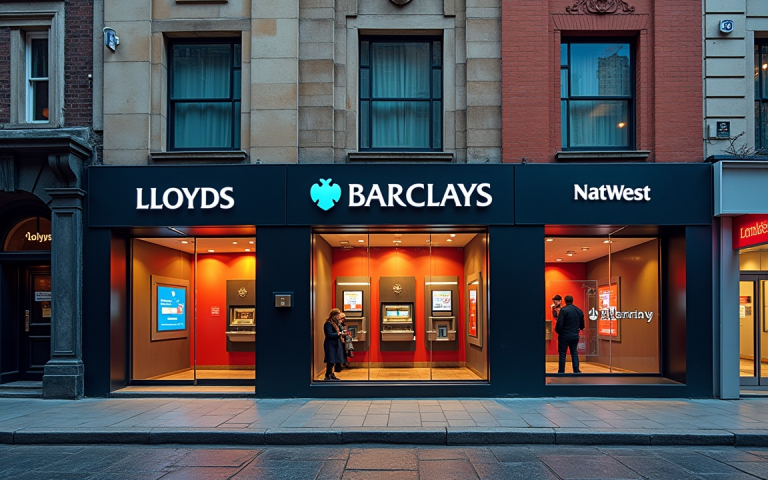
UK bank stocks popped by over 3% on Tuesday as investors waited for the upcoming Rachel Reeves budget reading and as traders anticipated more returns. 

Lloyds share price jumped by 3.78% to 90.69p, up from this week’s low of 85.86. It has jumped by over 80% from its lowest level this year.

Barclays stock price rose by 2.36% to $410, up by 85% from the year-to-date low, while Natwest soared by 3.75%. NatWest stock has jumped by 75% from its lowest point this year. Other bank stocks like Standard Chartered and HSBC also soared.

Lloyds, Barclays, and NatWest stocks jumped ahead of Reeves’ speech

Barclays, NatWest, and Lloyds share prices rose ahead of Rachel Reeves speech 

The main reason why the Barclays, NatWest, and Lloyds share price jumped as traders waited for the upcoming Rachel Reeves budget speech. 

According to Bloomberg, Reeves, the unpopular Chancellor of the Exchequer, has decided not to introduce a windfall tax on the country’s banks.

She will also not increase taxes on the industry, a move she expects will boost the sector and spur lending in the economy.

Additionally, she will not make changes to the banking levy, which is known as the surcharge. As was widely expected, Reeves will not introduce a new tax on banks income from reserves.

The new reporting came a few months after an influential think tank argued that introducing a windfall tax would help the country move from the multi-billion pound deficit into a surplus over the years.

The think tank pointed to the substantial profits the banks have made in the past few years, helped by structural hedges, which help to reduce sensitivity to interest rates.

On the other hand, banks have argued that imposing more taxes would make the country and the financial sector less attractive considering that they already pay more than their European counterparts.

UK banks investors eye sweeteners amid rising pessimism

Lloyds, Barclays, and NatWest investors are also hoping that the companies will unveil more policies to boost returns, as investors caution that the bull run may be about to run out of steam. Just recently, Unicredit’s Andrea Orcel warned:

“As we go into 2026, it is going to be tougher for European banks. I think net interest income will be more brutal than people expect.”

Some European banks have started offering sweeteners as the recent rally fades. For example, BNP Paribas and Société Générale recently announced an accelerated share repurchase program, giving investors €2.5 billion earlier than expected.

Additionally, Deutsche Bank announced new targets, which pointed to higher returns and payouts to investors.

UK banks published strong financial results recently, with the only blemish being the multi-million-pound provisions because of the motor insurance scandal.

Lloyds Bank said that its statutory profit after tax was £3.3 billion, even as it reported a £800 million charge related to the motor insurance issue. Its underlying net interest income in the first nine months of the year rose by 6% to £10.1 billion.

NatWest also published strong results, with its total income rising to £4.2 billion in the first nine months of the year and its impairment charges falling to £153 million.

Barclays, on the other hand, reported strong financial results as its profit before tax rose by 4% to £2.5 billion, helped by its investment banking division. However, its credit impairment charges jumped to £334 million from the £82 million.

The post Here’s why Barclays, NatWest, Lloyds shares jumped ahead of Reeves budget appeared first on Invezz

The Nifty 50 Index has jumped to a record high this year despite the Indian economy facing major challenges, including tariffs, retail investors selling, and a plummeting rupee. It was trading at ₹26,167 on Wednesday, a few points below the all-time high of ₹26,260.

Indian retail investors are dumping shares

The Nifty 50 Index is sitting near its all-time high even as retail investors continued dumping the shares.

Data compiled by Bloomberg shows that these investors have dumped shares worth over $2.2 billion so far this quarter, a sign that they expect the downtrend to accelerate. The last time they dumped shares this much was in June 2023.

One reason do the selling is that the Nifty 50 index has underperformed other global indices. It has jumped by just 10% this year while other indices like the KOSPI and Nasdaq 100 have had a better performance.

At the same time, some of these investors are rotating to other better-performing assets like gold and silver.

Additionally, there are lingering concerns about the Indian economy, which explains why the Indian rupee has plunged to the lowest level on record.

Also, traders are concerned that a trade deal between the US and India is taking too long to be sealed. In the meantime, Indian exporters to the US are having to pay a 50% tariff.

At the same time, unlike in Japan and South Korea, Indian companies are not highly exposed to the artificial intelligence industry.

Therefore, analysts believe that the Indian stock market needs some good news to continue its strong rally. One of these news is a potential deal between the US and India, and an adjustment on the H1-B visa fee. Also, a potential interest rate cut by the Reserve Bank of India (RBI) would help the stock market.

Most Nifty 50 Index companies have done well in the past 30 days. Shriram Finance stock has been the best-performing company in the index after soaring by 18%. Asian Paints stock has jumped by 15%, while State Bank of India, Reliance Industries, HCL Technologies, and Eicher Motors have jumped by over 5%.

On the other hand, Tata Motors, Trent, Cipla, Apollo Hospitals, and Bajaj Finance have plunged by over 8% in this period.

Nifty 50 Index technical analysis 

Nifty 50 Index chart | Source: TradingView

The daily timeframe chart shows that the Nifty 50 Index has been in a strong uptrend in the past few months, moving from ₹21,742 to the current ₹26,170. It is nearing the important resistance level at ₹26,247, its all-time high.

The chart shows that the index remains above the 50-day and 200-day Exponential Moving Averages (EMA) and the Supertrend indicators, a sign that bulls remain in control.

Therefore, the most likely Nifty 50 Index forecast is bullish, with the next key resistance level to watch being at 27,000. This view will be confirmed if the stock moves above the key resistance level at 26,247.

The post Nifty 50 Index analysis as India retail investors dump shares appeared first on Invezz