Category

Stock

Category

The FTSE 100 Index jumped by 20% in 2025, reaching its all-time high of £9,945. It has soared by nearly 30% from its lowest level in April, a performance that has mirrored that of other global indices like the S&P 500 and the Nasdaq 100. This article looks at the top stocks that fueled this surge.

FTSE 100 stock price chart | Source: TradingView

Fresnillo, Endeavor Mining, Antofagasta benefited from the commodity boom

Some mining companies were among the best gainers in the FTSE 100 Index this year as commodity prices soared. Fresnillo’s share price jumped by 370% this year, helped by the robust performance of silver and gold prices. 

Silver price jumped to a record high of $66, up sharply from the year-to-date low of $28. Gold also soared to a record high of $4,370, up sharply from the year-to-date low of $2,500. 

Fresnillo and Endeavor Mining stocks jumped to record highs because they are some of the biggest players in the industry. 

Antofagasta stock jumped by 93% this year, helped by the rising copper prices. Copper jumped to a record high of over $10,000, as demand jumped and supply deficit accelerated.

Airtel Africa was the second-best performer in the FTSE 100 Index

Airtel Africa, a company that offers telecom services in the continent, did well this year. It jumped by 178%, becoming the second-best-performing company in the FTSE 100 Index. 

The company’s growth accelerated, partly because of currency factors. Revenue in the first half of the year rose by 24.5% in constant currency. Its EBITDA rose by 33.2% to $1.44 billion, while profit-after-tax jumped to $376 million. 

The company has also benefited from its Airtel Money product, whose customers jumped to 50 million. Its annual processed funds jumped to $200 billion, a growth that will continue in the future. 

Rolls-Royce share price soared as demand jumped

Rolls-Royce stock rose by 95% this year, becoming one of the best performers in the FTSE 100 Index. This rebound happened as demand for its products continued growing across the board.

Its civil aviation business benefited from the rising order book for its wide-body engines. The rising flying hours helped boost the revenues of the long-term services contracts. 

The defense segment is benefiting from the buildup of military capability in Europe. Most importantly, the company continued making progress in its small modular reactor (SMR) business, which analysts believe is its hidden gem. 

UK banks benefited from high interest rates

Top UK banks like Standard Chartered, Lloyds, Barclays, NatWest, and HSBC were among the top gainers in the FTSE 100 Index. Standard Chartered rose by 78%, while Lloyds and Barclays rose by 75%. 

The other top UK banks rose by over 50% during the year as they benefited from the elevated interest rates. Higher rates helped to boost their net interest income, a trend that started in 2022. 

There was also a perception that British and other European banks were relatively undervalued compared to their American peers. Now, however, there is a risk on whether the companies will continue rising as the Bank of England slashes rates as UK inflation drops.

Top laggards in the FTSE 100 Index this year

On the other hand, the top laggards in the FTSE 100 Index this year were companies like WPP, Bunzl, Diageo, Mondi, Hikma Pharmaceuticals, and London Stock Exchange. All these stocks dropped by over 20% this year.

The post The stocks behind the FTSE 100 20% rally in 2025 appeared first on Invezz

The ARKK ETF stock has done well this year, and is beating other funds like those tracking the Nasdaq 100 and S&P 500 indices. Its total return this year was ~40%, much higher than QQQ and VOO’s 20% and 17.7%.

However, the fund remains much lower than its all-time high of $157.98. Its five-year performance is minus 35%, while QQQ and VOO rose by 104% and 98%.

Top ARKK ETF gainers in 2025

The ARK Innovation Fund jumped as some notable technology companies soared, which helped to offset losses in others.

Palantir Technologies’ stock price jumped by over 142% this year, bringing its market capitalization to over $437 billion amid the ongoing AI boom.

The company is benefiting from the rising demand of its services, which the management believes will continue doing well in the coming years. Its recent results showed that its total revenue rose by 63% in the third quarter to $1.18 billion, with its US commercial revenue surging by 121%.

The main concern about Palantir is that the company has become highly overvalued in most metrics. Besides, this is a company with a $437 billion valuation and expected annual revenue of $6.19 billion next year.

Shopify, another top ARKK ETF constituent company, continued its bull run this year, rising by over 50%. The company, which is the backbone of the e-commerce industry, has continued to report strong financial results in the past few quarters, with its numbers constantly beating analyst estimates.

Shopify’s third-quarter results showed that its GMV jumped to $92 billion in the third quarter, from $69 billion in the same period last year. Its revenue jumped to $2.8 billion from the previous $2.1 billion, while its free cash flow rose by over $100 million.

Robinhood, which ARKK holds shares worth $293 million, was another top gainer as its stock soared by 210% this year. It has benefited from the S&P 500 Index inclusion and the fact that its business has grown across the board. 

For example, its most recent results showed that its crypto revenue surged, even as other top companies like Coinbase and Kraken slowed. This growth was partially because of its Bitstamp acquisition.

The ARKK stock price also received a boost from AMD, a top semiconductor company in the United States. After struggling for a while, AMD’s stock price rebounded after the company inked a major deal with OpenAI, the creator of ChatGPT.

Meanwhile, Tesla’s stock price eked a gain in one of its toughest years ever. Its sales tumbled, while Donald Trump ended one of its main cash cows in the form of the EV tax credit. Instead, the company did well by promising to be a major player in the AI and robotics industry.

Still, ARKK ETF had some notable laggards, including BitMine, Archer Aviation, Block, CoreWeave, PagerDuty, and Intellia Therapeutics.

Is ARKK ETF a good investment?

ARKK stock chart | Source: TradingView

Technicals suggest that the ARKK ETF stock has more upside in the coming months as it has jumped from a low of $29.97 in December 2022 to $80 today.

The current level coincides with the 38.2% Fibonacci Retracement level. Also, the stock has remained above the 50-week and 200-week Exponential Moving Averages (EMA). The two averages made a golden cross pattern in July this year.

It has jumped above the Supertrend indicator. Therefore, technicals suggest that the fund will continue doing well in the coming months, with the initial target being the year-to-date high of $91.95. 

A move above that level will point to more gains, potentially to the all-time high of $157, which is ~100% above the current level.

Therefore, technicals suggest that the ARKK ETF has more upside in the coming weeks, making it a good investment. However, there is always a risk when investing in active funds, especially because of the cost. In this case, its expense ratio is a whopping 0.75%, which is much higher than QQQ’s 0.25%.

The post ARKK ETF analysis: How is Cathie Wood’s flagship fund faring? appeared first on Invezz

The IREN stock price made a strong bearish breakout on Monday as it plunged to its lowest level since September this year. It has now erased some of the gains it made a few months ago when it jumped from $5 to $76. This article explores why the IREN share price has crashed and the next key level to watch.

IREN stock is crashing amid AI jitters

The main reason why the IREN stock price is in a deep bear market is the ongoing jitters surrounding the artificial intelligence industry, which is starting to show cracks.

These cracks intensified last week when Oracle published its quarterly financial results. While its revenue and backlog growth were strong, its debt soared, and free cash flow turned negative.

These results pushed most AI stocks lower, with Nvidia falling to $176, down by 17% from its highest level this year. Broadcom stock dropped to $340, down sharply from the year-to-date high of $413.

IREN’s competitors have remained in a bear market this year, with CoreWeave trading at $72, down from the year-to-date high of $186. Bitfarms stock dropped to $2.5 from $6.5 earlier this year.

Investors are simply concerned that the AI hype that propelled IREN and similar companies into multi-billion dollar empires is starting to fade.

Dilution and competition concerns remain

IREN stock price has also tumbled because of the ongoing concerns about competition in the AI infrastructure industry, where the number of companies offering the same service has jumped.

Some of the top companies offering these services are CoreWeave, Oracle, Nebius, and Bitfarms.

The impact of all this is that the most important customers, who include hyperscalers like Microsoft, Meta Platforms, and Google will now have alternatives when selecting their partners.

IREN has already received a $9.7 billion order from Microsoft, but is yet to announce another one since that.

At the same time, the company will likely continue being highly dilutive as it ramps up its data center expansion. In a statement this month, the company said that it was raising money through debt and equity.

IREN is raising $1 billion in a private offering in convertible notes due 2032 and another $1 billion due in 2033. It also raised money in forms of convertible notes due in 2029 and 2030.

Therefore, the company’s outstanding shares has continued rising in the past few years. Its outstanding shares rose to 282.7 million, much higher than last year’s low of 138.4 million.

The IREN share price has continued falling because of the ongoing Bitcoin price crash. Bitcoin has dropped from the year-to-date high of $126,200 in October to the current $85,000. This is important as IREN still makes most of its money from its Bitcoin mining operations.

The most recent results showed that the company’s revenue rose to $240 million, with its net income rising to $384 million. Its profit included its unrealized gains, prepaid forwards, and the capped calls in terms of its convertible notes.

IREN share price technical analysis

IREN share price chart | Source: TradingView 

The daily timeframe chart shows that the IREN share price has crashed from the year-to-date high of $75.85 in November to the current $35. It has dropped below the important support level at $48.40, the neckline of the double-top pattern.

IREN has moved below the 50-day and 100-day Exponential Moving Averages (EMA) and the 50% Fibonacci Retracement level at $41. Also, the Relative Strength Index (RSI) and the MACD have continued moving downwards.

Therefore, the stock will likely continue falling as sellers target the key psychological level at $20, which is 42% below the current level. This price also coincides with the 78.6% Fibonacci Retracement level.

The post Here’s why the IREN stock price has crashed and why it may hit $20 soon appeared first on Invezz

The MSTR stock price continued its downward trend as Bitcoin and other coins plunged on Monday. Strategy dropped by 8.15% on Monday, reaching a low of $162, which was slightly above the year-to-date low of $155.

Strategy is at risk of mNAV crashing below 1

The MSTR share price crashed by nearly 10% on the same day that the company announced a big Bitcoin purchase. In a statement, the company said that it acquired 10,645 coins worth $980.3 million last week.

That was the second week in a row that the company made such a big purchase. Before that, the firm bought 10,624 coins valued at $962 million. These purchases have brought its total holdings to 671,68 coins currently worth over $57 billion.

The purchases are a sign that the company is highly bullish on Bitcoin and that it expects it to rebound as it has always done.

However, its continued accumulation is risky as it is coming at a rim when it’s market net-asset value (mNAV) has imploded.

Data compiled by Bitcoin Treasuries shows that the basic mNAV multiple has dropped to 0.80, much lower than where it started the year. This multiple is calculated by comparing its market capitalization and the value of its coins.

The NAV multiple, based on the diluted market capitalization, has dropped to 0.9. Most notably, the NAV based on its enterprise value, which is what most analysts watch, has dropped to 1.040.

A company’s enterprise value is calculated by looking at its market capitalization, its cash, its debt, and its preferred shares.

The significant decline in its NAV multiple has made it difficult for investors to allocate money in it because it has lost the premium it had a few months ago.

While the headline figure on Monday was the number of Bitcoins it bought, the accompanying report also showed how the company is raising money for these purchases. Its 8k report shows that the company sold shares in its preferred and common stock.

It sold 163,306 of STRF stock for $18 million, STRK for $600k, STRD for $82.2 million, and MSTR stock for $882 million. This means that MSTR investors are suffering from the ongoing dilution that has boosted the outstanding shares to over 305 million from 95 million a few years ago.

Worse, the company still has room to keep this dilution going on as it has $12 billion remaining in its ATM.

Strategy’s dilution largely made sense when Bitcoin and its stock were in a strong uptrend as the gains helped to offset it. Now, investors are facing a double whammy of more dilution and falling stock price.

Just recently, the CEO hinted that the company would consider selling some of its Bitcoin holdings to pay its dividends and debts. He then noted that the company had over $1 billion in cash to make these payments.

MSTR stock price analysis points to more downside

MSTR share price chart | Source: TradingView

A closer look at its technicals suggests that the MSTR share price has more downside to go.

The stock has dropped below the important support level at $230, which was its lowest level in the first quarter. Moving below that level confirmed that bears had prevailed.

The stock then formed the bearish flag pattern, and has now moved below the lower side, confirming the bearish outlook. A bearish flag is one of the most popular continuation signs in technical analysis.

The stock remains below all moving averages while the Relative Strength Index (RSI) and other oscillators have all pointed downwards.

Therefore, the most likely scenario is where it continues falling as sellers target the year-to-date low of $155. A drop below that level will point to more downside, potentially to the next psychological level at $100.

In the future, however, there is a possibility that the MSTR stock price will rebound as Bitcoin bounces back and as investors buy the dip.

The post MSTR stock price may crash to $100 as dilution rises, mNAV nears negative appeared first on Invezz

The KOSPI Index has pulled back in the past few days as the recent bull run stalled at its all-time high. It was trading at KRW 4,027, a few points below the year-to-date high of KRW 4,212.

Why the KOSPI Composite Index is falling 

KOSPI, the index tracking the biggest companies in South Korea, has come under pressure in the past few days.

One reason for this is that many foreign and local funds have started to sell South Korean stocks as they book profits following the recent surge. This surge drove the KOSPI from a low of KRW 2,290 in April to a high of KRW 4,212 in November this year.

The ongoing outflows also explain why the South Korean won has tumbled to the lowest level in eight months, with demand for US dollars continuing rising. It has dropped by 8% in the second half of the year, making it the worst-performing currency in Asia.

READ MORE: Here’s why South Korea’s KOSPI Index has soared this year

The KOSPI is also wavering because of the ongoing jitters surrounding the artificial intelligence industry. These jitters have pushed most companies in the industry, including blue-chip names like Broadcom, Nvidia, and Oracle, much lower than their year-to-date highs.

South Korea is home to some of the top beneficiaries of the industry, with Samsung being the biggest player in the industry. Samsung makes some fun the top chips used in the AI industry, where it makes numerous products like NAND and DRAM. Other AI companies in the KOSPI Index like SK Hynix, Naver, and Kakao, among others.

Some of these companies have pulled back in the past few weeks, mirroring the performance of their American peers like Oracle and Broadcom.

The KOSPI Index has also pulled back because of the ongoing performance of the country’s bond market. Data shows that the ten-year bond yield stands at 3.30%, much higher than the year-to-date low of 2.557%.

The South Korean Central Bank has maintained interest rates steady in the past few months, with officials prioritizing financial stability even as inflation has remained at an elevated level.

The KOSPI Index has also retreated as investors remained concerned about valuation following its surge from a low of KRW 2,290 in April to a high of KRW 4,212 in November.

KOSPI Index technical analysis

KOSPI Index chart | Source: TradingView 

Technicals suggest that the KOSPI Index has more downside to go in the near term. It formed a double-top pattern at 4,212 KRW and a neckline at KRW 3,867, its lowest level on November 21. A double-top is one of the most popular bearish patterns in technical analysis  

The Relative Strength Index (RSI) and other oscillators have formed a bearish divergence pattern, which happens when these oscillators are moving downwards even as the price rises. 

Therefore, the most likely scenario is where the index pulls back in the coming weeks and moves to the key support level at KRW 3,867, the neckline of the double-top pattern. A drop below that level and the dynamic support of the 50-day moving average will invalidate the bullish outlook.

The post KOSPI Index forms a risky pattern, pointing to a drop as rally stalls appeared first on Invezz

The embattled Indian rupee roared back to life on Wednesday as the country’s central bank boosted its interventions. The USD/INR exchange rate tumbled from a record high of 91.07 to a low of 90.28, its biggest drop in months. So, will the rupee gains hold?

Indian rupee rebounds amid RBI intervention

The USD/INR exchange rate has been in a strong uptrend this year, making the Indian rupee one of the top laggards in the Asian region.

This surge pauses on Wednesdays as the central bank delivered a strong intervention in which it sold dollars aggressively to halt the slide.

The bank did not make public the size of the ongoing intervention, although some analysts believe that it is in billions of dollars.

India has vast reserves to support a currency intervention when the rupee is in a freefall. The most recent data shows that the country has over $687 billion in foreign reserves.

RBI has hinted that rates to stay low for longer 

The RBI has largely intervened in the form of dollar liquidity provision. It has avoided hiking interest rates, which would make the rupee more attractive to locals and foreigners.

Instead, the bank has delivered two interest rate cuts this year, bringing the benchmark rate from 6% in January to 5.25%. 

Officials have pointed to the fact that inflation remains low and the economy is doing well. As a result, they hope that rate cuts will help to provide more fuel for economic growth.

The bank has also slashed rates because of the ongoing tensions between the United States and India. India is one of the top countries that has not reached a trade deal with the United States.

As a result, the US has put in place a 50% tariff on goods coming from India, and despite hopes of a deal, nothing has happened so far. 

The US also announced a boost in fees of H1-B visas, a move that disproportionately affected India, a country that has a large market share in the industry. That move has affected the Indian economy, including top companies in the industry like Tata Consultancy, Infosys, and Wipro.

Federal Reserve interest rate outlook 

The USD/INR exchange rate has reacted mildly to the actions of the Federal Reserve, which dropped interest rates by 0.25% last week. Officials then hinted that they would deliver another rate cut in 2026.

Macro data released this week showing that the labor market remained on edge in October as the economy shed thousands of jobs. It then rebounded in November, creating 64,000 jobs during the month.

Looking ahead, the US will publish the latest inflation report on Thursday. All these numbers, together with those that will be released in January, will provide more hints on what to expect in the coming meetings.

USD/INR analysis: what next for the Indian rupee?

USDINR chart | Source: TradingView

The daily timeframe chart shows that the USD/INR exchange rate has pulled back in the past few days, moving from a high of 91.08 on Tuesday to the current 90.34.

This retreat started when the pair hit the upper side of the ascending channel shown in red. 

The pair remains above the 50-day and 100-day Exponential Moving Averages (EMA), which is a bullish sign.

The Relative Strength Index has pointed downwards, while the MACD indicator has continued rising.

Therefore, the pair will likely drop and retest the support at 89.67 and then resume the uptrend. More gains will be confirmed when it moves above the year-to-date high of 91.07. Such a move will push it to the next key resistance level at 92.

The post USD/INR forecast: Here’s why the Indian rupee just surged appeared first on Invezz

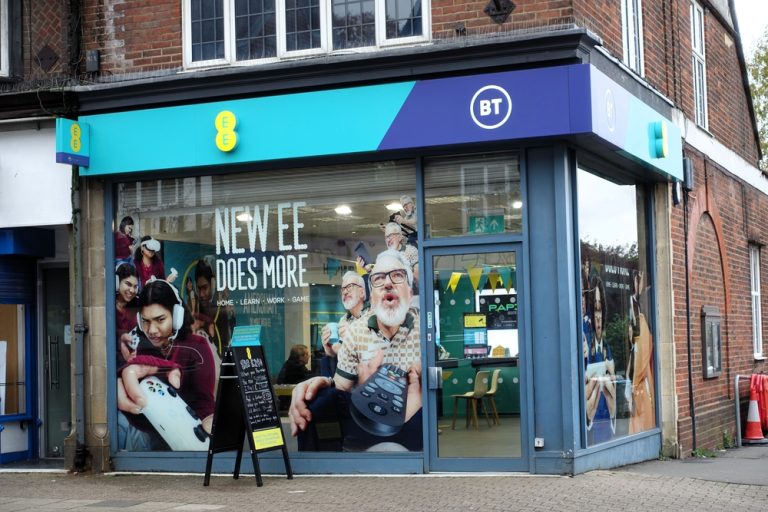
The BT share price has pulled back in the past few months, undoing some of the gains it made earlier this year. It was trading at 182.40p, down by 16% from its highest point in August this year. This price is still much higher than the year-to-date low of 133p.

BT Group is facing major headwinds

The BT Group stock price has retreated in the past few months as the company has continued facing major headwinds. One of these challenges is in the broadband industry, which analysts expect to keep slowing in the coming years. 

In a recent note, a New Street Research report noted that the number of customers paying for fixed-line broadband would drop by 250,000 this year. This forecast was notable for BT since it is the most dominant player in the sector. 

One reason for the weakness is that customers are slowly moving to other channels. They are receiving high-speed internet connection through mobile providers and satellite companies like Elon Musk’s Starlink. Competition in the industry, especially from alt nets, has continued growing this year.

Results pointed to broader weakness

The most recent results showed that BT Group lost a significant number of customers in the last quarter. It shed 242,000 broadband customers, much higher than the 205,000 it lost in the same period last year. 

The results showed that the company’s business remained under pressure. Its revenue dropped by 3% to £9.8 billion, while its profitability metrics were much worse. 

BT Group’s profit before tax dropped by 11% to £862 million, while the after-tax tax fell by 14% to £651 million. The earnings per share dropped by 14% to 6.54p. 

A closer look at its segments shows that they all retreated in the last quarter. The consumer division’s revenue dropped by 3% to £4.8 billion, while business and international revenue dropped by 2% and 9%. Revenue of its OpenReach business was flat. 

On the positive side, the company is expected to slow its capital expenditure now that its OpenReach solution has moved to nearly all countries. This slowdown means that the company will boost its free cash flow to about £3 billion by 2030.

Therefore, there is a likelihood that the stock will rebound as investors predict that its dividends will keep growing even as it business slows. This is important as the company has a dividend yield of 4.4%, higher than other companies.

BT share price technical analysis 

BT stock chart | Source: TradingView

The daily timeframe chart shows that the BT stock price rebounded from the 2024 low of 97.7p to a high of 218p this year. It has now pulled back to the current 182.40 as concerns about its growth trajectory has remained. 

BT share price bottomed at 174.10 and then crawled back to the current 18.40. It is now attempting to move above the 50-day and 100-day Exponential Moving Averages (EMA). A move above that level will point to more gains, potentially to the psychological point at 200p. 

However, a drop below the key support at 174.10p will invalidate the bullish outlook. Such a move will point to more downside, potentially to the key support at 150p.

The post BT share price is down 16% from YTD high: is it safe to buy the dip? appeared first on Invezz

The Dow Jones Index dropped for three consecutive days as jitters surrounding the artificial intelligence (AI) industry continued. It dropped to $48,115, down modestly from the year-to-date high of $48,847.

Dow Jones Index has pulled back amid AI jitters 

One main reason why the Dow Jones Index has pulled back in the past few days is that investors remain concerned about the artificial intelligence (AI) industry, which has driven it in the past two years.

These jitters accelerated last week after Oracle published its quarterly financial results, which showed that its revenue and backlog accelerated. However, its debt soared as its free cash flow turned negative, a notable thing for a company with big maturities coming up.

Oracle’s and Broadcom’s woes have had a major impact on other AI companies in the Dow Jones Index, including popular names like Nvidia, Microsoft, and Salesforce.

Still, some analysts like Tom Lee believe that the AI sector has more room to run in the coming year. For example, the average estimate for the S&P 500 Index among top Wall Street analysts is highly bullish, with some pros predicting that it will move to over $7,600 next year, driven by the AI boom.

Dow Index has pulled back ahead of the BoJ interest rate decision 

The Dow Jones and other American indices have pulled back as investors wait for the upcoming Bank of Japan interest rate decision, which will happen on Friday this week.

Data compiled by Polymarket shows that the odds that the bank will hike interest rates have jumped to 98%. Most traders anticipate that the bank will hike by 0.25%, bringing the benchmark rate to 0.75%, the highest level in years.

These odds explain why Japanese bond yields have jumped in the past few months, with the 30-year rising to 3.52%, up from October’s low of 3.037%.

Crude oil price rises amid Venezuela jitters 

The Dow Jones Index also reacted to the ongoing crude oil price rebound, with Brent and WTI rising to $59 and $56, respectively.

Crude oil price rose after Donald Trump announced a major blockade of sanctioned oil tankers, a move that will put more pressure on Caracas. However, the impact on the global oil market because of the diminished role of the country in the oil market.

READ MORE: US-Venezuela tensions: What’s the effect on Venezuela’s economy and what investors need to prepare for

Key earnings ahead 

The next key catalyst for the Dow Jones Index will be the upcoming earnings by some of the biggest companies in the United States.

Micron Technology, a company that makes DRAM and NAND products, will publish its financial results. Analysts expect the results to show that the normalized EPS rose by 123% to $3.94.

The other notable companies to watch will be General Mills and Jabil. Also, the other companies that will publish their results this week will be Accenture, Nike, Cintas, FedEx, Darden Restaurants, CarMax, and KB Home.

Dow Jones Index technical analysis 

Dow Jones chart | Source: TradingView

The daily chart shows that the Dow Jones Index rose from a low of $36,645 in April this year to a record high of $48,847.

It has formed an ascending channel and is now slightly below the upper side. It remains above the 50-day and 100-day Exponential Moving Averages (EMA).

The most likely scenario is where the index will resume the uptrend, and possibly retest the all-time high of $48,847. A move above that level will point to more gains, potentially to the next key resistance level at $50,000.

On the other hand, a move below lower side of the channel will point to more downside, potentially to the next key support level at $47,000.

The post Here’s why the Dow Jones Index is pulling back appeared first on Invezz

The GLD ETF edged higher on Monday as the recent bull run gained momentum, as investors reacted to last week’s Federal Reserve interest rate decision. It was trading at $395, a few points below the all-time high of $403.

Economic uncertainties, geopolitical risk, and a weaker US dollar continue to fan the bullion’s safe-haven appeal. However, Treasury yields have curbed gold price gains. Investors are now eyeing the US CPI and nonfarm payrolls data slated for release in the new week.

Is the momentum enough to retest the gold price all-time high?

Gold price remains on an uptrend, placing it on track to have its best year since 1979. It has rallied by over 60% ytd, having hit 50 fresh all-time highs during that timeframe. 

After pulling back from the record-high hit in late October and trading within a tight range over the past two weeks, the bulls are at it again. As investors digest December’s Fed interest rate decision, gold price edged higher on Friday to trade about $100 below the record high reached in late October. 

As expected, the US central bank announced its third rate reduction this year while hinting at a pause in the coming months. Usually, an environment of lower interest rates favours the non-yielding bullion. Besides, the rate reduction has occurred at a time when inflation remains elevated above the central bank’s target of 2%. As such, the precious metal is also benefiting from its status as a conventional safe-haven asset.

However, higher Treasury yields have curbed gold price gains. This comes after the Fed hinted at pausing on the rate cuts while forecasting just one reduction in the coming year.

The benchmark 10-year Treasury yields ended the week at 4.18% as it rebounded from the one-month low hit in late November at 3.96%. Nonetheless, following the interest rate reduction, it lacked enough bullish momentum to break the months-long resistance at 4.20%.

Investors are now keen on the US CPI and nonfarm payroll data slated for release in the new week. Notably, the Fed made its latest decision with an incomplete picture of the country’s inflation and job market. As such, the highly anticipated figures will heighten volatility in the US dollar, Treasury yields, and gold price.

GLD ETF technical analysis

GLD ETF stock chart | Source: TradingView

The SPDR Gold Shares, a leading gold ETF, ended the week in the green following the bulls’ successful efforts of breaking past the weeks-long tight range. On Friday, it hit its highest level since 20th October when it reached its all-time high. With the heightened momentum, the bulls have a chance to retest and surpass its record high of $403. At the time of writing, the GLD gold ETF was trading at $395 after pulling back from its intraday high of $399.50. Besides, the pullback had it ease from the border of the overbought territory at an RSI of 70 to 68.

 In the near term, the buyers’ target is on the asset’s all-time high at $403. As they gather enough momentum to reach and break that resistance, I expect the previous resistance zone of $393 to offer support to GLD gold price. However, a further corrective pullback may activate the lower support along the 25-day EMA at $383.  

The post GLD ETF: Gold bulls have the upper hand ahead of the US CPI and jobs report appeared first on Invezz

Copper price continues to move in tandem with the current supply/demand dynamics. While supply tightness has offered it steady support in recent weeks, signs of slowing demand have curbed its upside potential.

In the new week, the Comex copper price is set to react to the release of crucial economic data from the two top economies; China and the US. Indeed, it is already responding to China’s numbers released earlier on Monday. With the lower-than-expected figures, the asset lacks enough bullish momentum to break the crucial resistance at $5.50 a pound. Besides, the US nonfarm and CPI data are expected to heighten volatility on the US dollar and copper price by extension. At the time of writing, it was trading at $5.45.  

Comex copper price drivers for the new week

Comex copper price lacked enough bullish momentum to break the resistance at $5.50 a pound as the market digested China’s latest industrial data. According to the National Bureau of Statistics, the country’s industrial production rose by 4.8% in November compared to the previous year. This level missed the analysts’ expectations of a 5% increase and marked its lowest growth since August 2024. 

At the same time, China’s retail sales surged by 1.3% in November YoY compared to the forecast increase of 2.8% and the prior month’s 2.9%. Investments in property and other fixed assets also contracted sharper than the expected 2.3% by coming in at a 2.6% drop. 

China’s struggling property market and subdued domestic demand have been weighing on copper price and the broader industrial sector. In addition to the latest data, recent figures showed that industrial profits dropped by 5.5% in October YoY. Notably, that was the highest decline since June. Besides, manufacturing activity contracted beyond analysts’ expectations in November as new orders and production growth slowed. 

While this underwhelming situation from the top consumer and importer of industrial metals weighs on the red metal, the market is hopeful of significant improvement in the coming year. China’s policymakers have vowed to offer additional policy support that will boost domestic demand next year. For instance, on Saturday, the finance ministry announced its plans to issue ultra-long-term special government bonds in 2026. What’s more, the economy is still on track to hit the official growth target of 5% as exports to non-US markets increase.

China’s policy support, consumer sentiment, and economic data will remain key drivers of copper price into the new year. Meanwhile, investors are now eyeing the nonfarm payrolls and US CPI slated for release on Tuesday and Thursda,y respectively. These figures come about a week after the Fed’s interest rate decision that was announced, albeit an incomplete picture of the US inflation and job market. 

The release of the highly anticipated data will offer cues on the Fed’s next move while heightening volatility in the US dollar. As a dollar-priced asset, a higher US dollar would render copper more expensive for buyers holding foreign currencies. 

Comex copper price technical analysis

Copper price chart | Source: TradingView

Comex copper futures began the new week on its front foot after last week’s weekly loss. However, in reaction to China’s recent data, the bulls lacked enough momentum to break the resistance at $5.50. While supply tightness has bolstered the red metal above the crucial support zone of $5.15, worries over slowing demand growth has curbed its upside potential.  

In the short term, copper price may face resistance at $5.56, while $5.15 continues to offer steady support on the lower side. Even with further gains, it will likely remain within the borders of the months-long bullish channel. A rise past that bullish trendline will signal a breakout, with the bulls on track to record a fresh 5-month high.

The post Copper price analysis: China, US economic data set to offer cues appeared first on Invezz