Category

Stock

Category

The UnitedHealth (UNH) stock price dropped by 32% in 2025, making it the worst-performing company in the Dow Jones Index. This crash pushed its market capitalization from a peak of $541 billion in April to $297 billion today. This article explores why the giant insurance company plunged and what to expect.

Top reasons why the UnitedHealth stock price crashed 

UnitedHealth, one of the biggest insurance companies in the world has had a rough patch in the past few years, a move that culminated in the fatal shooting of Brian Thompson, its CEO, in December last year.

The killing by Luigi Mangione was likely because of the ongoing frustration about claims denials by the biggest insurance companies in the United States.

The crisis escalated after the company published its financial results and withdrew its forward guidance, citing the elevated Medicare Advantage costs, which drove the medical care ratio to alarming levels.

As the crisis escalated, the company’s CEO, Andrew Witty, stepped down in May this year, sending a signal that the company’s fundamentals were not doing well. A CEO resignation is often seen as a highly bearish catalyst for a stock.

The UNH stock price also plunged as the Department of Justice (DoJ) launched an investigation into the company’s dealings, especially on Medicare fraud. 

Will the UNH stock rebound in 2026?

With the UNH stock price down by double digits this year, the question among investors is whether it will rebound in the new year.

There are some potential bullish catalysts for the stock, which explains why it has rebounded by 40% from its lowest level this year.

One of the catalysts is that Warren Buffett, one of the best investors of our time, bought the dip. His company now holds 5.06 million shares worth over $3.9 billion, making it one of the biggest holders.

Other hedge fund investors like Appaloosa Management, Lone Pine Capital, and AQR have bought the dip, a sign that they expect it to rebound over time.

The other potential catalyst for the UNH stock is that its revenue growth resumed in the third quarter. Its revenue rose by 12% to $113 billion, higher than what analysts were expecting. The medical care ratio (MCR) of 89.9% was in line with expectations, and the management sees it falling over time.

Wall Street analysts also expect the company’s revenue will get to $113.38 billion, up by 12.47% YoY, which will bring its annual revenue to $447 billion. It will then make $456 billion next year.

Additionally, analysts are also hopeful that the UNH stock price will rebound. The average estimate is that the target will be $392, up sharply from the current $392. The most recent upgrade was from Cowen, which raised its target from $335 to $338.

UnitedHealth share price technical analysis 

UNH stock chart | Source: TradingView

The weekly timeframe chart shows that the UNH share price has rebounded from a low of $232 in July to the current $328.

It has moved above the Supertrend indicator, which is a highly bullish sign. Also, it is in the process of forming a bullish pennant pattern, which is made up of a vertical line and a symmetrical triangle.

Therefore, there is a likelihood that the stock will bounce back, potentially to the key resistance level at $378, its highest level in October. This price target coincides with the 38.2% Fibonacci Retracement level.

The post UNH stock: what next for the top laggard in the Dow Jones Index? appeared first on Invezz


Pool Corp’s stock price has been in a strong freefall this year, and is now at its lowest level since 2020. It has plunged by ~53% from its highest point this year, erasing $16 billion in value as the market capitalization dropped from $24.5 billion to the current $8 billion. 

Pool Corp stock has crashed as it faces major headwinds

Pool Corp is a top American company that specializes on swimming pool supplies. It sells its products in North America, Europe, and Australia, where the number of pools in households and institutions has jumped.

The company counts Warren Buffett as one of its top investors. Berkshire Hathaway, his company, holds over 3.45 million shares in the company worth over $793 million. He believes that the company is an overvalued blue-chip name with potential for growth.

READ MORE: Nasdaq 100 Index and QQQ ETF top laggards in 2025 revealed

Pool Corp’s business has faced numerous challenges in the past few years. Its annual revenue dropped to $5.31 million last year, from $5.54 billion in the previous year. Its annual revenue has been in a downtrend since 2022 when it made over $6.17 billion.

Pool Corp’s profitability has also been in a downward trend as revenues fell and costs rose. Its net income dropped from $748 million in 2022 to $412 million in the trailing twelve months (TTM).

The most recent results showed that Pool Corp’s net sales rose slightly to $1.45 billion in the third quarter. Its gross profit rose to $429 million, while its operating income rose to $178 million. 

The company’s weakness will likely persist in the near term as inflation remains at an elevated level. For example, the average estimate among 14 analysts is that the fourth quarter revenue will come in at $999.1 million, up slightly from what it made last year.

The company’s annual revenue will come in at $5.31 billion, down from the same period last year. Also, the average estimate is that its earnings per share will be $10.85, down from $11.07. 

Pool Corp stock has also retreated because of its inventory, which has remained at a high level over time. It ended the last quarter with $1.22 billion, up from $1.18 billion it had in the same level last year.

Analysts have a mixed opinion on the Pool stock. CFRA recently upgraded the stock to a buy, while William Blair slashed to market perform from outperform. The average target is $322, up from the current $229.

Pool stock price chart analysis 

Pool share price chart | Source: TradingView

The weekly chart shows that the Pool share price has pulled back in the past few months. It has dropped from a high of $409, its highest point in March 2024 to the current $229. 

A closer look shows that the stock has moved below the key support at $268, the lower side of the inverse cup-and-handle pattern. It was also the lower side of the head-and-shoulders pattern. 

Pool stock has remained below the 50-week moving average, a sign that bears remain in control. The RSI and the MACD indicators have continued falling. Therefore, the stock will likely keep falling as sellers target the key support at $200.

READ MORE: Trade Desk stock dropped 68% in 2025: Why was it the top S&P 500 laggard?

The post Pool Corp: Why is this Warren Buffett-backed stock down 53%? appeared first on Invezz

South Korea’s KOSPI Index was one of the best-performing stock market benchmarks globally in 2025 as it jumped by 75.53% and reached its all-time high. It was trading at KRW 4,215, up by 85% from its lowest level this year. 

Reasons behind the KOSPI Index rally

There were several important drivers for the KOSPI Composite Index this year. The first notable one came from Lee Jae-myung, the country’s president who pledged to push it to KRW 5,000 during his term. 

As part of his plan, he noted that the country would implement some policies to boost the stock market. These policies included corporate governance reforms aimed at removing the South Korean discount. 

This discount refers to the chronic undervaluation of South Korean stocks compared to their peers. Indeed, this discount still exists, with the index having a price-to-earnings (P/E) ratio of 17 compared to S&P 500 Index’s 22.

The KOSPI Composite Index also benefited from the ongoing boom in the artificial intelligence (AI) industry. This boom has lifted several companies that offer products in the industry. For example, Samsung Electronics’ stock jumped by 127% this year.

SK Hynix, another company in the tech industry, soared, with its market cap jumping to over $306 billion. This surge coincided with that of its top competitors, like Western Digital and Micron, which were the top gainers in the S&P 500 Index. 

The KOSPI Index also jumped after South Korea and the United States reached a deal. Donald Trump reduced tariffs to 15% from the previous 25%, while South Korea pledged to invest $350 billion in US assets. The focus areas of these investments will be in shipbuilding, semiconductors, and infrastructure. 

While the 15% tariff is still a high one, the deal helped to reduce the tensions that existed between the two countries. South Korea now hopes that the US Supreme Court will find the 15% tariff illegal. 

The actions by the South Korean Central Bank also had an impact on the KOSPI Index. The central bank slashed interest rates four times, bringing the benchmark rate to 2.5%. 

Most importantly, officials pointed to more cuts in 2026, citing the slowing economy. Still, the country’s bond yields continued rising despite the rate cuts. The ten-year yield rose to 3.385% from the year-to-date low of 2.5%.

KOSPI Composite Index technical analysis

KOSPI Index chart | Source: TradingView

The daily chart shows that the KOSPI Index has been in a strong bull run this year. It ends the year at KRW 4,215, its highest point on November 3. 

The index has remained above all moving averages and the key resistance level at $3,835, its lowest point in November this year. It has remained above all moving averages.

The Relative Strength Index (RSI) and the MACD indicators have continued rising. Therefore, the index will likely continue rising in the coming year as bulls target the key target at KRW 5,000. This view will be confirmed if it moves above the resistance at KRW 4,223 as this will invalidate the double-top pattern.

The post Here’s why the KOSPI Index jumped 75% in 2025 appeared first on Invezz

The IBEX 35 Index had a great performance in 2025 and was one of the best-performing global benchmarks. It jumped to a record high of €17,335, up sharply from the January low of €11,820. 

The index, which tracks the biggest Spanish companies, rose by 52% this year. In contrast, the FTSE MIB Index rose by 32%, while the FTSE 100, DAX, and the CAC 40 rose by 22%, 23%, and 11%, respectively. 

IBEX Index vs key European peers | Source: TradingView

Indra Sistemas was the top IBEX 35 stock

Indra Sistemas stock jumped by 184% in 2025, making it the best performer in the IBEX 35 Index. This surge brought its market capitalization to over €9.6 billion. 

The company’s business continued doing well, with its recent results showing that its backlog jumped to €9.5 billion. Its nine-month revenue rose by 6%, while the EBITDA rose by 10%. Most importantly, the company’s net profit rose by 58% to €291 million. 

The company’s growth was due to the ongoing performance of the European defense spending, which has continued growing in the past few years. This also explains why other companies like Rheinmetall, Thales, and BAE Systems soared. 

Solaria Energia 

Solaria Energia was the second-best performing company in the IBEX 35 Index as it jumped by 135%. The surge happened as the solar energy company announced a plan to triple its capacity and boost its profitability.

Solaria committed to investing €2.5 billion, a move that it expects to triple its operational capacity by 2028. It also signed a 150 MW solar deal and the first 180 MW wind contracts with Repsol. Solaria also expanded its business to the booming data center industry.

The company also published strong financial results, with its nine-month EBITDA and net profit rising to €230 million and €141 million, respectively. 

Banco Santander

Banco Santander was another top gainer in the IBEX 35 as it jumped by 126%. The surge brought its market cap to over €161 billion, making it one of the biggest banks in the world.

Santander’s surge mirrored that of other top European banks like Société Générale, Lloyds, Commerzbank, and Deutsche Bank. It benefited from the relatively high interest rates and the robustness of the European economy. 

Banco Santander’s profit before tax rose by 5.5% to €4.65 billion in the third quarter. Its nine-month profit jumped by nearly 5% to over €13.76 billion. 

Following Santander were other Spanish banks like BBVA, CaixaBank, Bankiter, and Banco Sabadell, which jumped by 112%, 99%, 86%, and 80%, respectively. 

Other top gainers in the IBEX 35 Index were companies like Grupo ACS, Mapfre, ArcelorMittal, and Acciona.

Top laggards in the IBEX Index

There were just a handful of companies in the red this year. Puig Brands, a popular fashion and beauty company, was the top laggard as it dropped by 16%. This retreat happened after a major downgrade from JPMorgan, which cited the slowdown in the fragrance business.

The other companies that slipped this year were Telefonica, Cellnex Tel, Redeia Corporacion, Amadeus, and Fluidra.

The post Here’s why Spain’s IBEX 35 Index jumped 52% in 2025 appeared first on Invezz

The Zimbabwe ZiG continued its recent rebound and hit its highest level against the US dollar since January this year. Central bank data shows that the USD/ZWG exchange rate dropped to 25.98, down significantly from the year-to-date high of 27. 

Zimbabwe ZiG boosted by the gold price rally

Zimbabwe’s gold-backed currency, which was launched in April 2024, bounced back recently, helped by the relentless gold price rally. 

Gold price jumped to a  record high of $4,555 this month, much higher than the year-to-date low of $2,620. It has soared by over 140% in the last five years, making it one of the best-performing assets this year.

Gold jumped because of the surging demand from central banks, private companies like Tether, and increased ETF inflows. The SPDR Gold Trust (GLD) attracted over $20 billion in inflows this year, its best performance in years.

Gold also jumped as investors rushed to its safety as Donald Trump launched his trade war in April this year. His reciprocal tariffs had the US implement huge tariffs on goods from around the world, with those from China reaching a record high of 145%.

The Federal Reserve also contributed to the gold rally as it delivered three interest rate cuts during the year. It brought interest rates to between 3.50% and 3.75%, with officials expecting at least one more cut in 2026.

The bank may deliver more cuts in 2026 as Trump will nominate the official who will replace Jerome Powell. He has hinted that he will only nominate a Fed Chair who will be keen on cutting interest rates aggressively, a move that will boost gold prices.

Central Bank continues its gold purchases

The Zimbabwe ZiG does well when gold is rising because it is backed by 3.4 metric tons of gold, whose value has continued rising this year.

In a statement this week, John Mushayavanhu, the country’s central bank governor, noted that the bank will continue making strategic purchases as it pushes on the goal of making ZiG the sole currency in 2030. He hopes that the reserves will get to three to six months of import cover, saying:

“The Reserve Bank strongly believes that maintaining the current trend of foreign currency reserves build up would enable it to meet the desired target in the near to medium term, for the smooth transition to a mono currency.”

The Zimbabwe ZiG also jumped as the central bank maintained high interest rates during the year. It left rates unchanged at 35%, much higher than other countries, including the United States. Higher rates have made the ZiG more attractive to investors. 

Meanwhile, the country’s economy did well in 2025, with the central bank expecting a final growth rate of 6.6%. This growth is mostly because of the elevated commodity prices and favorable weather after the El Niño drought in 2024. As a result, the country produced more tobacco, with exports soaring to over $1.1 billion. 

Analysts anticipate that the economy will continue growing in 2026, with the central bank expecting a 5% growth rate. It also sees inflation continuing its downtrend during the year.

Looking ahead, the Zimbabwe ZiG may continue doing well in the coming months as its demand rises. The most recent central bank data shows that the currency is now accounts for ~40% of all transactions, which is a good thing.

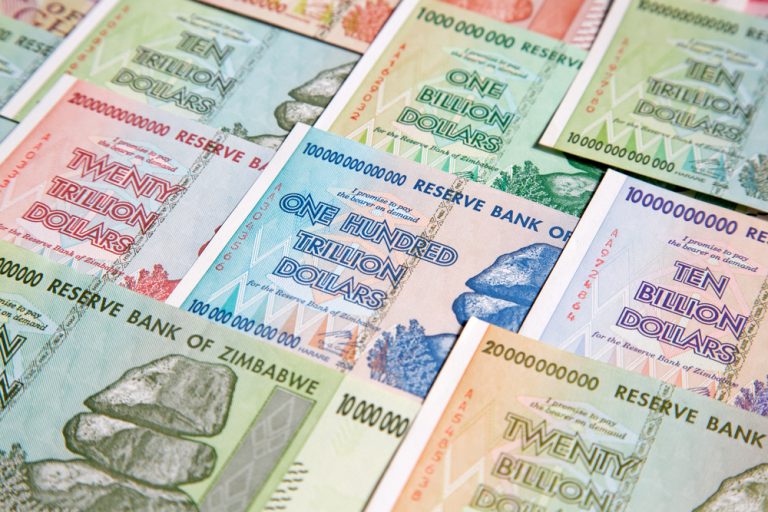
The biggest risk, however, is that Zimbabweans have a long memory. Many of them recall the past collapses of the other currencies and may never fully embrace the ZiG.

READ MORE: Zimbabwe ZiG: What’s going on with the gold-backed currency?

The post Here’s why the Zimbabwe ZiG currency just rose to its January levels appeared first on Invezz

The FTSE 100 Index jumped by nearly 22% this year, confirming a strong bull run that started in March 2020 when it crashed to a low of £4,892.

Its surge to a record high happened even as the UK faced major challenges of higher tariffs from the United States, higher taxes and inflation, and slow economic growth. 

FTSE 100 Index chart | Source: TradingView

FTSE 100 Index rally boosted by higher commodity prices 

One main reason why the blue-chip FTSE 100 Index jumped by over 20% was the strong performance of top commodities during the year.

The top gainers in the index were in the commodity sector. Fresnillo’s stock price jumped by 446% this year as gold and silver jumped to their record highs. The Mexican company is one of the biggest players in the silver market globally.

Endeavour Mining stock rose by 170% as it benefited from the elevated gold prices. The company, which operates large gold mines in Africa, continued doing well as its mining production coincided with the rising prices.

Meanwhile, Antofagasta’s share price jumped by 106% this year as copper experienced its best performance in years. Antofagasta is one of the biggest players in the copper mining business, delivering over $6.6 billion in annual revenue last year.

Other mining companies like Rio Tinto, Glencore, and Anglo American were also in the green during the year. RIO rose by 26%, while the other two jumped by 15% and 12.8%, respectively. Anglo American made headlines when it announced that it would acquire Canada’s Teck Resources.

READ MORE: Here’s why this FTSE 100 Index stock jumped ~380% in 2025

UK banks contributed to the FTSE 100 surge 

Meanwhile, UK banking companies were also among the best performers during the year, a performance that mirrored that of other European banks like Unicredit, Société Générale, and Banco Santander.

Standard Chartered stock jumped by 85%, while Lloyds, Barclays, NatWest, and HSBC rose by 80%, 79%, 63%, and 51%, respectively.

UK banks continued rising as they benefited from the relatively higher inflation rate, which pushed the Bank of England to maintain higher interest rates for longer.

Banks benefit from higher interest rates because they normally lead to higher net interest margin. Additionally, the companies benefited from the strong earnings growth during the year, helped by their cost cuts during the low-interest rate era.

Most recently, the companies did well after Rachel Reeves announced her budget in which she avoided implementing windfall taxes as some analysts and think tanks had proposed.

In addition to UK banks, other companies in the financial services industry were among the top gainers during the year. Prudential, an emerging market-focused insurance company, rose by 81%. St. James Place stock rose by 60%, while Aviva, M&G, and Phoenix Group rose by over 50%.

Defense contractors jumped amid resilient spending 

Babcock International’s stock price rose by 147%, while Rolls-Royce jumped by 102%, making some of the best-performing companies in the FTSE 100 Index. BAE Systems, another top company in the index, rose by 50%.

These manufacturing giants benefited as demand for their products rose, essentially in Europe. The UK and other countries like Germany and Spain have all boosted their spending in the past few years amid signs that the US was pulling back.

Rolls-Royce share price rose as the management boosted the forward guidance amid strong demand from its airline companies. Also, it benefited from the Small Modular Reactor (SMR) business, which is expected to continue growing over time.

On the other hand, the top laggards in the index were companies like Bunzl, Diageo, Auto Trader Group, Mondial, and London Stock Exchange Group. All these companies dropped by over 20% this year.

The post Here’s why the FTSE 100 Index jumped by ~22% in 2025 appeared first on Invezz

Italian stocks had a strong performance in 2025, with the blue-chip FTSE MIB Index soaring by over 30%, higher than its peers like the German DAX and French CAC 40. It rose to €45,000, up by ~40% from its lowest level in April. This article looks at some of the best and top laggards in the index.

FTSE MIB Index vs DAX, CAC 40, and FTSE 100

Fincantieri was the best FTSE MIB stock

Fincantieri, a giant company in the shipbuilding industry, was the best performer in the FTSE MIB Index as it jumped by 140%. 

The stock surged as demand for its commercial and defence ships continued rising. Its recent results showed that its backlog jumped to 100 ships worth over €61.1 billion.

The most recent results showed that its revenue rose by 20% to over €6.7 billion, while its EBITDA jumped by 40% to over €461 million. Additionally, the management expects that the business will continue thriving in the coming years, helped by its commercial and government orders.

Telecom Italia’s stock jumped by 107%

Telecom Italia was another top gainer in the FTSE MIB Index, mirroring the performance of other European telecom companies. For example, Orange was the second-best performer in the CAC 40 Index, while Airtel Africa was a key gainer in the FTSE 100. 

Telecom Italia’s business continued doing well during the year, with its revenue in the first nine months rising by 2.3% to €10 billion. This growth also happened in terms of its profitability, with the EBITDA rising by 5.4% to €3.2 billion. The company also narrowed its net loss by 78.6% to €109 million.

Iveco Group’s stock jumped after the Tata buyout

Iveco Group, the giant truck manufacturer, rose by 98% this year, helped by the buyout by India’s Tata. The company’s truck and commercial vehicle manufacturing business was sold for €3.8 billion, while the defense business was sold to Leonardo.

Leonardo soared as defence spending jumped

Leonardo’s stock price soared by 90% this year, mirroring the performance of other European defense contractors like Rolls-Royce, Rheinmetall, and BAE Systems. 

The company has benefited from the ongoing defense spending in Europe, with countries like Germany and France boosting their budgets. 

As a result, the company’s scored over €18.2 billion in new orders in the nine months. This increase brought its order backlog to over €47.3 billion. Its revenue jumped by 11% to €13.4 billion, while its EBITDA soared to €945 million. 

The other top gainers in the FTSE MIB Index were companies Banca Popolare di Sondrio (BPSO), BPER Banca, Italgas, Unicredit, Lottomatica Group, and Unipol. 

Top laggards Italian stocks

Amlifon Group stock price dropped by 45% this year, making it the worst-performing company in the FTSE MIB Index. The world’s biggest seller of hearing aid, recorded weak financial results, with its topline and bottom line falling. 

Amplifon’s revenues dropped slightly to €1.743 billion, while its net profit dropped to €74 million, down from €104 million in the same period last year. 

Automakers like Stellantis and Ferrari were among the worst performers in the FTSE MIB this year, dropping by 25% and 22%. Ferrari stock dropped as investors soured on its strategy on electric vehicles. 

The other top laggards in the index were companies like Nexi, Infrastrutture Wireless Italiane, Tenaris, Campari, and Brunello Cuccinelli.

The post FTSE MIB beat the DAX and CAC 40 in 2025 thanks to these stocks appeared first on Invezz

The Japanese yen slipped for the second consecutive day as investors reacted to the latest Federal Reserve minutes, which shed color on what to expect in the coming meetings. 

The USD/JPY exchange rate was trading at 156.60, a few points below the year-to-date high of 157.83. It has jumped by 12% this year, making the Japanese yen one of the top laggards in the developed world.

Fed minutes points to more rate cuts

The USD/JPY exchange rate resumed its uptrend after the Fed published minutes of the last meeting. In that meeting, officials decided to cut rates by 0.25%, bringing the official figure to between 3.50% and 3.75%. 

Minutes released on Tuesday showed that more Fed officials believe that additional rate cuts are appropriate as long as inflation continues falling. 

This statement was notable as the most recent data showed that the headline and core inflation dropped sharply in November. The headline CP dropped to 2.6%, while the core figure fell to 2.7%. Analysts were expecting the figure to show that inflation remained above the 3% target.

Most importantly, there are signs that inflation will move to 2% in 2026 now that the impact of tariffs has started to fade as companies fix their supply chain. 

Therefore, market participants expect the Fed to deliver 2 or three cuts in 2026. The bank may also deliver more cuts than that as Donald Trump has pledged to nominate an official keen on cutting. 

Bank of Japan is tightening

The USD/JPY exchange rate has also risen after the Bank of Japan (BoJ) delivered its interest rate decision. Officials decided to hike interest rates by 0.25%, pushing them to the highest level in three decades. 

Some analysts believe that the BoJ will hike interest rates at least once in the coming year. A Polymarket poll places the odds of a hike on January 23rd at just 2%. The odds of a hike in the March meeting then increase to 16%. 

Therefore, in theory, a divergence between the BoJ and the Fed should be bearish for the US dollar. 

USD/JPY technical analysis 

USDJPY chart | Source: TradingView

The daily chart shows that the USD to JPY exchange rate could be on the verge of a bearish breakout. It has formed a double-top pattern at 157.83 and a neckline at 154. A double-top is one of the most common bearish chart patterns in technical analysis.

The MACD and the Relative Strength Index (RSI) have formed a bearish divergence pattern. This pattern forms when oscillators like the MACD and the Relative Strength Index (RSI) start moving downwards when an asset is rising.

Therefore, the most likely scenario is where the USD/JPY pair retreats, and possibly retests the support at 154.34, its lowest level this month. A move below that level will point to more downside in the near term.

The post USD/JPY forecast: Double-top pattern points to a retreat appeared first on Invezz

The S&P 500 Index had another strong bull run this year, continuing a trend that has been going on since 2022. It jumped to a record high of $6,930, up by 17% from its January levels, adding trillions in value. It has now jumped by 87% in the last five years. 

This article explores some of the S&P 500 Index forecast by some of the top Wall Street analysts, including companies like Oppenheimer, Deutsche Bank, JPMorgan, UBS, Yardeni, and Goldman Sachs, among others.

S&P 500 Index forecast by key Wall Street analysts 

Most analysts are highly bullish on the S&P 500 Index in the coming year. The most optimistic ones are from Oppenheimer, who believe that it will jump to $8,100, up by 32% from the current level.

It is followed by Deutsche Bank and Capital Economics, who believe that the S&P 500 Index will jump to $8,000 during the year. 

Other analysts are highly bullish on the blue-chip S&P 500 Index, with Morgan Stanley, Wells Fargo, RBC, Evercore, and Yardeni expecting it to rise to $7,800, $7,800, $7,750, and $7,700, respectively.

Goldman Sachs, UBS, and HSBC analysts are also highly bullish on the index and now expect it to over $7,600. 

The least optimistic analysts are from Stifel, Bank of America, and Societe Generale, who believe that the S&P 500 Index will jump to $7,000, $7,100, and $7,300, respectively. As a result, the average estimate is that it will jump to $7,635, also much higher than the current $6,100.

The bullish case for the SPX Index and its ETFs, like SPY and VOO 

Most analysts are highly bullish on the S&P 500 Index and its ETFs like VOO and SPY because of its crucial fundamentals and main tailwinds.

First, analysts are optimistic that earnings growth will accelerate in the coming year, as it has this year. Data compiled by FactSet showed that the average earnings growth was over 13% in the third quarter, the fourth consecutive quarter of double-digit growth.

The estimated earnings growth estimate of the fourth quarter is 8.3%, meaning that the real figure will be over 13% as it has done in the past few quarters. 

Second, the index will benefit from Donald Trump’s Big Beautiful Bill, whose impact will start being felt by companies in 2026. Some of the provisions are tax cuts, bonus depreciation, spending for domestic research, and opportunity zone incentives.

Third, most analysts believe that the artificial intelligence (AI) industry is doing well and that the trend will continue. Most companies, including top companies like Microsoft and Meta Platforms have pledged to continue boosting their AI spending.

Additionally, the S&P 500 Index will continue rising as bulls target more Federal Reserve interest rate cuts in 2026, continuing a trend that will continue doing well.

S&P 500 Index technical analysis

 SPX chart | Source: TradingView

The daily timeframe chart shows that the S&P 500 Index has been in a strong uptrend in the past few months. It jumped to a high of $6,930, much higher than the April low of $4,835.

There are chances that the index will continue doing well as it has remained above all moving averages. It has also formed a small inverted head-and-shoulders pattern, a popular bullish continuation sign.

Therefore, the most likely scenario is where it continues rising, initially to the psychological level at $7,000, followed by the psychological level at $7,500.

The post Looking ahead to 2026: S&P 500 forecast by Goldman Sachs, UBS, JPMorgan, HSBC, Yardeni appeared first on Invezz

Gold price continued its strong rally this year, reaching its highest point on record. It rose to a high of $4,530, up by over 70% from its January levels. This surge made it one of the best-performing assets in the financial services industry. 

Why gold price surged in 2025

There are a few reasons why gold prices surged in the past few months. First, the surge happened as investors embraced it as a safe-haven asset after Donald Trump’s election.

Trump announced major tariffs against all countries, including its top trading partners like Mexico, China, India, and the European Union.

Second, gold price jumped as demand from some major entities accelerated. A good example, Tether bought gold worth over $14 billion this year. It uses these gold holdings to back up the USDT stablecoin and Tether Gold. 

Most importantly, top central banks like those in China and India continued to accumulate gold as a way of diversifying from the US dollar, which has lost value to inflation in the past few years. 

Third, gold jumped as investors reacted to the weakening US dollar. Data shows that the US dollar index (DXY) plunged to $96 from the year-to-date high of $110. Gold has an inverse relationship with the US dollar. 

Additionally, the metal continued its rally as the Federal Reserve started cutting interest rates during the year. It delivered three cuts and ended its quantitative tightening (QT) policy. The bank also hinted that it will continue cutting in the coming year. 

Meanwhile, US public debt has continued rising in the past few months and is now at $38.5 trillion. This trend means that the figure will continue soaring in the coming years and potential move to $40 trillion.

The global M2 money supply has also continued rising, making gold a viable alternative. Historically, gold is seen as a safe haven and an alternative to the US dollar.

Further, gold price jumped as investors continued accumulating it in the spot market and its ETFs. Data compiled by ETF.com shows that the SPDR Gold ETF attracted over $23 billion in inflows this year.

Will XAU rally continue in 2026?

Looking ahead, gold price may continue rising as investors embrace the Fear of Missing Out (FOMO). FOMO is a situation where investors buy assets to avoid missing out a prolonged rally over time. 

The metal will also benefit from the upcoming changes at the Federal Reserve. Donald Trump will replace Jerome Powell with a Fed official who will be more open to cutting interest rates to 1%.

The only hope is that Fed officials have started dissenting, meaning that many may push back against intensified rate cuts. For example, two officials backed leaving rates unchanged in the last meeting, while Stephen Miran voted to cut by 50 basis points. 

However, there is a risk that gold will retreat in 2026 as investors start taking profits.

Gold price technical analysis 

XAU chart | Source: TradingView

The daily chart shows that gold has been in a strong rally this year and is now at its all-time high. It recently moved above the important resistance level at $4,375, the previous all-time high.

The challenge, however, is that gold remains much higher than the 100-day and 50-day Exponential Moving Averages (EMA). This means that gold may go through mean reversion, a situation where its price moves back to the historical average. 

Also, the Relative Strength Index has moved to the extreme overbought level of 82. Therefore, there is a risk that the metal will pull back, potentially to $4,000 and then resume the uptrend.

The post Looking ahead to 2026: Can the gold price continue the momentum in 2026? appeared first on Invezz