Category

Latest News

Category

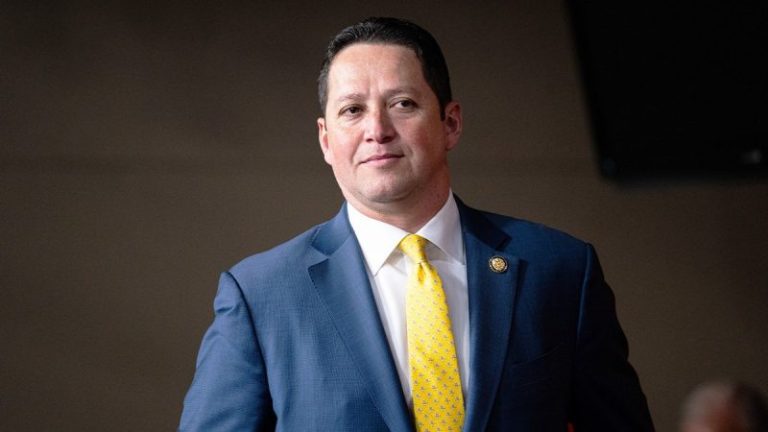
A bipartisan group of House lawmakers has introduced legislation aimed at keeping COVID-19 pandemic-era Obamacare subsidies alive for another two years.

Reps. Brian Fitzpatrick, R-Pa., and Tom Suozzi, D-N.Y., co-chairs of the Problem Solvers Caucus, have told reporters for weeks that they are working on such a measure as Capitol Hill scrambles to avert skyrocketing health insurance costs for millions of Americans beginning next year.

Democrats in Congress voted twice during the pandemic to expand the availability of premium tax credits for Obamacare, also called the Affordable Care Act (ACA), to make sure more Americans had access to healthcare coverage.

Those enhanced subsidies are set to expire at the end of this year.

A majority of House Republicans have signaled they are not open to extending them, at least not without significant reforms. Conservatives in particular have panned the enhanced subsidies as a COVID-era relic that benefited insurance companies rather than Americans themselves.

But some GOP lawmakers have joined Democrats in warning that failing to extend them at least temporarily at this point will result in millions of Americans seeing their healthcare premiums skyrocket while Congress does nothing to help.

House Republicans are now largely looking to Speaker Mike Johnson, R-La., and their leaders for the next move.

Johnson has said he intends to hold a vote on some kind of healthcare package before the end of this year, while panning Obamacare as a long-broken system badly in need of reforms.

One House GOP source told Fox News Digital that they expect Johnson to lay out a roadmap on healthcare at Republican lawmakers’ weekly conference meeting on Wednesday morning.

The bipartisan bill released Tuesday is being pushed by a group of four Democrats and four Republicans — Fitzpatrick, Suozzi, along with Reps. Don Bacon, R-Neb., Rob Bresnahan, R-Pa., Nicole Malliotakis, R-N.Y., Jared Golden, D-Maine, Don Davis, D-N.C., and Marie Gluesenkamp Perez, D-Wash.

Fitzpatrick called the legislation ‘a practical, people-first fix that protects families now, while preserving the space to keep working toward a stronger, smarter, more affordable healthcare system.’

‘When the stakes are this high, responsible governance means securing 80% of what families need today rather than risking 100% of nothing tomorrow,’ he said in a statement.

In addition to extending the enhanced Obamacare subsidies for two years, the bill also ‘stops unauthorized plan and subsidy changes by requiring consent and prompt notification before any modifications take effect,’ according to a press release.

It would also rein in pharmacy benefit manager (PBM) profits and expand access to health savings accounts (HSAs) — two reforms that other rank-and-file House Republicans have been advocating for.

But it’s not clear yet if House GOP leaders would put the bill on the floor for a chamber-wide vote, nor if it has the backing of their Democratic counterparts.

Still, there are ways to force a vote on legislation without leadership’s approval. One of those methods is called a discharge petition, which requires signatures from a majority of House lawmakers to override leaders’ wishes to vote on a given bill.

Fox News Digital asked Fitzpatrick last week if a discharge petition could be filed, but he did not give a direct answer, instead saying that the bill would be released imminently.

Bacon told Fox News Digital on Tuesday that a discharge petition is a realistic possibility but cautioned, ‘It would be wiser to see if we have 60 votes in the Senate first.’

The plan is one of several put forward by House Republicans to deal with the looming healthcare cliff.

Republican Study Committee Chairman August Pfluger, R-Texas, introduced legislation last week to allow states to opt out of Obamacare altogether while radically expanding the availability of HSAs.

And late last week, a bipartisan group of House lawmakers introduced a plan to extend the enhanced Obamacare subsidies — with income caps and extra guardrails against fraud — for a year.

The Senate, meanwhile, is expected to vote this week on Democrat-led legislation to extend the enhanced subsidies, though it’s likely to fail. It’s not yet clear if Senate Republicans will put up their own counter-proposal.

This post appeared first on FOX NEWS
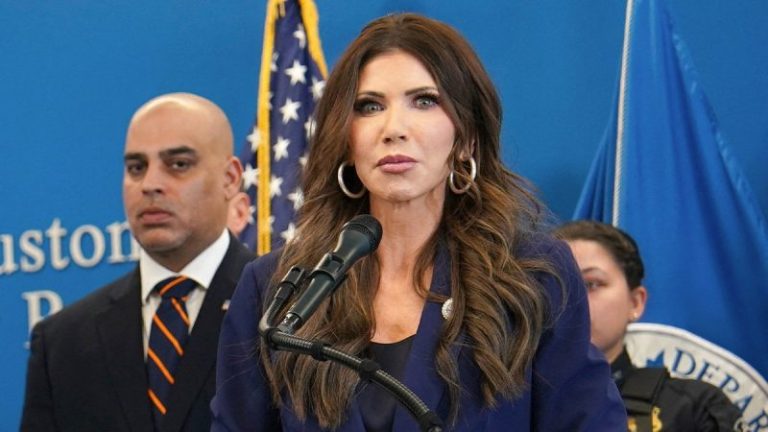
Liz Truss, the former British prime minister who staked her brief tenure on tax cuts and deregulation, is warning Americans about New York City Mayor-elect Zohran Mamdani’s socialist agenda will mirror the high-tax, high-regulation model she fought in the U.K.

‘I’ve seen what’s happened with Mamdani being elected,’ former U.K. Prime Minister Liz Truss told Fox News Digital in an exclusive interview. ‘We have characters like that in Britain. They are never satisfied. They keep putting up taxes. They keep putting up more regulations. We have seen in Britain appalling development of antisemitism. That’s what I fear for New York.’

Mamdani plans to pay for his ambitious campaign promises, including fast and free buses, universal childcare and city-run grocery stores, by raising taxes on corporations and the top 1% of New Yorkers. As the 34-year-old mayor-elect prepares to move into Gracie Mansion, critics have compared his agenda to European-style social welfare programs.

The British conservative served just 49 days as prime minister of the U.K. in 2022 before resigning amid market turmoil over her administration’s dramatic attempt to implement a pro-growth economic agenda. Now that the dust has settled, Truss has launched a private club for ‘pro-growth leaders,’ the Leconfield, and a YouTube show, ‘The Liz Truss Show.’

‘The Leconfield is about economic growth,’ Truss said. ‘It’s about prosperity. It’s about building that network of senior business executives, entrepreneurs, political leaders to create new opportunities in Britain and around the world. We need to see economic growth. That is the most important thing.’

Truss said her new members-only club will unite business leaders in Mayfair in co-working spaces and executive suites. The Times reported that Truss has requested £500,000 from each of the 700 Leconfield founding members for the lifetime membership.

‘This will bring together people in real-life to exchange those ideas, but it will also provide a space in London where people can do business. Currently, people end up in hotel lobbies. They are trying to work in clubs that maybe ban laptops or mobile phones. This will have boardrooms, executive space where people can get business done,’ Truss said.

According to a 2025 analysis by Henley & Partners, a global investment-migration consultancy, the United Kingdom is losing millionaires and billionaires faster than any country in the world.

‘Our taxes are too high,’ Truss explained. ‘Our regulation is too high, and our energy prices are also sky-high. This has meant people leaving, businesses leaving. It’s difficult to build new buildings because of all the regulations, and even though we’re sitting on masses of oil and gas, fracking is banned, so our energy prices are high, and it’s not surprising that that makes us uncompetitive.’

While Truss briefly lifted a ban on fracking in the U.K. in 2022 in an attempt to unleash energy production, her successor, Rishi Sunak, reinstated the moratorium that ended support for new fracking projects.

Like Truss, President Donald Trump has moved to reverse key Biden-era climate regulations as part of his key campaign promise to ‘unleash American energy,’ signing the One Big Beautiful Bill Act in July, which includes rollbacks on clean-energy incentives and repeals green energy mandates.

As Trump’s sweeping second-term agenda reshapes U.S. and global markets, his reciprocal and retaliatory tariffs have pushed some countries to reopen trade talks amid heightened market tensions.

Asked about Trump using tariffs to pressure the U.K. and the rest of Europe to pay more for certain goods, including U.S. medicine, Truss offered a surprisingly complimentary view of his strategy.

‘I was trade secretary in Britain, and I signed 60 trade deals as trade secretary, and I know that in order to get deals done you have to negotiate and you have to use leverage, and it’s exactly what I did as trade secretary, so I know that is how you get the deals done,’ Truss told Fox News Digital.

Her stance is a sharp departure from Prime Minister Keir Starmer, who has urged Trump to scale back tariff measures that could hurt the British economy.

Truss told Fox News Digital that her new YouTube channel, ‘The Liz Truss Show,’ will be a ‘free speech’ platform for exploring British and Western politics outside the mainstream media bubble.

Mamdani’s transition team did not immediately respond to Fox News Digital’s request for comment. 

This post appeared first on FOX NEWS

President Donald Trump will be deployed on the campaign trail next year ahead of the 2026 midterm elections, White House chief of staff Susie Wiles indicated during an appearance on ‘The Mom VIEW.’

Wiles said that ‘so many of those low-propensity voters are Trump voters,’ and that she had not ‘quite broken it to him yet, but he’s going to campaign like it’s 2024 again,’ for the individuals he assists.

While Trump does not help everyone, ‘for those he does, he’s a difference maker,’ she said, adding that the president is ‘a turnout machine.’

‘The president started raising money for the midterms the day after the election. And he’s sitting on a huge war chest to help these people,’ she said, noting that ‘he’ll use it.’

Trump took office earlier this year after Republicans in 2024 clinched a trifecta, winning the White House back, maintaining their House majority and taking back control of the Senate.

But the GOP’s political power will be on the line in 2026 since Republicans could potentially lose their majority in one or both chambers.

In the 2018 midterm elections during Trump’s first term, Republicans expanded their majority in the Senate but lost their House majority.

This post appeared first on FOX NEWS
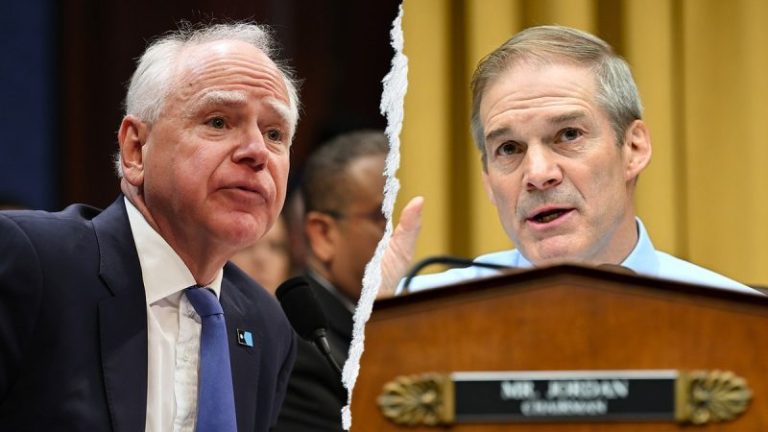
A biopic about Brazil’s jailed former president Jair Bolsonaro is in production, his son Carlos has confirmed.

In a post shared on X after his brother, Flavio, entered the country’s 2026 presidential race, Carlos lavished praise on American actor Jim Caviezel, who stars as the ex-president in the film.

‘Jim Caviezel, thank you for everything,’ Carlos wrote, describing the ‘Passion of the Christ’ actor as a figure whose legacy would be ‘admired by good people and envied by those who seek destruction.’

Carlos added that working with Caviezel had given him ‘one of the greatest gifts’ of his life, before closing with, ‘God, Jesus and Freedom.’

Caviezel has been linked to far-right conspiracy circles in the U.S. and has drawn scrutiny over the political messaging in some of his roles.

He also famously starred as Jesus in Mel Gibson’s ‘The Passion of the Christ’ and ‘The Sound of Freedom.’

According to The Guardian, the biopic, ‘Dark Horse,’ presents a heroic vision of Jair Bolsonaro and is based on Bolsonaro’s successful 2018 campaign for the presidency.

It is directed by Cyrus Nowrasteh and written by former Bolsonaro Culture Secretary Mário Frias.

Jair Bolsonaro remains in prison after receiving a 27-year sentence for attempting to overturn the 2022 election results.

Authorities said he orchestrated a plot to invalidate President Luiz Inácio Lula da Silva’s victory, leading to his imprisonment in September.

In addition to his sentence, a separate ruling has barred him from holding office until 2030, effectively ending his political career.

From prison, the former president issued a rare public endorsement naming Flávio as his preferred successor.

According to The Associated Press, Flávio, 44, has confirmed through his Senate office that he will run in the October 2026 presidential election against the candidate of the Liberal Party.

Flávio, who is the eldest of the brothers, described his decision to run as ‘irreversible,’ setting up a direct challenge to President Lula, who is seeking a fourth nonconsecutive term.

‘It is with great responsibility that I confirm the decision of Brazil’s greatest political and moral leader, Jair Messias Bolsonaro, to entrust me with the mission of continuing our national project,’ Flávio wrote on X.

His office also confirmed he has visited his father in prison.

Production on ‘Dark Horse’ is expected to continue into 2026, with filming planned in both Brazil and Mexico.

This post appeared first on FOX NEWS

Senate Republicans have finally landed on a plan to tackle expiring Obamacare subsidies to counter Senate Democrats, but both are likely to fail in a vote set for later this week. 

Senate Majority Leader John Thune, R-S.D., announced Tuesday that Republicans had coalesced around a proposal from Sens. Bill Cassidy, R-La., who chairs the Senate health panel, and Mike Crapo, R-Idaho, who chairs the Senate Finance Committee, to counter Democrats’ legislation. 

The Senate is set to vote on the dueling proposals on Thursday. 

Cassidy and Crapo’s plan was given the thumbs up by the majority of Republicans during the conference’s closed-door meeting Tuesday afternoon, Thune said. 

Their proposal, which was unveiled Monday night but has been in the works for weeks, would abandon the enhanced premium subsidies in favor of health savings accounts (HSAs), funneling the money that has gone directly to insurers through the program to consumers instead.

Thune argued that Senate Democrats’ plan, which was unveiled by Senate Minority Leader Chuck Schumer, D-N.Y., last week and would extend the subsidies for three years, would do little to curb the cost of healthcare in the country, and instead benefit affluent Americans and insurance companies. 

‘This program desperately needs to be reformed,’ Thune said. ‘The Democrats have decided we’re not going to do anything to reform it. And so we’ll see where the votes are on Thursday. But we will have an alternative that we will put up that reflects the views of the Republicans here in the United States Senate about how to make health insurance more affordable in this country, how to ensure that it’s not the insurance companies that are getting enriched, that it’s actually benefiting the patient.’

Republicans’ decision comes as more and more proposals were pitched among their ranks, reaching nearly half a dozen plans on the table for lawmakers to choose from. 

Cassidy and Crapo’s plan would seed HSAs with $1,000 for people ages 18 to 49 and $1,500 for those 50 to 65 for people earning up to 700% of the poverty level. In order to get the pre-funded HSA, people would have to buy a bronze or catastrophic plan on an Obamacare exchange.

The bill also includes provisions reducing federal Medicaid funding to states that cover illegal immigrants, requirements that states verify citizenship or eligible immigration status before someone can get Medicaid, a ban on federal Medicaid funding for gender transition services and nixing those services from ‘essential health benefits’ for ACA exchange plans, and inclusion of Hyde Amendment provisions to prevent taxpayer dollars from funding abortions through the new HSAs.

Both plans are likely to fail, however, given that Senate Democrats have rejected doing away with the subsidies in favor of HSAs, and Republicans contend that reforms to the credits — like income caps and more stringent enforcement on taxpayer dollars funding abortions — are must-haves for their support. 

Schumer argued that the ‘only realist path’ to preventing premiums from hiking ahead of the end of the year deadline to extend the subsidies would be for Republicans to cross the aisle and vote for their plan. He charged that the GOP’s plan was a ‘phony proposal’ that did nothing to extend the sunsetting subsidies. 

‘That’s what’s driving the price up, and they’re doing nothing about it,’ Schumer said. ‘The bill not only fails to extend the tax credits, it increases costs, adds tons of new abortion restrictions for women, expands junk fees, and permanently funds the cost-sharing reductions. Their bill is junk insurance. It’s been repudiated in the past.’

Both sides face a math problem in mustering bipartisan support for their respective proposals. And it’s unlikely that lawmakers break ranks from their party’s position, meaning both bills are doomed to fail. For some, the debate has devolved into a finger-pointing contest on which side was actually serious about addressing the growing healthcare affordability issue. 

‘It’s not a realistic plan that the Democrats have,’ Sen. Markwayne Mullin, R-Okla., said. ‘If the Democrats were actually coming to the table, I’d say, yes, we need to, but what they’re doing isn’t realistic.’ 

Before Thune’s announcement, Sen. Chris Murphy, D-Conn., said that Republicans were in charge, not Democrats. 

‘They’re in charge of putting together the votes to pass something,’ Murphy said. ‘And so far, they have done zero outreach on this issue of any significance to Democrats, as far as I can tell.’ 

This post appeared first on FOX NEWS

Ukrainian President Volodymyr Zelenskyy said Monday that Kyiv is nearly ready to present a refined peace plan to the United States after days of talks with European partners, even as he maintains that Ukraine cannot give up any territory to Russia.

Zelenskyy said he reviewed the results of negotiations held in London with European national security advisors and that Ukraine and its European partners had further developed their components of potential steps toward ending the war. He said Kyiv is prepared to share the updated documents with Washington and is in ‘constant contact’ with the United States as the process moves forward.

‘We are working very actively on all components of potential steps toward ending the war,’  Zelenskyy posted on X. ‘The Ukrainian and European components are now more developed, and we are ready to present them to our partners in the U.S. Together with the American side, we expect to swiftly make the potential steps as doable as possible.’ 

‘We are committed to a real peace and remain in constant contact with the United States,’ he wrote. ‘And, as our partners in the negotiating teams rightly note, everything depends on whether Russia is ready to take effective steps to stop the bloodshed and prevent the war from reigniting. In the near future, we will be ready to send the refined documents to the United States.’

The update came one day after Zelenskyy insisted his country cannot cede territory to Russia, complicating earlier peace proposals. 

‘Under our laws, under international law — and under moral law — we have no right to give anything away,’ Zelenskyy told reporters Monday, per The Washington Post. ‘That is what we are fighting for.’

Zelenskyy on Tuesday is in Brussels to meet with NATO Secretary-General Mark Rutte and European Commission President Ursula von der Leyen, after meeting in London with British, French and German leaders.

The Ukrainian leader is under growing pressure from the U.S. to accept a framework to end the war after close to four years of fighting with Russia.

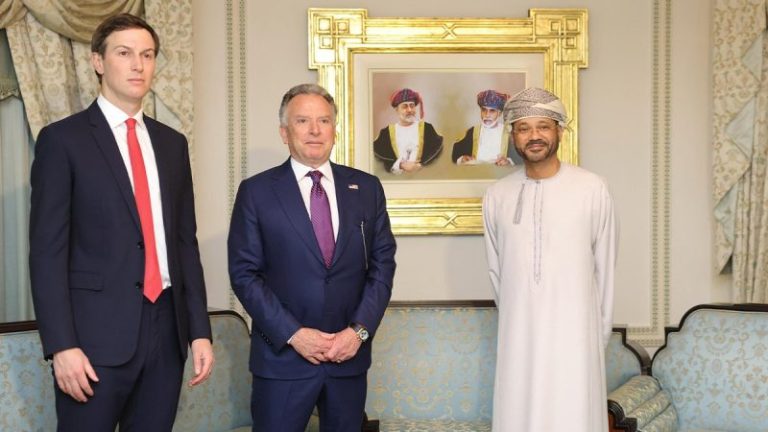
An initial draft of the 28-point plan, brokered by White House envoy Steve Witkoff and President Donald Trump’s son-in-law Jared Kushner, spooked Ukrainian and European leaders who said it was too deferential to Russia’s demands. Ukrainian officials met with Witkoff and whittled the plan down. 

Zelenskyy told reporters that in European talks the ‘obvious anti-Ukrainian points were removed.’ 

Trump on Sunday accused Zelenskyy of not keeping up with the latest on peace talks.

‘I’m a little bit disappointed that President Zelenskyy hasn’t yet read the proposal, that was as of a few hours ago,’ Trump told reporters at the Kennedy Center in D.C. Sunday. ‘His people love it, but he hasn’t.’

‘Russia, I guess, would rather have the whole country when you think of it, but Russia is, I believe, fine with it, but I’m not sure that Zelenskyy is fine with it,’ Trump added.

Leaked versions of the initial deal had offered Russia swaths of Ukrainian territory, both lands it has occupied throughout the war and the Donbas region, which it has yet to seize in full.

It offered Ukraine no path to NATO but Europe and U.S.-backed security guarantees that were not definitive. 

Ukraine views NATO membership as essential to preventing a Russian attack — seeking a path to NATO is enshrined in its constitution. 

Ukraine is entering one of the hardest stretches of the nearly four-year war, giving new urgency to the negotiations. Russian troops are pushing forward in the east as Kyiv struggles with shortages of ammunition and manpower. Meanwhile, Moscow’s continued strikes on Ukraine’s power grid have left the country facing rolling blackouts and widespread outages at the start of the winter months. 

Zelenskyy said in the past week alone, Russia launched more than 1,600 drones, roughly 1,200 guided aerial bombs, and nearly 70 missiles of various types against Ukraine.

And talks are heating up in tandem with a brewing scandal in Ukraine that has already pushed out Andrii Yermak, Zelenskyy’s former chief of staff and powerful gatekeeper who was leading negotiations, along with his justice and energy ministers. 

Rustem Umerov, the secretary of Ukraine’s National Security and Defense Council, has taken over negotiations, but is rumored to be caught up in the corruption investigation. 

Fox News’ Ashley Carnahan contributed to this report. 

This post appeared first on FOX NEWS
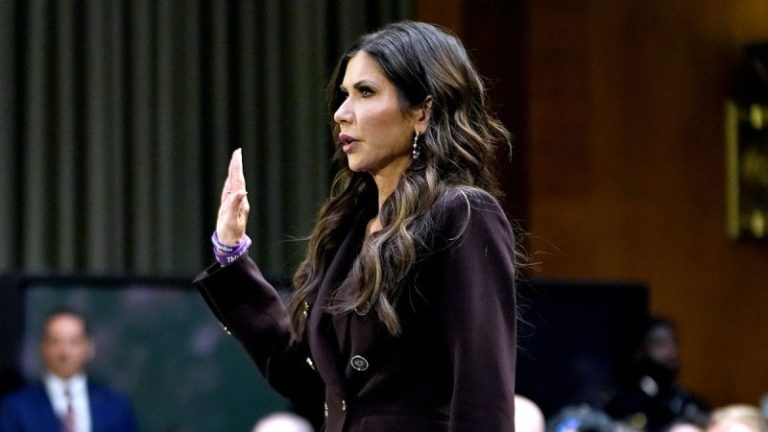
Beijing escalated its war of words with Tokyo after Japan said Chinese fighter jets aimed a fire-control radar at Japanese F-15s flying near Okinawa, an action Tokyo called ‘dangerous’ and ‘extremely regrettable.’

Chinese Foreign Minister Wang Yi told his German counterpart Johann Wadephul in Beijing that ‘Japan is threatening China militarily,’ a stance he called ‘completely unacceptable,’ after the radar incident, Reuters reported.

Wang accused Japanese Prime Minister Sanae Takaichi of ‘trying to exploit the Taiwan question — the very territory Japan colonized for half a century, committing countless crimes against the Chinese people — to provoke trouble and threaten China militarily. This is completely unacceptable,’ Wang said, according to China’s official Xinhua News Agency. He added that Japan, as a World War II ‘defeated nation,’ should act with greater caution.

China expert Gordon Chang told Fox News Digital, ‘China, with Saturday’s radar-lock incidents against Japan and other belligerent acts recently, looks like it wants to start a war. In any event, these incidents could easily spiral into war, especially because China cannot act constructively or deescalate.’

Japanese officials say the confrontation unfolded Dec. 6, when Chinese J-15 fighter jets operating from the aircraft carrier Liaoning twice aimed radar at Japanese F-15s over international waters near Japan’s Okinawa islands.

‘These radar illuminations are a dangerous act that goes beyond what is necessary for the safe flight of aircraft,’ Takaichi told reporters, adding that Japan had lodged a protest with China and calling the incident ‘extremely regrettable,’ Reuters reported.

Japan’s government later said the Self-Defense Force fighters ‘were maintaining a safe distance during their mission’ and denied China’s accusation that its jets obstructed Chinese operations, according to comments by Chief Cabinet Secretary Minoru Kihara, according to The Associated Press.

The radar clash came on the heels of remarks by Takaichi that have already put relations on edge. In early November, she told parliament that a Chinese attack on Taiwan could amount to a ‘survival-threatening situation’ for Japan and potentially trigger a military response under Japan’s 2015 security laws, Reuters reported. Beijing condemned those comments as ‘egregious,’ accused Tokyo of severe interference in its internal affairs and warned of ‘serious consequences’ if they were not retracted.

Chinese officials and state media have since portrayed Takaichi as hyping up an external threat to justify Japan’s military buildup and closer alignment with Taiwan. In parallel, Chinese spokespeople have accused Japan of ‘hyping up’ the radar incident itself and ‘deliberately making a false accusation’ to build tension, according to official statements carried by People’s Daily and other Chinese outlets.

Chang said, ‘China has not been able to get Prime Minister Takaichi to back down, so its choices are to accept its humiliation or ramp up the crisis. It will ramp up. China is now proving Takaichi right: Beijing is creating a ‘survival-threatening situation’ for Japan.’

This post appeared first on FOX NEWS
When the South Korean boy band/K-pop sensation BTS takes the stage in Seoul this June, ending a four-year touring hiatus, it will mark more than just a comeback — it will validate one of the shrewdest soft-power decisions in recent memory.  

In 2022, at the absolute apex of their global dominance, the group’s seven members chose to fulfill their mandatory military service rather than seek exemptions, which would almost certainly been granted. Their management company, HYBE, supported the decision. The world got a masterclass in how cultural power is created. 

The cynics predicted career suicide. Instead, BTS demonstrated that soft power isn’t built on avoiding obligations — it’s built on embracing them. When they reunite on stage, they’ll do so with enhanced credibility, having proven their success didn’t exempt them from the responsibilities of ordinary citizens. Americans remember Elvis taking a similar course at the height of his fame.  

The great thing about soft power is that, while generated by creative individuals and companies, it’s to the entire nation’s benefit. Like economic and martial power, soft power generates influence that can be used to bolster a nation’s standing. Examples of soft power abound from Britain’s cricket legacy and rock ’n’ roll ‘invasion’ of the 1960s to French and Italian cinema to America’s NBA, jazz music and Hollywood’s entertainment machine. Now, South Korea is stepping up.

Thus, it is almost tragic that while BTS was serving in the military, the ecosystem that made the band possible faces mounting scrutiny. South Korea has become expert at creating cultural phenomena that captivate the world — and equally expert at treating the architects of that success with suspicion once they achieve scale. This is a pattern South Korea cannot afford.   

South Korea’s cultural preeminence did not emerge from a government plan. It sprang from creative ambition, commercial ruthlessness, and just enough regulatory space for experimentation. The K-pop system requires massive capital investment, sophisticated global distribution and executives willing to bet nine figures on whether teenagers in Jakarta and São Paulo will stream the same songs. 

Yet, there’s a reflex in South Korean public life that treats popularity itself as evidence of wrongdoing. Bang Si-hyuk, the producer who built HYBE and shaped BTS into a global phenomenon, now faces legal scrutiny over stock transactions — the kind of corporate governance questions that seem to emerge almost inevitably once South Korean companies achieve sufficient scale.   

The particulars matter less than the pattern: bold risk-taking generates soft power, then invites investigation once it succeeds. 

Executives who might build the next BTS or international TV steaming sensation like, ‘Crash Landing on You,’ watch what happens to those who came before and recalibrate their ambition accordingly. In cultural soft power, this reflex is potentially fatal. 

South Korea’s competitors are watching. China has spent billions trying to manufacture soft power through state-directed enterprises. The PRC has largely failed — because audiences smell propaganda. South Korean free enterprise is succeeding in creating cultural exports that are simultaneously local and universal, specific enough to feel authentic in Seoul and accessible enough to travel across the globe.  

This is South Korea’s opportunity. Japan was given a similar window in the 1990s with anime and video games, but largely failed to capitalize on the trend because of governmental missteps. South Korea could easily repeat that mistake and lose the global influence that comes with serious national soft power. 

South Korea needs to recognize soft-power assets as strategic resources. France protects its luxury brands because Paris recognizes these companies project French taste globally in ways no government agency could. South Korea should ask: What institutional arrangements allow us to maintain standards while protecting our champions? 

South Korea’s cultural preeminence did not emerge from a government plan. It sprang from creative ambition, commercial ruthlessness, and just enough regulatory space for experimentation. 

BTS’s decision to fulfill their national military service obligations demonstrates what’s possible when artists, companies and national interest align voluntarily. HYBE supported that choice. But South Korea can’t count on such choices being made repeatedly if the system treats success as inherently suspect.

In June 2026, when BTS embarks on a global tour generating billions in economic impact and incalculable goodwill toward South Korea, remember this moment almost didn’t happen. The members could have sought exemptions. Instead, they chose service and came back stronger. 

But South Korea can’t count on such choices if the message to cultural entrepreneurs is that success invites scrutiny. The next generation is watching, deciding whether to aim for global impact or settle for domestic safety.

South Korea stumbled into becoming a cultural superpower. It doesn’t have to stumble out of it. But that requires recognizing that the bold, imperfect figures who build global cultural enterprises are assets to be protected, not problems to be managed. 

BTS made their choice — they bet on their country. Now, South Korea needs to decide if it’s going to bet on the people who create the next BTS, or put them under investigation instead. 

This post appeared first on FOX NEWS
On Friday, the Supreme Court announced that it would hear challenges to President Donald Trump’s executive order to end birthright citizenship. The Fourteenth Amendment automatically makes all babies born on American territory citizens. Trump’s effort to overturn the traditional reading of the constitutional text and history should not succeed.

Ratified in 1868, the Fourteenth Amendment provided a constitutional definition of citizenship for the first time. It declares that ‘all persons born or naturalized in the United States, and subject to the jurisdiction thereof, are citizens of the United States and of the state wherein they reside.’ In antebellum America, states granted citizenship: they all followed the British rule of jus soli (citizenship determined by place of birth) rather than the European rule of jus sanguinis (citizenship determined by parental lineage). As the 18th-century English jurist William Blackstone explained: ‘the children of aliens, born here in England, are, generally speaking, natural-born subjects, and entitled to all the privileges of such.’ Upon independence, the American states incorporated the British rule into their own laws.

Congress did not draft the Fourteenth Amendment to change this practice, but to affirm it in the face of the most grievous travesty in American constitutional history: slavery. In Dred Scott v. Sandford (1857), Chief Justice Roger Taney concluded that slaves — even those born in the United States — could never become American citizens. According to Taney, the Founders believed that Black Americans could never become equal, even though the Constitution did not exclude them from citizenship nor prevent Congress or the states from protecting their rights.

The Fourteenth Amendment directly overruled Dred Scott. It forever prevents the government from depriving any ethnic, religious or political group of citizenship.

The only way to avoid this clear reading of the constitutional text is to misread the phrase ‘subject to the jurisdiction thereof.’ Claremont Institute scholars (many of whom I count as friends) laid the intellectual foundations for the Trump executive order; they argue that this phrase created an exception to jus soli. Claremont scholars Edward Erler and John Eastman argue that ‘subject to the jurisdiction thereof’ requires that a citizen not only be born on American territory, but that his parents also be legally present. Because aliens owe allegiance to another nation, they maintain, they are not ‘subject to the jurisdiction’ of the United States.

The Claremont Institute reading implausibly holds that the Reconstruction Congress simultaneously narrowed citizenship for aliens even as it dramatically expanded citizenship for freed slaves. There is little reason to understand Reconstruction — which was responsible for the greatest expansion of constitutional rights since the Bill of Rights — in this way.

This argument also misreads the text of ‘subject to the jurisdiction thereof.’ Everyone on our territory, even aliens, falls under the jurisdiction of the United States. Imagine reading the rule differently. If aliens did not fall within our jurisdiction while on our territory, they could violate the law and claim that the government had no jurisdiction to arrest, try and punish them.

Critics, however, respond that ‘subject to the jurisdiction thereof’ must refer to citizen parents or risk being redundant when being born on U.S. territory. But at the time of the Fourteenth Amendment’s ratification, domestic and international law recognized that narrow categories of people could be within American territory but not under its laws. Foreign diplomats and enemy soldiers occupying U.S. territory, for example, are immune from our domestic laws even when present on our soil. A third important category demonstrates that ‘subject to the jurisdiction thereof’ was no mere surplusage. At the time of Reconstruction, American Indians residing on tribal lands were not considered subject to U.S. jurisdiction. Once the federal government reduced tribal sovereignty in the late 19th and early 20th centuries, it extended birthright citizenship to Indians in 1924.

The Fourteenth Amendment’s drafting supports this straightforward reading. The 1866 Civil Rights Act, passed just two years before ratification of the Fourteenth Amendment, extended birthright citizenship to those born in the U.S. except those ‘subject to any foreign power’ and ‘Indians not taxed.’ The Reconstruction Congress passed the Fourteenth Amendment because of uncertainty over federal power to enact the 1866 Act. If the Amendment’s drafters had wanted ‘jurisdiction’ to exclude children of aliens, they could have simply borrowed the exact language from the 1866 Act to extend citizenship only to those born to parents with no ‘allegiance to a foreign power.’

We have few records of the Fourteenth Amendment’s ratification debates in state legislatures, which is why constitutional practice and common-law history are of such central importance. But the few instances in which Congress addressed the issue appear to support birthright citizenship. When the Fourteenth Amendment came to the floor, for example, congressional critics recognized the broad sweep of the birthright citizenship language. Pennsylvania Sen. Edgar Cowan asked supporters of the amendment: ‘Is the child of the Chinese immigrant in California a citizen? Is the child born of a Gypsy born in Pennsylvania a citizen?’ California Sen. John Conness responded in the affirmative. Conness would lose re-election due to anti-Chinese sentiment in California.

Courts have never questioned this understanding of the Fourteenth Amendment. In United States v. Wong Kim Ark (1898), the Supreme Court upheld the citizenship of a child born in San Francisco to Chinese parents. The Chinese Exclusion Acts barred the parents from citizenship, but the government could not deny citizenship to the child. The Court declared that ‘the Fourteenth Amendment affirms the ancient and fundamental rule of citizenship by birth within the territory, in the allegiance and protection of the country, including all children here born of resident aliens.’ The Court rejected the claim that aliens are not within ‘the jurisdiction’ of the United States. Critics respond that Wong Kim Ark does not apply to illegal aliens because the parents were in the United States legally. But at the time, the federal government had yet to pass comprehensive immigration laws that distinguished between legal and illegal aliens. The parents’ legal status made no difference.

President Trump is entitled to ask the Court to overturn Wong Kim Ark. But his administration must persuade the justices to disregard the plain text of the Constitution, the weight of the historical evidence from the time of the Fourteenth Amendment’s ratification and more than 140 years of unbroken government practice and judicial interpretation. 

A conservative, originalist Supreme Court is unlikely to reject the traditional American understanding of citizenship held from the time of the Founding through Reconstruction to today.

This post appeared first on FOX NEWS
Republican Rep. Thomas Massie of Kentucky announced on Tuesday that he had introduced a measure to remove the U.S. from the North Atlantic Treaty Organization, arguing that the decades-old alliance is obsolete, has been costly for American taxpayers and puts the nation at risk of engagement in foreign wars.

‘NATO is a Cold War relic. The United States should withdraw from NATO and use that money to defend our country, not socialist countries. Today, I introduced HR 6508 to end our NATO membership,’ Massie said in a post on X.

GOP Rep. Anna Paulina Luna of Florida shared Massie’s post and wrote, ‘Co-sponsoring this.’

‘NATO was created to counter the Soviet Union, which collapsed over thirty years ago. Since then, U.S. participation has cost taxpayers trillions of dollars and continues to risk U.S. involvement in foreign wars. Our Constitution did not authorize permanent foreign entanglements, something our Founding Fathers explicitly warned us against. America should not be the world’s security blanket—especially when wealthy countries refuse to pay for their own defense,’ Massie said, according to a press release.

Republican Sen. Mike Lee of Utah introduced the ‘Not a Trusted Organization Act,’ or ‘NATO Act’ in the Senate earlier this year — Massie is now fielding companion legislation in the House.

Article 13 of the North Atlantic Treaty stipulates that ‘After the Treaty has been in force for twenty years, any Party may cease to be a Party one year after its notice of denunciation has been given to the Government of the United States of America, which will inform the Governments of the other Parties of the deposit of each notice of denunciation.’

The proposal advanced by Lee and Massie would use this escape hatch to extract the U.S. from the longstanding NATO alliance.

‘Consistent with Article 13 of the North Atlantic Treaty, done at Washington April 4, 1949, not later than 30 days after the date of the enactment of this Act, the President shall give notice of denunciation of the North Atlantic Treaty for purposes of withdrawing the United States from the North Atlantic Treaty Organization,’ the proposal declares.

‘No funds authorized to be appropriated, appropriated, or otherwise made available by any Act may be used to fund, directly or indirectly, United States contributions to the common-funded budgets of the North Atlantic Treaty Organization, including the civil budget, the military budget, or the Security Investment Program,’ the text of the measure stipulates.

This post appeared first on FOX NEWS