Category

Latest News

Category

Tax season already brings stress. In 2026, it brings added confusion. Changes to tax filing programs and the discontinuation of the free government-run filing system have left many taxpayers unsure about what is legitimate. That uncertainty has created an opening for scammers who move quickly when people hesitate. 

‘Every tax season we see scammers ramp up their activity, and with likely confusion now that the free government-run filing system is discontinued, we’re sure scammers will take advantage,’ said Lynette Owens, vice president of consumer marketing and education at Trend Micro.

In past years, scammers have leaned heavily on impersonation. Fake IRS emails promising refunds, text messages claiming accounts have been flagged under new rules and fraudulent tax help offers that promise faster returns continue to circulate, Owens said. As February begins, many taxpayers feel pressure to file quickly. That urgency creates the perfect conditions for fraud.

Get my best tech tips, urgent security alerts, and exclusive deals delivered straight to your inbox. Plus, you’ll get instant access to my Ultimate Scam Survival Guide — free when you join my CYBERGUY.COM newsletter.

Why scammers thrive when tax rules feel unclear

Uncertainty is one of the most effective tools scammers have. When taxpayers are unsure how filing rules work or whether a message is legitimate, criminals step in with communications designed to sound official and helpful. The goal is not clarity. It is speed.

‘Scammers aim to create a heightened sense of anxiety among the people they are targeting,’ Owens said. ‘When taxpayers don’t feel confident about what’s real, whether it’s new filing options, eligibility rules or program updates, criminals step in with messages that sound official and helpful.’ They often pose as the IRS, a tax prep service, or even government support. Once trust is established, the message quickly turns transactional, asking for clicks, personal data or payments.

The most common IRS impersonation scams right now

While the delivery methods change, the core message rarely does. Something is wrong, and it must be fixed immediately. 

‘The most common tactic we’re seeing is fake refund or account alert messages that claim something is wrong and demand immediate action,’ Owens said. Other scams go a step further. Some direct victims to fake IRS login pages designed to steal credentials.

Others promote fraudulent tax assistance, presenting themselves as government-backed or low-cost help in order to collect personal and financial information. These scams arrive by email, text message, phone calls and fake websites. Many are polished enough to appear legitimate at first glance.

Why phrases like new rules and urgent issues work

Language plays a central role in tax scams. Phrases such as new rules or urgent account issues are designed to trigger panic before logic has a chance to catch up. They suggest the recipient has missed something important or risks losing money.

‘Those phrases work because they can trigger panic and urgency, and people are more likely to react emotionally than logically,’ Owens said. ‘New rules suggest you may have missed something important, and an urgent account issue creates fear of penalties, delays or losing a refund.’ 

The safest response is to pause. Do not click links, reply to messages or call phone numbers included in the alert. Instead, go directly to a trusted source like IRS.gov using your own browser.

A real tax scam message that looks legitimate

Many tax scams follow a familiar structure. A common example reads: ‘IRS Notice: Your tax refund is on hold due to a filing discrepancy under updated 2026 rules. Verify your identity now to avoid delays.’ 

At first glance, messages like this may appear credible. They often include official-looking logos, reference numbers and links that resemble real government pages.

‘It may include a convincing IRS-style logo, a case number and a link that looks legitimate at a glance,’ Owens said. ‘But the red flags are usually the same.’ The message pressures immediate action, directs users to non-government websites, and requests sensitive information such as Social Security numbers, bank details or login credentials.

What happens after someone falls for a tax scam?

The damage rarely ends with a single click. 

‘The most serious consequences are identity theft and financial loss,’ Owens said. ‘Once scammers have personal information, they can file fraudulent tax returns, steal refunds, open credit accounts and access bank funds.’

Victims often spend months working to recover lost money, repair credit damage and restore their identities.

How the IRS really communicates with taxpayers

Despite repeated warnings, many people still believe the IRS might email or text them. 

‘A legitimate tax service or the IRS won’t reach out unexpectedly by email, text or social media, and they won’t pressure you to act immediately,’ Owens said.

Scam messages often share the same warning signs. They sound urgent, include links or attachments and ask for sensitive information right away. If a message creates panic or demands fast action, that alone is reason to be skeptical. The IRS primarily communicates by official mail. Unexpected digital contact should always raise concern.

What to watch for next as scams evolve

Tax scams continue to grow more sophisticated each year. 

‘Taxpayers should watch for scams that feel more real than ever,’ Owens said. ‘That includes highly polished phishing emails, refund texts designed for quick mobile clicks, fake tax help ads and cloned websites that mimic real IRS or tax prep portals.’

The biggest mistake people still make is treating an unexpected tax message like an emergency. 

‘In tax season, speed is the scammer’s advantage,’ Owens said. ‘Taking 30 seconds to double-check the source can prevent months of financial and identity damage.’

What to do if you clicked or responded by mistake

If someone realizes too late that a message was fraudulent, fast action can limit the damage. 

‘First, stop engaging immediately,’ Owens said. ‘Don’t click links, download attachments or reply.’

Next, report the incident. Forward phishing emails to phishing@irs.gov and file a report at reportfraud.ftc.gov.

After that, monitor financial accounts closely, change passwords and consider placing a fraud alert or credit freeze if necessary.

To learn more about how to do this, go to Cyberguy.com and search ‘How to freeze your credit.’ 

Ways to stay safe during tax season

Scammers count on rushed decisions. The good news is that a few smart habits can dramatically lower your risk.

1) Slow down before responding to tax messages

Urgency is the scammer’s favorite tool. Messages that demand immediate action aim to short-circuit your judgment. 

‘Scammers rely on fear, urgency or false promises, especially during tax season,’ Owens said. ‘It’s important to slow down, verify information through official channels, and use trusted security tools.’ If a message pressures you to act fast, stop. Take a breath before doing anything else.

2) Verify filing changes through official IRS channels

Scam messages often reference new rules, updated policies or eligibility changes. That language sounds credible when filing programs shift. Always confirm changes by typing IRS.gov directly into your browser or signing in to your trusted tax provider account. Never rely on links or phone numbers included in a message.

3) Protect tax accounts with strong credentials

Tax portals hold valuable personal and financial data. Weak passwords make them easy targets. Use strong and unique passwords for every tax-related account. A password manager can help generate and store secure credentials without relying on memory.

Next, see if your email has been exposed in past breaches. Our #1 password manager (see ) pick includes a built-in breach scanner that checks whether your email address or passwords have appeared in known leaks. If you discover a match, immediately change any reused passwords and secure those accounts with new, unique credentials.

Check out the best expert-reviewed password managers of 2026 at Cyberguy.com

4) Watch for pressure tactics and refund promises

Scammers know refunds motivate quick action. Messages claiming your refund is waiting, delayed or at risk often signal fraud. Be cautious of promises like faster refunds, guaranteed results or special access to government-backed assistance. Legitimate services do not operate that way.

5) Avoid links and secure your devices with strong antivirus software 

Clicking a single link can expose login credentials or install malware. Do not click on links in unexpected tax messages. Also, use strong antivirus software to help block malicious sites and detect threats before damage occurs.

The best way to safeguard yourself from malicious links that install malware, potentially accessing your private information, is to have strong antivirus software installed on all your devices. This protection can also alert you to phishing emails and ransomware scams, keeping your personal information and digital assets safe.

Get my picks for the best 2026 antivirus protection winners for your Windows, Mac, Android & iOS devices at Cyberguy.com

6) Reduce your digital footprint

Personal data fuels tax scams. The more information criminals can find online, the easier impersonation becomes. Using a data removal service can help limit exposed personal details across data broker sites. Less data means fewer opportunities for scammers to exploit your identity.

While no service can guarantee the complete removal of your data from the internet, a data removal service is really a smart choice. They aren’t cheap, and neither is your privacy. These services do all the work for you by actively monitoring and systematically erasing your personal information from hundreds of websites. It’s what gives me peace of mind and has proven to be the most effective way to erase your personal data from the internet. By limiting the information available, you reduce the risk of scammers cross-referencing data from breaches with information they might find on the dark web, making it harder for them to target you.

Check out my top picks for data removal services and get a free scan to find out if your personal information is already out on the web by visiting Cyberguy.com

Cyberguy.com

Kurt’s key takeaways

Tax season pressure makes even cautious people vulnerable. In 2026, filing confusion adds fuel to the fire. Scammers know this and design messages to look official, urgent and helpful. Pausing, verifying and trusting official sources remains the strongest defense. When something feels rushed, it is usually for a reason.

Have you received a suspicious IRS message this tax season, and what made you question whether it was real? Let us know by writing to us at Cyberguy.com

Get my best tech tips, urgent security alerts, and exclusive deals delivered straight to your inbox. Plus, you’ll get instant access to my Ultimate Scam Survival Guide — free when you join my CYBERGUY.COM newsletter. 

Copyright 2026 CyberGuy.com.  All rights reserved.

This post appeared first on FOX NEWS

Israel and Egypt conducted a test reopening of the Rafah Crossing between Egypt and Gaza on Sunday.

Israel’s Coordinator for Government Activities in the Territories (COGAT), which oversees humanitarian and civil efforts in Gaza, said the crossing will be open to the public starting Monday morning, but only in a limited capacity, allowing roughly 150 people per day to cross.

Those headed to the crossing will be picked up by buses and brought in organized groups, with each of them being cleared by Israeli intelligence.

Israeli forces will provide security for the crossings in coordination with Egypt and under the supervision of the European Union mission.

Return from Egypt for Gaza residents will only be allowed for those who left Gaza during the course of the war, and only after prior security clearance by Israel.

‘The Rafah crossing has reopened for the movement of people only. Today, a pilot is underway to test and assess the operation of the crossing,’ COGAT said in a statement.

‘The movement of residents in both directions, entry and exit to and from Gaza, is expected to begin tomorrow,’ the statement continued.

Israeli Prime Minister Benjamin Netanyahu’s office said last week that Israel agreed to the ‘limited reopening’ of the crossing under President Donald Trump’s 20-point peace plan.

‘As part of President Trump’s 20-point plan, Israel has agreed to a limited reopening of the Rafah Crossing for pedestrian passage only, subject to a full Israeli inspection mechanism,’ the Office of the Prime Minister of Israel wrote.

The Prime Minister’s Office said the reopening was contingent on the return of all living hostages and what it described as a ‘100 percent effort’ by Hamas to locate and return the remains of all deceased hostages.

The remains of the final Israeli hostage, Staff Sgt. Ran Gvili, were found by Israel and returned last week.

Fox News’ Greg Norman contributed to this report.

This post appeared first on FOX NEWS
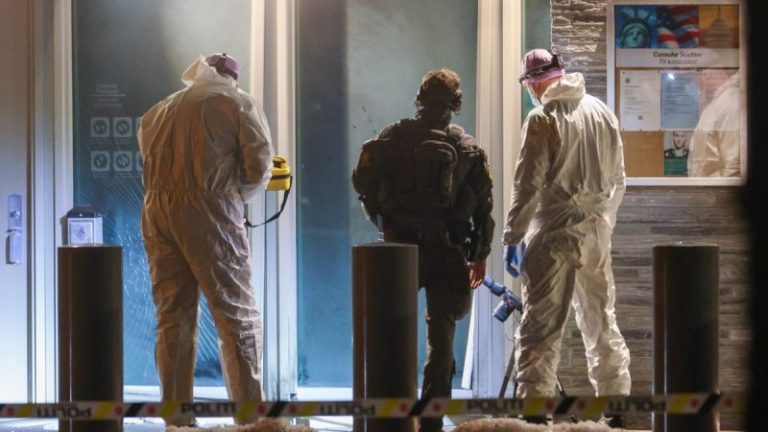
A pair of Senate Republicans are pushing their House counterparts to reject the Trump-backed shutdown deal unless it includes Homeland Security funding and election integrity legislation. 

Sens. Rick Scott, R-Fla., and Mike Lee, R-Utah, are calling on House Republicans to push back against the Senate-passed funding package, which includes bills to fund five agencies, including the Pentagon, as a partial government shutdown continues. 

They contended that the package needs to be retooled, and must include a modified version of the Safeguarding American Voter Eligibility Act, dubbed the SAVE America Act, and the Homeland Security (DHS) funding bill, which was stripped out after Senate Democrats threatened to blow up the government funding process. 

Doing so could extend what was expected to be a short-term shutdown.

Scott said congressional Democrats would ‘NEVER fund DHS’ and Immigration and Customs Enforcement (ICE). He voted against the package twice, arguing that the spending levels would further bloat the nation’s eye-popping $38 trillion national debt, and that the billions in earmarks betrayed Republicans’ previous vows of fiscal restraint.

‘If House Republicans don’t put the DHS bill back in, add the SAVE America Act and remove the wasteful earmarks, Democrats win,’ Scott said. ‘We must protect our homeland, secure our elections and end the reckless spending NOW!’

Lee also rejected the package in the Senate because of earmarks. He also agreed with Scott, and pushed for his SAVE America Act, which he introduced alongside Rep. Chip Roy, R-Texas, to be included.

‘To my friends in the House GOP: Please put DHS funding back in, then add the SAVE America Act,’ Lee wrote on X. 

The updated version of the SAVE Act would require that people present photo identification before voting, states obtain proof of citizenship in-person when people register to vote and remove noncitizens from voter rolls. 

But their demands run counter to the desire of President Donald Trump, who brokered a truce with Senate Minority Leader Chuck Schumer, D-N.Y., to strip the DHS bill following the fatal shooting of Alex Pretti during an immigration operation in Minneapolis in order to ram the funding package through the Senate.

And any changes to the deal, like including the SAVE America Act or adding the DHS bill, would send the package back to the Senate, where Schumer and his caucus would likely reject it. 

That would create a back-and-forth between the chambers that would further prolong what was meant to be a temporary shutdown.

Their demands also place House Speaker Mike Johnson, R-La., in a precarious position, given that several House Republicans want to extract concessions from congressional Democrats. Rep. Anna Paulina Luna, R-Fla., is already leading a charge to include the SAVE Act in the funding package. 

Johnson will have to shore up any resistance among his conference, given that House Minority Leader Hakeem Jeffries, D-N.Y., made clear to the speaker that any attempt to fast-track the legislation on Monday, when the House returns, would fail.

This post appeared first on FOX NEWS
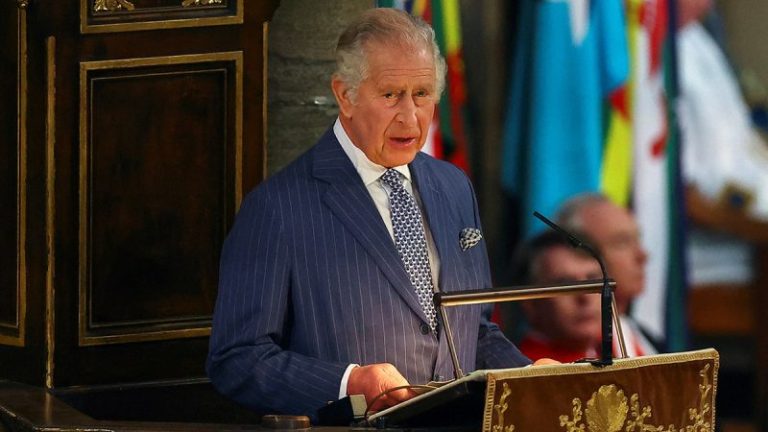
President Donald Trump has threatened legal action against author Michael Wolff and the estate of Jeffrey Epstein, insisting a newly released trove of Epstein-related files clears him of wrongdoing.

Trump was aboard Air Force One during a flight to Palm Beach, Florida, on Saturday when he responded to a reporter’s question about the more than 3 million Epstein-related records and personal emails that the Justice Department released Friday.

‘It looked like this guy, Wolff, was a writer, was conspiring with Epstein to do harm to me,’ Trump said. ‘I didn’t see it myself, but I was told by some very important people that not only does it absolve me, it’s the opposite of what people were hoping, you know, the radical left, that Wolff, who’s a third-rate writer, was conspiring with Jeffrey Epstein to hurt me, politically or otherwise, and that came through loud and clear.’

Trump said there was a high likelihood that he would sue Wolff and the Epstein estate ‘because he was conspiring with Wolff to do harm to me politically. That’s not a friend.’

In one March 2016 email between Epstein and Wolff that Fox News Digital reviewed, Wolff is encouraging Epstein to come up with an ‘immediate counter narrative’ to James Patterson’s book about him, ‘Filthy Rich: A Powerful Billionaire, the Sex Scandal that Undid Him, and All the Justice that Money Can Buy.’

‘You do need an immediate counter narrative to the book,’ Wolff writes. ‘I believe Trump offers an ideal opportunity. It’s a chance to make the story about something other than you, while, at the same time, letting you frame your own story.’

‘Also, becoming anti-Trump gives you a certain political cover which you decidedly don’t have now,’ Wolff continues.

In a February 2016 email previously released, Wolff had suggested to Epstein that the disgraced financier is the ‘bullet’ that could end Trump’s 2016 presidential campaign.

Regarding the latest Epstein document dump, Deputy Attorney General Todd Blanche told Fox News Digital on Friday that ‘in none of these communications, even when doing his best to disparage President Trump, did Epstein suggest President Trump had done anything criminal or had any inappropriate contact with any of his victims.’

Fox News Digital’s Brooke Singman contributed to this report.

This post appeared first on FOX NEWS
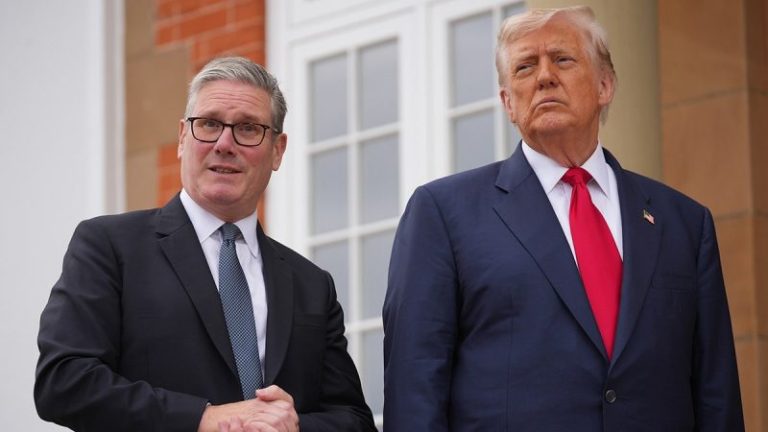
The House of Representatives is expected to vote this week on whether to refer former President Bill Clinton and former Secretary of State Hillary Clinton to the Department of Justice (DOJ) for criminal charges.

The House Rules Committee, the final gatekeeper before most legislation gets a chamber-wide vote, is slated to consider a pair of contempt of Congress resolutions targeting the Clintons at 4 p.m. ET on Monday.

Those resolutions are expected to pass through the committee along party lines, teeing them up for final passage as early as Tuesday or Wednesday.

Both Clintons were subpoenaed to appear before the House Oversight Committee to testify for Congress’ probe into Jeffrey Epstein.

Despite months of back-and-forth between the former first couple’s lawyers and Oversight staff, they never appeared on terms dictated by Committee Chairman James Comer, R-Ky., pushing him to initiate contempt proceedings.

‘This shows that no one is above the law,’ Comer told reporters after his panel advanced the resolutions last month. ‘I’m just real proud of the committee and look forward to hopefully getting the Epstein documents in very quickly and trying to get answers for the American people.’

The committee voted along bipartisan lines to move forward with contempt resolutions against the Clintons. Nine Democrats joined the Republicans to advance the resolution against Bill Clinton, while three voted to advance Hillary Clinton’s.

The majority of Democrats, however, have accused Comer of partisan motivations behind his Clinton contempt efforts.

The Clintons were two of 10 people subpoenaed by Comer as part of the panel’s investigation into Epstein. The subpoenas were issued following a bipartisan vote by an Oversight subcommittee panel during an unrelated hearing on illegal immigration.

Democrats on the committee have pointed out that Comer has not pushed to hold others who did not appear in contempt, nor has he made any threats against the DOJ for failing to produce all of its documents on Epstein by a deadline agreed to by Congress late last year. The department has produced a fraction of the documents expected so far.

Comer has said he is in contact with the DOJ about its document production.

If the vote this week is successful, the House will have recommended both the Clintons for prosecution by the DOJ.

A contempt of Congress charge is a felony misdemeanor that carries a maximum fine of $100,000 and up to a year in jail.

This post appeared first on FOX NEWS
A Russian drone strike hit a bus carrying miners in Ukraine’s Dnipropetrovsk region on Sunday, killing at least 12 people.

Ukrainian emergency services later reported the death toll had risen to 15 in one of the deadliest single attacks on energy workers since the start of the war. 

The attack Sunday came a few hours after President Volodymyr Zelenskyy announced a new round of peace talks between Ukraine and Russia had been postponed.

A spokesperson for DTEK, Ukraine’s largest private energy firm, which employed the workers, told Fox News Digital that drones had targeted the bus as it traveled ‘roughly 40 miles from the front line in central and eastern Ukraine.’

The DTEK spokesperson also described the incident as a ‘terrorist attack on civilian infrastructure.’

‘This strike was a targeted terrorist attack against civilians and another crime by Russia against critical infrastructure,’ the spokesperson added.

The bus was transporting miners after the end of their shift when it was hit by a Russian drone, the State Emergency Service of Ukraine also confirmed.

At least seven workers were injured, and a fire sparked by the impact was later extinguished by emergency crews.

‘The epicenter of one of the attacks was a company bus transporting miners from the enterprise after a shift in the Dnipropetrovsk region,’ the company also said in a statement.

Zelenskyy condemned the strike late Sunday, calling it another deliberate attack on civilians.

Earlier in the day, he announced that the next round of trilateral talks involving Ukraine, Russia and the U.S. would now take place Feb. 4-5 in Abu Dhabi, after originally being expected for Sunday.

‘Ukraine is ready for a substantive discussion, and we are interested in ensuring that the outcome brings us closer to a real and dignified end to the war,’ Zelenskyy said on X, adding that the delay had been agreed to by all sides.

The delay followed a surprise meeting Saturday in Florida between Steve Witkoff, President Donald Trump’s special envoy, and Kirill Dmitriev, the Kremlin’s special envoy and head of Russia’s sovereign wealth fund.

The talks in Abu Dhabi are now expected to include representatives from Ukraine, Russia and the U.S., according to the Associated Press.

Meanwhile, Zelenskyy warned Russia is stepping up its aerial campaign against civilian and logistical targets. 

‘Over the past week, Russia has used more than 980 attack drones, nearly 1,100 guided aerial bombs, and two missiles against Ukraine,’ he wrote on X on Sunday. ‘We are recording Russian attempts to destroy logistics and connectivity between cities and communities.’

In a statement, DTEK CEO Maxim Timchenko also explained the bus attack marked the company’s ‘single largest loss [of] life of DTEK employees since Russia’s full-scale invasion.’

‘We can already say with certainty that this was an unprovoked terrorist attack on a purely civilian target, for which there can be no justification,’ Timchenko said.

The attack marked ‘one of the darkest days in our history,’ he added. ‘DTEK teams are working with emergency services on the ground in Dnipropetrovsk region to ensure the injured, and families who have lost loved ones, get all the care and support they need. Their sacrifice will never be forgotten,’ he added.

This post appeared first on FOX NEWS

President Donald Trump said Sunday that the Trump Kennedy Center will close later this year for a two-year period to undergo renovations.

In a post on Truth Social, Trump said the complex will close on July 4, coinciding with the nation’s 250th anniversary, at which point construction will begin on what he described as a ‘new and spectacular entertainment complex.’

Trump said the decision followed a yearlong review involving contractors, arts experts and other advisers. He added that the temporary closure would allow the renovations to be completed faster and at a higher quality than if construction were carried out while performances continued.

Trump said the approach would be ‘the fastest way’ to elevate the center, adding that the planned grand reopening would surpass previous versions of the venue.

The Trump Kennedy Center did not immediately respond to Fox News Digital’s request for comment. 

Trump said the funds to carry out the renovation were already in place, though he did not provide an estimated cost or explain whether the project would be financed through federal funding, private contributions, or a combination of both.

The Trump Kennedy Center hosts hundreds of performances each year and is home to several resident companies. It was not immediately clear whether those events would be postponed or moved to other venues.

Since his return to office, Trump has undertaken a series of changes aimed at reshaping the look and feel of the White House and other iconic Washington landmarks.

In October, Trump unveiled a new monument dubbed the ‘Arc de Trump,’ which is planned to commemorate the nation’s 250th anniversary next year.

He has previously said that the large arch, a near twin of Paris’s iconic Arc de Triomphe, will welcome visitors crossing the Arlington Memorial Bridge from Arlington National Cemetery into the heart of the nation’s capital.

Trump’s taste for opulence is evident in the Oval Office, where gold accents now line the ceiling and doorway trim, reflecting his personal style.

Beyond the Oval Office, the administration has unveiled the ‘Presidential Walk of Fame,’ a series of portraits of past presidents displayed along the West Wing colonnade.

Among the largest projects underway is a 90,000-square-foot White House ballroom designed to accommodate roughly 650 seated guests. 

The administration has said the sprawling ballroom will adhere to the classical architectural style of 1600 Pennsylvania Avenue.

This post appeared first on FOX NEWS

The Israel Defense Forces (IDF) said Saturday that strikes across Gaza were carried out in response to what it described as a ceasefire violation in which eight terrorists were identified exiting underground terror infrastructure in eastern Rafah.

The IDF said it struck four commanders and additional terrorists from Hamas and Islamic Jihad, as well as a weapons storage facility. A weapons manufacturing site and two launch sites belonging to Hamas in central Gaza were also hit, the IDF said.

Gaza hospitals run by the Hamas-controlled Health Ministry said at least 30 Palestinians were reported killed in the strikes, according to The Associated Press. 

Hospital officials reported that casualties included civilians. They said the casualties included two women and six children from two different families. An airstrike also hit a police station in Gaza City, killing at least 14 and wounding others, Shifa Hospital director Mohamed Abu Selmiya said.

The strikes came a day after Israel accused Hamas of violating the ceasefire. An Israeli military official told the AP that the strikes were carried out in response to ceasefire violations but declined to comment on specific targets.

The violence unfolded one day before the Rafah border crossing with Egypt was set to reopen, a move seen as a key step in the second phase of the U.S.-brokered ceasefire. That phase includes limited border reopenings, efforts to demilitarize Gaza and discussions over postwar governance.

Israel has said the Rafah crossing has been a focal point for concerns about weapons smuggling by Hamas, and that security arrangements would accompany any reopening.

Israeli Prime Minister Benjamin Netanyahu’s office said Israel agreed to a ‘limited reopening’ of the crossing under President Donald Trump’s 20-point peace plan.

Israel has said it continues to carry out strikes across the region in response to violations of ceasefire understandings. On Friday, the Israel Defense Forces said it struck Hezbollah infrastructure and engineering vehicles in southern Lebanon, accusing the group of attempting to reestablish terror infrastructure in violation of agreements with Israel.

Meanwhile, a senior Israeli military official acknowledged that the IDF believes the Hamas-run Gaza Health Ministry’s overall death toll from the war is largely accurate, according to The Times of Israel. The military estimates around 70,000 Gazans were killed during the two-plus-year conflict triggered by Hamas’ Oct. 7, 2023, attack.

The Gaza Health Ministry currently reports 71,667 deaths, including more than 450 since the October 2025 ceasefire, though Israeli officials said the estimate does not include bodies believed to be buried under rubble.

Gaza’s Health Ministry has said 509 Palestinians have been killed by Israeli fire since the ceasefire began Oct. 10.

Israel also returned the bodies of 15 Palestinians on Thursday, days after recovering the remains of the last Israeli hostage, a Gaza Health Ministry official said, according to the AP.

The transfer marked the final hostage-detainee exchange under the first phase of the ceasefire.

The Associated Press contributed to this report.

This post appeared first on FOX NEWS
Hundreds of political prisoners in Venezuela, including opposition leaders, journalists and human rights activists, could soon be freed under an amnesty bill that the country’s acting president announced on Friday. 

The move represents the latest concession Venezuela’s acting President Delcy Rodríguez has made since the Jan. 3 capture of the country’s former leader Nicolás Maduro by the U.S.

Rodriguez told a group of justices, magistrates, ministers, military brass and other government leaders that the National Assembly, which is controlled by the ruling party, would promptly take up the bill, The Associated Press reported.

‘May this law serve to heal the wounds left by the political confrontation fueled by violence and extremism,’ she said in the pre-taped televised event, according to the AP. ‘May it serve to redirect justice in our country, and may it serve to redirect coexistence among Venezuelans.’

Rodriguez said the amnesty law would cover the ‘entire period of political violence from 1999 to the present,’ and that those incarcerated for murder, drug trafficking, corruption or human rights violations would not qualify for relief, the AP reported.

In addition to the amnesty law, Rodriguez announced the shutdown of Venezuela’s notorious El Helicoide prison in Caracas. Torture and other human rights abuses have been repeatedly documented at El Helicoide. The facility is set to be transformed into sports, social and cultural center, according to reports.

Alfredo Romero, the head of Foro Penal, Venezuela’s leading prisoner rights organization, welcomed the legislation while expressing some skepticism.

‘A General Amnesty is always welcome as long as its elements and conditions include all of civil society, without discrimination, that it does not become a blanket of impunity, and that it contributes to the dismantling of the repressive apparatus of political persecution,’ Romero said in a post on X.

Relatives of some prisoners livestreamed Rodríguez’s speech on a phone as they gathered outside Helicoide, according to the AP.

Opposition leader and Nobel Peace Prize laureate María Corina Machado said in a statement that the moves were not made ‘voluntarily, but rather in response to pressure from the US government,’ the AP reported. She also reportedly noted that people detained for their political activities have been held for anywhere between a month and 23 years.

Foro Penal estimates there are 711 political prisoners held in Venezuela, 183 of whom have been sentenced, the AP reported. The outlet identified prominent members of the opposition who were detained after the 2024 election and remain in prison as former lawmaker Freddy Superlano, Machado’s lawyer Perkins Rocha, and Juan Pablo Guanipa, a former governor and one of Machado’s closest allies.

On Friday evening, Venezuela released all known American citizens being held in the country.

‘We are pleased to confirm the release by the interim authorities of all known U.S. citizens held in Venezuela,’ the U.S. embassy wrote on X. ‘Should you have information regarding any other U.S. citizens still detained, please contact American Citizen Services.’

The Associated Press and Fox News Digital’s Louis Casiano contributed to this report.

This post appeared first on FOX NEWS
Shouts of ‘Trump act now!’ filled the sunny Saturday afternoon on New York’s Fifth Avenue as hundreds of anti-Iranian regime protestors denounced the theocratic regime in Tehran and called for the U.S. to take action against Iran.

‘We want freedom for the Iranian people,’ said protester Sarah Shahi. ‘We want this theocracy that has been taking people’s rights away to be taken out with whatever means necessary. We need help when so many people have been killed.’

The protesters gathered across the street from the residence of Iran’s ambassador to the United Nations and called for the regime in Tehran to be toppled.

The ornate 19th century limestone townhouse was originally purchased by the Iranian government under Mohammad Reza Pahlavi, the shah of Iran who ruled from 1941 until 1979. It has been the official home of the country’s UN representative ever since. Protests have been rare at the location, but at some point, overnight, someone spray-painted the words ‘terrorists’ and ‘killers’ on the front facade.

The building’s location is one of the most exclusive on the Upper East Side, diagonally across the street from the Metropolitan Museum of Art and less than a block away from the former residence of Jacqueline Kennedy Onassis.

One protester’s sign showed a photograph of current Iranian UN Ambassador Amir Saeid Iravani with the words ‘A terrorist lives here.’

‘For the people of the Islamic republic to be residing here is just so unjust,’ said Shahi. ‘But it is the closest thing we have to an embassy’ as a protest location.

Since Iran does not have diplomatic relations with the United States, the building is the only Iranian government-owned property in the country.

President Trump has ordered U.S. warships to within striking distance of Iran as he considers potential attacks against the regime’s nuclear program, oil and military targets. The buildup is in response to Iran’s continued support of terrorism and its brutal mass killings of protesters, with estimates saying as many as 30,000 people have been killed for participating in anti-regime street demonstrations.

The protesters in Manhattan are supporters of the late shah’s son, Crown Prince Reza Pahlavi, who has been speaking out for weeks against the regime as its barbaric crackdown continued. Pahlavi has been in exile for 47 years, since his father fled and the Iranian revolution ushered in the hardline religious Anti-American regime of the Mullahs.

The chants from the protesters were no less impassioned than those of their brethren who have flooded the streets of Iranian cities. Signs demanded ‘End the regime in Iran,’ and ‘Brave Iranians are fighting on the ground. The U.S. and Israel must act against a common enemy now.’ Other signs proclaimed, ‘No to the Islamic Republic regime,’ and ‘Make Iran Great Again.’

The protesters say they are waiting for President Trump to take military action against the regime so that the nation can finally taste freedom.

This post appeared first on FOX NEWS