Category

Investing

Category

Advanced Micro Devices Inc. unveiled a new chip aimed at smaller corporate data centres while outlining a longer-term roadmap designed to narrow the gap with market leader Nvidia Corp.

The move reflects a growing focus on companies that want to deploy AI workloads on local infrastructure, rather than relying entirely on large cloud providers.

At the same time, AMD signalled confidence that demand for advanced computing will remain strong, underpinned by the rapid expansion of AI applications across industries.

The announcement comes at a time when AMD is under pressure from investors to demonstrate tangible progress in a market that has been dominated by Nvidia.

Over the past two years, AI chips have become a multibillion-dollar business for AMD, lifting revenue and earnings.

Yet the company is still chasing a share of the tens of billions of dollars in annual AI hardware orders flowing to its larger rival, Nvidia.

New chip for local data centres

At the heart of the update was the MI440X, a new addition to AMD’s existing AI accelerator lineup.

The chip is designed for compact systems used in smaller corporate data centres, allowing enterprises to run AI models on premises and keep sensitive data within their own facilities.

By focusing on flexibility and local deployment, AMD is positioning the chip as a practical option for companies taking early or incremental steps into AI adoption.

Flagship systems and performance claims

Alongside the new model, AMD highlighted its higher-end MI455X accelerator.

Systems built around this chip are described as a significant advance in overall capability, reflecting improvements in performance and efficiency compared with earlier generations.

These systems form the backbone of AMD’s push into more demanding AI workloads, including training and inference at scale.

AMD also confirmed that its Helios system, which combines the MI455X with the upcoming Venice central processing unit design, is scheduled to go on sale later this year.

The system is intended to offer a tightly integrated platform for enterprise and research customers looking for end-to-end AI infrastructure.

AI demand and competitive pressure

AMD chief executive Lisa Su reinforced the view that AI-driven demand for computing power is far from peaking.

She echoed comments from other US technology leaders who argue that the rapid pace of AI innovation continues to push hardware requirements higher, rather than easing them.

AMD is widely seen as Nvidia’s closest competitor in the market for chips that power artificial intelligence software.

While the company has made progress in establishing itself as a credible alternative, the scale of Nvidia’s current lead means that each new product launch is closely scrutinised for signs of competitive momentum.

AMD also previewed its MI500 series of processors, scheduled to debut in 2027.

According to the company, the new range is expected to deliver performance gains of up to 1,000 times compared with the MI300 series introduced in 2023.

If achieved, such improvements would represent a major step change in AMD’s AI hardware capabilities.

AMD’s CES appearance also featured collaboration signals. OpenAI co-founder Greg Brockman appeared alongside Su to discuss ongoing cooperation with OpenAI and future system deployments.

The post AMD deepens enterprise AI push with new data centre chips appeared first on Invezz

Valero Energy has emerged as a key focus for investors after renewed attention on Venezuela’s oil sector following the capture of President Nicolas Maduro and US President Donald Trump’s push to encourage American oil companies to help revive the country’s battered industry.

The US-based refiner has drawn backing from both Wall Street analysts and prominent investor Michael Burry, who said he has held Valero shares since 2020 and plans to maintain that position for longer.

“Realize that many Gulf Coast refineries were purpose-built for Venezuelan heavy crude,” Burry wrote in a Monday blog post on Substack. 

“So they have been running with suboptimal feedstock for years. This will, in time, produce better margins across jet fuel, asphalt, and diesel … I have owned Valero since 2020, and I am more resolved to holding it even longer after this weekend.”

Valero’s shares rose around 10% on Monday as investors reacted to the prospect of improved feedstock economics.

Gulf Coast advantage

Valero operates 15 refineries across the United States, Canada, and the UK, with the majority of its capacity concentrated on the Texas and Louisiana Gulf Coast.

Those facilities are among the best positioned in the US to handle heavy crude grades, giving the company a structural advantage if Venezuelan supply increases.

Analysts at Tudor, Pickering & Holt said Valero is “easily the biggest potential beneficiary” of any rebound in Venezuelan oil production and exports to the US.

They added that while smaller refiners such as PBF Energy and HF Sinclair could also benefit, Valero stands out due to its scale and historical exposure to Venezuelan crude.

Matthew Blair, TPH’s head of chemicals, refiners and renewable fuels equity research, said an increase in Venezuelan output could widen the discount between heavy crudes and benchmark prices such as Brent and West Texas Intermediate, supporting refinery margins.

He pointed to Maya crude, a heavy Mexican grade that competes with Venezuelan oil, which has traded at a narrower discount to Brent in 2025 than in earlier years.

Blair said that the discount would likely widen again if Venezuelan production rises.

Uncertainty remains

US government data shows Valero imported about 70,000 barrels per day of Venezuelan crude in 2025.

Heavy crude imports from Mexico and Venezuela account for roughly 21% of the feedstock processed at Valero’s refineries, according to TPH.

No other US refiner relies as heavily on non-Canadian heavy crude.

Despite the potential upside, Blair cautioned that uncertainty remains over whether US companies would commit capital to Venezuela.

Political instability, questions over governance, and the risk of further US actions could deter investment.

He added that significant upgrades to Venezuela’s power grid, infrastructure, and workforce would be required before the country could meaningfully tap its vast oil reserves.

The post Why Michael Burry sees Valero Energy as a winner from a Venezuelan oil boost appeared first on Invezz

Metaplanet Inc. shares have surged in recent trading, fueled by a strong crypto market rally.

The company, known for holding one of the largest corporate Bitcoin treasuries, has become a favorite among investors seeking BTC exposure through equities.

Metaplanet gains as Bitcoin climbs

Metaplanet’s stock has jumped approximately 8.9% today, coinciding with the rising Bitcoin price, which has recovered significantly since the start of 2026.

Investors view Metaplanet as a proxy for Bitcoin exposure, treating its shares as a way to participate in BTC gains without holding the cryptocurrency directly.

The company currently holds over 35,000 BTC, one of the largest Bitcoin treasuries among public corporations.

Metaplanet stock closed the day at around ¥510, reflecting a significant increase from prior levels.

Its 52-week range has been wide, spanning from ¥291 to nearly ¥1,930, highlighting the stock’s volatility and sensitivity to Bitcoin price movements.

Average trading volumes have also surged as more investors react to both Bitcoin rallies and corporate announcements.

Metaplanet’s strategic moves drive investor confidence

Metaplanet recently announced a ¥150 billion share buyback plan.

This buyback is seen as a move to enhance capital efficiency and support the stock amid rising Bitcoin prices.

Investors responded positively, interpreting the buyback as a signal of confidence in the company’s Bitcoin accumulation strategy.

The company’s Bitcoin treasury is growing steadily, with recent reports confirming additional BTC purchases in the last quarter of 2025.

Notably, Metaplanet uses a combination of preferred share issuances and loans to fund its Bitcoin acquisitions.

This strategy allows the company to expand its BTC holdings while maintaining operational flexibility.

Its stock’s correlation with Bitcoin has made it a bellwether for crypto-linked equities.

Other Bitcoin treasury stocks have also benefited from the ongoing crypto rally, reinforcing sector-wide momentum.

Bitcoin treasury stocks

As Bitcoin prices continue to recover, other Bitcoin treasury stocks like Strive (ASST), Strategy (MSTR), MARA Holdings (MARA), and Coinbase Global (COIN), among others, have also seen significant gains.

At press time, for instance, the Strive stock was up 19% today, significantly higher than Metaplanet.

Investors seeking exposure to Bitcoin (BTC) without directly holding the asset are increasingly turning to these corporate BTC proxies.

With Bitcoin price rising back towards $100,000, companies holding substantial BTC reserves could see increased investor interest, especially since their stock prices seem to correlate with the Bitcoin price movements.

This trend is expected to continue, at least for the first quarter of 2026, seeing that the crypto market has started the year on a very high note.

With a robust BTC treasury and proactive capital strategies, Metaplanet remains at the forefront of the emerging Bitcoin equity market.

The post Crypto rally boosts Bitcoin treasury stocks, sending Metaplanet shares soaring appeared first on Invezz

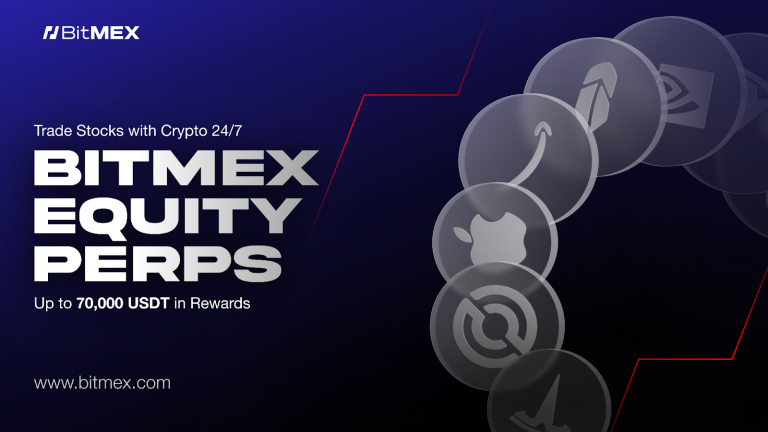
BitMEX has expanded its derivatives offering with the launch of Equity Perps, a new product that allows traders to gain exposure to major US stocks and equity indices using cryptocurrency as collateral.

The move marks a notable step for the exchange, which has traditionally focused on crypto-native markets, and reflects growing interest in bridging digital assets with traditional financial instruments.

Announced on January 6, 2025, the product enables 24/7 trading on US equity benchmarks, including periods when American stock markets are closed.

By doing so, BitMEX is positioning itself to attract traders seeking continuous access to equity-linked products without relying on conventional brokerage infrastructure.

Equity Perps extend BitMEX’s derivatives suite

Equity Perps are cash-settled perpetual swap contracts that track the price of individual US stocks or equity indices.

Like other perpetual contracts offered by BitMEX, they do not have an expiry date and rely on a funding rate mechanism to keep prices aligned with the underlying reference index.

Traders can take both long and short positions with leverage of up to 20x.

Margin collateral can be posted in cryptocurrencies such as Bitcoin or Tether, allowing users to deploy digital assets rather than fiat currency to access equity exposure.

At launch, the contracts cover a range of widely traded US stocks and indices, including Amazon, Apple, Circle, Coinbase, Meta, Nvidia, Robinhood, and Tesla, as well as the S&P 500 and the Nasdaq.

BitMEX has said it plans to expand the list of available contracts over time as the product matures.

24/7 trading and pricing mechanics

One of the distinguishing features of Equity Perps is their continuous trading availability.

While pricing during US market hours is based primarily on real-time equity prices, pricing outside those hours is supported by tokenized spot prices sourced from multiple exchanges.

This structure is designed to maintain price continuity even when traditional equity markets are closed.

Funding for the contracts is exchanged every eight hours, consistent with BitMEX’s existing perpetual swap products, regardless of US market hours.

In cases of corporate actions such as stock splits, the exchange has indicated that affected contracts will be settled early and relisted once the corporate action is complete.

All Equity Perps trades carry a maker rebate of 2.5 basis points and a taker fee of 7.5 basis points, aligning the product with BitMEX’s broader fee structure for derivatives trading.

Incentives and broader strategy

To coincide with the launch, BitMEX is offering a 70,000 USDT prize pool for eligible users who trade Equity Perps, alongside maker rebates on all contracts in the new category.

The exchange has also published educational resources and product guides on its website and blog to support users’ onboarding.

Commenting on the launch, BitMEX chief executive Stephan Lutz said the product offers traders a more flexible way to access US equity markets using crypto collateral, while removing the constraints of traditional market hours.

He added that the initiative extends BitMEX’s derivatives expertise to a broader set of global markets while maintaining the exchange’s focus on reliability and performance.

The post BitMEX launches Equity Perps for 24/7 trading of US stocks using crypto collateral appeared first on Invezz

Taiwan Semiconductor Manufacturing Co. (TSMC) shares surged by the most since April, extending a powerful rally as investor optimism around artificial intelligence demand carried into the new year.

The world’s largest contract chipmaker climbed as much as 6.9% in Taipei trading to reach a fresh record high, underscoring its central role in the global AI supply chain.

The gains followed a bullish analyst move from Goldman Sachs Group Inc., which raised its price target on TSMC by 35% to NT$2,330.

The investment bank cited expectations of another year of solid growth, supported by improving profit margins and sustained demand for advanced chips used in AI computing.

Goldman upgrade fuels rally

Goldman Sachs analysts, including Bruce Lu, said they remain confident in TSMC’s long-term growth prospects as AI investment accelerates globally.

“We view AI as a multi-year growth engine for TSMC,” the analysts wrote in a report.

Lu added that margins are improving even as the company plans to invest heavily in future capacity, projecting capital spending of $150 billion over the next three years.

The upgrade helped propel TSMC to the forefront of a broader advance in Asian technology stocks on Monday.

Investors continued to pour money into the AI theme despite concerns that valuations may be overheating.

According to market participants, fear of missing out on further gains outweighed worries about short-term volatility, even after recent geopolitical tensions following US strikes against Venezuela.

Technology shares once again provided the largest boost to regional equity benchmarks, reinforcing the sector’s dominance as AI-related companies attract incremental capital.

Asian chipmakers ride AI momentum

TSMC’s rally came alongside continued strength in other major Asian chipmakers.

South Korea’s Samsung Electronics Co. extended its gains to a fifth consecutive session.

The memory chipmaker is expected to report preliminary results later this week, which investors will scrutinize for signs that earnings growth can justify the sector’s sharp run-up.

TSMC shares have climbed 44% in 2025, pushing the company’s market capitalization above $1 trillion for the first time.

The milestone reflects growing investor confidence in TSMC’s strategic position as the leading foundry for advanced chips, particularly those designed for artificial intelligence workloads.

“For leading-edge semiconductor, capacity from TSMC is the king,” Sanford C. Bernstein & Co. analysts including Mark Li, wrote in a note dated Friday.

This year “is still all about AI,” though the analysts urged investors to “focus on quality” amid concerns that parts of the market could be forming a bubble.

Advanced Chips Cement Strategic Role

The company’s technological leadership has been reinforced by recent manufacturing progress.

TSMC last week began mass production of its 2-nanometre (N2) chips, a critical milestone in next-generation semiconductor development.

The company said the N2 technology, set to roll out in the fourth quarter of fiscal 2025, offers higher transistor density and improved energy efficiency, describing it as the most advanced semiconductor technology currently available.

TSMC supplies chips for a wide range of applications, from smartphones to high-performance servers.

Its customers include Nvidia Corp. and Apple Inc.

More than half of the world’s semiconductors, including nearly all high-end AI chips, are manufactured in Taiwan, positioning TSMC at the center of global supply chains.

Industry analysts view the 2nm ramp as a crucial step in helping TSMC maintain its technological edge and capture expanding AI-driven revenue opportunities in the years ahead.

The post TSMC shares hit record high as AI optimism drives analyst upgrades appeared first on Invezz

Asian markets opened the first full trading week of the year on a stronger footing, even as investors grappled with the geopolitical and market implications of a dramatic US military operation in Venezuela.

The capture of Venezuelan President Nicolas Maduro over the weekend injected fresh uncertainty into global markets, influencing moves across equities, commodities, cryptocurrencies, and currencies, while also prompting sharp political reactions from allies and further pointed remarks from President Donald Trump.

Asian markets and oil react to Venezuela developments

Asian equities advanced broadly on Monday, with investors weighing geopolitical risks against optimism ahead of a heavy slate of economic data.

MSCI’s broadest index of Asia-Pacific shares outside Japan rose 1.36%, while S&P 500 e-mini futures edged up 0.13%.

Japan’s Nikkei 225 jumped 3%, nearing a record high reached two months ago, after data showed manufacturing activity stabilised in December following five months of contraction.

South Korea’s Kospi and Taiwan’s benchmark index both climbed more than 2.7% to fresh record highs.

Elsewhere, Australia’s benchmark index added 0.1%.

China-linked markets lagged.

Hong Kong’s Hang Seng Index fell 0.01%, dragged lower by energy stocks after a gauge of Hong Kong-listed oil and gas companies fell 3.1%.

Oil prices were choppy as markets assessed the impact of the US intervention in Venezuela and an OPEC+ decision to keep output unchanged.

Brent crude futures fell 0.3% to $60.55 a barrel.

Neil Shearing, group chief economist at Capital Economics, said the removal of Maduro was “unlikely to have meaningful near-term economic consequences for the global economy,” though he warned that “its political and geopolitical ramifications will reverberate.”

Marko Papic, chief strategist at BCA Research, said Venezuela would need significant capital and engineering support to restore output.

“We are therefore not sellers of oil in this situation and, in fact, think that upside risks could develop,” he said.

Bitcoin and safe havens gain on political uncertainty

Bitcoin rose to a three-week high in early Asian trading as political uncertainty boosted demand for alternative and haven assets.

The largest cryptocurrency climbed as much as 2.3% to $93,323, its highest level since Dec. 11, before easing back to around $91,453 later in the session. Ether was little changed at $3,141.

The move came alongside gains in precious metals.

Gold rose about 1.8% to $4,411.50 an ounce, after earlier jumping above $4,400, while silver surged as much as 3.92% as investors sought safety.

Bitcoin’s recent gains follow weeks of range-bound trading and come despite the cryptocurrency ending last year down 6.5%.

Sean McNulty, APAC derivatives trading lead at FalconX, said the rally was being driven by crypto-native firms and a lack of selling by miners, family offices, and large funds.

On Jan. 2, investors put $471 million into US-listed Bitcoin exchange-traded funds, the largest daily inflow since Nov. 11.

Denmark pushes back on Trump’s Greenland rhetoric

Geopolitical tensions extended beyond Latin America. Danish Prime Minister Mette Frederiksen warned President Trump to stop threatening to acquire Greenland, just a day after the US operation in Venezuela.

“The Kingdom of Denmark — and thus Greenland — is part of NATO and is therefore covered by the alliance’s security guarantee,” Frederiksen said, adding that she would “strongly urge the United States to stop the threats against a historically close ally.”

Her remarks followed comments by Trump, quoted by The Atlantic, saying, “We do need Greenland, absolutely.”

Trump has long floated the idea of acquiring the mineral-rich territory, an ambition that has been repeatedly rejected by both Greenland and Denmark.

Trump targets Colombia and signals wider drug crackdown

A day after Maduro’s capture, Trump signaled that other countries could face pressure over drug trafficking.

Speaking aboard Air Force One, he singled out Colombia and its president, Gustavo Petro.

“Colombia is very sick, too, run by a sick man who likes making cocaine and selling it to the United States, and he’s not going to be doing it very long,” Trump said.

Trump said his campaign against Venezuela would also weaken Cuba, noting that Cuban soldiers assist Venezuela’s military.

“Cuba looks like it is ready to fall,” he said, without offering evidence.

He struck a slightly more conciliatory tone toward Mexico, while repeating complaints about drug flows and noting that Mexican President Claudia Sheinbaum has rejected his offer of US military assistance.

The post Morning brief: Asian stocks climb as Venezuela shock ripples, Bitcoin hits high appeared first on Invezz

Tesco share price has remained in a narrow range in the past few months despite the company’s growing market share and profitability growth. It was trading at 442.2 on Monday, inside a narrow range it has remained at since December. This article explores whether it is a good investment today.

Tesco’s business is thriving

Tesco, the biggest retailer in the United Kingdom, is doing well, helped by its strong geographical presence across the country and its cheaper prices. 

The company has also benefited from the management’s focus on cost management, investment in e-commerce, and price matching. All these factors have helped it continue gaining market share across other companies, including Aldi. 

It also benefited from its premium and store brands, with Tesco Finest experiencing double-digit growth for three years. Tesco’s Clubcard loyalty program is driving sales with over 24 million households participating.

Additionally, the management has simplified its business by exiting its non-core businesses. The most notable one was selling its banking operations to Barclays.

Recent results showed that the company’s like-for-like sales rose by 4.3%3 in the first half, with growth happening across the UK, Republic of Ireland (ROI), and Booker. 

Its revenue rose to £33 billion, up by 5.1% from the same period last year, with its adjusted operating profit rising modestly to £1.67 billion. Tesco’s free cash flow rose to £1.2 billion.

These results were much better than what the management was expecting, as consumers reacted positively to its initiatives. As a result, the management lifted its forward guidance for the fiscal year.

Tesco expects to make an adjusted profit of £3.1 billion, up by £100 million from the previous guidance of £3.1 billion. It also expects to save £500 million this year to offset higher operating costs. 

Therefore, Tesco share price has remained on edge as investors assess its performance and the impact of competition. There are concerns that its profitability will be impacted over time. 

On the positive side, there are signs that the company is relatively undervalued. It currently trades at a price-to-earnings (P/E) ratio of 17, which is much lower than other top retailers like Walmart and Sainsbury, its top competitor. It is also lower than the FTSE 100 average of 19.

Tesco share price technical analysis 

TSCO stock chart | Source: TradingView

The daily timeframe chart shows that the TSCO stock price has pulled back from the 2025 high of 481p to the current 442p. This retreat was in line with our forecast.

It has remained above the ascending trendline that links the lowest swings since August 8 last year.

The stock has also remained above the 100-day Exponential Moving Average (EMA), which is a bullish sign. It is also slightly above the Major S/R pivot point of the Murrey Math Lines tool. These technicals point to an eventual recovery, potentially to the ultimate resistance at 468p. 

However, the risk is that the stock has formed a head-and-shoulders-like pattern and moved below the Supertrend indicator. Therefore, a bearish breakout, potentially to the strong, pivot, reverse level at 421p is possible. This view will be confirmed if it moves below the 100-day moving average and the ascending trendline.

The post Tesco share price has retreated: Is it a bargain or a value trap? appeared first on Invezz

Elon Musk’s satellite internet service Starlink has begun offering free broadband access to users in Venezuela through Feb. 3, as the country deals with widespread disruption following US airstrikes and the arrest of former leader Nicolas Maduro.

The move places a private technology provider at the centre of a fast-moving geopolitical crisis, where connectivity has become a critical issue alongside security and governance.

Reports of power and internet outages in Caracas and surrounding regions have raised concerns about access to basic communication, particularly as international scrutiny of Washington’s actions intensifies.

Starlink said on Sunday that it was proactively adding service credits to both active and inactive accounts in Venezuela while monitoring regulatory requirements and conditions on the ground.

The company did not give a timeline for when customers in the country might be able to formally purchase the service locally, noting that any updates would be communicated through its official channels.

Connectivity amid disruption

The offer of free service comes after the US carried out a military operation that targeted parts of the Venezuelan capital and nearby states.

Washington said its actions on Jan. 3 focused mainly on Caracas, with additional strikes reported in Miranda, Aragua, and La Guaira.

In the aftermath, local media reported electricity and internet outages in parts of Caracas, with similar disruptions in Miranda over the weekend.

By extending temporary access, Starlink could help restore basic connectivity in areas affected by infrastructure damage or service interruptions.

The company’s availability map still lists Venezuela as “coming soon,” suggesting it has not formally launched there, even though some users appear to already have access.

This has raised questions about how the service is operating in the country and under what regulatory framework.

Starlink operates as a subsidiary of SpaceX, delivering broadband via low-earth-orbit satellites.

Users typically need to purchase specialised hardware to connect to the network, a requirement that may limit broader adoption during a crisis despite the free service credits.

Political uncertainty deepens

The connectivity push is unfolding against a backdrop of sharp political uncertainty.

Following Maduro’s arrest and extradition to face charges including narco-terrorism and election manipulation, US President Donald Trump said Washington would oversee Venezuela’s transition.

Trump also announced on Saturday that Vice President Delcy Rodriguez had been sworn in after Maduro’s capture.

At the same time, he warned that further military action could follow if the new leadership failed to comply with US expectations.

These statements have added to volatility in a country already grappling with economic and social strain.

Global response and precedent

International reaction has been swift.

The UN Security Council is scheduled to meet on Jan. 6 to discuss the legality of the US actions, as several countries, including Brazil and Spain, have criticised the strikes.

The debate is likely to focus not only on military intervention but also on its humanitarian and legal implications.

Venezuela is not the first conflict-affected region where Starlink has been deployed.

The satellite network was previously used in Ukraine to replace communication systems damaged during Russia’s invasion.

While Starlink initially covered much of the cost there, its operations in Ukraine have been funded by a US Department of Defense contract since June 2023.

Starlink has not disclosed how many users are active in Venezuela or the cost of providing free service during the current period.

The post Starlink offers free internet in Venezuela after US airstrikes and Maduro arrest appeared first on Invezz

Lloyds share price continued its strong bull run on Friday, reaching the important milestone of 100p for the first time since September 2008. It has risen in the last seven consecutive months, the longest streak since 2012, and is up by 90% in the previous 12 months. So, will the rally accelerate in 2026?

Lloyds Bank’s business has done well

Lloyds Bank stock has been in a strong bull run in the past few years, rising from a low of 25.50p in 2021 to the psychological point at 100p. This surge has pushed its market capitalization to over $80 billion, making it one of the top banking groups in Europe.

The stock’s surge has coincided with the performance of other European banks like Santander, Société Générale, Deutsche Bank, and Commerzbank.

Its performance was also notable as it happened at a time when the UK economy is facing major challenges. Inflation has jumped, economic growth has slowed, and most recently, Rachel Reeves announced a series of tax hikes.

One major reason behind the Lloyds share price surge is that the company is about to conclude the motor insurance claims issue. It added £800 million in provisions tied to this remediation in the third quarter, bringing the total amount to £1.95 billion. 

Another reason is that the Bank of England (BoE) has maintained rates at a higher level in the last few years. It slashed rates by 25 basis points in December to 3.75%, the third cut of the year. 

Still, despite the cut, the yield of UK government bonds has held steady, with the 10-year remaining at 4.50% and the five-year remaining at 4%. Also, the management has entered into structural hedge programs intended to absorb low interest rates in the country.

Resilient revenue and profitability growth

The third-quarter results released last year showed that the company’s business continued doing well, barring the motor insurance charge. It recorded a statutory profit after tax of £3.3 billion in the third quarter, with its net income rising by 6%. 

High interest rates and the performance of the other segment contributed to the performance. Its net interest income rose to £3.45 billion in the third quarter from £3.2 billion in the same period last year. 

Also, the other income division made over £1.55 billion, up from 1.43 billion in Q3’24. This business includes its fee-generation segment and its real estate ventures. 

Lloyds has slowly become one of the biggest landlords in the UK, with a £2 billion rental property portfolio with over 7,000 properties. It hopes to continue adding to this portfolio with the goal of getting to 43,000 properties by 2030.

Analysts tracking the company have a mixed outlook. For example, JPMorgan has set a target price of 102p, a few points above the current level. Jefferies and Royal Bank of Canada (RBC) are more optimistic and are expecting it to jump to 105p and 110p, respectively. 

However, Citigroup and Shore Capital have set a target of 97p and 84p, respectively. These analysts cited the impact of interest rate cuts, elevated valuations, and potentially lower shareholder returns.

Lloyds share price technical analysis

LLOY stock chart | Source: TradingView

The daily chart shows that the LLOY stock price has been in a strong bull run for months. It has jumped to a high of 100p, moving to the upper side of the ascending channel. 

The shares have remained above the 50-day and 100-day Exponential Moving Averages (EMA). Also, the Relative Strength Index (RSI) and the Stochastic Oscillator have continued rising.

Therefore, the most likely outlook is neutral. A move above the upper side of the channel will point to a continuation to more gains, potentially to the resistance at 110p and above.

The post Lloyds share price forecast after hitting 100p: Is it still a good buy? appeared first on Invezz

IAG share price started the year well, rising to a key resistance level at 430p, its highest level since January 2020, and a few points below its all-time high of 438p. It has been in a strong bull run, rising by 380% from its lowest point in 2022.

IAG’s business has had major tailwinds

IAG, a leading airline company that owns popular brands like British Airways, Aer Lingus, LEVEL, and Iberia, has been in a strong bull run since the pandemic ended a few years ago. 

The surge has mirrored the performance of other global airline companies like Ryanair, Delta, and United. This trend continued last year as global trade maintained its resilience despite the volatile trade policy environment. 

READ MORE: Here’s why the Ryanair share price surged in 2025

IATA believes that the recovery will accelerate this year. It expects that passenger traffic will grow by 4.9% this year, led by the Asia Pacific region. Also, it expects that load factor will rise to 83.8%, while ancillary revenue will continue expanding. 

As a result, IATA expects that airline net profit will jump to $41 billion, while the net margin will be 3.9%. This growth will happen despite the softening fares and high cost pressures.

IAG, as one of the top global airline companies, is set to benefit from this growth. Its main advantage is in the diversification of its business, with a strong performance on the TransAtlantic route and in other areas like Asia. 

The most recent metrics showed that IAG’s revenue and profitability rose in the first nine months of the year. Its revenue rose by 4.9% to €25.2 billion, while its profit after tax rose by 15.5% to €2.7 billion. However, its revenue was flat at €9.32 billion, while its profit after tax fell by 2.3% to €1.4 billion. 

IAG has continued to return cash to its shareholders, completing over €1 billion in share buybacks. It plans to announce another share repurchase program in February and has continued to pay its dividends.

The company is also trading at a discount, with its normalized price-to-earnings (P/E) ratio at 7.08, lower than Ryanair’s 13 and EasyJet’s 7.50. Delta has a multiple of 11, while United Airlines has a multiple of 10.5.

IAG share price technical analysis 

IAG stock chart | Source: TradingView

The weekly chart shows that the IAG stock has been in a strong bull run, rising from a low of 88.76p in 2022 to a high of 430. It has moved above the important support level at 360p, its highest point in February last year. 

The stock has jumped above the 50-week and 100-week Exponential Moving Averages (EMA). At the same time, the Relative Strength Index (RSI) has continued rising and is nearing the overbought level at 70. It has formed a cup-and-handle pattern.

Therefore, the stock will likely continue rising as bulls target the psychological point at 450p. A move above that level will point to more gains, potentially to 500p. A drop below the support at 360p will invalidate the bullish outlook.

The post IAG share price boomed in 2025: will the rally continue this year? appeared first on Invezz