Category

Investing

Category

The S&P 500 climbed 0.7% to a fresh intraday record high on Friday, following the release of December’s employment report, which showed a mixed labor market picture that calmed recession fears.

The Nasdaq Composite gained 0.9%, while the Dow Jones Industrial Average added 213.52 points, or 0.43%, closing at 49,480.41 as of midday trading.

The gains cap the first full trading week of 2026 with solid weekly advances: the S&P 500 is up roughly 0.9% week-to-date, while the Dow and Nasdaq have each risen approximately 1.8% and 1.2%.​

The employment data reinforced a narrative Wall Street has embraced since late 2025: the Federal Reserve is likely to remain on hold in January.

This certainty reduced volatility and signalled the market’s willingness to hold equities through the first quarter earnings season, a key psychological shift for the market.​

Market snapshot: Indexes, breadth and sector movers

Nonfarm payrolls increased by just 50,000 in December, falling sharply short of the 73,000 forecast by Dow Jones consensus economists and marking a sharp slowdown from November’s revised figure of 56,000.

Critically, prior months saw downward revisions totalling 76,000 jobs: 68,000 in October, reduced from an initial 105,000 decline, and 8,000 in November, signalling a tighter labor market than headline estimates suggested.

The unemployment rate ticked down to 4.4%, slightly better than the anticipated 4.5%, while wage growth accelerated to an annual 3.8%, exceeding expectations of 3.6%.​

This mixed signal, weak job creation paired with falling unemployment and accelerating wages, left room for bulls to claim the labor market remains resilient.

Leisure and hospitality, the largest job gainer, added 47,000 positions, while healthcare rose 21,000.

By contrast, retail employment dropped 25,000, and government added only 2,000 jobs.

The breadth of gains tilted toward defensive sectors and cyclicals, with financials and industrials outperforming.

Small-cap equities also rallied, with the Russell 2000 participating in the week’s gains.​

Treasury yields remained choppy but ultimately drifted higher after initially spiking lower on the weak payrolls number.

The 10-year yield climbed to 4.187%, while the 2-year rose 1 basis point to 3.505%, as markets repriced the probability of a Fed rate cut in late January to just 5%, down from 12% earlier Friday.

The dollar index reached a four-week peak of 99.091, reflecting renewed confidence in the U.S. economy’s durability.​

Drivers and outlook​

Forward-looking catalysts include the Federal Reserve’s January 28 policy decision, next week’s retail sales and inflation data, and the start of earnings season.

The market has now priced in a 71% probability of 50 basis points in total rate cuts throughout 2026, though the timing remains uncertain.

Until the Fed signals a dovish pivot or economic data deteriorates sharply, risk appetite appears firmly in favour of equities.​

The gains reflect a market settling into 2026’s first full trading week with renewed conviction: no imminent rate cuts, but no recession either.

The traders will likely keep a close eye on Fed speakers and regional economic data next week to test that thesis.

The post US midday market brief: S&P 500 rises 0.7% as jobs data lifts sentiment appeared first on Invezz


US job growth stalled in December, underscoring a labor market losing momentum, while geopolitical and policy uncertainty weighed on global sentiment.

Iran’s Supreme Leader warned protests could isolate the country further as security forces tightened controls.

In the US, OpenAI and SoftBank moved to secure clean energy for AI infrastructure with a $1 billion renewables investment.

Meanwhile, the Supreme Court delayed a ruling on Trump-era tariffs, prolonging uncertainty over trade policy, costs, and presidential authority.

US job growth stalls

US job growth remained stuck at stall speed in December, with employers adding just 50,000 positions as the unemployment rate dipped to 4.4%.

The modest gain fell short of expectations and capped the weakest year for hiring since 2003, with only 584,000 jobs created in 2025.

Restaurants and healthcare drove the gains, while retail, manufacturing, and construction shed workers.

Though the jobless rate ticked down from November’s 4.5%, the broader picture shows a labor market running on fumes, hiring has slowed dramatically from 2024’s pace, and downward revisions to prior months painted an even softer picture than first reported.

Iran’s leader warns of isolation

Iran’s Supreme Leader warned protesters that continued unrest risked leaving the country “cut off from the world,” as authorities tightened their grip after days of nationwide demonstrations.

In a televised speech, he accused foreign enemies of stoking the turmoil and urged Iranians to reject what he called Western plots to weaken the Islamic Republic.

Security forces intensified their presence in major cities, with reports of fresh arrests and internet restrictions aimed at curbing mobilisation.

The warning underscored Tehran’s growing isolation as new Western sanctions and diplomatic censure pile pressure on an economy already crippled by years of mismanagement and conflict.

OpenAI, SoftBank back AI power push

OpenAI and SoftBank Group announced a $1 billion investment in SB Energy, SoftBank’s renewable power unit, as the tech giants deepen their push into clean energy to fuel the AI boom.

The deal values SB Energy at roughly $5 billion and will help expand its solar and battery storage projects across the US and Asia.

With data centres consuming ever more electricity, the partnership aims to lock in reliable, low-carbon power for OpenAI’s massive computing needs.

The move highlights how AI firms are racing to secure energy supplies amid growing concerns about grid capacity and emissions.

US Supreme Court delays tariff ruling

The Supreme Court kept investors and importers in suspense on Friday, declining to rule on the legality of Donald Trump’s sweeping tariffs despite intense speculation that a decision was imminent.

Instead, the justices issued a single opinion in an unrelated criminal case, leaving one of the most consequential trade and fiscal questions of Trump’s second term unresolved.

At stake is not just the fate of hundreds of billions of dollars in duties, but also how far a president can stretch emergency powers to reshape trade policy.

Markets now face several more days of uncertainty over costs, refunds, and executive authority.

The post Evening digest: US job numbers, Iran unrest, OpenAI-SoftBank back AI push appeared first on Invezz

Wheat kicked off the new year with a price surge, as the most actively traded futures contract on the CBOT climbed to 522 US cents per bushel on Thursday, marking its highest level since December 26.

At the time of writing, US wheat futures for the March contract were at 518 cents.

Wheat prices began the year at a robust 500 US cents on the first trading day. Concurrently, the associated futures contract on Euronext in Paris achieved its peak for the last seven weeks, reaching EUR 192 per ton.

The recent announcement of a price increase for wheat is directly attributable to the noticeable deterioration in the condition of winter wheat plants across several key US states, most notably Kansas, according to Commerzbank AG.

This adverse change has been observed and reported since the end of November.

Weather pattern affects crops

Agricultural analysts are pointing to the challenging weather patterns, including insufficient snow cover, extreme temperature fluctuations, and periods of dryness, as the primary factors compromising the health and expected yield of the winter wheat crop.

Since Kansas is a major producer of wheat, the reduced outlook for its harvest has a significant and disproportionate impact on global supply forecasts.

Consequently, this is triggering the upward adjustment in market prices to reflect the anticipated scarcity and higher production costs associated with a less-than-ideal growing season.

While the US Department of Agriculture released the data on Tuesday, the reduction in the percentage of crops rated good or excellent in Kansas, which is the most significant US growing state, was minimal.

Deterioration was notably more pronounced in the neighboring states of Nebraska and Oklahoma.

Given the continuing drought in the Plains, further declines are possible. The USDA reports data for these states on a monthly schedule during the winter season.

Weekly data at the federal level will not be available again until the beginning of April.

US winter wheat acreage

The USDA is scheduled to release its initial estimate for US winter wheat acreage next Monday.

A Reuters poll suggested this figure will likely be 32.41 million acres. This would represent the smallest acreage recorded in the past six years, according to Commerzbank.

Market participants anticipated US wheat stocks to total 1.64 billion bushels as of December 1, according to the Reuters survey.

This data will be released by the USDA, which will also publish figures on last year’s winter wheat planting, which amounted to 33.15 million acres.

Carsten Fritsch, commodity analyst at Commerzbank, noted:

That would be 4.5% more than last year.

Grain stocks

Meanwhile, the inventories of both corn and soybeans are projected to experience a substantial increase over the three-month period leading up to the start of December.

This significant accumulation is a direct consequence of the seasonal harvest cycle, during which the vast majority of the year’s crops are gathered and brought into storage.

For corn in particular, the influx from the harvest is expected to be exceptionally large, with projections indicating that stock levels will climb to unprecedented, record-breaking quantities by the beginning of December.

This surge in supply reflects the successful conclusion of the growing season and the subsequent post-harvest management of these key agricultural commodities.

Expected US corn stocks are projected to increase to 12.96 billion bushels, marking an almost 1 billion bushel rise compared to the previous year, the USDA report showed.

Meanwhile, soybean stocks are anticipated to reach 3.25 billion bushels, representing an increase of nearly 5% year-over-year.

The post Kansas crop woes fuel wheat rally ahead of USDA winter acreage estimate appeared first on Invezz

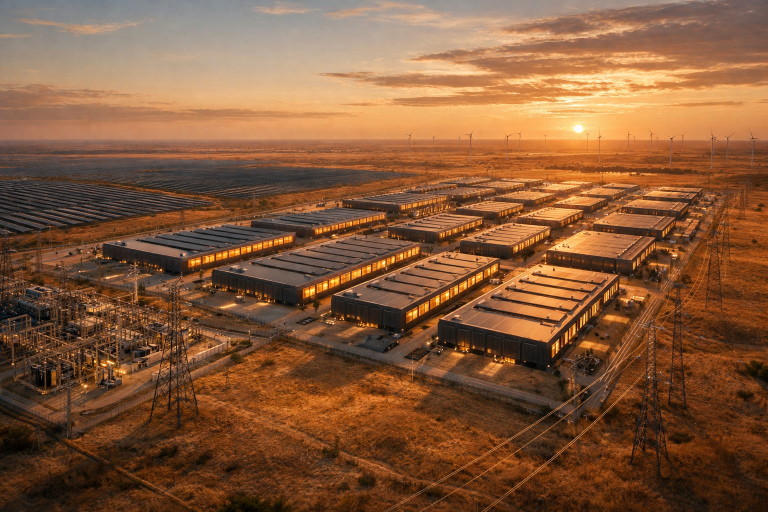
OpenAI and SoftBank announced a joint $1 billion investment in SB Energy on Friday to build and operate a 1.2-gigawatt data centre in Milam County, Texas.

On the surface, it reads like yet another megadeal in the booming AI infrastructure arms race.

But it signals something more urgent: electricity has become AI’s single largest production bottleneck.

Without solving the power problem, no amount of capital, chips, or code will matter.​

The economics are stark. A single gigawatt of continuous power supplies roughly 750,000 American homes.

Yet data centres are now clustering these demands in concentrated geographic zones, straining grids that were designed for steady, predictable industrial loads decades ago.

Between 2017 and 2023, data centre electricity demand more than doubled, driven almost entirely by AI-accelerated servers.

Lawrence Berkeley National Laboratory, operated by the US Department of Energy, estimates that data centre consumption will reach between 325 and 580 terawatt-hours by 2028, up from 176 TWh in 2023.

AI alone could account for 35 to 50% of all data centre power use by 2030, driving electricity demand that the International Energy Agency projects will exceed 250 TWh in the United States by 2026.​

Why power is AI’s hidden chokepoint

This growth trajectory exposes a hard truth: most American electrical grids cannot absorb this load. Grid interconnection queues now stretch seven years in some regions.

Utilities typically project demand in years, not months. Yet AI data centre projects announce gigawatt-scale builds on quarterly timelines.

The result is gridlock, not shortage, but misalignment between infrastructure build cycles and AI deployment speed.​

The OpenAI–SoftBank investment sidesteps this bottleneck by securing dedicated generation.

SB Energy, a SoftBank subsidiary, is building “powered infrastructure” for the 1.2-gigawatt Milam County site, meaning it will secure or develop a power supply in advance of construction.

This is not a novel strategy; major cloud operators have been pursuing on-site generation and dedicated renewables contracts for years, but the scale and speed are unprecedented.

The $1 billion reflects the capital intensity: reliable, AI-grade power requires upfront investment in generation assets, transmission interconnects, and battery storage that utility-scale capex cannot keep pace with.​

What the deal means for markets and policy

Tactically, the partnership locks in three critical advantages: stable, long-term power pricing independent of volatile wholesale markets; faster site commissioning by pre-securing grid access; and reduced regulatory risk through private coordination rather than utility-led coordination.

SB Energy becomes both developer and infrastructure provider, collapsing the permitting and construction timeline by months.​

The broader implication is market-shaping. Hyperscalers are signalling that grid constraints, not capital scarcity, will determine AI infrastructure deployment.

This reshapes investment logic across renewable energy, battery storage, and transmission. Wind and solar developers near data centre clusters gain immediate offtake demand.

Regional transmission operators face pressure to prioritize data centre interconnections over traditional industrial or residential projects.

Local regulators, already overwhelmed by proposal volume, now confront concentrated power demands from well-capitalized tech firms with explicit White House backing.​

The post This $1B OpenAI–SoftBank bet reveals what AI can’t function without appeared first on Invezz

US big banks are set to kick off earnings season next week, and experts are bracing for solid results.

According to Ken Leon, a senior CFRA analyst, the outlook for these banking giants is “very positive”, with several tailwinds that could lift both profits and stock prices.

Note that iShares’ big banks exchange-traded fund (ETF) has already been in a sharp uptrend – up nearly 60% versus its 52-week low at the time of writing.

Still, the CFRA analyst sees US bank stocks rallying further in 2026 on the back of the following tailwinds.

Rate environment favours bank stocks

Speaking recently with CNBC, Leon cited the current rate environment as a major positive for the US bank stocks.

The Federal Reserve is broadly expected to pause in January and lower rates further in the months ahead. What this stance means for big banks is predictable funding costs, offering a cushion against volatility.

With a more lenient monetary policy, lenders are positioned to expand margins, and investors gain confidence in their forward earnings.

How steepening yield curve benefit bank stocks

Another major tailwind for the Wall Street banks this year is the yield curve that’s shifted in their favour.

“We’re seeing a steepening yield curve that’s improving net interest margins,” Leon told CNBC, adding this dynamic enables banks to borrow cheaply on the short end while lending at a higher rate on the long end.

The result: healthier spreads and strong profitability in their core lending businesses.

Bank stocks to rally on loan demand

According to the CFRA expert, loan demand will remain resilient this year as “the US economy is still very good,” with growth projected at up to 3.0%.

That translates into steady expansion in traditional banking activities, from mortgages to corporate lending.

As businesses and consumers continue to borrow, bank stocks will benefit from both volume and pricing power.

Capital markets to drive bank earnings

Beyond traditional lending, Ken Leon sees capital markets as the real earnings catalyst. “The delta for earnings has been the capital markets,” he noted.

Mergers and acquisitions (M&A), equity underwriting, and initial public offerings (IPOs) surged in late 2025, with $146 billion raised – up 30%.

And that momentum will likely carry into this year, fueling fee income and accelerating investment banks’ bottom lines, he concluded.

Are US big banks expensive to own?

In the CNBC interview, Leon admitted that valuations aren’t cheap.

“When you look at things like price and net tangible book value, they’re expensive,” he acknowledged.

Yet with regulatory easing on the horizon – possibly enabling buybacks and higher dividends – he believes investors should stay the course.

For the CFRA analyst, the combination of strong fundamentals and capital return makes US bank stocks worth owning, even at the current elevated multiples.

The post What to expect from US big banks as they report earnings next week? appeared first on Invezz

India heads into 2026 with headline indicators that would be the envy of many major economies.

Growth is strong, inflation is subdued, and political stability remains intact.

Yet beneath these reassuring numbers lies a widening disconnect between macro performance and lived economic reality, said a Financial Times report.

For investors and policymakers alike, this dichotomy will define the year ahead.

Growth accelerates, but gains remain uneven

India’s economy surprised on the upside in 2025.

Gross domestic product expanded 8.2% year on year in the July–September quarter, prompting the Reserve Bank of India to raise its growth forecast for 2026 to 6.8% from 6.5%.

Inflation has remained low for several quarters, giving the central bank room to consider further interest rate cuts this year.

However, this growth is being captured disproportionately by the affluent.

Property markets illustrate the imbalance clearly: ultra-luxury apartments priced above $1 million are snapped up within days of launch, while middle-income housing projects continue to carry unsold inventory for multiple quarters.

Value is rising, but volumes are not.

Two structural pressures are weighing on household wellbeing.

The first is employment. Official data shows unemployment falling to 4.7% in November 2025, yet recurring reports of hundreds of thousands of applicants chasing a few hundred or thousand public-sector jobs tell a different story.

In cities, gig work has absorbed many job seekers, but these roles often lack stability, safety nets, or upward mobility.

Meanwhile, part of the rise in employment figures reflects definitional changes that now count unpaid helpers in family enterprises as employed, particularly boosting women’s participation.

The second pressure point is household debt. According to RBI data, household liabilities exceeded 41% of GDP as of March 2025, with nearly half of borrowing directed toward consumption rather than asset creation.

Slower wage growth, job insecurity, and a savings rate still below pre-pandemic levels are forcing many households to borrow simply to maintain living standards.

The macro picture remains supportive, but the key risk for 2026 is that growth continues without translating into broader income and employment gains.

As a result, India may grow strongly this year while most wallets see limited relief.

Equity markets rise, portfolios lag

India’s equity markets mirror the broader economy’s imbalance.

Benchmark indices touched new highs in 2025, yet gains were concentrated in a narrow group of stocks.

Small and mid-cap shares struggled, with nearly half delivering negative returns and most others trading in a tight range.

For many retail investors, portfolios failed to reflect the headline index performance.

Outlook for 2026 is cautiously optimistic, but hinges on corporate earnings and liquidity conditions.

A potential US Federal Reserve rate cut could improve global risk appetite, but the link between lower US rates and foreign inflows into India has weakened.

Even after the US rate cuts last year, foreign portfolio investors continued to withdraw funds.

Domestically focused companies will depend on a revival in private-sector capital expenditure and consumption.

The technology sector could benefit if trade ties with the US stabilise, particularly around issues such as H1B visas, even though services are not currently subject to tariffs.

Primary markets were a major driver of activity in 2025, and IPO enthusiasm is expected to continue.

The anticipated listing of Reliance Jio in the first half of the year stands out as a potential landmark transaction.

Another near-term catalyst will be Finance Minister Nirmala Sitharaman’s annual budget speech, typically delivered in early February, where expectations are tempered by the limited fiscal headroom available.

Political stability, with emerging frictions

Politically, Prime Minister Narendra Modi’s government enters 2026 from a position of relative comfort.

State elections in Assam, Kerala, Tamil Nadu, and West Bengal are not seen as decisive for the ruling Bharatiya Janata Party at the national level.

Assam appears secure, while the southern states remain difficult terrain.

West Bengal is expected to be the most competitive contest.

This electoral breathing room gives the government scope to pursue difficult or unpopular measures.

At the same time, after more than a decade in power, the BJP-led administration is facing greater scrutiny.

Criticism has become more audible in mainstream media and on social platforms, including from outlets previously seen as firmly pro-government.

Recent pushback against expanded mining permissions in the Aravalli range showed this shift.

The opposition remains fragmented and has struggled in recent state elections, leaving Modi’s main challenges internal rather than external.

Questions around succession ahead of the 2029 general election linger, even as his electoral base remains stable.

For 2026, the key issue is how effectively the government uses political stability to address economic stress without triggering backlash.

While definitive answers may not emerge this year, the policy choices made now will likely shape the narrative heading into the next national election cycle.

The post India’s economy looks strong with low inflation—but do people feel it appeared first on Invezz

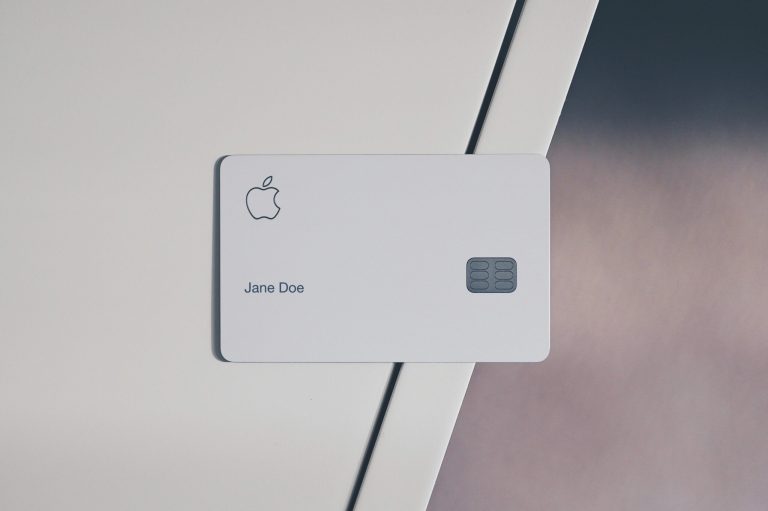
JPMorgan has replaced Goldman Sachs as the issuer of “Apple Card,” marking a significant shift in the tech titan’s financial services strategy.

On the surface, it’s a seismic shift that offers Apple Inc. (NASDAQ: AAPL) a stronger, more stable banking partner with unmatched scale, credibility, and infrastructure.

However, the direct impact on Apple stock – that’s currently up some 50% versus its 52-week low  – will likely prove limited only.

Why the JPMorgan switch isn’t significant for Apple stock

While the JPM partnership strengthens Apple’s financial services credibility, it doesn’t materially alter the giant’s earnings profile – at least in the near-term.

Apple Card sure is innovative, but it contributes only a small fraction to the company’s vast services revenue, which is dominated by App Store, iCloud, and subscription offerings.

Generally speaking, the card is more about ecosystem stickiness for AAPL than profit margins.

The transition may reassure investors that Apple has secured a reliable partner, but it’s not the kind of development that moves forecasts or valuation multiples.

In short, the switch is strategically sound, but financially modest – leaving AAPL stock largely unaffected.

The switch was not Apple’s decision in the first place

What’s also worth noting is that Apple wasn’t the one eager to exit the card partnership – it was Goldman Sachs.

Why? Because its consumer banking experiment proved costly, with higher-than-expected credit losses and servicing expenses. Apple, by contrast, wanted stability for its customers and continuity in its financial products.

So, the switch to JPMorgan was reactive – not proactive – a move to safeguard the user experience rather than to unlock new revenue streams.

This context further explains why the market has pretty much shrugged off the news on Thursday.

If anything, the shift is somewhat disruptive, requiring a two-year transition, but not transformative enough to change Apple’s share trajectory.

Why AAPL shares are unlikely to push higher in 2026

According to Barchart, AAPL shares are currently going for a forward price-to-earnings (P/E) ratio of more than 32.

Since they’re already trading at a premium valuation, the only tailwind that can drive Apple higher this year is artificial intelligence (AI).

And while the company’s push on that front sure is promising, it isn’t immediately transformative, according to Raymond James analysts’ recent note to clients.

We expect adoption of AI functionality at the edge to remain relatively limited in the near term.

Importantly, options traders also seem to agree with the firm’s cautious stance on AAPL. Contracts expiring mid-April have the lower price set at about $234 currently, indicating the titan could lose some 8% over the next three months.

Note that Apple Inc. has lost its title of the world’s second most valuable company to Google parent Alphabet Inc. this week as well.

The post Apple stock: why JPM switch is strategically sound but financially modest appeared first on Invezz

Nvidia stock traded lower early on Thursday as investors grappled with mixed and sometimes contradictory signals over how close the chip maker is to resuming exports of its artificial intelligence hardware to China.

Shares of the semiconductor giant were down around 2% at $185.05 in midday trading.

Nvidia’s stock has become increasingly sensitive to developments surrounding China, where a resumption of sales represents one of the most significant near-term catalysts for the company.

China export hopes face fresh uncertainty

Optimism around a restart of Chinese sales had been building since last month, when President Donald Trump said his administration would allow shipments of Nvidia’s H200 chip to China, provided the company gives the US government a 25% cut of sales.

The announcement raised expectations that a prolonged revenue drought from China could soon ease.

However, those hopes were shaken this week after The Information reported that Chinese authorities had asked some domestic technology companies to stop placing new orders for Nvidia’s H200 chips.

According to the report, regulators are reviewing whether the chips should ultimately be allowed into the country and under what conditions, suggesting a pause rather than an outright rejection.

The report added that Beijing is keen to prevent Chinese firms from stockpiling US-made chips before a final regulatory decision is reached.

Selective approvals under consideration

Complicating the picture further, Bloomberg reported on Thursday that Chinese authorities are preparing to approve some imports of Nvidia’s H200 chips as soon as this quarter.

Under the proposal, officials are said to be considering allowing purchases for select commercial uses, while maintaining strict prohibitions on sensitive areas.

According to the report, the chips would be barred from use by the military, critical infrastructure, sensitive government agencies and state-owned enterprises, reflecting ongoing security concerns.

Similar restrictions have previously been applied to other foreign technology products, including devices from Apple and memory chips from Micron Technology.

Requests from restricted organisations could still be reviewed on a case-by-case basis, Bloomberg reported, citing sources familiar with the matter.

Huang strikes optimistic tone

Despite the mixed reports, Nvidia Chief Executive Officer Jensen Huang struck an upbeat note this week while speaking at the CES trade show in Las Vegas.

Huang said demand for the H200 chip is “very high” and that he does not expect major issues from the Chinese government.

Nvidia already has orders for more than two million H200 chips at a list price of about $27,000 each, implying roughly $54 billion in potential revenue, Reuters previously reported.

However, amid the regulatory uncertainty, Chinese authorities have reportedly asked some technology companies to pause orders while they determine how many domestically produced chips firms should buy.

Nvidia, for its part, is reportedly asking for full upfront payment on orders during this period of uncertainty.

Huang acknowledged that the process now hinges on administrative details rather than high-level policy decisions.

“President Trump has already said that the H200s are licensed to be exported, and now we have to go through the mechanics of that,” Huang said.

“Once we get that done, I’m expecting the purchase orders to arrive.”

He added that Nvidia does not expect any formal public statement from Beijing, suggesting that approval would be signalled through the flow of orders rather than official announcements.

“We learn about everything through purchase orders. We’re not expecting any press releases or any large declarations,” Huang said.

High stakes after past policy shocks

The uncertainty underscores how exposed Nvidia remains to abrupt policy shifts.

Last year, the company took a $5.5 billion inventory write-down after a sudden US ban blocked sales of its H20 chip to China, illustrating how quickly regulatory changes can translate into financial pain.

The H200, Nvidia’s second-most advanced chip, is far more powerful than the H20, offering roughly six times the performance.

For Chinese technology firms racing to build large-scale AI systems, access to the H200 would represent a significant leap in computing capability.

For now, investors appear to be waiting for clearer signals from both Washington and Beijing.

Until the mechanics of licensing and the scope of Chinese approvals are settled, Nvidia’s stock is likely to remain volatile, reflecting the enormous revenue potential — and equally large policy risks — tied to its China business.

The post Nvidia stock down around 2% as China uncertainty continues to dampen sentiment appeared first on Invezz

Ondas Holdings (NASDAQ: ONDS) ripped higher on Thursday after Israel picked its subsidiary, Airobotics, for its “Drone Hives” project.

While the Drone Hives initiative is a critical component of the $1.7 billion Eastern Border Security Barrier, the “prime contractor” label may be masking significant financial and operational hurdles

Following today’s gains, Ondas stock is trading some 40% above its price at the start of this year.

Should you invest in Ondas stock on Israeli news?

While the $1.7 billion price tag for the Eastern Border Security Barrier is eye-watering, Ondas Holdings’ actual revenue share remains rather opaque.

Being a “prime contractor” for the Drone Hives layer doesn’t equate to a multibillion-dollar windfall for the Nasdaq-listed firm.

The broader initiative encompasses physical fencing, massive civil engineering, and sensor grids, of which autonomous drones are only a subset.

In fact, news today confirmed that SPEAR (UVision group) is already integrated as a subcontractor – meaning Ondas must share the revenue pool.

With the initial purchase order only expected later this month, the market is pricing in “best-case-scenario” before seeing a single line of confirmed contract value.

What it signals is: ONDS stock price rally may be more sentiment-driven than fundamentally backed – and is, therefore, unlikely to survive the test of time.

Execution risk and political scrutiny loom large

Defence projects of this magnitude are rarely linear, and “Israel’s Ministry of Defence (IMOD)” is notorious for shifting technical specifications mid-stream.

The 500km border initiative is a multi-phase, multi-year endeavour subject to the whims of the 2026 – 2027 Israeli budget.

Any political de-escalation or fiscal reallocation could lead to “lumpy” cash flows or project delays that small-cap investors are ill-equipped to handle.

History shows that defence contracts often face rigorous auditing and bureaucratic bottlenecks that can stall deployment for quarters.

If IMOD adjusts the “smart border” concept or prioritises different defence sectors, the anticipated Drove Hive rollout could see its timeline – and its profitability – stretched thin.

Scale mismatch could weigh on ONDS shares

Ondas has grown rapidly via acquisitions like Roboteam and Sentrycs – but managing a national-scale security project is a monumental leap in complexity.

Despite a recent boost in market cap, ONDS remains a relatively small player tasked with forming a “System of Systems” in a high-intensity combat environment.

Integrating these disparate technologies while meeting the stringent operational demands of IMOD could strain the company’s resources.

Scaling up to deploy thousands of autonomous drones requires massive investments in hiring and R&D, which creates significant margin pressure.

If operational inefficiencies arise during this massive scaling phase, the projected earnings growth could be cannibalised by the sheer cost of fulfilling such a high-stakes contract, further contracting Ondas shares’ upside potential.

Valuation remains the biggest overhang on Ondas Holdings

While the aforementioned risks may not be super concerning in a vacuum, they sure are when taken together with the ONDS shares’ stretched valuation.

At the time of writing, Ondas Holdings is going for a price-to-sales (P/S) multiple of more than 73 – alarmingly higher for a small-cap firm that’s only beginning to build a name for itself in drone-tech.

While the company based out of Sunnyvale, CA, is growing at an exceptional rate (60% sequential growth in revenue in Q3), much of it is through acquisitions only.

This raises questions about the sustainability of that growth and whether Ondas can organically scale its operations without relying on costly bolt‑on deals that inflate topline but leave profitability and long‑term shareholder value in doubt.

In short, the Israeli news sure is exciting on the surface, but the related upside is likely priced into Ondas Holdings stock at current levels.

Note that ONDS is already trading well above the Street-high price target of $13.

The post Why Israel news isn’t as big for Ondas stock as market is making it to be appeared first on Invezz

European markets and politics were in focus as investors weighed shifting economic signals and mounting social pressures across the region.

London stocks edged lower as weakness in energy shares offset a fresh defence rally, while signs of easing wage expectations offered cautious optimism for UK inflation watchers.

On the continent, French farmers brought disruption to Paris with renewed protests over incomes and regulation, and China’s Anta made a tentative move on Puma, highlighting ongoing strategic reshaping in European corporates.

Oil drags FTSE despite defence surge

London’s FTSE 100 slipped on Thursday as weakness in oil majors offset another powerful rally in defence stocks.

The blue‑chip index eased around 0.3%, with Shell tumbling after cutting its LNG production outlook and flagging a loss in its chemicals unit, while BP also traded lower.

Oversupply worries continued to hang over the wider energy sector.

In contrast, defence names surged to fresh records after President Trump called for a big increase in US military spending, sending BAE Systems sharply higher.

Retailers were another weak spot, with Associated British Foods, Greggs and Tesco all under pressure after cautious updates today.

French farmers bring Paris to halt

Hundreds of French farmers drove tractors into Paris on Thursday, blocking roads and demanding urgent government action on falling incomes and rising costs.

The protest, organised by the powerful FNSEA union, snarled traffic around the capital as farmers voiced anger over cheap imports, environmental regulations, and what they call unfair competition.

Some tractors carried banners reading “No farmers, no food” and “Save French agriculture.”

The government has promised talks, but farmers say past pledges have not been honoured.

The demonstration follows similar protests across Europe, with farmers warning they will escalate action if their concerns over profitability and bureaucracy are not addressed quickly.

Anta eyes Pinault Puma stake

China’s Anta Sports has approached the Pinault family with an offer to buy its roughly 29% stake in German sportswear group Puma, Reuters quoted people familiar with the matter.

The talks are described as preliminary, and there is no guarantee a deal will be reached, but a transaction would mark a major shift in Puma’s shareholder base and deepen Anta’s push into global markets.

The Pinaults, who control French luxury group Kering via their holding company, have been gradually reshaping their portfolio.

Any sale would likely be closely watched by regulators and investors, given Puma’s brand strength and European footprint.

UK wage growth expectations ease

British firms have scaled back their wage growth expectations for the year ahead, according to the Bank of England’s latest survey, offering a tentative sign that pay pressures may be easing.

The proportion of companies expecting wage growth above 5% has fallen, while those planning increases of 2-3% have risen.

The shift, if sustained, could help the BoE feel more confident that inflation is returning sustainably to target.

However, the central bank remains cautious, noting that wage settlements are still running above levels consistent with its 2% inflation goal, and the labour market remains tight in several sectors.

The post Europe bulletin: FTSE slips on oil, Paris farmers protest, UK wages cool appeared first on Invezz