Category

Investing

Category

India heads into 2026 with headline indicators that would be the envy of many major economies.

Growth is strong, inflation is subdued, and political stability remains intact.

Yet beneath these reassuring numbers lies a widening disconnect between macro performance and lived economic reality, said a Financial Times report.

For investors and policymakers alike, this dichotomy will define the year ahead.

Growth accelerates, but gains remain uneven

India’s economy surprised on the upside in 2025.

Gross domestic product expanded 8.2% year on year in the July–September quarter, prompting the Reserve Bank of India to raise its growth forecast for 2026 to 6.8% from 6.5%.

Inflation has remained low for several quarters, giving the central bank room to consider further interest rate cuts this year.

However, this growth is being captured disproportionately by the affluent.

Property markets illustrate the imbalance clearly: ultra-luxury apartments priced above $1 million are snapped up within days of launch, while middle-income housing projects continue to carry unsold inventory for multiple quarters.

Value is rising, but volumes are not.

Two structural pressures are weighing on household wellbeing.

The first is employment. Official data shows unemployment falling to 4.7% in November 2025, yet recurring reports of hundreds of thousands of applicants chasing a few hundred or thousand public-sector jobs tell a different story.

In cities, gig work has absorbed many job seekers, but these roles often lack stability, safety nets, or upward mobility.

Meanwhile, part of the rise in employment figures reflects definitional changes that now count unpaid helpers in family enterprises as employed, particularly boosting women’s participation.

The second pressure point is household debt. According to RBI data, household liabilities exceeded 41% of GDP as of March 2025, with nearly half of borrowing directed toward consumption rather than asset creation.

Slower wage growth, job insecurity, and a savings rate still below pre-pandemic levels are forcing many households to borrow simply to maintain living standards.

The macro picture remains supportive, but the key risk for 2026 is that growth continues without translating into broader income and employment gains.

As a result, India may grow strongly this year while most wallets see limited relief.

Equity markets rise, portfolios lag

India’s equity markets mirror the broader economy’s imbalance.

Benchmark indices touched new highs in 2025, yet gains were concentrated in a narrow group of stocks.

Small and mid-cap shares struggled, with nearly half delivering negative returns and most others trading in a tight range.

For many retail investors, portfolios failed to reflect the headline index performance.

Outlook for 2026 is cautiously optimistic, but hinges on corporate earnings and liquidity conditions.

A potential US Federal Reserve rate cut could improve global risk appetite, but the link between lower US rates and foreign inflows into India has weakened.

Even after the US rate cuts last year, foreign portfolio investors continued to withdraw funds.

Domestically focused companies will depend on a revival in private-sector capital expenditure and consumption.

The technology sector could benefit if trade ties with the US stabilise, particularly around issues such as H1B visas, even though services are not currently subject to tariffs.

Primary markets were a major driver of activity in 2025, and IPO enthusiasm is expected to continue.

The anticipated listing of Reliance Jio in the first half of the year stands out as a potential landmark transaction.

Another near-term catalyst will be Finance Minister Nirmala Sitharaman’s annual budget speech, typically delivered in early February, where expectations are tempered by the limited fiscal headroom available.

Political stability, with emerging frictions

Politically, Prime Minister Narendra Modi’s government enters 2026 from a position of relative comfort.

State elections in Assam, Kerala, Tamil Nadu, and West Bengal are not seen as decisive for the ruling Bharatiya Janata Party at the national level.

Assam appears secure, while the southern states remain difficult terrain.

West Bengal is expected to be the most competitive contest.

This electoral breathing room gives the government scope to pursue difficult or unpopular measures.

At the same time, after more than a decade in power, the BJP-led administration is facing greater scrutiny.

Criticism has become more audible in mainstream media and on social platforms, including from outlets previously seen as firmly pro-government.

Recent pushback against expanded mining permissions in the Aravalli range showed this shift.

The opposition remains fragmented and has struggled in recent state elections, leaving Modi’s main challenges internal rather than external.

Questions around succession ahead of the 2029 general election linger, even as his electoral base remains stable.

For 2026, the key issue is how effectively the government uses political stability to address economic stress without triggering backlash.

While definitive answers may not emerge this year, the policy choices made now will likely shape the narrative heading into the next national election cycle.

The post India’s economy looks strong with low inflation—but do people feel it appeared first on Invezz
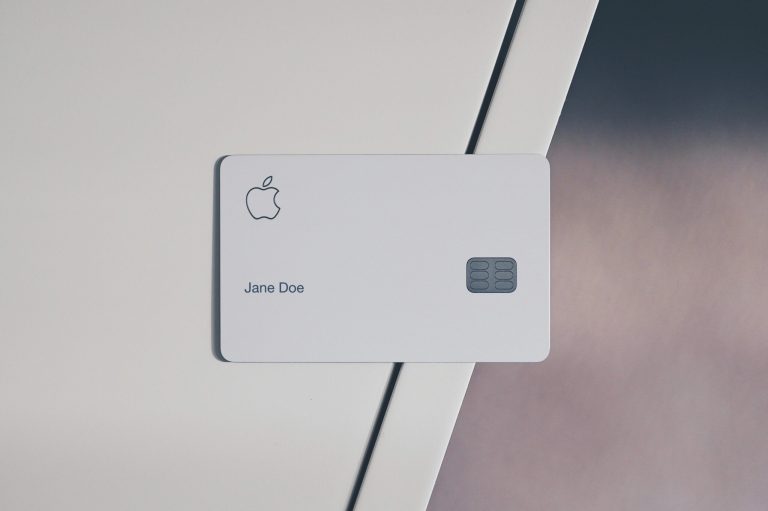

JPMorgan has replaced Goldman Sachs as the issuer of “Apple Card,” marking a significant shift in the tech titan’s financial services strategy.

On the surface, it’s a seismic shift that offers Apple Inc. (NASDAQ: AAPL) a stronger, more stable banking partner with unmatched scale, credibility, and infrastructure.

However, the direct impact on Apple stock – that’s currently up some 50% versus its 52-week low  – will likely prove limited only.

Why the JPMorgan switch isn’t significant for Apple stock

While the JPM partnership strengthens Apple’s financial services credibility, it doesn’t materially alter the giant’s earnings profile – at least in the near-term.

Apple Card sure is innovative, but it contributes only a small fraction to the company’s vast services revenue, which is dominated by App Store, iCloud, and subscription offerings.

Generally speaking, the card is more about ecosystem stickiness for AAPL than profit margins.

The transition may reassure investors that Apple has secured a reliable partner, but it’s not the kind of development that moves forecasts or valuation multiples.

In short, the switch is strategically sound, but financially modest – leaving AAPL stock largely unaffected.

The switch was not Apple’s decision in the first place

What’s also worth noting is that Apple wasn’t the one eager to exit the card partnership – it was Goldman Sachs.

Why? Because its consumer banking experiment proved costly, with higher-than-expected credit losses and servicing expenses. Apple, by contrast, wanted stability for its customers and continuity in its financial products.

So, the switch to JPMorgan was reactive – not proactive – a move to safeguard the user experience rather than to unlock new revenue streams.

This context further explains why the market has pretty much shrugged off the news on Thursday.

If anything, the shift is somewhat disruptive, requiring a two-year transition, but not transformative enough to change Apple’s share trajectory.

Why AAPL shares are unlikely to push higher in 2026

According to Barchart, AAPL shares are currently going for a forward price-to-earnings (P/E) ratio of more than 32.

Since they’re already trading at a premium valuation, the only tailwind that can drive Apple higher this year is artificial intelligence (AI).

And while the company’s push on that front sure is promising, it isn’t immediately transformative, according to Raymond James analysts’ recent note to clients.

We expect adoption of AI functionality at the edge to remain relatively limited in the near term.

Importantly, options traders also seem to agree with the firm’s cautious stance on AAPL. Contracts expiring mid-April have the lower price set at about $234 currently, indicating the titan could lose some 8% over the next three months.

Note that Apple Inc. has lost its title of the world’s second most valuable company to Google parent Alphabet Inc. this week as well.

The post Apple stock: why JPM switch is strategically sound but financially modest appeared first on Invezz

Nvidia stock traded lower early on Thursday as investors grappled with mixed and sometimes contradictory signals over how close the chip maker is to resuming exports of its artificial intelligence hardware to China.

Shares of the semiconductor giant were down around 2% at $185.05 in midday trading.

Nvidia’s stock has become increasingly sensitive to developments surrounding China, where a resumption of sales represents one of the most significant near-term catalysts for the company.

China export hopes face fresh uncertainty

Optimism around a restart of Chinese sales had been building since last month, when President Donald Trump said his administration would allow shipments of Nvidia’s H200 chip to China, provided the company gives the US government a 25% cut of sales.

The announcement raised expectations that a prolonged revenue drought from China could soon ease.

However, those hopes were shaken this week after The Information reported that Chinese authorities had asked some domestic technology companies to stop placing new orders for Nvidia’s H200 chips.

According to the report, regulators are reviewing whether the chips should ultimately be allowed into the country and under what conditions, suggesting a pause rather than an outright rejection.

The report added that Beijing is keen to prevent Chinese firms from stockpiling US-made chips before a final regulatory decision is reached.

Selective approvals under consideration

Complicating the picture further, Bloomberg reported on Thursday that Chinese authorities are preparing to approve some imports of Nvidia’s H200 chips as soon as this quarter.

Under the proposal, officials are said to be considering allowing purchases for select commercial uses, while maintaining strict prohibitions on sensitive areas.

According to the report, the chips would be barred from use by the military, critical infrastructure, sensitive government agencies and state-owned enterprises, reflecting ongoing security concerns.

Similar restrictions have previously been applied to other foreign technology products, including devices from Apple and memory chips from Micron Technology.

Requests from restricted organisations could still be reviewed on a case-by-case basis, Bloomberg reported, citing sources familiar with the matter.

Huang strikes optimistic tone

Despite the mixed reports, Nvidia Chief Executive Officer Jensen Huang struck an upbeat note this week while speaking at the CES trade show in Las Vegas.

Huang said demand for the H200 chip is “very high” and that he does not expect major issues from the Chinese government.

Nvidia already has orders for more than two million H200 chips at a list price of about $27,000 each, implying roughly $54 billion in potential revenue, Reuters previously reported.

However, amid the regulatory uncertainty, Chinese authorities have reportedly asked some technology companies to pause orders while they determine how many domestically produced chips firms should buy.

Nvidia, for its part, is reportedly asking for full upfront payment on orders during this period of uncertainty.

Huang acknowledged that the process now hinges on administrative details rather than high-level policy decisions.

“President Trump has already said that the H200s are licensed to be exported, and now we have to go through the mechanics of that,” Huang said.

“Once we get that done, I’m expecting the purchase orders to arrive.”

He added that Nvidia does not expect any formal public statement from Beijing, suggesting that approval would be signalled through the flow of orders rather than official announcements.

“We learn about everything through purchase orders. We’re not expecting any press releases or any large declarations,” Huang said.

High stakes after past policy shocks

The uncertainty underscores how exposed Nvidia remains to abrupt policy shifts.

Last year, the company took a $5.5 billion inventory write-down after a sudden US ban blocked sales of its H20 chip to China, illustrating how quickly regulatory changes can translate into financial pain.

The H200, Nvidia’s second-most advanced chip, is far more powerful than the H20, offering roughly six times the performance.

For Chinese technology firms racing to build large-scale AI systems, access to the H200 would represent a significant leap in computing capability.

For now, investors appear to be waiting for clearer signals from both Washington and Beijing.

Until the mechanics of licensing and the scope of Chinese approvals are settled, Nvidia’s stock is likely to remain volatile, reflecting the enormous revenue potential — and equally large policy risks — tied to its China business.

The post Nvidia stock down around 2% as China uncertainty continues to dampen sentiment appeared first on Invezz

Ondas Holdings (NASDAQ: ONDS) ripped higher on Thursday after Israel picked its subsidiary, Airobotics, for its “Drone Hives” project.

While the Drone Hives initiative is a critical component of the $1.7 billion Eastern Border Security Barrier, the “prime contractor” label may be masking significant financial and operational hurdles

Following today’s gains, Ondas stock is trading some 40% above its price at the start of this year.

Should you invest in Ondas stock on Israeli news?

While the $1.7 billion price tag for the Eastern Border Security Barrier is eye-watering, Ondas Holdings’ actual revenue share remains rather opaque.

Being a “prime contractor” for the Drone Hives layer doesn’t equate to a multibillion-dollar windfall for the Nasdaq-listed firm.

The broader initiative encompasses physical fencing, massive civil engineering, and sensor grids, of which autonomous drones are only a subset.

In fact, news today confirmed that SPEAR (UVision group) is already integrated as a subcontractor – meaning Ondas must share the revenue pool.

With the initial purchase order only expected later this month, the market is pricing in “best-case-scenario” before seeing a single line of confirmed contract value.

What it signals is: ONDS stock price rally may be more sentiment-driven than fundamentally backed – and is, therefore, unlikely to survive the test of time.

Execution risk and political scrutiny loom large

Defence projects of this magnitude are rarely linear, and “Israel’s Ministry of Defence (IMOD)” is notorious for shifting technical specifications mid-stream.

The 500km border initiative is a multi-phase, multi-year endeavour subject to the whims of the 2026 – 2027 Israeli budget.

Any political de-escalation or fiscal reallocation could lead to “lumpy” cash flows or project delays that small-cap investors are ill-equipped to handle.

History shows that defence contracts often face rigorous auditing and bureaucratic bottlenecks that can stall deployment for quarters.

If IMOD adjusts the “smart border” concept or prioritises different defence sectors, the anticipated Drove Hive rollout could see its timeline – and its profitability – stretched thin.

Scale mismatch could weigh on ONDS shares

Ondas has grown rapidly via acquisitions like Roboteam and Sentrycs – but managing a national-scale security project is a monumental leap in complexity.

Despite a recent boost in market cap, ONDS remains a relatively small player tasked with forming a “System of Systems” in a high-intensity combat environment.

Integrating these disparate technologies while meeting the stringent operational demands of IMOD could strain the company’s resources.

Scaling up to deploy thousands of autonomous drones requires massive investments in hiring and R&D, which creates significant margin pressure.

If operational inefficiencies arise during this massive scaling phase, the projected earnings growth could be cannibalised by the sheer cost of fulfilling such a high-stakes contract, further contracting Ondas shares’ upside potential.

Valuation remains the biggest overhang on Ondas Holdings

While the aforementioned risks may not be super concerning in a vacuum, they sure are when taken together with the ONDS shares’ stretched valuation.

At the time of writing, Ondas Holdings is going for a price-to-sales (P/S) multiple of more than 73 – alarmingly higher for a small-cap firm that’s only beginning to build a name for itself in drone-tech.

While the company based out of Sunnyvale, CA, is growing at an exceptional rate (60% sequential growth in revenue in Q3), much of it is through acquisitions only.

This raises questions about the sustainability of that growth and whether Ondas can organically scale its operations without relying on costly bolt‑on deals that inflate topline but leave profitability and long‑term shareholder value in doubt.

In short, the Israeli news sure is exciting on the surface, but the related upside is likely priced into Ondas Holdings stock at current levels.

Note that ONDS is already trading well above the Street-high price target of $13.

The post Why Israel news isn’t as big for Ondas stock as market is making it to be appeared first on Invezz

European markets and politics were in focus as investors weighed shifting economic signals and mounting social pressures across the region.

London stocks edged lower as weakness in energy shares offset a fresh defence rally, while signs of easing wage expectations offered cautious optimism for UK inflation watchers.

On the continent, French farmers brought disruption to Paris with renewed protests over incomes and regulation, and China’s Anta made a tentative move on Puma, highlighting ongoing strategic reshaping in European corporates.

Oil drags FTSE despite defence surge

London’s FTSE 100 slipped on Thursday as weakness in oil majors offset another powerful rally in defence stocks.

The blue‑chip index eased around 0.3%, with Shell tumbling after cutting its LNG production outlook and flagging a loss in its chemicals unit, while BP also traded lower.

Oversupply worries continued to hang over the wider energy sector.

In contrast, defence names surged to fresh records after President Trump called for a big increase in US military spending, sending BAE Systems sharply higher.

Retailers were another weak spot, with Associated British Foods, Greggs and Tesco all under pressure after cautious updates today.

French farmers bring Paris to halt

Hundreds of French farmers drove tractors into Paris on Thursday, blocking roads and demanding urgent government action on falling incomes and rising costs.

The protest, organised by the powerful FNSEA union, snarled traffic around the capital as farmers voiced anger over cheap imports, environmental regulations, and what they call unfair competition.

Some tractors carried banners reading “No farmers, no food” and “Save French agriculture.”

The government has promised talks, but farmers say past pledges have not been honoured.

The demonstration follows similar protests across Europe, with farmers warning they will escalate action if their concerns over profitability and bureaucracy are not addressed quickly.

Anta eyes Pinault Puma stake

China’s Anta Sports has approached the Pinault family with an offer to buy its roughly 29% stake in German sportswear group Puma, Reuters quoted people familiar with the matter.

The talks are described as preliminary, and there is no guarantee a deal will be reached, but a transaction would mark a major shift in Puma’s shareholder base and deepen Anta’s push into global markets.

The Pinaults, who control French luxury group Kering via their holding company, have been gradually reshaping their portfolio.

Any sale would likely be closely watched by regulators and investors, given Puma’s brand strength and European footprint.

UK wage growth expectations ease

British firms have scaled back their wage growth expectations for the year ahead, according to the Bank of England’s latest survey, offering a tentative sign that pay pressures may be easing.

The proportion of companies expecting wage growth above 5% has fallen, while those planning increases of 2-3% have risen.

The shift, if sustained, could help the BoE feel more confident that inflation is returning sustainably to target.

However, the central bank remains cautious, noting that wage settlements are still running above levels consistent with its 2% inflation goal, and the labour market remains tight in several sectors.

The post Europe bulletin: FTSE slips on oil, Paris farmers protest, UK wages cool appeared first on Invezz

As Apple Inc. accelerates internal discussions around leadership succession, hardware engineering chief John Ternus has emerged as the leading candidate to eventually succeed Chief Executive Officer Tim Cook, according to a report from The New York Times.

The report said the shift comes as Tim Cook, 65, has signalled to senior leaders that he wants to reduce his workload after more than a decade at the helm of one of the world’s most valuable companies.

People familiar with the discussions told the New York Times that if Cook steps down as chief executive, he would likely transition into the role of chairman of the board, a move that would preserve continuity at the top of the company.

Ternus moves to the front of the pack

According to the report, which cited four people close to the company, Ternus, 50, has moved ahead of other internal candidates.

His rise reflects what appears to be a preference within Apple’s board for continuity rather than a dramatic strategic reset.

Those familiar with the process described Ternus as having a management style similar to Cook’s: measured, collaborative, and deeply attuned to Apple’s complex global supply chain.

Ternus joined Apple in 2001 and currently serves as Senior Vice President of Hardware Engineering.

Over the years, he has built a reputation for financial discipline and incremental innovation, qualities that align closely with Apple’s approach under Cook.

One example cited in the report dates back to around 2018, when Apple debated adding a $40 laser component to the iPhone to enhance augmented reality features.

According to two people familiar with the discussions, Ternus argued that the costly component should be limited to higher-end “Pro” models.

He reasoned that Apple’s most loyal users would value the feature, while mainstream consumers would not, and that rolling it out broadly would unnecessarily pressure margins.

Expanding responsibilities and product leadership

By 2013, Ternus’s remit had expanded to include oversight of the Mac and iPad teams.

In recent years, he has taken on an even more prominent role in shaping Apple’s product roadmap.

He was a key leader in Apple’s 2020 transition away from Intel processors in Macs to the company’s own silicon, a shift that has been widely viewed as one of Apple’s most successful engineering moves in the past decade.

Ternus also spearheaded the development of the iPhone Air, released last year with a slimmer design, and has been involved in Apple’s experimentation with foldable devices, according to one person close to the company cited by the New York Times.

A deep bench of internal candidates

While Ternus is currently viewed as the front-runner, he is not the only executive under consideration.

Apple’s internal bench includes several long-serving leaders, among them Craig Federighi, head of software; Eddy Cue, head of services; Greg Joswiak, head of worldwide marketing; and Deirdre O’Brien, who oversees retail and human resources.

The central question facing Apple’s board is whether the company needs a bold innovator or another operationally focused manager.

While Apple has not replicated the transformative success of the iPhone and iPad in recent years, it has continued to deliver steady product updates and remains one of the most profitable companies in the world.

AI strategy and external pressures

Succession planning comes as Apple confronts several strategic challenges.

The company must navigate President Donald Trump’s shifting tariff policies and its continued dependence on manufacturing in China.

At the same time, Apple’s approach to artificial intelligence remains under scrutiny.

While rivals have spent tens of billions of dollars developing AI capabilities, Apple has largely stayed on the sidelines and delayed major AI-driven changes to its products.

The prospect of a Ternus-led Apple may therefore raise questions among some investors about whether the company’s long-term AI strategy will become more assertive.

Apple shares were down about 1% in afternoon trading on Thursday following the report.

While leadership clarity is often viewed positively by investors, the market reaction suggested some unease about how Apple will balance continuity with the need to address emerging technological shifts.

The post This 50-year-old Apple veteran may succeed CEO Tim Cook appeared first on Invezz

Advanced Micro Devices (NASDAQ: AMD stock) tumbled on Thursday, dropping nearly 3% to $204.53 as investors rotated out of the semiconductor giant following its CES product showcase.

The decline reflects not a company-specific crisis, but rather a collision of broader sector pressures, profit-taking after a stunning 77% rally in 2025.

AMD’s impressive announcements at CES, including new MI455X data-center GPUs, the Ryzen 7 9850X3D processor, and the Helios rack platform, failed to hold investor enthusiasm.

The AMD stock move underscores how high the bar has become for semiconductor stocks racing to capitalize on artificial intelligence.​

AMD stock: Sector pressure and CES fallout weigh on chip stocks

AMD doesn’t operate in a vacuum.

On Wednesday, Intel’s 10% surge on its Panther Lake launch stole the momentum from AMD’s own CES announcements a day earlier.

Intel’s Arc B390 graphics chip claimed 77% faster gaming performance than its previous version, while its new 18A manufacturing process directly challenges AMD’s cost structure.

That competitive positioning shifted sentiment sharply away from AMD and toward Intel as the near-term AI-PC play.​

Beyond Intel, the broader semiconductor sector is vulnerable to rotation.

Memory manufacturers like Western Digital fell 9% and Seagate dropped 9.3% as investors locked in gains across high-beta chip stocks.

AMD stock, with a beta of 1.9, tends to amplify market moves, both up and down. When tech rotates into defensive holdings or away from volatile growth bets, AMD feels the pain twice over.​

Geopolitical and regulatory headlines loom in the background.

US licensing policies toward China, tariff uncertainty, and questions about whether AI capex can sustain current levels all weigh on semiconductor sentiment.

While none triggered Thursday’s sell-off directly, the uncertainty keeps short-term traders on edge, ready to bail at the first sign of profit-taking opportunity.​

Profit-taking and short-term dynamics

The math is straightforward: AMD rallied 77% in 2025. After such a gain, any pullback is violent.

Heavy insider selling, including CEO Lisa Su’s sale of 125,000 shares in December for $26.9 million, adds psychological pressure, signaling that even insiders are locking in gains near recent highs.​

Analysts maintain a “Moderate Buy” rating with a $277 consensus price target, but that consensus assumes flawless execution: robust MI450 bookings, high-margin AI-GPU sales, and no competitive surprises.

Intel’s Panther Lake announcement cast doubt on that scenario, at least for the near term.​

Technical factors amplified the decline. The stock’s recent 20% pullback from October highs has left short-term traders and algorithms on hair-trigger sell signals.

Once key price levels were breached, momentum-based selling kicked in, cascading the decline from -1% to -3.2% within the first hour of Thursday trading.​

AMD’s Thursday plunge is a reminder that near-term price action and long-term fundamentals diverge sharply.

The post Why is AMD stock plunging sharply on Thursday? appeared first on Invezz

Investors are bailing on CorMedix (NASDAQ: CRMD) today after the biotech firm guided for up to $320 million in revenue for its fiscal 2026.

The announcement isn’t sitting well with shareholders, primarily because CRMD’s topline was roughly $400 million in the prior year, according to the preliminary full-year financials it posted on Thursday.

Simply put, the NJ-headquartered firm expects its revenue to shrink this year, which seldom bodes well for investors. Following today’s plunge, CorMedix stock is down over 50% from its 52-week high.

CorMedix stock to remain subdued on DefenCath weakness

On July 1st, DefenCath will lose its temporary TDAPA reimbursement status and shift to a notably less favourable post-TDAPA add-on adjustment.

What this means is that dialysis providers will receive lower institutional reimbursement, and CorMedix will face materially reduced net pricing.

This will directly pressure its margins and undermine its near-term revenue visibility.

Note that “DefenCath” was CorMedix’s sole commercial product for a long time – and while the recent Melinta acquisition did expand its portfolio, those new revenue sources aren’t yet material enough to offset the expected weakness in its antimicrobial catheter lock solution.

This makes buying the dip in CRMD stock a rather risky proposition for serious investors.

CRMD shares’ technicals are just as concerning

CorMedix shares remain unattractive despite the sharp pullback, also because the management sees DefenCath sales sliding further to $140 million at the top end of its range in 2027.

Moreover, it’s not just fundamentals – the company’s technicals are just as concerning.

At the time of writing, CRMD is trading decisively below its major moving averages (MAs), indicating bears remain in control across multiple timeframes.

Plus, the biotech stock’s long-term relative strength index (100-day) sits at about “45” currently – which means the broader downtrend isn’t approaching exhaustion either.

Note that insiders have predominantly unloaded CorMedix in the trailing 12 months, reinforcing that those closest to the company believe it was overvalued at north of $10.

Taken together, these insights further strengthen the bear case for CRMD in 2026.

Is it worth investing in CorMedix today?

On Thursday, CorMedix also said its chief executive, Joseph Todisco, is taking over as chairman of the board as well.

This consolidation resides significant power in a single individual, reducing checks and balances that independent board oversight typically provides.

For investors, this dual role can be unsettling – as it heightens governance risk and may complicate accountability.

In the near term, this transition may mean uncertainty around strategic decision‑making, potentially undermining confidence in CRMD shares.

What’s also worth mentioning is that Wall Street had a consensus “buy” rating and $19 price target on CorMedix heading into 2026.

It’s reasonable to assume, however, that following the DefenCath update today, at least some firms will choose to downwardly revise their estimates for CRMD.  

The post Why is CorMedix stock crashing today: is it worth buying on the dip? appeared first on Invezz

US stock indexes edged higher on Thursday after shaking off early morning weakness tied to mixed labor market signals and cautious investor positioning ahead of Friday’s employment report.

The S&P 500 recovered from small opening losses to trade just barely positive, while the Dow led the session with a 0.6% gain, buoyed by rotations into defensive and cyclical names outside technology.

The rebound reflects investor resilience rather than conviction, with breadth remaining cautious as traders await the January nonfarm payroll report due on Friday at 8:30 AM.​

US market rebound led by tech, breadth remains cautious

The morning selloff faded as buyers stepped in, particularly in industrials, financials, and discretionary stocks that had lagged during the technology-led rally.

The Dow’s outperformance, up roughly 0.6% midday, contrasted sharply with the Nasdaq composite, which traded essentially flat as mega-cap technology names struggled to hold ground.

Market breadth painted a mixed picture: advancers barely outnumbered decliners as traders rotated away from concentrated positions in Magnificent Seven stocks that have driven the bulk of 2025’s gains.​

The Russell 2000 small-cap index, meanwhile, climbed toward record territory, suggesting institutional investors were diversifying away from tech concentration.

VIX volatility, the fear gauge, held steady around 15.2, elevated for an early-year Friday but not signaling capitulation or panic selling.

This measured tone contrasts sharply with Thursday’s sharp rotations into defense stocks on Trump’s $1.5 trillion military budget announcement.​

Sector performance underscored the rotation: Palo Alto Networks bounced 1.8% on M&A speculation amid a cybersecurity consolidation wave.

Gap Inc. surged 2.8% after a UBS upgrade. Energy stocks, which had faltered on Venezuela oversupply concerns, stabilized as crude prices held firm.

Notably, financial stocks like JPMorgan and Bank of America inched higher alongside Treasury yields, reflecting investor expectations that the Fed may hold rates steady longer than initially priced in.​

Macro watch: Bond yields, dollar, Fed commentary shape afternoon trade

The 10-year Treasury yield held steady around 4.14%–4.16%, having fallen 3 basis points from Wednesday’s highs as investors digested weak December job creation data (41,000 private-sector jobs via ADP vs. 50,000 forecast).

The 2-year yield sat at 3.48%, leaving the 10-2 yield curve spread at 0.68%, a modest positive slope signaling mild expectations for economic normalization rather than recession.​

The dollar index ticked up to 98.80, hovering near four-week highs but struggling to break through the 99.00 resistance level.

The modest dollar strength, paired with stable yields, created a mixed backdrop for equities, not aggressively dollar-positive, but stable enough to keep Treasury buyers engaged.​

Friday’s headline jobs report will determine afternoon market direction.

Consensus forecasts nonfarm payroll growth of 55000–60,000 in December, down sharply from prior months as the economy faces labor headwinds.

A miss could trigger a rally in bonds and equities on Fed easing bets. ​

The post US midday market brief: stocks inch higher as S&P 500 recovers from morning losses appeared first on Invezz

Tonight’s top headlines span geopolitics and global tech tensions.

In Washington, the US Senate is moving to curb President Trump’s war powers by advancing a resolution that would require congressional approval before further military action in Venezuela.

Meanwhile, Trump’s administration is entertaining an unusual proposal to pay Greenlanders to consider independence.

China has launched a probe into Meta’s AI acquisition of Manus, underscoring rising tech rivalry.

And in energy markets, Reliance Industries signals interest in Venezuelan crude should sanctions ease.

Senate moves to curb Trump’s war powers

The US Senate is preparing to vote on a bipartisan resolution that would limit President Trump’s ability to take further military actions on Venezuela without congressional approval.

The measure reflects growing concern among lawmakers about the administration’s outreach to Caracas and the potential easing of pressure on President Maduro’s government.

While Trump has argued that engaging Venezuela could lower oil prices and reduce migration, critics warn that sanctions relief should only follow concrete democratic reforms.

The resolution, which has enough support to pass, would require the White House to certify political progress before waiving key restrictions, setting up a potential clash with the executive branch.

Trump floats Greenland payout plan

The Trump administration is weighing an extraordinary idea: paying Greenland’s 57,000 residents lump sums of between 10,000 and 100,000 dollars each to encourage them to break from Denmark, according to a Reuters report.

The payments, potentially totalling nearly $6 billion, are one of several options under discussion as Trump revives his long‑held ambition to bring the Arctic island under US control.

Critics in Greenland and Europe have blasted the notion as crass and neo‑colonial, insisting Greenland’s future is for Greenlanders and Denmark to decide, not Washington.

China probes Meta AI deal

China’s antitrust regulator is investigating Meta’s acquisition of Manus, a small AI startup, and has ordered the US tech giant to halt exports of certain products to the country.

The State Administration for Market Regulation is reviewing whether the deal, which closed last year, violates merger rules and national security concerns.

Separately, Beijing has told Meta to stop shipping some hardware and software to Chinese customers, citing export control issues.

The moves signal fresh tension between Washington and Beijing over technology transfers and highlight China’s growing scrutiny of foreign deals in sensitive sectors.

Reliance eyes Venezuelan oil return

Reliance Industries said it would consider buying Venezuelan crude if US sanctions are lifted, a move that could open a major new market for Caracas and reshape global oil flows.

The Indian refining giant, which operates the world’s largest processing complex at Jamnagar, has historically taken Venezuelan oil but stopped after Washington tightened restrictions.

With the Trump administration now exploring a rapprochement, Reliance appears ready to move quickly.

The company stressed any purchases would comply with international law, but the prospect of fresh shipments highlights how sanctions relief could rapidly redraw trade routes and give Venezuela a vital economic lifeline.

The post Evening digest: Trump faces Senate pushback, floats Greenland payouts, China targets Meta appeared first on Invezz