Category

Investing

Category

GeneDx stock (NASDAQ: WGS) plunged 14% on Monday after the genomics testing company released preliminary full-year 2025 results that met expectations.

But the company unveiled 2026 guidance that investors deemed disappointingly conservative, wiping out significant gains and reigniting concerns about the high-growth biotech’s ability to maintain breakneck expansion.

GeneDx stock fell from Friday’s close of approximately $139 to intraday lows near $120, marking the latest sharp reversal for the company.

GeneDx stock: Guidance miss that changed sentiment

GeneDx reported preliminary 2025 revenue of $427 million, representing 41% year-over-year growth and roughly in line with the company’s prior guidance of $425 to $428 million.

The real estate exome and genome testing business generated $360 million in revenue, up 54% from 2024, with test volumes reaching 97,271 for the year, up 30.5%.​

But the market’s attention was fixed squarely on management’s 2026 outlook.

GeneDx projected 2026 revenue between $540 and $555 million, implying growth of just 27 to 30% from full-year 2025.

Critically, the company’s core exome and genome testing revenue is expected to grow only 33 to 35% next year, a dramatic deceleration from the 54% pace achieved in 2025.​

For context, GeneDx shares surged 51% during 2025, partly on the premise that the company’s rapid acceleration of test volumes and improving profitability would persist.

The guidance effectively told investors that expansion is moderating, a message that high-momentum biotechs rarely deliver without triggering sharp selloffs.​

Priced for perfection: The GeneDx pattern

This reversal fits a familiar playbook for GeneDx.

In April 2025, the company beat Wall Street’s revenue forecast of $79.5 million with actual results of $87.1 million, yet shares plummeted 43% because the beat margin was viewed as too modest and test volumes declined sequentially.

GeneDx’s stock price reflects something closer to a venture-stage growth narrative priced into a public company.

With a current forward price-to-sales ratio near 8 times, the stock assumes sustained 30-plus percent annual growth well into the future.

Any hint of deceleration triggers de-rating, as Monday’s move demonstrated.​

Operationally, the company remains compelling.

Full-year 2025 adjusted gross margins held steady at 71%, and management reaffirmed the goal of positive adjusted net income in 2026.

CEO Katherine Stueland emphasized momentum in the NICU (neonatal intensive care) market and Epic Aura integration, initiatives designed to accelerate second-half 2026 growth.​

Yet guidance of 27 to 30% revenue growth, while respectable for most biotech companies, is insufficient to justify GeneDx’s current valuation.​

The stock will likely stabilise only once management either raises 2026 guidance during earnings season (due February 23, 2026) or investors reset expectations lower.

The post Why is GeneDx stock crashing on Monday? appeared first on Invezz

The major lenders on Wall Street will start the fourth-quarter earnings season this week while shareholders monitor their financial reports to understand the direction of the sector for 2026.

JPMorgan Chase reports Tuesday, followed by Bank of America, Citigroup, and Wells Fargo on Wednesday, then Goldman Sachs and Morgan Stanley on Thursday, according to MarketWatch.

Financial institutions can now set more aggressive performance targets because the current regulatory environment has decreased supervisory activities.

The market consensus predicts JPMorgan EPS will reach $4.95 while revenue will amount to $46.2 billion.

The company Home Bancshares will release its Q4 financial results, but analysts predict the results will be inconsistent.

What to watch as results roll in

The “beat and raise” pattern, which supports long-term share price growth, appears during each earnings season when most S&P 500 companies exceed analyst predictions, according to MarketWatch.

The main focus for investors this week will be on the revenue composition and capital performance, and expense management of the biggest American banking institutions, together with their 2026 target adjustments.

The upcoming JPMorgan preview will concentrate on capital markets operations.

The sell-side analysts predict JPMorgan will achieve $4.95 per share earnings and $46.2 billion in net revenue when they release their results on Tuesday morning, according to the preview analysis.

The analysts predict JPMorgan will achieve 3% earnings growth and 8% revenue growth compared to the previous year, according to the preview analysis.

The bank’s capital markets group produces more than half of its net revenue and income through trading operations and deal transactions, which creates financial result dependence on these activities while achieving high returns on tangible common equity, according to the analysis.

The report established JPMorgan Chase as having a value that exceeded its actual worth by 16% when using the P/E ratio and 2.3 times its tangible book value, while showing excellent capital performance and 20% return on tangible common equity (ROTCE), which supported its elevated market value.

The average fair value estimates that experts provided amounted to $313.

The following section presents a preview of Citigroup while examining how its growth performance relates to its investment returns.

The Wednesday morning report from Citigroup showed analysts predicted $20.6 billion in net revenue and $1.67 per share earnings, which would represent 5% revenue growth and 25% earnings growth compared to the previous year, according to the preview.

The research findings showed Citi would achieve 25% EPS growth through its dividend distribution program, yet the study revealed two main problems because of its 9% return on total equity capital and its need for more spending reductions and operational changes to generate value.

Home Bancshares stands as the banking institution that people should monitor in their region.

Home Bancshares will release fourth-quarter results after the closing bell on Wednesday, Jan. 14, according to Benzinga.

The market predicts that the company will achieve 60 cents of earnings per share, which represents a rise from 50 cents during the previous year, while revenue will reach $272.48 million compared to $260.76 million in the past year.

The company on Dec. 8 agreed to acquire Mountain Commerce Bancorp for $150.1 million. Shares fell 1% to close at $28.45 on Friday, Benzinga reported.

Home Bancshares has received multiple analyst evaluations throughout the previous period.

The analyst Dave Rochester from Cantor Fitzgerald maintains a neutral position while starting his coverage at $32 on September 10th, 2025, and achieving a 70% accuracy rate.

Keefe Bruyette & Woods analyst Christopher McGratty maintained a Market Perform rating for the stock while increasing his price target to $32 from $30 on July 21, 2025.

The analyst achieved a 73% accuracy rate in his predictions.

RBC Capital analyst Karl Shepard maintained Sector Perform status for the stock while reducing his price target from $33 to $31 on April 21, 2025.

His predictions showed 68% accuracy.

The list includes Stephens & Co.’s Matt Olney, who predicts the stock will be overweight while setting a $33 target price for April 21, 2025, with a 75% accuracy rate.

Why it matters for investors

MarketWatch predicts that major banks will create capital return plans and obtain improved regulatory conditions, which will support the current high stock market values.

The bank operates in a market environment that affects its earnings performance because JPMorgan maintains a large capital markets division.

The company faces two main evaluation criteria because its financial performance depends on market conditions and its return on investment and organizational transformation progress.

Key dates and lineup

The financial results from JPMorgan Chase will become available to the public on Tuesday.

Wednesday: Bank of America, Citigroup, and Wells Fargo report; Home Bancshares after the close, per Benzinga.

Thursday: Goldman Sachs and Morgan Stanley report.

The main point is that the largest US banks, together with specific regional banks, will introduce multiple updates during this week, which will establish the direction for 2026.

The company should track its revenue breakdown and its investment returns, and all modifications to its guidance, which will affect how investors predict its performance.

The post Wall Street banks to kick off Q4 earnings as investors eye 2026 outlook appeared first on Invezz

The Kospi Composite Index continued its strong bull run, hitting its highest level on record. It jumped to a record high of KRW 4,680, up by over 105% from its lowest level in 2025. This surge coincided with the ongoing South Korean won plunge, which rose to KRW 1,475, up by 3% above the lowest level this month.

Kospi Index nears president’s target of KRW 5,000

The Kospi Composite Index has been in a strong rally since the new president promised to boost its performance to KRW 5,000, something that many analysts believed was unachievable as it was trading at KRW 2,700 when he made the pledge.

The index soared today as the main stock market exchange said that it would increase the number of trading hours to meet the rising demand for shares, especially by retail traders. It will increase the trading hours from 6.5 hours today to 12 hours in the coming months.

The main catalyst for the ongoing Kospi Index surge is the ongoing AI boom, which has led to a big increase in demand for products made by companies like Samsung, SK Hynix, and Hanmi Semiconductor. Samsung and SK Hynix are the two biggest companies in the index with a market capitalization of over $612 billion and $350 billion, respectively.

The best-performing companies in the Kospi Index this year are companies like Kumho Electric, Keyang Electric Machinery, Hanwa Systems, Hyundai Autoever, and Hyundai Glovis.

Meanwhile, the index has jumped because the ongoing South Korean won plunge, with the USD/KRW nearing its highest level in 2025. It has jumped from a low of 1,430 on December 25 to the current 1,473, and is now in its worst performance since 1998.

A deteriorating South Korean won boosts the country’s stock market by making products more affordable abroad, which may help to boost their market share over time.

Meanwhile, the South Korean Central Bank has maintained a cautious approach as it worked to stabilize the economy amid the ongoing tariffs with the United States. The bank slashed interest rates by 0.25% to 2.5% in May and left them there. The lower rates have pushed more investors to move to the stock market.

Kospi Composite Index technical analysis 

KOSPI Index chart | Source: TradingView 

The daily timeframe chart shows that the Kospi Composite Index has been in a strong uptrend in the past few months, moving from a low of KRW 2,281 in April to KRW 4,654.

It has moved above the important resistance level at KRW 4,223, its highest level on November 3rd. Such a move will invalidate the double-top pattern, a risky bearish reversal sign.

The index remains above all moving averages, while the Average Directional Index (ADX) has moved to 84, a sign that bulls maintained the momentum.

Also, the Relative Strength Index (RSI) has moved to the overbought level of 80. Therefore, the most likely scenario is where the index continues rising as bulls target the key resistance level at KRW 5,000 later this year.

The alternative scenario is where the index retreats and retests the key support level at KRW 4,223, down by nearly 10% from the current level.

The post Here’s why the Kospi Composite Index is in an unstoppable bull run appeared first on Invezz

Venezuela’s stock market has surged to record highs following the capture of former President Nicolás Maduro by US forces, as investors wager that years of economic isolation and mismanagement may finally give way to stabilization and reform.

The country’s benchmark Indice Bursatil de Capitalizacion (IBC) has gained more than 130% since the US operation on Jan. 3, defying expectations of turmoil and instead reflecting a wave of speculative optimism, said a CNBC report.

The rally comes after years in which Venezuela’s economy was battered by sanctions, defaults, and policy uncertainty, leaving its financial markets largely sidelined from global capital flows.

Stock market rally signals optimism

The sharp rise in equities has drawn attention from both domestic and international investors.

Adding to the momentum, US ETF issuer Teucrium on Friday applied to the Securities and Exchange Commission to launch what would reportedly be the first exchange-traded fund focused on companies with exposure to Venezuela.

Analysts say the rally reflects hopes that Venezuela’s economy could stabilize under a reconfigured political environment.

Expectations are growing that such a shift could help revive oil output, attract foreign capital, and normalize relations with the United States.

“In what is a fluid environment, we currently believe that Venezuela is more likely to experience regime continuity with behavioral realignment, rather than an outright democratic transition or system collapse,” BMI said in a note.

“A pliant Venezuela would allow the US to reinforce its regional hegemony, secure access to the oil sector on very favorable terms.”

Investors price in sanctions relief

Market participants say that optimism has been building around the idea that Maduro’s removal could pave the way for sanctions relief and eventual debt restructuring.

“Investors began to price in Maduro’s removal from power as a precondition for sanctions relief and eventually a restructuring deal,” said Anthony Simond, investment director at UK-based wealth and investments firm Aberdeen.

According to Simond, demand has come from a wide range of investors, including mainstream emerging-market asset managers as well as hedge funds and distressed-debt specialists seeking asymmetric upside opportunities.

However, strategists caution that Venezuela’s stock exchange remains small, illiquid, and difficult for global investors to access.

These characteristics can amplify price swings.

The IBC soared 1,644% in 2025, underscoring the volatility that can arise in thinly traded markets.

“Because Venezuela’s markets are thinly traded, even small shifts in expectations can cause large price moves,” Alice Blue, an integrated brokerage of financial charting platform TradingView, wrote in a note.

“The rally reflects hope and speculation, not confirmed outcomes.”

Bonds rally, but risks remain

The optimism has not been limited to equities.

Investors have also rushed into Venezuela’s sovereign bonds and those issued by the state oil company since Maduro was captured.

Renewed interest is largely driven by expectations of potential debt restructuring, which investors see as a way to unlock value frozen since Venezuela’s 2017 default, said Jeff Grills, head of US cross markets and emerging markets debt at Aegon Asset Management.

Still, Grills warned that much of the rally appears headline-driven.

“At this stage, the rally appears to be largely tactical, rather than the start of a structural re-rating,” he said, adding that leadership changes alone do not yet amount to a full regime transition.

Complicating the outlook are Venezuela’s extensive external liabilities, including arbitration claims and bilateral debts estimated at $150 billion to $170 billion, according to Reuters.

“Everything depends on that not being derailed. [However] if that materializes, this is a complete re-rating situation,” said Eric Fine, a portfolio manager from VanEck.

For now, Venezuela’s market surge reflects a fragile mix of optimism and speculation, with investors closely watching how political developments translate into concrete economic change.

The post Venezuela stocks hit record as investors bet on post-Maduro turnaround appeared first on Invezz

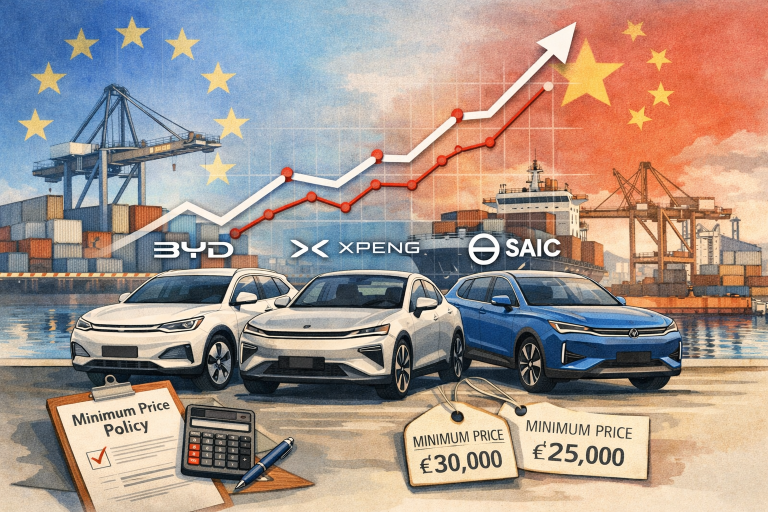
Shares of Chinese electric vehicle makers rose on Tuesday after the European Commission announced it is considering a minimum price system to replace import tariffs, a move investors view as supportive of margins and sales growth in the region.

BYD Inc. shares jumped as much as 4.8% in Hong Kong trading. Xpeng Inc. advanced 5.3%, while SAIC Motor Corp.’s Shanghai-listed shares rose as much as 3.6%.

The rally followed confirmation that the European Union is reassessing the tariff regime imposed on Chinese-made electric vehicles in 2024.

EU considers shift from tariffs to pricing framework

Under the plan outlined by the European Union on Monday, Chinese exporters would submit proposals covering minimum import prices, annual volume limits, and future investments in the region.

These submissions would then be assessed by the European Commission. If adopted, the framework would replace tariffs on Chinese EVs that currently range as high as 35%.

The proposed system could reshape how Chinese automakers access the European market.

The existing tariffs were introduced after a year-long investigation in which the EU accused Chinese carmakers of benefiting from unfair state subsidies.

Those levies also apply to China-made vehicles sold by non-Chinese brands, including Tesla Inc.

“Overall, this should be positive for developing better ties between the EU and Chinese automakers, and allow European manufacturers like Volkswagen to use China as an EV export hub,” said Eugene Hsiao, head of China equity strategy at Macquarie Capital Ltd, in a Bloomberg report.

Hsiao noted, however, that minimum pricing would need to be flexible to accommodate different vehicle models and categories.

He added that the changes could be mixed for Chinese automakers, given the ongoing push to localize production in Europe to avoid trade barriers.

Implications for Chinese automakers and Europe

The potential policy shift comes as the EU balances competing priorities.

On one hand, it is seeking to stabilize trade relations with key partners as tensions with the United States intensify, following President Donald Trump’s threats to seek control of Greenland.

On the other hand, European policymakers remain under pressure to protect the region’s domestic automotive industry from intensifying competition by Chinese manufacturers offering more affordable electric vehicles.

While details of the proposal have yet to be finalized, analysts see the development as broadly constructive for Chinese EV makers’ expansion in Europe.

“While awaiting details, we tend to read it as constructive for Chinese EV’s sales expansion in Europe,” Morgan Stanley analysts wrote in a note. “Key players — like BYD, SAIC, and Geely — shall benefit.”

Chinese automakers have already been gaining traction in the region.

In the first 11 months of 2025, China exported 579,000 battery electric vehicles to Europe.

BYD, SAIC, and Zhejiang Geely Holding Group Co. each accounted for roughly 10% to 15% of those exports, according to Morgan Stanley estimates.

Trade tensions and market dynamics

Pricing remains a key factor underpinning Chinese competitiveness.

The average price of China-made EVs sold in Europe last year was around 25,000 euros ($29,140), compared with an overall average import price of about 30,000 euros for battery EVs, Morgan Stanley said.

The earlier tariff dispute triggered retaliatory measures from Beijing, which targeted European industries including dairy, pork, and brandy.

Since then, negotiations between Brussels and Beijing have continued in an effort to avoid a broader trade conflict.

The post BYD, Chinese EV stocks rise as EU weighs minimum price system over tariffs appeared first on Invezz

Nio stock price jumped by over 2% in Hong Kong, continuing a cautious recovery that started on Friday. It rose to a high of $38 after a proposal by the European Union that may help boost sales of Chinese EVs in the region. 

EU considers plan to replace tariffs on Chinese vehicles

Nio and other Chinese EV companies rose in Hong Kong and Beijing after a report suggested that EU officials were considering a minimum price system to replace import tariffs. Such a move would be highly positive for these companies as it would boost their sales and profit margins.

The plan will see Chinese vehicle companies submit their plans on their minimum import prices, annual volume limits, and future investments in the region. Such a move will remove the 35% tariff that these companies pay today.

Nio, a top Chinese manufacturer, would benefit from access to the European market, where it has attempted to gain market share over the years.

Europe is an ideal market because of its huge population of over 600 million people, who are much wealthier than those in other places. It would also help it to diversify its business from China, a country whose market has become highly saturated, with companies like Xiaomi, SAIC, XPeng, and Li Auto competing for market share.

Nio deliveries are doing well 

In a recent note, Nio said that its business was doing well, with demand for its vehicles continuing the uptrend. 

The company said that it delivered 48,135 vehicles in December, up by 54.6% from the same period a year earlier. It sold 124,807 vehicles in the fourth quarter, up by 71% YoY. This growth brought its annual deliveries to 326,028 vehicles, up by 47% YoY.

In contrast, Tesla delivered 418,227 vehicles in the fourth quarter, a 16% plunge from the same period in 2024. The company delivered over 97,000 vehicles in China in December.

Nio’s growth is being driven by ES-8, its sports utility vehicle (SUV), which has surpassed 40,000 deliveries, making it one of the fastest growing models in its category.

The most recent quarterly results showed that Nio made $3 billion in revenue in the third quarter while its gross margin jumped to 13.9% from the previous 10.9%.

Still, the main challenge that Nio faces is that its business has never been profitable, which has pushed it to raise money and dilute its shareholders. The company recently raised over $1.16 billion by selling American shares.

Nio stock price technical analysis 

Nio shares chart | Source: TradingView 

The daily timeframe chart shows that the Nio share price has been in a strong downward spiral in the past few months, moving from a high of $61.80 in October to the current $37.

It has formed a head-and-shoulders pattern, a common bearish reversal pattern, a common bearish reversal sign. 

The stock is about to form a death cross, which happens when the 50-day and 200-day Exponential Moving Averages (EMA). This pattern is one of the most bearish chart patterns in technical analysis.

Nio has also invalidated the double-bottom pattern at $37.80 and the neckline at $42.9. A double-bottom is one of the most common bullish reversal chart patterns.

The stock has now moved below the 61.8% Fibonacci Retracement level at $38.6. Moving below this level is important as most rebounds normally happen at this point.

Therefore, the most likely Nio share price forecast is bearish, with the next key support level to watch being at $32, the 78.7% Fibonacci Retracement level, which is 16% below the current level.

The post Nio stock jumps in Hong Kong after key EU news as a risky pattern nears appeared first on Invezz

Global markets opened Tuesday on a buoyant note, led by a rally in Asian equities driven by optimism around artificial intelligence, while uncertainty over US monetary policy and geopolitics pushed investors toward safe havens such as gold.

Commodities were mixed, with oil climbing on Middle East tensions and metals extending a strong start to the year.

Asian markets rally on AI optimism

Asian share markets moved broadly higher on Tuesday, led by a surge in Japanese stocks after markets reopened from a holiday.

Japan’s Nikkei jumped 3.3% to record highs, supported by a slide in the yen to historic lows and growing expectations of fiscal stimulus.

Reports confirmed that Prime Minister Sanae Takaichi plans to call an early election in an effort to strengthen her coalition’s parliamentary majority, a move seen as providing scope for more aggressive economic policies.

Elsewhere in the region, South Korea and Taiwan both hit all-time peaks, while Chinese blue chips climbed to a four-year high.

MSCI’s broadest index of Asia-Pacific shares outside Japan rose 0.4% to a fresh record.

Optimism around artificial intelligence continued to underpin sentiment. “We see global equities continuing to climb in 2026, targeting circa 10% upside for the MSCI AC World to year-end,” analysts at Citi said, while cautioning that high valuations leave little room for earnings disappointments.

In Europe, futures pointed modestly higher, while US stock futures eased ahead of a key December inflation reading and the start of earnings season for major banks.

Uncertainty surrounding the independence of the US Federal Reserve weighed on the dollar and boosted demand for gold.

The news of a US Justice Department criminal investigation into Fed Chair Jerome Powell raises concerns that the central bank could face political pressure to keep rates too low for too long.

The dollar index hovered near 98.94 after falling overnight, while the euro edged higher.

Gold broke above $4,600 an ounce for the first time before steadying slightly lower.

“Gold serves as a catch-all, and a default hedge of last resort for fear and uncertainty,” said Christopher Louney, a gold strategist at RBC Capital Markets, who sees potential gains as high as $5,200 by year-end.

SK Hynix to build new advanced packaging plant

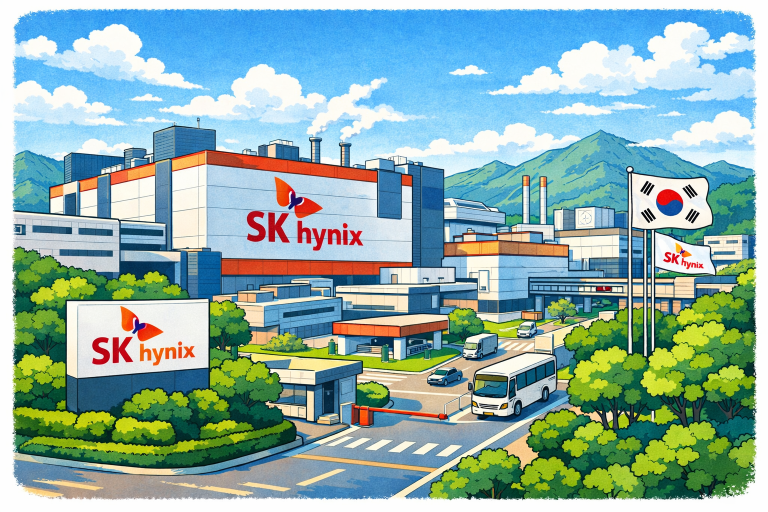
In corporate news, South Korea-based SK Hynix said it will invest 19 trillion won ($12.9 billion) to build a new advanced packaging plant in Cheongju, expanding capacity to meet surging AI-related demand.

Construction is set to begin in April, with completion targeted for the end of 2027.

The plant will focus on advanced packaging technology that combines multiple memory chips into a single high-density unit, improving performance and energy efficiency.

SK Hynix is a global leader in high-bandwidth memory used in AI processors, including those designed by Nvidia.

The company cited industry projections showing the HBM market growing at a compound annual rate of 33% between 2025 and 2030.

Trump presses Microsoft on electricity costs

US President Donald Trump said Microsoft will announce changes aimed at ensuring Americans do not face higher utility bills as the company expands data center capacity to support AI demand.

“I never want Americans to pay higher Electricity bills because of Data Centers,” Trump wrote on social media, adding that his administration is working with major technology firms on the issue.

Microsoft did not immediately comment, but the company has previously said it is managing the local impact of its data centers, even withdrawing plans for one project in Wisconsin amid opposition.

Aluminum and tin extend strong rally

In commodities, aluminum traded near its highest level since early 2022, while tin extended a sharp rally on expectations of tighter global supplies.

Except copper, most metals have surged on Tuesday.

Aluminum rose to around $3,187 a ton in London, close to Monday’s high, while tin climbed to about $48,470 a ton and is up nearly 20% in 2025.

Metals have started 2026 strongly, supported by supply constraints, falling interest rates, and demand linked to AI-driven infrastructure such as data centers and power grids.

The post Morning brief: Asian stocks hit records, gold surges as AI boom fuels markets appeared first on Invezz

Rolls-Royce share price surged to a record high this year, continuing a trend that has been going on for years. It jumped to a record high of 1,305p on Monday, bringing the year-to-date gains to 11%, making it one of the best-performing companies in the FTSE 100 Index.

Why the Rolls-Royce share price has soared 

Rolls-Royce Holdings stock has soared by 1,300% in the last five years, bringing its market capitalization to over $143 billion, making it the fifth biggest company in the UK after AstraZeneca, HSBC, Linde, and Shell. It has overtaken companies like Unilever, Rio Tinto, and British American Tobacco.

Rolls-Royce’s surge mirrors the performance of other top industrial companies like BAE Systems, Babcock, GE Aerospace, and Melrose Industries. 

One reason for this is that the company has a large defence business at a time when geopolitical risks are rising. Trump recently kidnapped Venezuela’s Nicolas Maduro and has threatened to attack Greenland. 

At the same time, he has hinted that he will launch an attack on Iran, where protests have continued in the past three weeks. Trump has also maintained that the US will boost its defense spending from nearly $1 trillion to $1.5 trillion. 

Defense spending is also accelerating in Europe, where Trump has pushed countries to boost defense spending to 5%. This is important because the company is a major defense contractor, making engines for fighter jets and nuclear submarine propulsion systems.

Rolls-Royce share price has also soared because of its small modular nuclear reactor business. Analysts believe that this business has more room to run, especially after the recent deal between Oklo and Meta Platforms. The deal will see Oklo providing reliable nuclear power to AI data centers. 

Therefore, there is a likelihood that Rolls-Royce will also gain some of these contracts in the future. Besides, it is one of the most experienced companies in the nuclear industry.

Aviation industry is booming

Rolls-Royce’s share price also continued to do well because of the aviation industry, which will continue doing well this year. A recent report by IATA showed that air traffic will grow by 4.9% this year, continuing a trend that started after the pandemic. 

Rolls-Royce is one of the biggest players in the aviation industry, where it makes engines known as Trent and UltraFan. Its engines are mostly used in aircraft like Boeing 787 and Airbus A350.

Analysts believe that the company’s growth will continue this year, with its operating profit and cash flow soaring. The company’s guidance is for the two metrics to be between £3.1 billion and £3.2 billion and between £3 billion and £3.1 billion, respectively. Chances are that its numbers will be better than its guidance.

It has also continued to reward its shareholders, including with a £200 million buyback announced in December.

Rolls-Royce share price technical analysis

RR stock price chart | Source: TradingView

The daily chart shows that the Rolls Royce share price has rebounded in the past few weeks. It has soared from a low of 1,020p in December to 1,287p today. 

The stock has moved above the key resistance level at 1,192p, the neckline of the inverted head-and-shoulders pattern, a common bullish reversal sign. 

The stock remains above the 50-day and 200-day Exponential Moving Averages and the Supertrend indicator. Additionally, the Relative Strength Index (RSI) and the Average Directional Index (ADX) have continued rising.

Therefore, the most likely scenario is where the stock continues rising as bulls target the key resistance level at 1,500p. Another alternative is where the stock drops and retests the support at 1,192p and then resumes the uptrend to 1,500p.

The post Rolls-Royce share price rally gains steam: can it hit 1,500p? appeared first on Invezz

Nigeria is preparing to pass a new law that could make it one of the first African countries to regulate artificial intelligence across the economy.

The move comes as global technology firms have expanded rapidly in one of the continent’s fastest-growing digital markets, often without strong legal oversight.

The proposed National Digital Economy and E-Governance Bill would give regulators fresh powers over data, algorithms, and digital platforms.

It also aims to close a regulatory gap that has existed since Nigeria published a draft AI strategy in 2024.

Lawmakers expect to approve the bill by the end of March.

Nigeria’s AI law targets risky systems

The bill introduces tighter scrutiny for higher-risk AI systems, particularly those used in finance, public administration, surveillance, and automated decision-making.

These are areas where AI can shape access to money, services, and opportunities, and where errors or bias can have wider consequences.

Developers of such systems would be required to file annual impact assessments.

These reports would cover risks, mitigation measures, and performance, giving regulators a clearer way to track how AI tools behave once they are deployed.

New regulator powers

The National Digital Economy and E-Governance Bill would give regulators stronger authority to demand information from AI providers and issue enforcement directives.

It also enables regulators to suspend or restrict AI systems that are considered unsafe or non-compliant.

The proposed rules are designed to set a clearer baseline for the market, especially as AI tools become more common in both government functions and the private sector.

For Nigeria, this signals a shift from informal adoption to a more structured environment where digital platforms and AI providers may face closer checks.

Fines raise compliance pressure for AI providers

Under the bill, regulators would be able to impose fines of up to 10 million naira ($7,000) or 2% of an AI provider’s annual gross revenue from Nigeria.

The proposal does not spell out how penalties would be assessed, but it would still introduce a direct compliance risk for companies operating in the country.

This enforcement mechanism is likely to matter most for firms building or deploying tools at scale.

It could also influence how international technology companies structure their systems, policies, and reporting in Nigeria, particularly when their products fall into the higher-risk category.

Risk-based standards and controlled testing

Nigeria plans to regulate AI early rather than retroactively as adoption accelerates across finance, public services, and private companies, according to Kashifu Abdullahi, the director general of the National Information Technology Development Agency.

If passed, the law would make Nigeria one of the first African nations to adopt a comprehensive, economy-wide AI regulatory framework.

Abdullahi has said other countries, including Mauritius, Egypt, and Benin, have AI strategies, but do not yet have full legislation.

The proposed law sets ethical standards around transparency, fairness, and accountability.

It also uses a risk-based approach similar to frameworks emerging in Europe and parts of Asia, potentially reshaping how companies from Google to Chinese cloud providers operate in Africa’s most populous nation.

The bill also includes the creation of controlled AI environments, allowing startups and institutions to test new technologies under regulatory supervision.

The goal is to support innovation while keeping safeguards in place, and to make it easier to identify and contain harmful uses of AI.

The post Nigeria set to introduce AI rules to rein in fast-growing digital platforms appeared first on Invezz

SK Hynix Inc. is preparing a major capacity push as the global race to build AI-ready data centres strains the memory supply chain.

The South Korean chipmaker plans to invest 19 trillion won ($12.9 billion) to build a new advanced chip packaging facility, targeting the fast-growing market for high-bandwidth memory (HBM) and other cutting-edge components used in AI hardware.

The company said it will begin construction in April in Cheongju, a city in South Korea’s southern region, and aims to complete the complex by the end of 2027.

SK Hynix is currently the world’s leading supplier of HBM for Nvidia Corp.’s AI accelerators, placing it at the centre of one of the most critical hardware segments powering today’s AI boom.

Cheongju project targets packaging bottlenecks

The new Cheongju site signals a strategic shift toward expanding advanced packaging capability, a part of chipmaking that has become increasingly important for AI-focused products.

Packaging is no longer a minor final step. For high-performance memory like HBM, it can determine how quickly manufacturers can scale supply and deliver chips that meet demanding AI workloads.

The facility is expected to strengthen SK Hynix’s ability to support customers as data centre buildouts accelerate, particularly where high-end memory is needed to pair with AI accelerators.

Global memory supply tightens as AI buildouts grow

The move comes at a time when global memory supply is tightening, raising concerns about potential constraints on AI investment.

Demand for HBM and other advanced memory chips has surged faster than many in the industry anticipated, driven by the pace at which companies are building and upgrading AI data centres.

In the current cycle, memory has shifted from being treated as a commoditised component to becoming a limiting factor.

When supply is tight, it directly affects how quickly data centres can bring new AI accelerator systems online, even if the accelerator chips themselves are available.

Why HBM shortages may persist

The imbalance between supply and demand has been reinforced by practical constraints across the industry.

Even as suppliers work to lift output, long qualification cycles, complex packaging requirements, and limited fabrication capacity slow the pace of expansion.

These dynamics suggest shortages may persist for some time, keeping prices firm and giving memory manufacturers more leverage over customers than in past cycles.

For AI infrastructure builders, that changes procurement priorities, with memory increasingly treated as a key resource rather than an interchangeable input.

SK Hynix’s plan is part of a wider rethink among top memory makers, as the sector responds to demand signals from the AI economy.

Major producers, including Samsung Electronics Co. and Micron Technology Inc., are also reassessing capital expansion strategies, with more focus on faster investment in advanced packaging lines.

SK Hynix expects the HBM market to grow at an average annual rate of 33% from 2025 to 2030, underlining why producers are moving quickly to secure capacity.

The company said the “importance of proactively responding to rising HBM demand is becoming increasingly critical,” highlighting how supply planning has become central to AI hardware growth.

Chey Tae-won, chairman of SK Hynix parent SK Group, also raised supply concerns in November, warning that the industry has entered an era where supply constraints are creating bottlenecks as more companies request access to memory chips.

The post SK Hynix to ramp up advanced chip packaging for AI memory demand appeared first on Invezz