Category

Investing

Category

The race to $100 for silver is increasingly becoming a reality rather than a fever dream.

Silver prices breached the $90-per-ounce for the first time ever on Wednesday as the rally continued amid expectations of further interest rate cuts by the US Federal Reserve in 2026. 

At the time of writing, the silver contract on COMEX was at $90.510 per ounce, up 4.8%.

The contract had hit a record high of $91.343 per ounce earlier in the day. 

Silver prices are likely to hit $100 per ounce in the first quarter of 2026, according to analysts at Citi.

They also said that the white metal is expected to continue outperforming gold. 

Citi maintains its forecast that silver will outperform gold, despite both metals reaching new all-time highs this year.

However, the firm ultimately expects base metals to capture the primary market attention. 

Source: Commerzbank Research

Geopolitics influence silver rally

Geopolitical tensions have dramatically increased safe-haven demand for precious metals among investors in the last few weeks. 

Hundreds of protesters have been killed amid civil unrest in Iran. 

The general public is demanding political change due to widespread government corruption, surging inflation, and the drastic fall of the Rial against the US Dollar (USD).

US President Donald Trump, in response to the ongoing situation, has issued a warning of military action against Tehran if the government persists in the killing of protesters.

Additionally, safe-haven assets have gained ground amid escalating worries regarding the Federal Reserve’s (Fed) autonomy. 

These concerns follow criminal charges filed against Chairman Jerome Powell, which allege fund mismanagement concerning the renovation of the Washington headquarters. 

Powell has dismissed these charges as a “pretext,” suggesting they are a consequence of the Fed basing interest rate decisions on the public interest rather than the president’s desires.

“The event led to a sharp decline in the US Dollar, as market experts warned that an attack on the Fed’s autonomous status could weigh on US sovereign rating,” Sagar Dua, editor at FXstreet, said in a report. 

Rate cut bets

Softer-than-expected US inflation figures have prompted traders to expect further interest rate cuts by the Fed this year. 

Lower interest rates bode well for non-yielding metals such as silver and gold. 

In December, the US core Consumer Price Index recorded a monthly increase of 0.2% and an annual rise of 2.6%. 

These figures were below analysts’ forecasts, which had anticipated a 0.3% month-on-month and 2.7% year-on-year increase.

US President Donald Trump welcomed the inflation figures amid his repeated demand for Federal Reserve Chair Jerome Powell to “meaningfully” cut interest rates, 

Powell found support on Tuesday as top Wall Street bank CEOs and global central bank chiefs publicly backed him. 

This show of support came after the news that the Trump administration had decided to investigate Powell, a move that also drew criticism from former Fed chiefs.

The market anticipates two rate reductions of 25 basis points each this year, with the first expected to occur in June.

Tight supply situation boost silver

Demand for silver is anticipated to increase, largely driven by growing industrial use in sectors like photovoltaics, e-mobility, power grid expansion, and artificial intelligence.

After five consecutive years of supply deficits, physical silver supplies are already tight, evidenced by low inventories in China and a decrease in COMEX inventories, according to Commerzbank AG.

“However, the sharp rise in prices could lead to a reduction in the use of silver in industrial applications (thrifting) or to silver being replaced by cheaper metals, where technically possible,” Carsten Fritsch, commodity analyst at Commerzbank. 

High silver prices could stimulate an increase in market supply, coming from either greater mine output or expanded recycling efforts, he added.

However, it is questionable whether this will be sufficient to alleviate the shortage this year.

The German bank now expects silver prices to reach $92 per ounce by the middle of 2026, and $95 an ounce by the end of the year. 

“The daily MACD remains significantly overbought, although that hasn’t prevented silver from hitting a succession of new highs. But, it is reason to be cautious up here,” said David Morrison, senior market analyst at Trade Nation. 

While it’s certainly possible that silver’s rally can continue, the risks of a very large drawdown have also grown.

The post Silver tops $90/oz on rate-cut bets, geopolitical tensions; is $100 next? appeared first on Invezz

Asian markets advanced on Wednesday, led by a rally in Japanese shares, as investors positioned for the possibility of fresh fiscal stimulus in Japan and digested a complex mix of geopolitical risks, central bank concerns, and shifting currency dynamics.

At the same time, cryptocurrencies climbed, precious metals surged to record levels, and corporate dealmaking remained in focus with new developments around Netflix and Warner Bros. Discovery.

Asian markets and currency moves

Asian equities edged higher, supported by gains in Japan, where local media reported that Prime Minister Sanae Takaichi may call a snap lower house election on February 8.

The prospect of an election and additional fiscal stimulus weakened the yen and boosted stocks.

The Japanese yen slid to 159.44 per dollar, its weakest level since July 2024, reviving concerns about possible market intervention.

The softer currency and stimulus expectations lifted the Nikkei more than 1.3% to a record high, while Japanese government bonds fell in what investors have dubbed the “Takaichi trade.”

Masahiko Loo, senior fixed income strategist at State Street Investment Management, said in a Reuters report that the moves reflected expectations of fiscal easing, though he cautioned they could be overstated.

“Any sharp and decisive break beyond 161 level (for yen) could trigger renewed intervention to curb excessive volatility,” Loo said.

Elsewhere, MSCI’s broadest Asia-Pacific index rose 0.2%, hovering just below a record peak.

The CSI 300 index was down 0.74% at the time of writing.

S&P 500 futures were down 0.22%, dragged down by financial shares, while European futures pointed to a muted open.

Bitcoin and crypto markets

Bitcoin climbed to a two-month high as geopolitical uncertainty and concerns around US institutions boosted its appeal.

The world’s largest cryptocurrency rose as much as 2.4% to $96,348 in early Asian trading, its highest intraday level since Nov. 16, although it was trading at $94,751 at the end of writing.

Ether surged as much as 5.1%.

“Medium term, I think we could see investors allocate more to Bitcoin on a gold-catch-up narrative — and other risk-on assets are having a great time,” said Justin d’Anethan, head of research at Arctic Digital, in a Bloomberg report.

Vincent Liu, chief investment officer at Kronos Research, pointed to derivatives markets as another driver, citing “a sharp short squeeze,” with about $270 million of Bitcoin short positions liquidated in the past 24 hours.

Joshua Lim of FalconX said traders broadly see the current macro backdrop as supportive for Bitcoin.

Netflix to increase bid for WBD deal

In corporate news, Netflix Inc. is working on revised terms for its acquisition of Warner Bros. Discovery Inc., including discussions around a potential all-cash offer for the company’s studios and streaming businesses, reported Bloomberg.

The changes aim to speed up a transaction that has faced political opposition and rival bids from Paramount Skydance Corp.

Under the original terms, Warner Bros. shareholders were set to receive $23.25 in cash and $4.50 in Netflix common stock, subject to adjustments if Netflix shares fell below $97.91.

Since Netflix launched its bid for Warner Bros. in October, the streaming company’s shares have declined by about 25%, touching a low of $89.07 in New York trading on Tuesday.

Netflix has already secured $59 billion in bridge financing and refinanced about $25 billion with longer-term debt.

Netflix has room to take on additional debt while preserving its “robust” credit ratings, according to Stephen Flynn, a senior credit analyst at Bloomberg Intelligence, in a research note published on Tuesday.

Silver and gold hit new records

Precious metals surged as geopolitical tensions, US rate expectations, and concerns about Federal Reserve independence fueled haven demand.

Gold rose within striking distance of a record high, while silver broke above $90 an ounce for the first time.

Silver climbed as much as 5.3% to $91.5535 an ounce, with Citigroup upgrading its three-month forecast to $100 an ounce.

Hao Hong of Lotus Asset Management said the rally “has a lot of room to run this year.”

Gold also benefited from strong inflows, with analysts noting sustained speculative interest across global markets.

The post Morning brief: Asian stocks rise on Japan election bets; Silver, BTC hit highs appeared first on Invezz

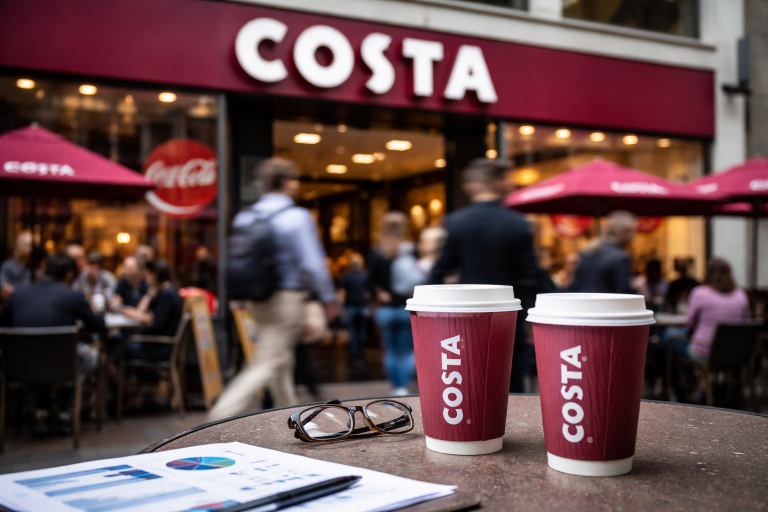
Coca-Cola has abandoned plans to sell its Costa Coffee chain after offers from private equity firms failed to meet expectations, the Financial Times has reported.

The US beverage group ended talks with remaining bidders in December, drawing a close to a months-long auction process, according to the FT report citing people familiar with the matter.

While Coca-Cola could revive plans to sell Costa in the medium term, the decision marks a setback for a deal that had already struggled to gain momentum.

Private equity interest falls short

Firms that reached the later stages of talks included TDR Capital, the owner of supermarket group Asda, and Bain Capital’s special situations fund, which holds investments in Gail’s and PizzaExpress.

Earlier in the process, Apollo, KKR, and Centurium Capital had also examined the opportunity, the report said.

Coca-Cola had been targeting a valuation of around £2bn for Costa, well below the £3.9bn it paid in 2018 when it acquired the chain from Whitbread.

That gap between expectations and bids ultimately proved too wide, prompting the company to step back from the sale.

An acquisition that failed to meet expectations

Coca-Cola bought Costa Coffee for an enterprise value of $5.1bn to strengthen its position in the global coffee market, where it competes with Starbucks and Nestlé.

At the time, the group said Costa would help it tap into growth beyond soft drinks by leveraging its global distribution network and brand strength.

However, the strategy has delivered mixed results.

In July, chief executive James Quincey acknowledged that the acquisition had “not quite delivered” and was “not where we wanted it to be from an investment hypothesis point of view,” an unusually frank admission from the company’s leadership.

Mounting financial and competitive pressures

Costa’s financial performance has deteriorated in recent years.

Operating losses more than doubled to £13.5m in 2024 from £5.8m a year earlier, even as sales edged up 1% to £1.2bn.

The chain, founded in London in 1971 by Italian brothers Bruno and Sergio Costa, operates about 2,700 cafés across the UK and Ireland.

The recent figures stand in stark contrast to the pre-pandemic period, when Costa regularly generated annual profits of up to £100m.

Footfall has been uneven, margins have been squeezed, and the brand has struggled to keep pace with both value-focused rivals such as Greggs and newer, trend-driven chains like Blank Street and Black Sheep Coffee.

Industry analysts say the market has become crowded and unforgiving.

Clive Black of Shore Capital told the Independent that Costa may have reached “peak Costa” in the UK, leaving it more exposed to competition.

He also pointed to a growing number of independent and artisanal cafés offering what consumers perceive as a better experience and less corporate feel.

Rising costs add to the strain

Beyond competition, coffee chains are contending with higher costs, including wage increases, higher National Insurance contributions, and persistent inflation in coffee bean prices.

Pret’s move to launch a meal deal and Greggs’ aggressive value positioning highlight how price sensitivity among consumers has reshaped the sector.

For Coca-Cola, the stalled sale leaves it weighing whether to persist with a challenging asset or revisit divestment when market conditions improve.

The post Coca-Cola drops Costa Coffee sale after private equity bids fall short: report appeared first on Invezz

Knowledge Atlas Technology JSC Ltd., better known as Zhipu, announced on Wednesday that its open-source image generation model, GLM-Image, completed training using Huawei Technologies Co.’s Ascend chips.

The company described it as the first state-of-the-art multimodal model in China to reach this milestone on homegrown hardware, as the country works to build a more self-sufficient AI supply chain independent from the US.

Zhipu trains GLM-Image on Huawei Ascend

Zhipu said the training was carried out using Huawei’s Ascend Atlas 800T A2 server and the MindSpore framework, according to its statement.

The Ascend Atlas 800T A2 server includes Huawei’s Kunpeng-branded processors, alongside Ascend-branded AI chips, showing how China’s AI firms are increasingly relying on domestically developed full-stack computing systems.

The company said this achievement demonstrates that advanced multimodal generative AI training can be done using Chinese-built hardware and software platforms.

Domestic chips gain ground as sanctions bite

The announcement is a milestone for Huawei because no other major AI firms in China have publicly advertised success in training their models on domestic chips.

Huawei itself previously said in May last year that it trained its Pangu Pro MoE model on Ascend chips, highlighting the company’s efforts to prove its processors can handle large-scale AI workloads.

Zhipu was placed on a US blacklist last year, and since then, it has been accelerating work with domestic chipmakers, including Cambricon Technologies Corp., as it adapts and develops models that can run efficiently on Chinese semiconductors.

Nvidia export rules shift as China pushes self-reliance

Zhipu’s move comes as Beijing continues to promote local expertise and technology development, following years of efforts by the US and its allies to restrict China’s access to advanced Western chips and tools.

Hours before Zhipu highlighted its partnership with Huawei on Wednesday, the US moved closer to allowing Nvidia Corp. to sell its H200 artificial intelligence chips to China.

Washington issued revised criteria for winning approval to ship the processors to Chinese buyers, signalling a potential change in how some AI chip exports could be handled.

Even with shifting US rules, Beijing has extended support for the development, production, and adoption of homegrown AI chips, particularly as Nvidia’s most advanced semiconductors remain restricted.

IPO momentum lifts Zhipu shares

Last Thursday, Zhipu became the first of China’s major AI startups to go public.

Since the listing, Zhipu’s shares have jumped more than 80% as investors buy into growing enthusiasm around China’s AI industry and its domestic chip ambitions.

Huawei, widely seen as China’s top AI chipmaker, is preparing to sharply ramp up production of its most advanced semiconductors this year.

Cambricon, meanwhile, is preparing to more than triple its production of AI chips in 2026, adding to expectations of expanding local supply.

The post China’s Zhipu trains AI image model on Huawei Ascend chips amid sanctions appeared first on Invezz

Germany’s second-largest bank, DZ Bank, has taken a decisive step into the digital asset market by approving Bitcoin and cryptocurrency trading.

The approval comes after DZ Bank received authorisation under the European Union’s Markets in Crypto-Assets Regulation, known as MiCAR.

The MiCAR regulatory clearance was granted by Germany’s financial watchdog, BaFin, at the end of December 2025.

With this approval, DZ Bank is now legally permitted to operate a crypto trading platform within the EU framework, and the bank has launched its crypto trading platform known as meinKrypto.

Bringing crypto trading into mainstream banking

The meinKrypto platform is designed to allow customers to buy, sell, and hold cryptocurrencies directly through their existing banking environment.

The platform is integrated into the widely used VR Banking App, which serves customers of Volksbanken and Raiffeisenbanken across Germany.

The technical and operational setup behind meinKrypto involves multiple regulated partners.

Boerse Stuttgart Digital Custody is responsible for safeguarding crypto assets and ensuring institutional-grade security standards.

Trade execution is handled by EUWAX, while IT integration is supported by Atruvia, the cooperative sector’s technology provider.

This collaborative structure allows smaller banks to offer crypto services without building their own infrastructure.

It also centralises compliance and risk management under established financial institutions.

By embedding crypto services into an established banking app, DZ Bank aims to remove technical barriers often associated with digital assets.

Customers will not need to manage private keys or rely on external crypto exchanges.

Instead, the trading experience is structured to resemble traditional online banking transactions.

At launch, meinKrypto supports major digital assets including Bitcoin (BTC), Litecoin (LTC), Ethereum (ETH), and Cardano (ADA).

These assets were selected due to their liquidity, market maturity, and regulatory acceptance.

DZ Bank has indicated that additional assets could be considered in the future, subject to compliance requirements.

The platform is intended for self-directed investors rather than advisory-based investment clients.

This approach aligns with regulatory expectations under MiCAR, which emphasises transparency and investor responsibility.

Phased rollout strategy

Although DZ Bank has received MiCAR authorisation, the rollout of meinKrypto will occur on a bank-by-bank basis.

Each local cooperative bank must independently notify BaFin and opt into the crypto service.

This structure allows individual institutions to decide whether crypto trading fits their customer strategy and risk profile.

Early indications suggest a strong interest within the cooperative banking network.

Industry surveys show that more than one-third of cooperative banks are prepared to adopt the platform.

This level of interest highlights growing demand for regulated crypto access among retail banking customers.

DZ Bank’s role is to provide the regulatory framework, infrastructure, and technical backbone for participating banks.

Local banks, meanwhile, maintain their direct customer relationships and onboarding responsibilities.

The post Germany’s second-largest bank, DZ Bank, approves Bitcoin and crypto trading appeared first on Invezz

Saudi Arabia’s Public Investment Fund (PIF) is shifting roughly $12 billion worth of listed gaming shares to its subsidiary, Savvy Games Group.

The move covers stakes in major companies, including Nintendo Co. and Bandai Namco Holdings Inc., according to a Bloomberg report.

The transfer consolidates the kingdom’s gaming investments under one vehicle, as Savvy continues to position itself as a key pillar in Saudi Arabia’s strategy to diversify away from oil.

Even after the handover, Savvy is expected to keep taking a largely passive approach to these holdings, rather than pushing for influence inside the companies.

The shift also gives Savvy a clearer structure for managing stakes across Asia’s biggest gaming companies, while aligning future dealmaking with Saudi Arabia’s broader digital entertainment ambitions.

Savvy becomes the centre of PIF’s games portfolio

Once the transfers are completed, Savvy is set to hold about 10% stakes in several gaming firms, including Koei Tecmo Holdings Inc., NCSoft Corp., Nexon Co., and Square Enix Holdings Co., said the Bloomberg report, citing a company document.

Savvy was established in 2021 and has been positioned as one of the main channels for Saudi Arabia’s long-term growth push in gaming and esports.

The company still has billions of dollars available for future investments across the gaming sector.

A $38 billion investment war chest remains in play

Savvy has around $38 billion earmarked for gaming investments.

It has already used that capital to build a wider footprint across competitive gaming, buying Monopoly Go developer Scopely Inc., Pokemon Go developer Niantic, and multiple esports organisations.

Monopoly Go became a breakout hit and helped boost the profile of Savvy’s portfolio.

However, not every bet has worked as planned.

Some of the company’s esports investments have faced challenges, and Savvy has also laid off staff as it reassessed parts of its competitive gaming exposure.

Take-Two stake already shifted, while EA deal stays separate

In a late-December regulatory filing, the PIF confirmed it moved its 11 million shares of Take-Two Interactive Software Inc. to Savvy.

Separately, Bloomberg reported, citing a person familiar with the buyout, that the PIF is also the largest investor in Electronic Arts Inc.’s $55 billion buyout.

However, Savvy is not involved in that transaction.

No change planned to the investment strategy

Savvy is expected to follow the PIF’s hands-off playbook once the holdings are fully transferred.

The company has no plans to become an active investor in the companies it owns shares.

The transfer has been in the works for an extended period, according to Amar Batkhuu, a spokesperson for Savvy.

He said the move will place oversight of the PIF’s gaming investments under Savvy, which he described as a leading gaming entity for the fund and a key pillar of the National Gaming and Esports Strategy. Batkhuu added that there are no plans to alter the existing investment approach.

The post Saudi PIF shifts $12B gaming stakes to Savvy as portfolio gets consolidated appeared first on Invezz

Lloyds share price continued its strong bull run this year, and is now hovering at its highest level since September 2008. It has jumped in the last 12 consecutive months, and is up by 430% from its lowest level in 2020. 

This surge has brought its market capitalization to over $80 billion, making it the 14th biggest company in the UK. Still, technicals suggest that the stock may pull back soon.

Why the Lloyds share price has soared 

Lloyds Bank stock price has been in a strong uptrend in the past few months, mirroring the performance of other British banks. Barclays’ stock has jumped by nearly 80% in the last 13 months, while NatWest’s has soared by over 60%.

Other European banks like Unicredit, Societe Generale, and BNP Paribas have been in a strong uptrend in the past few years.

Lloyds Bank has done well as the company’s growth has held steady despite the ongoing growth slowdown in the UK, which is now going through a period of stagflation. Stagflation is characterized by a period of high inflation and slow economic growth, with a recent report showing that the economy contracted by 0.1% in October.

Lloyds share price has also done well as investors anticipate the ending of the motor insurance crisis after last year’s Supreme Court ruling. The company announced £800 million charge for motor finance commission, bringing the total amount to over £1.7 billion.

The most recent results showed that Lloyds Bank’s business made over £3.3 billion statutory profit after tax compared to the £3.8 billion in the same period a year earlier. The decline was because of the motor insurance charge.

Additionally, the management boosted the forward guidance. It now expects that its underlying net income to be £13.6 billion and its return on tangible equity to be 12%.

READ MORE: Top 3 reasons to buy Lloyds Bank shares

Lloyds Bank has continued to reward its shareholders through its buybacks and dividends, a process that will continue because of its capital ratio. It ended the last quarter with a CET1 ratio of 13.8%, which it expects to fall to 13% this year. 

Lloyds executed a £1.75 billion in share buybacks in 2025 and has continued to pay a dividend, with its dividend yield rising to between 4% and 5%.

Still, the main concern about Lloyds is that it has now become a bit overvalued. Its price-to-earnings ratio is 16, while the forward multiple is 12, which are much higher than its historical levels.

Looking ahead, the next key catalyst to watch will be its earnings, which will come out on January 29. These numbers will provide more information about its performance.

Lloyds stock price technical analysis

LLOY stock chart | Source: TradingView

The weekly chart shows that the LLOY stock price has been in a strong bull run in the past few months. However, there is a risk that the stock will lose momentum in the near term. 

For one, the Relative Strength Index (RSI) has formed a rising wedge pattern, which is made up of two ascending and converging trendlines. This means that the RSI will have a bearish breakout, which will happen when the stock retreats. 

Similarly, the Percentage Price Oscillator (PPO) has formed a bearish divergence pattern. At the same time, the stock is much higher than the 50-week and the 100-week Exponential Moving Averages (EMA), meaning that it may go through a mean reversion.

Therefore, the stock may have a bearish breakout soon, potentially to the support at 90p. 

The post Lloyds share price rally accelerates — will this momentum last? appeared first on Invezz

US spot Bitcoin exchange-traded funds recorded their largest daily net inflows in more than three months on Tuesday, signalling a renewed wave of institutional demand as investors move past year-end portfolio rebalancing and re-engage with digital assets.

According to data from Farside Investors, spot Bitcoin ETFs attracted $753.7 million in net inflows on Tuesday, the strongest daily intake since Oct. 7, 2025.

The surge marked a sharp turnaround after weeks of choppy and often negative flows that dominated late November and December.

Date IBIT FBTC BITB ARKB BTCO EZBC BRRR HODL BTCW GBTC BTC Total
13 Jan 2026 126.3 351.4 159.4 84.9 0.0 0.0 0.0 10.0 3.0 0.0 18.8 753.8
12 Jan 2026 -70.7 111.7 0.0 0.0 0.0 0.0 0.0 6.5 0.0 64.3 4.9 116.7
09 Jan 2026 -252.0 7.9 -5.9 0.0 0.0 0.0 0.0 0.0 0.0 0.0 0.0 -250.0
08 Jan 2026 -193.3 -120.5 3.0 -9.6 0.0 0.0 0.0 0.0 1.9 -73.1 -7.2 -398.8
07 Jan 2026 -130.0 -247.6 -39.0 -42.3 0.0 0.0 0.0 -11.6 0.0 -15.6 0.0 -486.1
Data from Farside Investors.

Fidelity’s Wise Origin Bitcoin Fund led the inflows, pulling in $351 million on the day.

Bitwise’s BITB followed with $159 million, while BlackRock’s iShares Bitcoin Trust added $126 million.

Other bitcoin-linked funds also reported positive flows, reflecting broad-based participation rather than a single-fund anomaly.

Ethereum ETFs also turn positive

The renewed appetite for crypto exposure was not limited to Bitcoin.

US spot Ethereum ETFs also recorded strong inflows, posting a combined $130 million in net positive flows across five funds on Tuesday. T

he parallel move suggests that investors are increasing allocations across major digital assets rather than rotating into Bitcoin alone.

The synchronised inflows into both Bitcoin and Ethereum products indicate improving confidence among institutional investors after a period marked by caution, regulatory uncertainty, and profit-taking toward the end of 2025.

Broader crypto market confirms bullish momentum

The resurgence in ETF demand coincided with a broad rally across the crypto market.

Total cryptocurrency market capitalization climbed nearly 4% over the past 24 hours to about $3.25 trillion, pushing above recent local highs.

The move has reinforced a developing bullish structure, characterised by a sequence of higher local highs and higher lows.

Market participants note that, from a technical perspective, the crypto market faces limited resistance until around $3.32 trillion, a level that corresponds to the 61.8% Fibonacci retracement of the decline from the early October peak.

Investor sentiment has also improved notably. The widely followed crypto sentiment index rose to 48, still in the lower half of its historical range but representing the highest reading since the end of October.

The uptick suggests a meaningful shift in mood after weeks of subdued confidence.

Bitcoin breaks above key technical levels

Bitcoin traded above $95,000 on Tuesday, its highest level since Nov. 17, confirming the improving technical backdrop.

The flagship cryptocurrency successfully rebounded from its 50-day moving average, broke above previous resistance levels, and reinforced the pattern of higher lows that technicians often associate with trend reversals.

Over the past 24 hours, Bitcoin rose about 3% to trade near $94,610, while ether outperformed with a gain of 6.21%, changing hands around $3,324.

The stronger move in ether reflects growing investor confidence in riskier segments of the crypto market as sentiment improves.

The rally followed the release of US consumer price index data on Tuesday, which showed that inflation remains elevated but has continued to cool from its peak.

The data strengthened expectations that the Federal Reserve may be able to cut interest rates later this year, a backdrop that typically boosts demand for risk assets, including cryptocurrencies.

At the same time, regulatory developments in Washington are drawing increased attention.

The US Senate Banking Committee is preparing for a markup session on Thursday for a market structure bill aimed at amending and voting on legislation that would provide greater clarity for digital assets.

Investors view the prospect of clearer regulatory rules as a potential catalyst for longer-term institutional adoption.

The post Bitcoin ETFs see over $750M in inflows as BTC breaches $95K appeared first on Invezz

Saks Global, the parent organisation of the storied American luxury department store chain Saks Fifth Avenue, filed for Chapter 11 bankruptcy protection in the US Bankruptcy Court for the Southern District of Texas late Tuesday.

The filing represents a critical turning point for the retailer as it grapples with a mounting debt burden and a strained relationship with its global supplier network.

“With support from its key financial stakeholders, Saks Global has commenced voluntary chapter 11 cases in the US Bankruptcy Court for the Southern District of Texas (the ‘Court’) to facilitate its ongoing transformation,” the company announced in a statement.

The restructuring process brings an immediate change to the executive suite.

Richard Baker is stepping down from his role as Chief Executive Officer, with former Neiman Marcus head Geoffroy van Raemdonck assuming the top position to navigate the company through its court-supervised reorganisation.

“In close partnership with these newly appointed leaders and our colleagues across the organisation, we will navigate this process together with a continued focus on serving our customers and luxury brands. I look forward to serving as CEO and continuing to transform the Company so that Saks Global continues to play a central role in shaping the future of luxury retail,” van Raemdonck said in the Saks statement.

To support its operations during the bankruptcy proceedings, Saks Global has secured $1 billion in debtor-in-possession financing.

This capital is expected to provide the liquidity necessary to fund day-to-day operations and turnaround initiatives.

Furthermore, a group of bondholders has reportedly agreed to provide an additional $500 million in financing once the company emerges from bankruptcy.

How the Neiman Marcus acquisition added to Saks’ financial woes

The current financial crisis follows a high-profile 2024 merger in which Saks owner HBC acquired Neiman Marcus for $2.65 billion.

The deal was intended to create a luxury retail behemoth capable of negotiating more favourable terms with individual brands while revitalising the physical store experience.

Executives argued at the time that the $2.7 billion deal would reduce costs and bolster the standing of both iconic labels.

However, the anticipated synergies failed to materialise.

Instead, the acquisition added billions in debt to a balance sheet already under pressure from shifting consumer habits and the rise of e-commerce competitors.

Saks Fifth Avenue had been reporting double-digit quarterly sales declines as early as 2023, and the financial weight of the merger proved unsustainable.

In late December, the company missed a $100 million interest payment tied to approximately $2.2 billion in debt utilised to fund the Neiman Marcus transaction.

Vendor payment delays preceded Neiman Marcus acquisition

Industry analysts suggest that the roots of the crisis extend beyond the recent merger.

Mark Cohen, former head of retail studies at Columbia Business School, noted in a BBC report that some of the company’s challenges date back more than a decade.

He argued that the leadership’s historical focus on deal-making sometimes came at the expense of the core business’s operational integrity.

Suppliers featured across the retailer’s physical and digital storefronts have voiced grievances regarding payment delays dating back to the period preceding the Neiman Marcus acquisition—a clear precursor to the company’s deepening liquidity crisis.

The consolidation two years ago exacerbated these underlying fiscal pressures.

By assuming billions of dollars in new debt to capitalise the transaction, Saks significantly increased its total liabilities while simultaneously carrying substantial arrears to its existing vendor base.

“Right out of the gate, they stopped paying their bills,” Cohen said.

“You can’t stay upright as a retailer, whether you’re a discount retailer or a luxury player, without having a reliable, consistent financial relationship with your suppliers.”

For months, suppliers have reported significant payment delays, leading many to halt shipments.

While some brands continued the partnership to maintain their presence in the luxury market, others severed ties entirely as cash flow constraints worsened.

A proposal last February to settle overdue balances in twelve instalments did little to restore confidence among the fashion houses that supply the retailer’s inventory.

The post Inside Saks Global’s bankruptcy: luxury slowdown and a debt-heavy acquisition appeared first on Invezz

US stocks swung sharply intraday as investors recovered from early losses while grappling with unprecedented legal pressure on Federal Reserve Chair Jerome Powell.

The S&P 500 moved back into positive territory by midday trading after plunging to session lows on Monday, while bank shares slumped amid a Justice Department criminal investigation into Powell.

Moreover, a lingering anxiety over President Trump’s proposal to cap credit card interest rates at 10% also added to the overall uncertainty among investors.​

US stocks’ rebound masks banking weakness

Monday’s session proved volatile as the market absorbed twin shocks to financial stability and monetary independence.

The S&P 500 fell as low as 0.7% before recovering ground in afternoon trading, though the broader index remained under pressure.

The Nasdaq composite and Dow Jones Industrial Average similarly traced U-shaped patterns, with defensive technology names like Walmart providing ballast while financial stocks tumbled.​

Banking shares bore the brunt of the selling. Capital One shares tumbled nearly 9%, while Citigroup slid roughly 3 to 4% and JPMorgan Chase dropped more than 3% in early trading.

American Express fell 4.4%, and even payment processors Visa and Mastercard each slipped nearly 2% as investors repriced credit-card earning power downward.

The weakness extended to smaller lenders: Bank of America fell more than 1% as traders anticipated pressure on loan profitability from either regulatory action or congressional intervention on interest-rate caps.​

Broader market indices showed resilience despite the financial sector volatility.

Energy, utility, and defensive stocks provided relative strength as investors rotated into names perceived as less vulnerable to political pressure or regulatory action.

Legal action and Fed independence concern

The market’s caution reflected Powell’s own alarm.

On Sunday evening, the Federal Reserve Chair disclosed in a video statement that the Department of Justice had served grand jury subpoenas related to his June testimony before the Senate Banking Committee.

The testimony revolves around the Federal Reserve’s $2.5 billion renovation of its Washington headquarters.

Powell called the action “unprecedented” and directly attributed it to Trump’s frustration over the Fed’s refusal to cut interest rates more aggressively.​

“The threat of criminal indictment related to my setting interest rates based on my best judgment of what will serve the public is clearly a pretext,” Powell stated.​

The subpoenas create a rare constitutional moment: federal prosecutors opening a criminal investigation into a sitting Fed chair over policy decisions raises fundamental questions.

Market strategists noted that such an escalation risks destabilising confidence in the Fed’s autonomy, precisely what investors need to price assets accurately in an environment of near-record stock valuations.​

Compounding the legal stress, Trump’s weekend proposal to impose a 10% cap on credit-card interest rates effective January 20 sent card issuers scrambling to reassure investors that congressional action remains unlikely.

Yet the fact that a sitting president can move bank stocks 9% simply by announcing regulatory intent underscores how precarious the regulatory environment has become for financial firms.​

The post US midday market brief: S&P 500 turns positive; banks slide on Powell probe appeared first on Invezz