Category

Editor’s Pick

Category

The post Crypto Regulations in India 2025 appeared first on Coinpedia Fintech News

India has emerged among the top 10 countries globally for crypto transactional use, according to the World Crypto Rankings 2025 report by Bybit & DL Research. Crypto adoption in India is spreading fast beyond metro cities, both geographically and demographically.

The CoinSwitch 2025 report, based on 2.5 crore users, highlights that over 75% of crypto activity now originates from non-metro regions, Bitcoin has returned as the top asset with an 8.1% allocation, and XRP has witnessed one of the biggest jumps in trading. The market continues to be youth-led, with more women joining, particularly from Andhra Pradesh.

In an interview with CNBC, Binance CEO Richard Teng emphasized that India could become the next crypto superpower, driven by its young, tech-savvy population and active regulatory dialogue.

Below is a timeline of key crypto regulation updates in India during 2025. 

Table of contents

  • Crypto Regulation India Timeline – 2025
    • July 7, 2025 : Bybit Imposes 18% GST
    • June 2025 : Discussion paper on Cryptocurrency
    • May 22, 2025 : FSB Peer Review Preparation
    • April 1, 2025 : SEBI Oversight Begins
    • February 13, 2025 : VDA Income Tax Amendment Bill Introduced
    • February 10, 2025 : Crypto Exchanges Declared Reporting Entities
  • Crypto Tax in India – 2025 (Fact-Checked)
  • Crypto License in India 
  • India Leads Overall Institutional Strength in Crypto 
  • Crypto Adoption in India (2025 Snapshot)
  •  Conclusion
  • FAQs

Crypto Regulation India Timeline – 2025

December 2025

  • Coinbase Gets CCI Approval: Coinbase obtains clearance to acquire a minority stake in CoinDCX parent DCX Global.
  • Calls for Tokenization Bill: MP Raghav Chadha urges the government to introduce a tokenization bill in India.
  • RBI’s Stand on Bitcoin: RBI Deputy Governor T. Rabi Sankar states that Bitcoin has no intrinsic value and is purely speculative, likening it to tulip mania, while praising the blockchain technology behind it.
  • Coinbase Reopens in India: Coinbase resumes user registrations in India and plans to launch an INR-to-crypto fiat ramp in 2026.
  • Push for Regulatory Clarity: MP Dr. K Laxman advocates for clear crypto and Web3 regulations to curb innovation drain.

October 2025

Government on Sovereign Crypto: Commerce Minister Piyush Goyal confirms that the government does not encourage cryptocurrencies without sovereign or asset backing. Plans include introducing an RBI-backed digital currency, akin to US stablecoins, to eventually replace normal currency.

July 7, 2025: Bybit Imposes 18% GST

Bybit imposed an 18% GST on all crypto transfers of – spot and margin trading, derivatives, fiat-related transactions, withdrawals, and stakings. Additionally, it also launched the termination of some legacy products and services on July 9, 2025.

June 2025: Discussion paper on Cryptocurrency

The Indian government planned to release a discussion paper to establish a regulatory framework for crypto in India. The initiative also promised to seek public consultation on– stakeholders, including financial institutions, legal experts, crypto companies, and the general public.

May 22, 2025: FSB Peer Review Preparation

India gears up for the Financial Stability Board (FSB) review in October, aiming to align local crypto regulation with global regulatory standards.

April 1, 2025: SEBI Oversight Begins

SEBI starts monitoring crypto tokens that resemble securities. A multi-agency regulatory model is proposed, including RBI, SEBI, and the Finance Ministry.

February 13, 2025:VDA Income Tax Amendment Bill Introduced

The bill expands the scope of Virtual Digital Assets (VDAs) to include NFTs and undisclosed income. However, the 30% tax rate remains unchanged.

February 10, 2025: Crypto Exchanges Declared Reporting Entities

Exchanges, wallets, and even mining pools are categorized as “reporting entities.” They must report all transactions to tax authorities under the new AML

Crypto Tax in India – 2025 (Fact-Checked)

As of now, no official reduction has been made to the 30% tax on crypto gains or the 1% TDS, despite industry demands.

1. For Investors and Traders

  • Flat 30% Tax on gains from crypto sales, swaps, or gifts.
    No deductions allowed except for cost of acquisition.
  • 1% TDS on transfers above ₹10,000 (buyer deducts and remits).
  • No loss set-off or carry-forward permitted.

Example:  Buy BTC at ₹2.72 lakh → Sell at ₹8.72 lakh → ₹6 lakh profit → Tax = ₹1.8 lakh + TDS = ₹6,000

2. For Crypto Companies & Exchanges

  • KYC/AML compliance is mandatory.
  • 1% TDS to be collected and remitted on every qualifying user transaction.
  • Transaction reporting to tax authorities under PMLA and IT laws.

3. Bybit tax

  • All Bybit users must pay 18%Goods and Services Tax (GST)
    on all crypto transfers. 
  • Services like spot and margin trading, derivatives, fiat transactions, and crypto withdrawals are subject to tax. 
Category Tax Rate TDS Example
Investors 30% 1% if >₹10k ₹50k profit → ₹15k tax + ₹500 TDS
Traders 30% 1% if >₹10k Taxed as business income
Companies NA 1% collected ₹10L transaction → ₹10k TDS

Crypto License in India 

Crypto exchanges and service providers must register with the Financial Intelligence Unit (FIU) and comply with anti-money laundering (AML) and know your customer (KYC) policies to be eligible for an official license in India. 

What Do Indians Think About Their Crypto Legislation?

  • Vote for a better crypto framework: 1 in 93% support crypto regulation. The citizens of India want smart regulations instead of bans. 56% of them support a strong crypto framework, 13% support taxation, and only 24% prefer lighter rules. 
  • Votes over new authority: The report also shows that 51% of the total crypto users prefer a new authority over RBI (22%) or SEBI (20%). 
  • Vote against tax regime: When asked about what the biggest discouraging point in crypto in India is, 66% of people voted for 30% on tax gains, while 84% say crypto taxes are unfair vs equities. 
  • Vote on policy clarity and teaching crypto:  90% would invest more if rules were clearer & taxes fairer. People also showed positive support for crypto education in India, with 76% of votes. 
  • Vote on Web3: 78% voted that Indians are missing out Web3 trend.

India Leads Overall Institutional Strength in Crypto 

According to Chainalysis data, India ranks 1 across the overall index in digital assets. With a thriving fintech ecosystem, widespread use of UPI payments, and innovations such as eRupi, the country is dominating the fintech space. Its crypto space has grown by 99%, as per reports. 

India’s Rank
Overall Index Score  1
Retail  1
CeFi 1
DeFi 1
Insitutional  1

Crypto Adoption in India (2025 Snapshot)

  • Active Users: Over 107.3 million Indians (7.37% of population) hold or trade crypto.
  • Revenue Forecast: India’s crypto market is projected to hit $6.4 billion by year-end.
  • Exchanges: Platforms like CoinDCX, CoinSwitch, and Mudrex offer access to over 500 tokens.
  • Growth Drivers: Rising financial inclusion, smartphone penetration, and blockchain innovation.
  • Government Holdings: No official disclosure yet; policies prioritize transparency and user safety.

 Conclusion

India’s crypto regulation in 2025 reflects a delicate balance between enabling innovation and enforcing oversight. With strict taxes (30% + 1% TDS) and real-time transaction reporting, the government is creating a compliant ecosystem without enforcing an outright ban. As the FSB review nears, clarity in crypto regulation India could open new doors for mass adoption and position the country at the forefront of the $7 trillion global digital economy.

Never Miss a Beat in the Crypto World!

Stay ahead with breaking news, expert analysis, and real-time updates on the latest trends in Bitcoin, altcoins, DeFi, NFTs, and more.

FAQs

What is India’s crypto tax in 2025?

India imposes a flat 30% tax on crypto gains and a 1% TDS on transfers over ₹10,000, with no loss set-off.

Are cryptocurrencies legal in India?

Cryptocurrencies are not legal tender in India but are legal to hold and trade within a regulated tax and compliance framework.

Is there a regulatory body for cryptocurrency in India?

India has a multi-agency approach involving RBI, SEBI, and the Ministry of Finance to oversee various aspects of cryptocurrency.

Does SEBI regulate crypto in India?

Yes, from April 1, 2025, SEBI began monitoring crypto tokens resembling securities, aligning with a multi-agency regulatory model.

Is India reviewing crypto regulations due to global policy changes?

Yes, India is actively reviewing its crypto stance and regulations in 2025 to align with evolving global policies and standards, including the upcoming FSB review.
The post Bitcoin Price Today Holds Near $86,600 Amid Thin Liquidity and Market Uncertainty appeared first on Coinpedia Fintech News

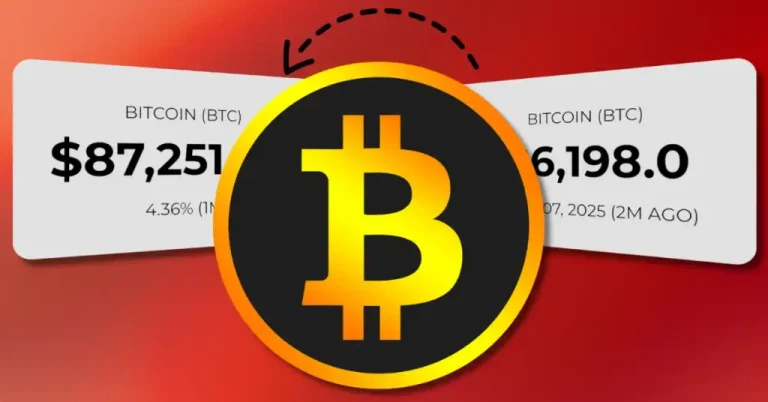
Bitcoin price is hovering around the $86,600 mark, but the calm comes after a sharp reminder of how fragile the market remains. Earlier this week, BTC briefly surged close to $90,000 before reversing just as quickly, underscoring that selling pressure still sits just beneath the surface. This isn’t a sign of collapsing fundamentals, but rather a market struggling with thin liquidity and unresolved macro uncertainty.

Low liquidity has made Bitcoin more sensitive to sudden shifts in sentiment. With fewer aggressive buyers stepping in, even moderate selling has had an outsized impact on price. At the same time, Bitcoin’s growing correlation with traditional risk assets has pulled it into broader “risk-off” moves seen across global markets.

What’s Driving the Selling Pressure?

Several forces are weighing on Bitcoin simultaneously. ETF inflows, which helped fuel earlier upside, have slowed noticeably. Derivatives markets have also gone through a period of deleveraging, flushing out excess leverage that once supported higher prices. Add year-end portfolio repositioning into the mix, and the result is a market that’s cautious and reactive rather than confident.

According to LVRG Research Director Nick Ruck, Bitcoin’s recent weakness reflects macro-driven risk aversion rather than any crypto-specific breakdown. With fresh liquidity scarce, price swings have become sharper, even without major news catalysts.

What’s Happening

Despite the volatility, not all analysts see this as the start of a major downturn. Vincent Liu, CIO at Kronos Research, views the current range as a re-pricing phase following Bitcoin’s strong run earlier in the cycle. In his view, leverage has already been cleared, and the market is now in a holding pattern, waiting for direction.

.article-inside-link {
margin-left: 0 !important;
border: 1px solid #0052CC4D;
border-left: 0;
border-right: 0;
padding: 10px 0;
text-align: left;
}

.entry ul.article-inside-link li {
font-size: 14px;
line-height: 21px;
font-weight: 600;
list-style-type: none;
margin-bottom: 0;
display: inline-block;
}

.entry ul.article-inside-link li:last-child {
display: none;
}

  • Also Read :
  •   Bitcoin Price Could Rally 45% as Golden Cross Appears for Fifth Time Since 2020
  •   ,

A key level to watch is around $81,000, often referred to as Bitcoin’s “True Market Mean.” As long as BTC holds above this zone, the broader structure remains intact. A decisive break below it, however, could open the door to a deeper correction and revive fears of a prolonged downturn heading into 2026.

Role of Fed

Monetary policy remains a major overhang. While the Federal Reserve has cut rates three times recently, Chair Jerome Powell has signaled a pause in January, with markets largely pricing in no near-term cut. That stance has kept risk appetite in check.

However, speculation is building around a leadership change at the Fed. President Donald Trump has stated that the next Fed Chair will aggressively favor lower rates, potentially pushing borrowing costs toward 1% or below. Reports suggest Trump has already interviewed candidates, including pro-crypto Fed Governor Christopher Waller.

How Low Can Bitcoin Go From Here?

For now, Bitcoin’s stability reflects patience, not strength. As long as macro uncertainty persists and liquidity remains thin, downside risks cannot be ruled out. A hold above $81,000 keeps the market in consolidation mode, but a loss of that level could accelerate selling. Until clearer signals emerge from Washington or liquidity returns, Bitcoin is likely to remain vulnerable to sharp, choppy moves rather than a clean trend in either direction.

Never Miss a Beat in the Crypto World!

Stay ahead with breaking news, expert analysis, and real-time updates on the latest trends in Bitcoin, altcoins, DeFi, NFTs, and more.

FAQs

Why is Bitcoin’s price so volatile right now?

Bitcoin is currently facing thin market liquidity and broader financial uncertainty, making it more sensitive to even moderate selling pressure, which leads to sharper price swings.

Is the Bitcoin bull market over?

Not necessarily. Many analysts view current volatility as a re-pricing phase, not a structural breakdown, with leverage already reduced and the market awaiting clearer direction.

What’s the worst-case scenario for Bitcoin’s price?

The main risk is a sustained break below the $81,000 support. In thin liquidity, this could trigger accelerated selling, though fundamentals remain intact for long-term holders.

The post JPMorgan Turns to Coinbase’s Base as JPM Coin Goes Public appeared first on Coinpedia Fintech News

JPMorgan just took a step that would have sounded unlikely a few years ago.

The banking giant has moved its tokenized deposit product, JPM Coin (JPMD), off its private blockchain and onto Base, Coinbase’s public Ethereum layer-2 network.

The reason is straightforward: institutional clients want to move money, post collateral, and settle trades directly on public blockchains.

Why JPMorgan Took JPM Coin Public

JPM Coin has been around since 2019, operating on JPMorgan’s permissioned blockchain, now called Kinexys. That setup worked when on-chain activity was limited. But as more trading and settlement moved onto public networks, clients started asking for access there too.

“Right now, the only cash or cash equivalent option available on public chains are stablecoins,” said Basak Toprak, Product Head of Deposit Tokens at JPMorgan’s Kinexys Digital Payments. “There is a demand for making payments on public chains using a bank deposit product.”

Base offered what JPMorgan was looking for: a fast, low-cost Ethereum network already used by many institutional crypto firms through Coinbase.

.article-inside-link {
margin-left: 0 !important;
border: 1px solid #0052CC4D;
border-left: 0;
border-right: 0;
padding: 10px 0;
text-align: left;
}

.entry ul.article-inside-link li {
font-size: 14px;
line-height: 21px;
font-weight: 600;
list-style-type: none;
margin-bottom: 0;
display: inline-block;
}

.entry ul.article-inside-link li:last-child {
display: none;
}

  • Also Read :
  •   BREAKING: JPMorgan Debuts Ethereum Tokenized Money-Market Fund
  •   ,

What JPM Coin Will Be Used for on Base

The use cases are practical. JPM Coin on Base can be used to hold collateral and make margin payments tied to crypto transactions.

“There are asset managers or broker-dealers who have a transaction relationship with Coinbase,” Toprak said. “They keep collateral at Coinbase, and they pay margins as well.”

Until now, firms handled this either through stablecoins or traditional bank transfers. Both come with trade-offs. Bank transfers have cutoff times. Stablecoins introduce a different risk profile that some institutions are still uneasy with.

JPM Coin offers a third option which is a bank-backed deposit, now usable on public blockchain rails.

A Clear Direction Ahead

JPM Coin remains permissioned and fully controlled by the bank.

“A payment is a payment,” Toprak said. “Cash is used as collateral today in traditional finance, so it can be used as a collateral in the onchain world as well.”

Still, the move carries weight. Coinbase executive Brian Foster described tokenized deposits as the “cousin of stablecoins,” highlighting how banks are adapting as on-chain finance grows.

Never Miss a Beat in the Crypto World!

Stay ahead with breaking news, expert analysis, and real-time updates on the latest trends in Bitcoin, altcoins, DeFi, NFTs, and more.

FAQs

What is JPM Coin and how is it different from a stablecoin?

JPM Coin is a bank-backed deposit token issued by JPMorgan, representing real cash held at the bank, unlike stablecoins issued by private entities.

Why did JPMorgan move JPM Coin to the Base blockchain?

JPMorgan moved JPM Coin to Base to meet client demand for faster, always-on payments and collateral settlement directly on public blockchains.

What are the main use cases of JPM Coin on Base?

It’s used for holding collateral, margin payments, and settling crypto-related transactions without bank cutoff times or stablecoin risks.

The post Kraken Launches xStocks on TON via Telegram Wallet appeared first on Coinpedia Fintech News

Kraken is launching its xStocks product on the TON blockchain, now available through Telegram’s TON Wallet. This integration lets users trade tokenized stocks directly within Telegram, offering a simple and familiar interface. By combining Kraken’s robust trading platform with TON’s fast blockchain and Telegram’s large user base, the move aims to make digital assets more accessible, streamline the trading experience, and promote wider adoption of tokenized stock trading in the crypto space.

The post When is CPI Data Released? appeared first on Coinpedia Fintech News

The US Consumer Price Index (CPI) for November will be released today at 8:30 AM ET, following the cancellation of the October report due to the government shutdown. Analysts anticipate a 3.1 % headline CPI and 3.0 % core CPI, with month-over-month growth around 0.3 %. With no monthly CPI data available, investors are closely watching the annual figures to assess inflation trends and potential impacts on Federal Reserve policy decisions.

The post Taiwan Government Now Holds 210 Bitcoin from Seized Assets appeared first on Coinpedia Fintech News

Taiwan has joined the growing list of governments holding Bitcoin, not as an investment strategy but as a result of law enforcement activity. The country’s Ministry of Justice has confirmed it currently holds 210.45 BTC in seized assets, securely stored as legal evidence. While the amount may seem modest compared to corporate treasuries, the move highlights how seriously governments are now treating digital assets within formal legal systems.

How Taiwan Ended Up With 210 Bitcoin

The Bitcoin held by Taiwan’s Ministry of Justice comes from multiple criminal investigations rather than a single high-profile case. As crypto has become more embedded in financial activity, it has also appeared more frequently in cases involving fraud, money laundering, and other financial crimes. Taiwan’s authorities have spent years developing the technical capability to trace blockchain transactions, identify wallet ownership, and legally seize digital assets.

Successfully securing more than 210 BTC suggests Taiwan’s law enforcement agencies are no longer playing catch-up with crypto-related crimes. Instead, they now have the tools and legal processes needed to operate confidently in a blockchain-based financial environment.

Why This Matters for Crypto Regulation

This development signals a growing level of regulatory maturity. Handling seized Bitcoin is far more complex than storing cash or physical valuables. Authorities must manage price volatility, safeguard private keys, and ensure airtight cybersecurity. Taiwan’s ability to securely hold Bitcoin shows that governments can manage digital assets responsibly without destabilizing markets.

More importantly, it reinforces the idea that crypto is no longer operating in a regulatory gray zone. Governments that can securely seize and manage Bitcoin are better positioned to create clearer, more predictable crypto regulations. Taiwan’s approach could serve as a blueprint for other jurisdictions still struggling with digital asset custody.

Crypto Impact

For everyday crypto users, the message is twofold. On one hand, Taiwan’s actions support long-term adoption by proving that governments can coexist with digital assets rather than banning them outright. On the other hand, it’s a reminder that crypto transactions are not invisible. With the right tools, authorities can trace activity and enforce the law.

For investors, this points to increasing institutional understanding of crypto mechanics. Markets tend to favor clarity over uncertainty, and developments like this suggest crypto is steadily moving toward regulatory normalization.

A Sign of Crypto’s Growing Legitimacy

Taiwan’s 210.45 BTC is more than seized evidence, it’s a symbol of how far digital assets have come. When governments hold, secure, and manage Bitcoin within legal frameworks, they implicitly acknowledge its permanence in the global financial system. As more countries follow this path, crypto’s role as a recognized asset class only continues to strengthen.

The post YoungHoon Kim Predicts XRP Price Surge Amid Institutional Demand appeared first on Coinpedia Fintech News

YoungHoon Kim, the world’s highest IQ holder, predicts XRP could flip Ethereum by 2026, even as the XRP remains under pressure in the short term. If that happens, XRP’s price could rise toward $6-$6.5 per token, even as it currently trades near $1.86 amid short-term market weakness.

XRP Could Flip Ethereum Market Cap

According to comments shared by YoungHoon Kim, growing interest in XRP is no longer limited to retail traders. He pointed to recent integrations beyond the XRP Ledger, including Solana-related developments, as a key reason behind shifting sentiment. 

XRP’s focus on cross-border payments and fast settlement gives it a real use case that could attract banks and financial firms.

Kim, once known as a Bitcoin maximalist, now says XRP’s expanding role in payments and liquidity is changing the market narrative.

For now, Ethereum is still much larger. ETH’s market cap is around $345 billion, while XRP’s is near $113 billion. For XRP to overtake Ethereum, its value would need to rise by nearly 3x, or capital would need to move steadily out of ETH.

How High Can XRP Price Go If It Flips Ethereum?

As of now, XRP is trading near $1.86 with a market cap of around $113 billion, while Ethereum’s market cap stands close to $345 billion.

XRP has roughly 55 billion tokens in circulation. If XRP grows to match Ethereum’s market cap, its price would need to rise to about $6–$6.50 per token.

Institutional Demand Supports XRP Outlook

While XRP is trading below 50% of its peak, institutional interest remains strong. U.S.-listed spot XRP ETFs have now attracted $1.14 billion in total inflows since launching in mid-November.

Together, these ETFs now account for nearly 1% of XRP’s total market value, showing strong interest from institutions.

Over the past five days, spot Ethereum ETFs have seen heavy outflows, and even Bitcoin ETFs have recorded consistent withdrawals. In contrast, XRP ETFs continue to see steady inflows.

XRP Price Forms Strong Base Near $1.90

XRP price is showing early signs of stabilization after weeks of a long downtrend and forming a base near the $1.85–$1.90 support zone. This is the same area where selling pressure starts to fade, and price begins to curve upward, a common early sign of accumulation.

If XRP holds above this support, the first upside target sits near $2.20–$2.30, where the price previously faced resistance. 

A clean break above this level could open the door to the next zone around $2.60 and later toward $3.30 if momentum builds.

The post ETH vs SOL vs AVAX: Which Altcoin Has the Cleanest Breakout Setup Right Now? appeared first on Coinpedia Fintech News

As Bitcoin coils near a critical turning point, capital is beginning to rotate toward altcoins with the cleanest continuation structures. Ethereum, Solana, and Avalanche are all trading near key technical zones in the short term, but beneath the surface, their setups diverge meaningfully. When volatility compresses at the market level, relative structure matters. This comparison focuses on which altcoin is best positioned to lead once expansion returns.

Ethereum (ETH): Strong Base, But Momentum Lags

Ethereum continues to respect its rising daily trend support, with higher lows intact on both the 4H and daily timeframes. However, the ETH price remains capped below its near-term resistance zone, with momentum indicators struggling to expand decisively.

On the 4H chart, ETH is consolidating rather than compressing aggressively, suggesting stability—but not urgency. RSI is holding in the neutral-bearish zone, yet it lacks the impulsive characteristics typically seen ahead of strong breakout phases. Meanwhile, MACD suggests a bullish crossover is impending, but as it remains within the negative range, no major impact can be expected. Therefore, the Ethereum price is structurally strong but currently more reactive than leading. 

Avalanche (AVAX): Volatile Structure, Higher Risk

AVAX shows wider price swings and less structural clarity. While it has rebounded from recent lows, the 4H chart reveals inconsistent higher-low formation, and daily resistance remains relatively distant.

Momentum has not improved largely, but volatility expansion without tight compression often leads to fakeouts rather than sustained breakouts. AVAX would need additional consolidation to build a higher-probability setup. Hence, the Avalanche price is momentum-driven but structurally noisy and higher risk.

Solana (SOL): The Cleanest Breakout Structure 

Solana stands out on both the 4H and daily timeframes. Price is compressing tightly beneath resistance while consistently printing higher lows—a classic breakout structure. Volatility has contracted sharply, often a precursor to expansion moves.

RSI remains elevated but not overheated, and SOL continues to show relative strength against both ETH and the broader altcoin market. Importantly, invalidation levels are clearly defined, making risk management cleaner. Hence, the Solana price is the best balance of structure, momentum, and clarity.

Among the three, Solana currently offers the highest-quality 4H/Daily breakout setup. Its tightening compression, sustained relative strength, and controlled momentum profile give it an edge over ETH’s slower build and AVAX’s volatility. If Bitcoin resolves higher from its own compression zone, SOL appears best positioned to respond with an impulsive continuation move rather than a delayed reaction.

The Bottom Line

While ETH and AVAX both remain in constructive trends, neither currently matches the clarity of Solana’s setup. SOL’s tight compression beneath resistance, persistent higher-low formation, and controlled momentum profile offer a cleaner risk-to-reward framework than its peers. In environments where Bitcoin resolves from compression, altcoins with the most efficient structures tend to move first—and move hardest. Unless SOL loses its higher-timeframe support, it remains the most compelling breakout candidate among the three as traders position for the next phase of market expansion.

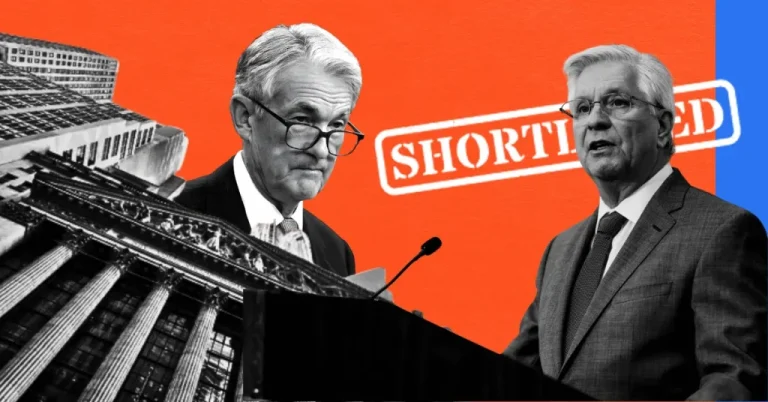
The post Trump Adds Fed Governor Christopher Waller to Shortlist to Replace Jerome Powell appeared first on Coinpedia Fintech News

The race to replace Federal Reserve Chair Jerome Powell is heating up, with President Donald Trump expanding his shortlist to include current Fed Governor Christopher Waller. The move highlights Trump’s main objective: appointing a Fed Chair who supports deep interest rate cuts to boost economic growth. With Powell’s term ending in May next year, the decision could come quickly, possibly as early as January.

Trump is already in discussions with former Fed Governor Kevin Warsh and National Economic Council Director Kevin Hassett. Waller’s entry into the race suggests the final choice is still open, with policy alignment playing a central role.

Why Christopher Waller Is Gaining Attention

Waller has gained traction for his consistently dovish stance on monetary policy. He has been one of the strongest voices inside the Federal Reserve, pushing for rate cuts, and earlier this year dissented when the Fed decided to keep rates unchanged. Under Powell, the Fed has already delivered three consecutive quarter-point cuts, bringing rates to the 3.50%–3.75% range.

Trump has repeatedly argued that interest rates should be closer to 1% or even lower. Waller’s openness to further easing places him closer to Trump’s policy goals than many other candidates. His clear and structured policy views have also earned him support from parts of Wall Street.

Crypto-Friendly Views Add to His Appeal

Waller has also stood out for his relatively open approach to digital assets. He has pushed back against skepticism around decentralized finance, arguing that regulators should adapt to innovation rather than block it. At a Federal Reserve payments conference last year, Waller described stablecoins as “a new form of private money” that can exist alongside traditional payment systems.

These comments have drawn praise from crypto industry leaders. Custodia Bank CEO Caitlin Long said Waller could help resolve long-standing issues such as access to Fed master accounts for crypto firms. She called the timing of his consideration “perfect” and said he deserves serious attention.

.article-inside-link {
margin-left: 0 !important;
border: 1px solid #0052CC4D;
border-left: 0;
border-right: 0;
padding: 10px 0;
text-align: left;
}

.entry ul.article-inside-link li {
font-size: 14px;
line-height: 21px;
font-weight: 600;
list-style-type: none;
margin-bottom: 0;
display: inline-block;
}

.entry ul.article-inside-link li:last-child {
display: none;
}

  • Also Read :
  •   Bitcoin, Ethereum, and XRP Price Fall as Crypto Market Today Fails to Recover
  •   ,

Political Challenges Limit His Chances

Despite his policy stance, Waller remains an underdog. According to The Wall Street Journal, he lacks the close personal relationship with Trump that Hassett and Warsh have. Some Trump allies have also criticized Waller for supporting only a half-point rate cut in September 2024, arguing it did not go far enough.

Prediction platform Polymarket currently gives Waller a 15% chance of becoming Fed Chair. Hassett leads with 52%, followed by Warsh at 29%.

Decision Timeline and Market Impact

Treasury Secretary Scott Bessent has confirmed that Trump is actively interviewing candidates and is expected to announce his choice in early January. While Warsh remains the perceived frontrunner, Waller’s inclusion signals Trump’s willingness to prioritize policy views over personal ties.

Some investors see the potential leadership change as market-positive. BitMine chairman Tom Lee believes a new Fed Chair could lead to a more dovish policy shift, possibly supporting a broader market recovery heading into 2026. For now, Waller’s candidacy underscores how the Fed Chair race is being shaped by monetary policy views as much as political dynamics.

Never Miss a Beat in the Crypto World!

Stay ahead with breaking news, expert analysis, and real-time updates on the latest trends in Bitcoin, altcoins, DeFi, NFTs, and more.

FAQs

Who is Christopher Waller and why is he being considered for Fed Chair?

Christopher Waller is a current Federal Reserve Governor known for supporting interest rate cuts, aligning closely with President Trump’s push for easier monetary policy.

Who is the chair of the Federal Reserve right now?

Jerome Powell is the current Federal Reserve Chair, leading U.S. monetary policy decisions on interest rates, inflation control, and financial stability.

What does the Federal Reserve Chair actually do?

The Fed Chair leads the central bank, guides interest rate policy, oversees financial stability, and represents the Fed to markets, Congress, and the public.

The post Hyperliquid Puts $1B HYPE Tokens Up for Burn Vote appeared first on Coinpedia Fintech News

Hyperliquid is putting nearly $1 billion worth of HYPE tokens under the spotlight.

The Hyper Foundation has proposed a validator vote to formally recognize HYPE tokens held in the protocol’s Assistance Fund as burned. If approved, the tokens would be excluded from HYPE’s circulating and total supply, even though they are already inaccessible at the protocol level.

A Burn Without a Transaction

This is not a traditional token burn.

The Assistance Fund is a built-in mechanism within Hyperliquid’s layer-1 execution that automatically converts trading fees into HYPE and sends them to a system address. That address was created without a private key, meaning the tokens cannot be accessed or spent unless a hard fork is introduced.

“The Hyper Foundation is proposing a validator vote to formally recognize the Assistance Fund HYPE as burned, removing the tokens permanently from the circulating and total supply,” the foundation said.

A “Yes” vote would bind validators to never approve any upgrade that could unlock the funds.

Why Hyperliquid Is Clarifying Supply Now

Hyperliquid’s fee-driven model has been drawing institutional attention, particularly as large treasuries begin to track HYPE more closely.

According to Cantor Fitzgerald, the protocol has generated around $874 million in fees year-to-date, with 99% of those fees routed through the Assistance Fund to repurchase HYPE.

Cantor described this structure as one that returns nearly all protocol revenue to tokenholders. The new proposal makes it clear that these repurchased tokens were never meant to re-enter circulation, reducing confusion around HYPE’s effective supply.

The foundation said the vote is meant to align supply reporting with how the protocol actually works, rather than create artificial scarcity.

.article-inside-link {
margin-left: 0 !important;
border: 1px solid #0052CC4D;
border-left: 0;
border-right: 0;
padding: 10px 0;
text-align: left;
}

.entry ul.article-inside-link li {
font-size: 14px;
line-height: 21px;
font-weight: 600;
list-style-type: none;
margin-bottom: 0;
display: inline-block;
}

.entry ul.article-inside-link li:last-child {
display: none;
}

  • Also Read :
  •   US Senators Introduce SAFE Crypto Act to Target Rising Crypto Scams
  •   ,

How the Vote Works

Validators must signal their position in the governance forum by December 21, while users can stake with validators that match their view until December 24. The final result will be decided through stake-weighted consensus.

Native Markets, issuer of the USDH stablecoin, noted that 50% of USDH reserve yield is routed into the Assistance Fund.

“Should this validator vote pass, these contributions will then be formally recognized as burned,” the company said.

As Hyperliquid continues to post strong numbers, the vote highlights a shift toward cleaner accounting and long-term protocol clarity. Always a good sign!.

Never Miss a Beat in the Crypto World!

Stay ahead with breaking news, expert analysis, and real-time updates on the latest trends in Bitcoin, altcoins, DeFi, NFTs, and more.

FAQs

Does this proposal change how HYPE tokens function in trading or governance?

No. The proposal only affects how certain tokens are counted in supply metrics, not how HYPE is used for trading, staking, or governance. Token utility and on-chain behavior remain unchanged.

Could future governance decisions reverse this classification?

Only under highly unlikely circumstances. A “Yes” vote would create a binding commitment among validators to reject any future upgrades that attempt to unlock or reuse those tokens, making reversal politically and economically difficult.

How might this decision affect institutional or treasury investors tracking HYPE?

It improves transparency around supply data, which is critical for valuation models and risk assessment. Clearer accounting reduces ambiguity for funds that must disclose circulating supply assumptions to regulators or investors.