Category

Editor’s Pick

Category

The post XRP Price Faces Strong Resistance Below $2 While Buyer Momentum Stays Weak appeared first on Coinpedia Fintech News

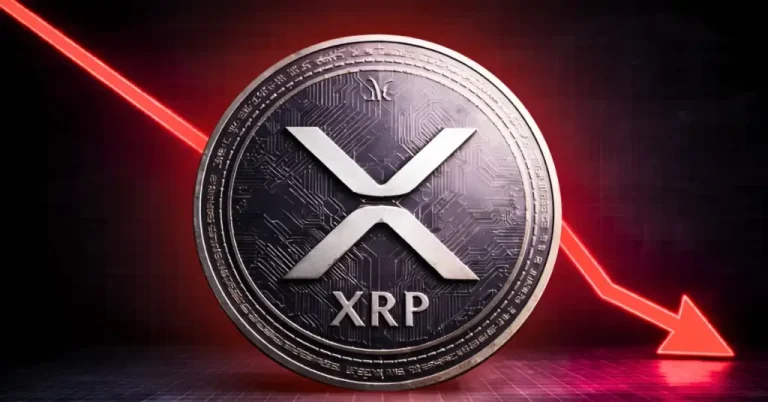
XRP price remains under pressure, trading below the key $2.00 level. Multiple failed attempts to move higher have reinforced the broader downtrend, keeping buyers cautious. With price action capped by strong resistance, momentum has weakened, and market confidence remains fragile. Unless XRP can decisively reclaim $2.00, sentiment is likely to stay defensive.

On-chain Data Signals Growing Stress Among XRP Holders

According to Glassnode, growing pressure on XRP holders. About 52% of the circulating supply is currently in profit, meaning nearly half of all tokens are underwater. This decline in profitability mirrors late-2024 conditions, when XRP failed to sustain strong rallies.

Historically, when the share of supply in profit nears or drops below 50%, XRP often enters extended consolidation or deeper corrective phases. While this does not signal an immediate sell-off, it increases the risk of panic selling if prices slip further and holder confidence weakens.

Ownership concentration is adding to market concern. Ripple Labs continues to control a significant share of the supply, with roughly 45 billion XRP held in escrow and about 1 billion tokens freely available. Because supply is heavily concentrated among a small group of entities and exchanges, changes in large-holder behavior can quickly impact XRP’s price direction.

Whale Activity Reflects Cautious Positioning

Data shows that wallets in the top 1% of XRP holders control approximately 87.6% of the total supply, slightly lower than earlier in the month. While the decline is modest, even small reductions at this scale can affect price action. 

Rather than accumulating aggressively, whales appear to be reducing exposure cautiously. This behavior limits upside momentum and reinforces the current sideways-to-bearish structure, making a rapid recovery less likely without fresh demand.

XRP Price Analysis

From a technical standpoint, XRP is trading near $1.92 and remains capped below resistance around $1.94. A descending trendline that has held for more than six weeks continues to suppress upside attempts. In the near term, XRP is likely to remain range-bound between $1.85 and $1.94 unless a decisive breakout or breakdown occurs.

.article-inside-link {
margin-left: 0 !important;
border: 1px solid #0052CC4D;
border-left: 0;
border-right: 0;
padding: 10px 0;
text-align: left;
}

.entry ul.article-inside-link li {
font-size: 14px;
line-height: 21px;
font-weight: 600;
list-style-type: none;
margin-bottom: 0;
display: inline-block;
}

.entry ul.article-inside-link li:last-child {
display: none;
}

  • Also Read :
  •   The New Crypto Everyone Missed Until Now, Here’s Why It’s Rising
  •   ,

Analysts See Potential for a Trend Reversal

Despite the weak backdrop, some analysts are watching for a potential shift. Crypto analyst Arthur notes that liquidation data shows most downside liquidity has already been cleared, while significant liquidation clusters sit above the price between $2.10 and $3.20. He believes this imbalance could fuel a sharp upside move if momentum returns.

Meanwhile, x user, Niels, highlights a possible double-bottom formation, with RSI rebounding and price reclaiming support after a brief fake breakdown. If broader market conditions improve, he sees XRP targeting the $2.30–$2.50 range.

FAQs

How high could XRP go by the end of 2025?

Analysts predict XRP could reach $5.05 by December 2025 if bullish momentum continues and key resistance levels are broken.

What factors influence XRP’s price movement?

XRP price is influenced by ETF approvals, on-chain activity, investor sentiment, legal developments, and broader crypto market trends.

Is XRP a good investment in 2025?

XRP shows bullish signs with strong on-chain activity and ETF interest, but investors should watch key support and resistance levels carefully.

What will XRP be worth in 2030?

XRP could reach an average of $26.50 by 2030, driven by growing adoption, institutional interest, and market expansion.

What is the XRP prediction for 2040?

XRP’s price could range from $97.50 to $179 by 2040, reflecting potential long-term adoption as a global payment solution.

What will XRP be worth in 2050?

XRP might reach between $219 and $526 by 2050 if it becomes a dominant digital asset with widespread global usage.

The post Binance Rolls Out Five New Spot Trading Pairs appeared first on Coinpedia Fintech News

Binance launches ADA/USD1, ASTER/USD1, ZEC/USD1, LUNA/USDC, and LUNC/USDC spot pairs on December 24 at 08:00 UTC, with full Trading Bots support, including spot algo orders. USD1 from World Liberty Financial packs a $2.72 billion market cap as Treasury backed USD stablecoin under BitGo custody. Terra Classic fans celebrate LUNC/USDC as a big win after years of recovery, with leader VegasMorph calling it a sign of their resilience and a festive boost.

The post Metaplanet Approves Shares to Expand Bitcoin appeared first on Coinpedia Fintech News

Tokyo-listed Metaplanet, holding 30,823 BTC worth $2.75 billion, approved issuing preferred shares without affecting common stock. Following MicroStrategy’s approach, the company doubled its Class A (MARS) and Class B (MERCURY) shares, added floating-rate and quarterly dividends, and targeted institutional investors. Recently, it raised $150 million through MERCURY shares and $250 million via credit for Bitcoin purchases. The stock jumped 18% to 451 JPY as investors anticipate further Bitcoin accumulation and bigger holdings.

The post XRP Price Today: Whale Selling vs ETF Inflows Who Takes Control? appeared first on Coinpedia Fintech News

XRP price today again fails to reclaim the key $2 level after falling nearly 22% over the past two months. While whales quietly reduce exposure and on-chain data shows growing stress among holders, institutional money continues to flow in through XRP ETFs. 

This contrast raises one key question for traders, is XRP preparing for another drop?

Whale Selling Is Keeping XRP Under Pressure

According to on-chain data, the main reason behind XRP’s weakness is steady selling from large holders, often called whales. Wallets holding between 100,000 and over 1 million XRP have been sending tokens to exchanges, especially Binance. This usually means planned selling, not panic selling.

At the same time, data shows a small drop in the supply held by the top 1% of XRP wallets. These big holders now control about 87.6% of the total supply, slightly down from earlier this month, a clear sign of whales slowly reducing their positions.

Another concern is falling profitability. Only about 52% of XRP’s supply is now in profit, meaning nearly half of all holders are sitting at a loss.

As a result, XRP has struggled to build momentum, with supply consistently meeting demand every time the price moves higher.

.article-inside-link {
margin-left: 0 !important;
border: 1px solid #0052CC4D;
border-left: 0;
border-right: 0;
padding: 10px 0;
text-align: left;
}

.entry ul.article-inside-link li {
font-size: 14px;
line-height: 21px;
font-weight: 600;
list-style-type: none;
margin-bottom: 0;
display: inline-block;
}

.entry ul.article-inside-link li:last-child {
display: none;
}

  • Also Read :
  •   Has ADA Price Fallen Too Far? What Cardano’s Price Structure Signals Next
  •   ,

ETF Inflows Signal Institutional Confidence

Despite recent price pressure, one key reason XRP is holding near the $2 level is steady inflows into spot XRP ETFs. These ETFs have now crossed $1.2 billion in total assets, showing strong interest from institutional investors.

At the same time, Bitcoin and Ethereum ETFs have been seeing continued outflows. This contrast suggests that some institutions are shifting their focus toward XRP instead of the larger cryptocurrencies.

XRP Price Outlook

XRP recently found support near $1.85, a level that has held strong in the past. As of now, XRP price is trading around $1.92, reflecting a slight drop seen in the last 24 hours. 

Meanwhile, looking at the XRP price chart, it is seen slipping below its 3-day Gaussian Channel, a signal that has historically marked important trend changes. In previous cycles, similar moves were followed by long periods of sideways or bearish trading before a stronger recovery took shape.

Looking ahead, XRP needs to reclaim the $2 level to bring bullish momentum back. Holding above $1.85 is crucial. If this support breaks, the price could slide toward $1.66 or even $1.50.

FAQs

How high could XRP go by the end of 2025?

Analysts predict XRP could reach $5.05 by December 2025 if bullish momentum continues and key resistance levels are broken.

What factors influence XRP’s price movement?

XRP price is influenced by ETF approvals, on-chain activity, investor sentiment, legal developments, and broader crypto market trends.

Is XRP a good investment in 2025?

XRP shows bullish signs with strong on-chain activity and ETF interest, but investors should watch key support and resistance levels carefully.

What will XRP be worth in 2030?

XRP could reach an average of $26.50 by 2030, driven by growing adoption, institutional interest, and market expansion.

The post Hyperliquid Fires Back at Solvency and Integrity Claims, Cites Onchain Proof appeared first on Coinpedia Fintech News

Hyperliquid is pushing back after a wave of claims questioned its solvency, transparency, and internal controls. In a detailed public response, the perpetuals trading platform said several accusations circulating online were based on incorrect or misunderstood information.

“Hyperliquid is built on a foundation of onchain transparency,” the team wrote, addressing the claims one by one.

The response comes as traders across the crypto market demand clearer proof of reserves and stronger governance from major exchanges.

Why the Solvency Claim Came Down to USDC

One of the most serious accusations claimed Hyperliquid was undercollateralized by $362 million. According to Hyperliquid, this conclusion came from leaving out native HyperEVM USDC balances.

“Every dollar is accounted for; the author failed to count native HyperEVM USDC,” the platform stated.

Hyperliquid explained that when both the Arbitrum bridge USDC and native HyperEVM USDC are included, total balances amount to $4.351 billion, matching user balances on HyperCore. The team emphasized that this verification is fully onchain and independently checkable.

Testnet Functions Sparked Confusion

Another claim suggested Hyperliquid could retroactively manipulate trading volume. The platform said this was based on testnet-only code that cannot be executed on mainnet.

“Testnet functions are exactly that – testnet only for testing,” Hyperliquid said, adding that these features are used to test complex fee and volume mechanics before deployment.

According to the team, every trade and volume figure on mainnet can be verified by anyone running a node.

No Special Privileges or Hidden Controls

Hyperliquid also rejected claims that certain users receive fee exemptions or that insiders could influence the HYPE airdrop.

“There are no such mechanisms to distort fees,” the platform stated, noting that fees, trades, and the full HYPE genesis distribution are all available onchain.

Addressing concerns around governance and control, Hyperliquid clarified that chain freezes only occur during planned network upgrades, similar to hard forks on other blockchains.

.article-inside-link {
margin-left: 0 !important;
border: 1px solid #0052CC4D;
border-left: 0;
border-right: 0;
padding: 10px 0;
text-align: left;
}

.entry ul.article-inside-link li {
font-size: 14px;
line-height: 21px;
font-weight: 600;
list-style-type: none;
margin-bottom: 0;
display: inline-block;
}

.entry ul.article-inside-link li:last-child {
display: none;
}

  • Also Read :
  •   Metaplanet Stock Jumps As Investors Back Bitcoin-Focused Capital Plan
  •   ,

Internal Rules Aim to Strengthen Trust

Alongside its technical rebuttal, Hyperliquid pointed to steps taken to improve trust. The platform has banned employees, contractors, and team members from trading $HYPE to avoid conflicts of interest, following reports of a former employee shorting the token.

Hyperliquid also confirmed that Assistance Fund tokens – around 11% of circulating supply – have been formally recognized as permanently burned through validator consensus, removing long-standing supply concerns.

Hyperliquid is leaning heavily on one message: its entire state is onchain, visible, and verifiable by anyone who wants to look.

The post Has ADA Price Fallen Too Far? What Cardano’s Price Structure Signals Next appeared first on Coinpedia Fintech News

Cardano continues to lag the broader crypto market, trading near $0.36–0.37 after a prolonged decline, while an extended sell-off has kept the price locked inside a descending structure. Despite a modest intraday bounce, ADA remains well below key resistance zones, leaving traders focused on whether this move marks early base-building or just another pause within a broader downtrend. With the demand fading off and the technicals pointing towards a recovery, can the ADA price rise above $0.4?

Current ADA Price Action

At the time of writing, ADA is trading around $0.36, with a market capitalisation of roughly $13–14 billion, keeping it among the top large-cap altcoins.

  • 24-hour volume: approximately $250–350 million, modest compared to earlier cycles
  • Recent price change: ADA is down around 2–4% on the week, with only shallow rebounds
  • Trend context: Price remains range-bound but biased lower, reflecting weak participation from momentum buyers

Volume remains muted, suggesting traders are cautious rather than aggressively positioning.

Short-Term Cardano Price Analysis 

On the 4-hour chart, Cardano (ADA) remains trapped inside a descending broadening wedge, reflecting persistent lower highs and controlled selling pressure. Price is currently hovering around $0.36–0.37, after bouncing from the lower boundary of the channel. Presently, the price is attempting to break the resistance, and if it succeeds, a rise from $0.39 to $0.41 could be imminent. 

Momentum indicators hint at early stabilisation, but not a confirmed reversal. RSI has lifted modestly from oversold territory, while MACD is attempting a bullish crossover near the zero line. Bollinger Bands have started to compress, suggesting volatility is contracting—often a precursor to a directional move.

For any short-term recovery to gain traction, ADA must break and hold above $0.38–0.40, which aligns with prior horizontal resistance and the channel’s upper boundary. Failure to do so keeps the bias neutral-to-bearish.

Long-Term Cardano Price Analysis 

From a weekly perspective, ADA remains firmly in a broader corrective phase. Price continues to trend lower within a well-defined descending parallel channel that has been in place for several months, following the rejection from the $0.80–$1.00 region earlier in the year.

The current price zone near $0.36 sits just above a key long-term demand area, where buyers have previously stepped in to slow declines. However, momentum on the weekly chart remains weak, with MACD still below the signal line and OBV rolling over—indicating limited accumulation so far.

Structurally, ADA needs a weekly close above $0.45–0.50 to signal a meaningful shift in trend. Until that happens, the broader setup suggests consolidation or further downside risk toward the $0.30–0.32 support band remains possible.

Conclusion

The current setup suggests that Cardano price can rise above $0.40, but only if buyers show follow-through rather than short-covering. A move above this level would signal that selling pressure is easing and could trigger a relief rally toward higher resistance zones. However, without sustained volume and acceptance above $0.40, any bounce risks fading quickly. Until that confirmation appears, ADA remains in a recovery attempt rather than a confirmed trend reversal, keeping both upside and downside scenarios firmly in play.

The post Ghana Legalizes Crypto With New Regulatory Law appeared first on Coinpedia Fintech News

Ghana’s parliament has passed the Virtual Asset Service Providers Bill, officially legalizing cryptocurrency trading and creating a clear regulatory framework for digital assets and service providers. The new law gives the Bank of Ghana power to license and oversee exchanges, wallet providers, and other crypto platforms while enforcing consumer protections and anti-money-laundering rules. This move aims to reduce risks like fraud, bring oversight to a fast-growing market used by millions of Ghanaians, and support innovation and financial inclusion.

The post Uniswap Jumps as UNI Governance Vote Nears—Can the Fee Switch Trigger the Price Rally? appeared first on Coinpedia Fintech News

The Uniswap (UNI) price has moved back into focus as traders react to a major governance vote that could reshape the token’s long-term value. While the broader crypto market remains cautious, UNI has shown relative strength, driven by expectations around changes to token burns and protocol fees. With the vote entering its final stage, UNI price action is becoming increasingly sensitive to both technical levels and sentiment shifts.

Current UNI Price Action

In recent sessions, Uniswap (UNI) has rebounded after defending the $5.00 support zone, a level that had acted as a key pivot throughout the month. Price has since pushed higher, clearing near-term resistance as buying interest picked up ahead of the governance decision.

The move has been supported by a rise in trading volume, suggesting active positioning rather than a low-liquidity spike. However, price action has also started to slow near higher levels, indicating early profit-taking. This places UNI in a short consolidation phase, where the next directional move will likely depend on the outcome of the vote and how the market reacts afterwards.

About the UNI Governance Vote

The ongoing UNIfication governance vote, which runs through December 25 UTC, is one of the most important proposals Uniswap has seen in recent years. The proposal includes two major changes.

First, it plans a 100 million UNI token burn from the treasury, reducing overall supply. Second, it proposes the activation of Uniswap’s long-discussed fee switch, allowing a portion of protocol fees to be routed into a burn mechanism. If implemented, this would directly link protocol usage and revenue to UNI’s token economics for the first time.

For traders and long-term holders, this is significant. UNI has historically functioned mainly as a governance token. The fee switch would introduce a clearer value-capture mechanism, potentially changing how the market values UNI compared to other DeFi blue-chip tokens.

UNI Price Analysis: Key Levels and Scenarios

From a technical perspective, UNI’s structure has improved after holding above $5.00, which now acts as a critical support zone. Momentum indicators had been oversold before the rebound, supporting the case for a relief rally.

Key levels traders are watching:

  • Support: $5.00–$4.85
  • Near-term resistance: $5.60–$5.80
  • Higher resistance (if momentum builds): $6.20–$6.50

Holding above the $5.6 region after the vote would keep the bullish structure intact. A rejection back below support could turn the recent move into a short-term “buy the rumor, sell the news” reaction, especially given the thin holiday liquidity around the vote result.

Conclusion

UNI’s recent price strength reflects growing anticipation around a governance decision that could redefine how UNI’s token is valued. The combination of a large token burn and potential fee switch has pushed UNI back onto traders’ radar, even as broader market sentiment remains cautious.

That said, the real test will come after the vote. Whether UNI can hold key support levels and attract sustained participation will decide if this move evolves into a longer-term repricing or fades into consolidation. For now, price behaviour around the $5 zone remains the most important signal to watch.

The post US Crypto Tax Framework Draft Signals Major Shift in Digital Asset Rules appeared first on Coinpedia Fintech News

A new crypto-focused tax framework is quietly gaining traction in the US House of Representatives, signaling a potential turning point for how digital assets are taxed. Led by Republican Rep. Max Miller and backed by Democrat Rep. Steven Horsford, the draft proposal reflects growing bipartisan agreement that US crypto tax rules need modernization.

Although the bill has not yet been formally introduced, its structure highlights a clear shift: treating crypto less like a speculative novelty and more like a functional financial system used for payments, lending, and network operations.

Stablecoin Payments Get Tax Relief

One of the most eye-catching provisions is a proposed de minimis exemption for regulated stablecoin payments. Under the draft, transactions under $200 would no longer trigger a taxable event.

This change could significantly simplify everyday crypto usage, allowing consumers to spend stablecoins on goods and services without tracking capital gains on small purchases.

Lawmakers, however, are keeping the exemption narrow. The goal is to reduce paperwork—not enable tax avoidance. Safeguards, reporting requirements, and anti-abuse rules are expected to prevent users from splitting large transactions into repeated small payments.

.article-inside-link {
margin-left: 0 !important;
border: 1px solid #0052CC4D;
border-left: 0;
border-right: 0;
padding: 10px 0;
text-align: left;
}

.entry ul.article-inside-link li {
font-size: 14px;
line-height: 21px;
font-weight: 600;
list-style-type: none;
margin-bottom: 0;
display: inline-block;
}

.entry ul.article-inside-link li:last-child {
display: none;
}

  • Also Read :
  •   Are Banks Trying to Kill Stablecoin Rewards? 125 Crypto Groups Push Back
  •   ,

Clear Rules for Crypto Lending

The proposal also tackles digital asset lending, an area that has long operated in tax uncertainty. The draft would allow non-taxable treatment for legitimate lending of liquid and fungible digital assets, as long as lenders receive the same type of asset in return.

To close loopholes, the framework excludes arrangements that resemble asset sales or manipulate tax basis. NFTs, illiquid or thinly traded tokens, tokenized securities, and derivative-based instruments are explicitly left out.

Mining and Staking Tax Deferral

Another major shift involves mining and staking rewards. Instead of taxing rewards immediately upon receipt, the proposal would allow taxpayers to defer income recognition for up to five years.

This change acknowledges the operational realities of blockchain validation and addresses cash-flow challenges faced by miners and stakers—especially during volatile market conditions.

Shift in US Crypto Tax Policy

Taken together, the draft outlines a more pragmatic approach to US crypto taxation. By easing rules for everyday payments, tightening standards for complex transactions, and offering flexibility for network participants, lawmakers appear to be redefining how digital assets fit into the financial system.

If introduced and passed, the proposal could represent one of the most significant updates to US crypto tax policy to date—potentially reshaping how Americans use and report digital assets.

Never Miss a Beat in the Crypto World!

Stay ahead with breaking news, expert analysis, and real-time updates on the latest trends in Bitcoin, altcoins, DeFi, NFTs, and more.

FAQs

What is the new US crypto tax proposal about?

It’s a bipartisan draft in the US House aiming to modernize crypto taxes by simplifying payments, clarifying lending rules, and easing taxes on mining and staking.

How does the proposal change crypto lending taxes?

It allows tax-free treatment when the same digital asset is lent and returned, while excluding NFTs, illiquid tokens, and sale-like structures.

Is the US crypto tax framework officially law yet?

No. It’s still a draft and not formally introduced, but it signals strong bipartisan momentum toward clearer and more practical crypto tax rules.

The post Why Japan’s Rising Bond Yields Are Making Bitcoin Traders Nervous appeared first on Coinpedia Fintech News

A quiet but important shift is unfolding in Japan’s bond market, and macro investors are starting to take notice. Long-term Japanese government bond yields have climbed to record highs, signaling a change in one of the world’s most influential funding environments. While the move may not grab headlines immediately, history suggests adjustments in Japan’s rates tend to ripple across global markets with force.

Japan Bond Yields Reach Record Highs

Japan’s bond market has long acted as a stabilizing anchor for global liquidity. When that anchor moves, the effects are rarely contained. Looking at the market scenario, macro analyst NoLimit is sounding the alarm over a major shift in Japan’s bond market that could have wide-reaching consequences for global risk assets, including crypto.

Yen Carry Trade Faces Rising Pressure

For decades, near-zero interest rates turned the Japanese yen into the backbone of global carry trades. Investors borrowed cheaply in yen and deployed that capital into higher-yielding assets around the world, supporting everything from US equities to emerging markets and crypto.

As Japanese long-term yields rise, this equation starts to break down. The appeal of borrowing yen weakens, and investors are forced to reassess risk positions that depend on stable, low-cost funding. The recent rise across Japan’s yield curve suggests the pressure is no longer limited to short-term rates, increasing strain on global leverage.

.article-inside-link {
margin-left: 0 !important;
border: 1px solid #0052CC4D;
border-left: 0;
border-right: 0;
padding: 10px 0;
text-align: left;
}

.entry ul.article-inside-link li {
font-size: 14px;
line-height: 21px;
font-weight: 600;
list-style-type: none;
margin-bottom: 0;
display: inline-block;
}

.entry ul.article-inside-link li:last-child {
display: none;
}

  • Also Read :
  •   Bitcoin Price Enters New Downtrend as On-Chain Demand Weakens, CryptoQuant Warns
  •   ,

Japan Capital Flows Shift From Global Markets

Higher domestic yields also alter behavior among Japan’s largest investors, including insurers and pension funds. When returns within Japan become more competitive, the incentive to allocate capital overseas declines.

This shift can reduce foreign demand for assets like US Treasuries while increasing currency volatility as positions are rebalanced or hedged. Such changes often place simultaneous pressure on bonds, equities, and other risk assets, creating a broad tightening in global financial conditions.

Crypto Markets Vulnerable to Liquidity Tightening

The real danger lies in positioning. Many portfolios remain heavily skewed toward leveraged risk strategies that assume funding costs stay manageable. When those assumptions change, selling tends to accelerate.

Rising yields often lead to volatility spikes, tighter correlations across markets, and sudden liquidity gaps. Assets that typically move independently can sell off together as investors scramble to reduce exposure.

Crypto markets are especially sensitive to shifts in liquidity. As global yields rise, leverage becomes more expensive and speculative demand fades. Even strong crypto-specific news can struggle to offset a macro environment that is turning less supportive.

Traders note that the impact from Japanese rate moves often appears with a delay. In previous cycles, Bitcoin experienced sharp declines weeks after similar yield spikes, raising concern that additional downside risk may still lie ahead. While such pullbacks can eventually form short-term bottoms, they rarely mark the end of a broader macro reset.

Never Miss a Beat in the Crypto World!

Stay ahead with breaking news, expert analysis, and real-time updates on the latest trends in Bitcoin, altcoins, DeFi, NFTs, and more.

FAQs

What is causing Japan’s bond yields to rise?

Long-term Japanese government bond yields are climbing due to shifts in monetary policy and global market dynamics, impacting domestic and international investments.

How do rising Japanese yields affect global markets?

Higher yields reduce the appeal of low-cost yen funding, pressuring global equities, bonds, and leveraged investments like crypto.

How could rising yields impact crypto markets?

As yields rise, borrowing costs increase, leverage decreases, and speculative demand falls, making crypto more vulnerable to volatility.

Will rising Japanese yields trigger a global financial reset?

While not guaranteed, historical trends show rising yields can tighten liquidity, prompt market sell-offs, and create broader risk across global assets.