Category

Editor’s Pick

Category

The post Chainlink Price Prediction 2026, 2027 – 2030: Will LINK Price Reach $100? appeared first on Coinpedia Fintech News

Story Highlights

  • The live price of the LINK token is  $ 12.46536070.
  • Price prediction for 2026 suggests a potential high of $55.
  • Long-term forecasts indicate LINK could reach $195 by 2030.

Chainlink has emerged as a game-changing decentralized oracle network, enabling smart contracts to connect seamlessly with real-world data, APIs, and traditional financial systems. As the crypto market evolves, Chainlink’s role continues to expand, especially with its Cross-Chain Interoperability Protocol (CCIP) gaining traction. Its native token, LINK, not only powers the ecosystem but has also caught the attention of investors and analysts. As a result, institutional interest surged, leading to the launch of the LINK ETF by Grayscale in early December 2025. 

With LINK price showing signs of a potential breakout and strong on-chain fundamentals backing its rise, the big question remains: Can LINK coin price hit $50 in December 2025? Let’s dive into this detailed Chainlink price prediction 2026–2030 to find out.

Table of Contents

  • Chainlink Price Prediction December 2025
  • Chainlink Price Analysis 2025
  • Chainlink Price Prediction 2026
  • Chainlink Price Targets 2026 – 2030
  • Market Analysis
  • FAQs

Chainlink Price Today

Cryptocurrency Chainlink
Token LINK
Price $12.4654

1.62%
Market Cap $ 8,826,721,545.27
24h Volume $ 238,502,839.8685
Circulating Supply 708,099,970.4526
Total Supply 1,000,000,000.00
All-Time High $ 52.8761 on 10 May 2021
All-Time Low $ 0.1263 on 23 September 2017

The wedge formed by the cup and handle pattern is nearing its final stage of completion. However, it appears that this will not result in a rally in December. Evidence indicates that the price is likely to continue its decline and consolidate, remaining below the $18 threshold until the conclusion of the month. Also, the chance for a Santa rally this month was high, but even that passed without flinching; it’s clear that in the remaining days of December, it’s gonna be muted.

Month Potential Low ($) Potential Average ($) Potential High ($)
LINK Crypto Price Forecast December 2025 10 18 30

In 2025, Chainlink price (LINK) started the year on a downward path, but by April, the tide began to turn. Early in April, LINK began its recovery from a low of $10.067. 

By May, it had formed a bullish rounded bottom pattern, with a crucial neckline set at $18. However, since mid-May, LINK faced challenges in maintaining its position near this neckline. 

By the third week of June, it pulled back toward the support level of the rounded bottom, which coincides with a multi-year support zone around $11. 

In the final week of June onwards, the LINK price began to rise and main rally came from $11 to $28 between July and August. This surge was primarily triggered by the successful launch of the Chainlink Reserve. 

However, after reaching its peak, profit-taking in late August led to a decline in the LINK/USD price, which dropped to $11.75 by November 21st. This price level is aligned with the lower boundary support of a declining wedge, which forms part of a cup-and-handle pattern where the handle is depicted by the declining wedge.

By late November, the price began to rise again, facing some challenges around the $13.30 mark. On December 3rd, momentum shifted positively when Grayscale launched its LINK ETF, GLNK, resulting in a 25% increase and enabling the price to clear the 20-day EMA band on the daily chart. It now appears that LINK price is headed to retest the upper boundary of the handle as well as the falling wedge.

The optimistic forecast for LINK/USD in 2025 has been low because the FOMC failed to generate positive momentum. Many were expecting the BOJ rate hike to create a big turmoil even though the news was absorbed. Now seeing the catalyst avoiding price action, December looks weak. However, 2026 seems more opportune than 2025.

On the weekly chart, a long-term ascending trendline has been consistently in effect over multiple years. This trendline has proven its reliability by producing upward price movements on numerous occasions, reinforcing its credibility as a key technical indicator. 

Looking ahead, the Chainlink price prediction 2026 suggests that the potential for a significant price surge reminiscent of the explosive rally observed in 2020, remains high. Analysts suggest that such a rally could see prices target the range of $48 to $55, driven by strong market momentum and bullish sentiment.

For those taking a more conservative outlook, even the lower end of the targets suggests a promising rally, with predictions pinpointing a price range of approximately $32 to $36 by 2026. This presents a favorable risk-reward scenario for investors monitoring this trendline and assessing their market strategies.

Year Potential Low ($) Potential Average ($) Potential High ($)
2026 35 50 55
Year Potential Low ($) Potential Average ($) Potential High ($)
2026 35 50 55
2027 48 64 80
2028 58 85 104
2029 70 108 141
2030 85 147 195

This table, based on historical movements, shows Chainlink price to reach $195 by 2030 based on compounding market cap each year. This table provides a framework for understanding the potential LINK price movements. Yet, the actual price will depend on a combination of market dynamics, investor behavior, and external factors influencing the cryptocurrency landscape.

Market Analysis

Firm Name 2025 2026 2030
Changelly $15.32 $25.83 $140.70
coincodex $10.66 $6.44 $14.79
Binance $17.55 $18.43 $22.40
Mitrade $22.64 $32.22 $139.2
Investing Haven $39.20 $54.10 $80
Flitpay $40.6 $62.6 $110

*The aforementioned targets are the average targets set by the respective firms.

Never Miss a Beat in the Crypto World!

Stay ahead with breaking news, expert analysis, and real-time updates on the latest trends in Bitcoin, altcoins, DeFi, NFTs, and more.

FAQs

How much is Chainlink worth?

At the time of writing, the value of one LINK crypto token was  $ 12.46536070.

What is the price prediction for Chainlink in 2026?

Chainlink price prediction for 2026 suggests LINK could trade between $35 and $55, with an average price near $50 under bullish conditions.

How much will 1 Chainlink be worth in 2030?

By 2030, 1 Chainlink could be worth between $85 and $195, depending on adoption, market cycles, and long-term crypto growth.

Where will Chainlink be in 5 years?

In five years, Chainlink is expected to be a core Web3 infrastructure, with broader adoption and a potential price range of $80–$140.

Is Chainlink a good long-term investment?

Chainlink is considered strong long term due to its real-world utility, oracle dominance, institutional adoption, and expanding cross-chain ecosystem.

What factors influence Chainlink price predictions?

LINK price is driven by oracle demand, CCIP adoption, staking growth, institutional interest, crypto market cycles, and global liquidity trends.


The post Galaxy Digital Admits Bitcoin 2026 Is ‘Too Chaotic’ as Price Targets Split Widely appeared first on Coinpedia Fintech News

Bitcoin is about to close 2025 almost exactly where it started.

After riding a strong bullish wave for most of the year, Bitcoin hit a new all-time high of $126,080 on October 6. ETF inflows were strong, regulatory progress improved sentiment, and on-chain activity picked up. But the rally didn’t last.

A mix of macro disappointments, leverage wipeouts, and heavy whale selling cooled the market, pushing BTC back into the $80,000-$90,000 range by December.

Galaxy Digital says that while 2025 may end quietly, it helps lay the groundwork for what comes next.

Galaxy Digital: 2026 Is Hard to Call

In its annual report, Galaxy Digital took a cautious stance on Bitcoin’s near-term outlook. While the firm expects Bitcoin to reach $250,000 by the end of 2027, it admits that 2026 is far less predictable.

“2026 is too chaotic to predict, though Bitcoin making new all-time highs in 2026 is still possible,” said Alex Thorn, Head of Firmwide Research at Galaxy Digital.

According to Galaxy, Bitcoin still hasn’t fully regained bullish momentum. Until BTC can hold above the $100,000-$105,000 range, downside risk remains on the table.

Options Markets Show Extreme Price Ranges

That uncertainty is clearly showing up in derivatives markets. Options traders are pricing nearly equal odds of Bitcoin trading at $70,000 or $130,000 by June 2026. By the end of 2026, expectations stretch even wider from $50,000 to $250,000.

“These wide ranges reflect uncertainty about the near term,” Thorn said, pointing to broader risks like monetary policy shifts, AI capital spending, and the U.S. midterm elections.

.article-inside-link {
margin-left: 0 !important;
border: 1px solid #0052CC4D;
border-left: 0;
border-right: 0;
padding: 10px 0;
text-align: left;
}

.entry ul.article-inside-link li {
font-size: 14px;
line-height: 21px;
font-weight: 600;
list-style-type: none;
margin-bottom: 0;
display: inline-block;
}

.entry ul.article-inside-link li:last-child {
display: none;
}

  • Also Read :
  •   At Least Five Crypto Treasury Firms Face Asset Sales or Closure in 2026, Galaxy Says
  •   ,

2025 Predictions Fell Short

Galaxy also reviewed its 2025 Bitcoin calls and several missed the mark.

Bitcoin did not cross $150,000 or test $185,000 as expected. While BTC briefly became one of the top risk-adjusted performers earlier in the year, it’s now on track to finish 2025 with a negative Sharpe ratio. Spot Bitcoin ETFs also fell short of the $250 billion AUM target, reaching about $141 billion instead.

A “Boring” Year May Still Be Bullish

Despite the setbacks, Galaxy believes Bitcoin is maturing into a more traditional macro asset. Volatility has declined, and downside protection now costs more than upside bets – a shift usually seen in established markets like gold.

“2026 could be a boring year for Bitcoin, and whether it finishes at $70k or $150k, our bullish outlook… is only growing stronger,” Thorn said.

For Bitcoin, stability may be the real signal of progress.

Never Miss a Beat in the Crypto World!

Stay ahead with breaking news, expert analysis, and real-time updates on the latest trends in Bitcoin, altcoins, DeFi, NFTs, and more.

FAQs

Why is Bitcoin’s 2025 performance considered “boring” despite hitting record highs?

Bitcoin reached an all-time high but ended the year near its starting price, showing reduced volatility and signaling maturation as a macro asset rather than pure speculation.

What do options markets reveal about Bitcoin’s near-term outlook?

Traders price wide ranges for 2026, from $50,000 to $250,000, reflecting uncertainty from macro factors like monetary policy, AI spending, and U.S. elections.

Why could a “boring” year still be positive for Bitcoin?

Lower volatility and higher cost of downside protection suggest Bitcoin is becoming a more stable, institutional-friendly asset, laying groundwork for long-term growth.

The post U.S. Crypto Policy Takes a Historic Turn Under Trump Administration appeared first on Coinpedia Fintech News

Under the President Donald Trump Administration, the U.S. government has taken a markedly different approach toward cryptocurrency. Instead of treating the sector as a regulatory problem or speculative threat, Washington is now moving to integrate crypto directly into the existing financial system. 

According to @tiger_research, the U.S. strategy is not to replace traditional finance with crypto, but to make crypto operate under familiar financial rules and structures.

U.S. SEC Signals New Era of Crypto Regulation

A major shift has occurred at the U.S. SEC. Under former Chair Gary Gensler, crypto regulation relied heavily on enforcement actions against companies like Ripple, Coinbase, and Binance. Clear rules were often missing, with lawsuits taking priority over guidance.

After Gensler’s exit, this approach changed. Under new leadership, the SEC introduced Project Crypto, aiming to clearly define which digital tokens qualify as securities. According to tiger_research, this signals a move away from regulation through lawsuits toward a structured regulatory framework, an important step for the crypto industry’s long-term growth.

CFTC Embraces Crypto as Collateral

The Commodity Futures Trading Commission (CFTC) has also expanded its role. It formally recognized Bitcoin and Ethereum as commodities and approved them, alongside USDC, for use as collateral in derivatives markets.

Through its Digital Asset Collateral Pilot Program, the CFTC applied traditional risk controls like haircuts, treating crypto assets similarly to conventional financial collateral. This signals a deeper level of institutional trust and positions crypto as functional financial infrastructure, not just speculative assets.

OCC Opens the Banking Door

Perhaps the most structural shift came from the Office of the Comptroller of the Currency (OCC). Previously, crypto firms were locked out of federal banking oversight and forced to navigate state-by-state licensing.

That changed in late 2025, when the OCC conditionally approved national trust bank charters for firms such as Circle and Ripple. This move puts major crypto companies on equal footing with traditional banks, allowing nationwide operations and direct settlement without intermediary banks.

.article-inside-link {
margin-left: 0 !important;
border: 1px solid #0052CC4D;
border-left: 0;
border-right: 0;
padding: 10px 0;
text-align: left;
}

.entry ul.article-inside-link li {
font-size: 14px;
line-height: 21px;
font-weight: 600;
list-style-type: none;
margin-bottom: 0;
display: inline-block;
}

.entry ul.article-inside-link li:last-child {
display: none;
}

  • Also Read :
  •   10x Research Outlines Key Events That Could Move Crypto in 2026
  •   ,

Congress also delivered long-awaited clarity through the GENIUS Act, which set strict rules for stablecoin issuers. The law mandates 100% reserve backing, bans rehypothecation, and assigns federal oversight. As the analyst notes, this effectively transforms stablecoins into legally recognized digital dollars.

Why This Matters for Crypto

This past year shows the U.S. is not banning crypto, nor fully deregulating it. Instead, it is absorbing crypto into its financial core. Regulatory debates still exist, especially around privacy tools like Tornado Cash, but those tensions reflect institutional checks rather than policy reversal.

For crypto markets, Bitcoin’s 2025 run under Trump was volatile but constructive. BTC surged above $109,000 early in the year on pro-crypto optimism and regulatory clarity, then sold off sharply after Trump’s tariff announcements hit risk markets. 

Despite the pullback, adoption kept rising through state reserves and corporate Bitcoin treasuries, helping BTC recover and rally again. After the Fed cut rates in September, Bitcoin surged to a new all-time high near $125,800 in October, with bullish macro conditions reviving upside expectations.

Never Miss a Beat in the Crypto World!

Stay ahead with breaking news, expert analysis, and real-time updates on the latest trends in Bitcoin, altcoins, DeFi, NFTs, and more.

FAQs

How might the SEC’s shift from enforcement to structured regulation impact crypto investors?

A clear regulatory framework reduces legal uncertainty, encouraging institutional investment and enabling startups to innovate without fearing unexpected lawsuits.

What are the potential effects of crypto firms gaining federal bank charters?

National trust bank charters allow firms like Circle and Ripple to operate nationwide, speeding up transactions and integrating crypto more closely with traditional finance.

What could the CFTC’s approval of crypto as collateral mean for markets?

Treating crypto like traditional financial collateral allows derivatives and lending markets to expand, increasing liquidity and encouraging broader institutional adoption.

The post Ethereum Price at Critical Levels: Breakout or Breakdown Next? appeared first on Coinpedia Fintech News

Ethereum (ETH) is trading near a crucial price zone, leaving traders cautious as the market looks for its next direction. After weeks of volatile moves, ETH has entered a slower phase, hovering close to a key support area. The current price action suggests the market is at a decision point, where a strong move in either direction could soon follow.

Ethereum Price Analysis

Looking at the chart, some traders believe Ethereum may be forming a Head & Shoulders structure. ETH moved into the $3,200–$3,250 range in early December, which could mark the left shoulder. This was followed by a stronger rally above $3,400, forming the head. The most recent rebound stalled lower, around $3,100–$3,150, which may represent the right shoulder.

The key support zone, often referred to as the neckline, sits between $2,900 and $2,950, where ETH is currently trading. While the structure resembles a classic reversal setup, it remains unconfirmed. Ethereum has not yet broken decisively below $2,900. Analysts say a clear 4-hour or daily close below this level, followed by continued selling, would be needed to confirm a downside shift.

Until then, Ethereum remains range-bound, with traders watching closely for a decisive breakout or breakdown.

ETH Price Bearish Case

One reason the bearish view remains weak is how the price is behaving near the right shoulder. Instead of facing a strong rejection, Ethereum has been moving sideways, forming a tight range. This kind of price action often leads to further consolidation or even continuation, rather than a sharp breakdown.

Momentum indicators also do not strongly support a downside move. The Relative Strength Index (RSI) is sitting between 45 and 50, showing neutral momentum. In clear Head & Shoulders reversals, RSI usually struggles near 60 on the right shoulder and then drops sharply. That pattern is not visible here.

Because of this, many traders see the current structure as a range or distribution phase, rather than a confirmed reversal. In stronger market cycles, similar setups often fail and turn into sideways movement before the broader uptrend resumes.

Key Levels: $2,900 Support and $2,750 Risk Zone

Ethereum has already retraced nearly 61.8% of its last impulsive move, a level where price reactions are common. While $2,900 remains immediate support, a deeper move toward $2,750 is increasingly viewed as the key downside level to monitor in the coming weeks.

If ETH fails to hold this zone, it could signal another liquidity sweep lower before any meaningful recovery.

Volatility Expected as Structure Tightens

Several analysts are warning that volatility could pick up soon. Ethereum often dips below visible support or “liquidity” levels to trigger sell orders before making a larger move. With Bitcoin also approaching a key turning point, ETH could briefly move lower and test recent lows before deciding on its next direction.

From a broader view, Ethereum has been stuck in a sideways correction since November 21, trading below the top of its corrective channel. A break above this channel would be the first sign that upside momentum is returning.

For a stronger bullish outlook, ETH would need to reclaim $3,550. Until that happens, the risk of continued consolidation or another short-term dip remains high.

.article-inside-link {
margin-left: 0 !important;
border: 1px solid #0052CC4D;
border-left: 0;
border-right: 0;
padding: 10px 0;
text-align: left;
}

.entry ul.article-inside-link li {
font-size: 14px;
line-height: 21px;
font-weight: 600;
list-style-type: none;
margin-bottom: 0;
display: inline-block;
}

.entry ul.article-inside-link li:last-child {
display: none;
}

  • Also Read :
  •   Bitcoin Outlook 2026: Institutions Could Drive BTC Price to $170K, Says Michael Saylor
  •   ,

Ethereum Futures Trading Hits Record Levels

Despite uneven price performance in 2025, Ethereum has set a new record in derivatives trading activity. According to CryptoQuant data, for every $1 invested in ETH on the spot market, nearly $5 has moved into futures, showing how heavily traders are using leverage.

Binance alone saw over $6.74 trillion in ETH futures trading this year, nearly double the volume recorded in 2024. The same trend is visible across other major exchanges, including OKX, Bybit, and Bitget, all of which reported record highs in Ethereum futures activity.

This growing dependence on derivatives has made Ethereum’s price more volatile and less stable. Even with massive trading volumes, ETH only posted a small new all-time high, suggesting recent price moves have been driven more by liquidations than strong spot buying.

Ethereum Long-Term Outlook Remains Constructive

Despite the short-term uncertainty, the long-term outlook for Ethereum remains positive. Fundstrat’s Tom Lee recently said ETH could rise to $7,000–$9,000 by early next year, driven by Wall Street’s growing interest in tokenizing real-world assets on the Ethereum network.

Large institutions such as BlackRock and JPMorgan have already launched on-chain pilots, pushing real-world asset value locked on Ethereum past $20 billion. This strengthens Ethereum’s position as the main platform for on-chain settlements.

For now, Ethereum is at a key turning point. Traders are closely watching the $2,900 level, as the next clear move above or below this zone could shape price action in the weeks ahead.

FAQs

What is the Ethereum price prediction for 2026?

Ethereum could trade between $4,700 and $14,100 in 2026, depending on market cycles, network upgrades, and institutional demand.

Can Ethereum really reach over $15,000 by 2030?

Long-term models suggest ETH could exceed $15,000 by 2030 if network upgrades, institutional use, and market growth continue steadily.

Is Ethereum a good long-term investment?

Ethereum’s long-term outlook is supported by network upgrades, institutional adoption, and Layer-2 growth, but it still carries market and regulatory risks.

What are the main risks affecting Ethereum’s price?

Key risks include regulatory uncertainty, macroeconomic changes, centralization concerns in staking, and shifts in overall crypto market sentiment.

The post Which Crypto to Buy Today for Both Short-Term Moves and Long-Term Value? appeared first on Coinpedia Fintech News

Finding a crypto asset that can deliver near-term momentum while also holding real long-term value is rare. Many tokens offer hype without structure, or utility without visibility. Mutuum Finance (MUTM) stands out because it is being built with both timelines in mind. With a strong presale performance, a clearly defined lending use case, and multiple demand drivers planned into its design, it is increasingly being discussed in crypto predictions focused on balance rather than speculation.

Act Now As Just 2% Remaining At $0.035

Mutuum Finance (MUTM) is currently in Presale Phase 6 with a total supply capped at 4 billion tokens. The current price stands at $0.035, and around $19.45 million has already been generated across all presale phases. This phase alone has seen 98% of its 170 million token allocation sold, reflecting strong market interest. The holder count has grown to over 18,600 participants across all phases, showing steady organic growth rather than sudden hype-driven spikes.

It is also important to highlight credibility. The presale has been running since early 2025, with the team remaining active and aligned with its roadmap. Key milestones have been delivered on schedule, and the protocol launch is planned as a fully functional product rather than a rushed release. This consistency separates Mutuum Finance (MUTM) from the rug-pull culture that dominates many presales and positions it as a serious long-term project.

A Dual Lending Model Designed for Real Demand

At its core, Mutuum Finance (MUTM) is being developed as a decentralized, non-custodial lending and borrowing protocol that combines peer-to-contract and peer-to-peer markets. This dual structure is important because it allows users to choose between liquidity pools and direct lending, depending on their risk appetite and asset preference. P2C pools will provide predictable access to liquidity, while P2P markets will allow assets that are often excluded from traditional lending platforms to participate.

The team has announced that the first version of the protocol will be deployed on the Sepolia Testnet in Q4 2025. This V1 release will focus on essential infrastructure such as liquidity pools, mtTokens that represent deposited assets, debt tokens that track borrow positions, and an automated liquidator bot. ETH and USDT are expected to be the initial supported assets for lending, borrowing, and collateral, keeping the system simple and secure in its early stages.

Deploying V1 on the testnet gives the community early access to interact with the protocol before the mainnet rollout. This stepwise introduction strengthens transparency, encourages user participation, and allows the development team to collect valuable feedback for improvements. As engagement grows, interest in the ecosystem is expected to rise, supporting long-term demand and confidence in the MUTM token.

Stablecoin Mechanics 

One of the strongest growth drivers lies in the protocol’s planned decentralized stablecoin. This stablecoin will always aim to maintain a $1 value and will only be minted when users borrow against overcollateralized assets like ETH. When loans are repaid or liquidated, the stablecoin will be burned, keeping supply directly tied to real borrowing activity. Only approved issuers with defined limits will be able to mint it, ensuring risk remains controlled.

Interest rates for this stablecoin will be governed to help maintain price stability rather than fluctuate purely on supply and demand. When the price trades above $1, rates can be adjusted downward, and when it falls below, rates can rise. Arbitrage activity will naturally support this mechanism, as users act on price differences to restore balance. Because all loans will be overcollateralized and automatically liquidated when needed, the system is designed to preserve value over time.

This stablecoin will anchor both lending markets within Mutuum Finance (MUTM). Borrowers will need it, lenders will earn from it, and liquidity will circulate within the ecosystem. Since stablecoins are the backbone of DeFi activity, a secure and well-governed version is expected to create recurring demand for MUTM through sustained protocol usage rather than temporary speculation.

Why Demand, Visibility, and Security Could Drive Value

Price discovery is another key pillar. The protocol’s design anticipates the use of Chainlink data feeds to deliver reliable asset pricing across multiple blockchains. Accurate pricing is essential for fair liquidations and safe collateral management. The roadmap also includes fallback oracles, aggregated data sources, and on-chain metrics such as time-weighted average prices from decentralized exchanges. Together, these layers will reduce manipulation risk and pricing errors.

Reliable pricing builds confidence. When users trust valuations, they are more likely to open larger positions and hold them longer. This leads to higher fee generation, stronger treasury growth, and more economic activity tied to Mutuum Finance (MUTM). Over time, this demand cycle supports token value through real usage rather than artificial scarcity.

Visibility is expected to increase as well. With a strong presale trajectory and clear utility, Mutuum Finance (MUTM) is projected to pursue listings on well-known Tier-1 and Tier-2 exchanges after launch. Once listed, liquidity inflows, whale participation, and broader exposure are expected to accelerate adoption. This pattern has been observed repeatedly with major DeFi projects that combined utility with timing, reinforcing why some analysts already discuss MUTM as the next crypto to hit $1 in long-term outlooks.

One analyst who previously projected major price movements in assets like BTC and ETH has projected a strong post-listing trajectory for Mutuum Finance (MUTM). Based on a projected listing reference price of $0.06, the analysis points toward a multi-fold increase within the first year of active protocol usage, translating into several hundred percent gains driven by demand growth rather than hype.

Mutuum Finance (MUTM) offers a rare blend of short-term momentum and long-term value design. With Phase 6 already 98% sold out and the next phase set to increase the price by 15% to $0.040, the current window at $0.035 represents the last opportunity at this discounted level. For those looking at crypto predictions grounded in demand, structure, and credibility, Mutuum Finance (MUTM) is increasingly difficult to ignore.

For more information about Mutuum Finance (MUTM) visit the links below:

Website: https://www.mutuum.com

Linktree: https://linktr.ee/mutuumfinance

The post “Time to Be Important”: Mike Novogratz Issues Wake-Up Call for XRP and Cardano appeared first on Coinpedia Fintech News

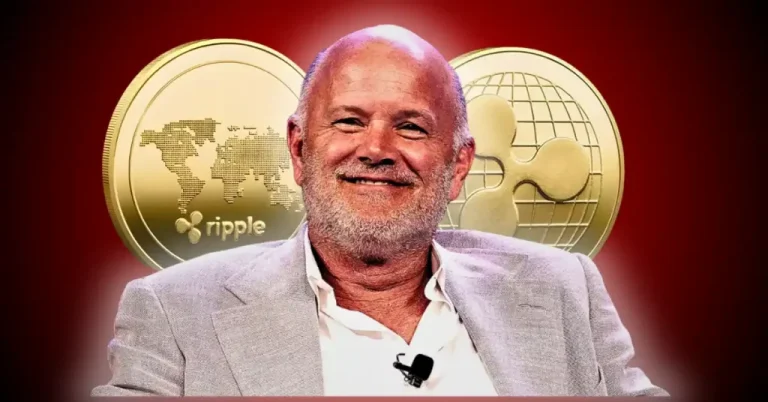
Crypto’s next phase won’t be decided by hype, and Mike Novogratz is making that clear.

The Galaxy Digital CEO says the market is moving away from story-driven tokens and toward projects that can show real use. In a recent Youtube video from Galaxy’s channel titled “2026 is a Year for Building,” Novogratz warned that tokens like XRP and Cardano (ADA) could lose relevance if they fail to prove practical value as the industry matures.

His message was clear: crypto’s next winners will be built on usage.

Crypto Is Entering a “Prove It” Phase

Novogratz said the market is shifting from “narrative-driven tokens” to “business-driven tokens” – assets that actually do something and can point to adoption, revenue, or visible demand.

That change won’t happen overnight. Instead, he sees a one- to three-year transition period, with 2026 acting as a key checkpoint for the industry.

“I think it’s it is a building year for us and for other crypto companies,” Novogratz said. “It’s time for us to start being important.”

Tokens that remain stuck in vision mode may struggle once the market starts asking harder questions.

Why XRP and Cardano Face Pressure

Novogratz made a clear distinction between Bitcoin and most altcoins. Bitcoin, he said, functions as a macro asset and long-term hedge. Other tokens, including XRP and ADA, are competing as infrastructure – payment rails, financial tools, or utility networks.

In that environment, speed or decentralization alone isn’t enough. What matters is whether people are actually using the network.

.article-inside-link {
margin-left: 0 !important;
border: 1px solid #0052CC4D;
border-left: 0;
border-right: 0;
padding: 10px 0;
text-align: left;
}

.entry ul.article-inside-link li {
font-size: 14px;
line-height: 21px;
font-weight: 600;
list-style-type: none;
margin-bottom: 0;
display: inline-block;
}

.entry ul.article-inside-link li:last-child {
display: none;
}

  • Also Read :
  •   Crypto Analyst Calls XRP a “Zombie Asset” Despite Ripple’s Growth
  •   ,

Without visible adoption, Novogratz suggested, those tokens risk being left behind as crypto shifts from trading to real-world application.

Wallets and Exchanges Are Becoming Banks

Another major theme was convergence. Novogratz expects wallets and exchanges to evolve into full-scale financial platforms offering stablecoins, tokenized assets, and investment products.

“Everyone’s going to try to build a similar business, which is let me give you a bank and a wallet,” he said.

This shift, he added, will take years, but it will reshape how crypto fits into everyday finance.

2026 Is the Deadline

Novogratz closed with a clear takeaway: the next two years are about building, not marketing.

By 2026, crypto projects will need to show where they matter in the real world or risk fading as the industry grows up.

Never Miss a Beat in the Crypto World!

Stay ahead with breaking news, expert analysis, and real-time updates on the latest trends in Bitcoin, altcoins, DeFi, NFTs, and more.

FAQs

Does this shift mean speculative crypto trading is coming to an end?

Not entirely. Short-term trading will still exist, but long-term capital is increasingly flowing toward projects that can justify their value through usage, not momentum alone.

Who is most affected by this “prove it” phase in crypto?

Early-stage altcoin projects, especially those without clear adoption paths, face the most pressure. Established firms with products, users, or institutional ties may benefit.

What happens if a project fails to show progress by 2026?

Projects that fail to demonstrate relevance risk losing developer interest, liquidity, and long-term investor support as the market reallocates capital to proven platforms.

The post Bitcoin Price Set for Next Move Higher in 2026, Says Swan Bitcoin CEO appeared first on Coinpedia Fintech News

Major cryptocurrencies like Ethereum and Solana have fallen more than 20% over the past 90 days, raising concerns across the digital asset market. However, Swan Bitcoin CEO Cory Klippsten believes the recent downturn may already be behind the market and argues that Bitcoin is positioning itself for a strong rebound heading into 2026.

In a recent CNBC interview, he acknowledged the recent volatility but emphasized that Bitcoin’s broader market structure appears healthier than in previous cycles.

Bitcoin Price Consolidates After Sharp Rise

Bitcoin previously surged to around $73,000 before climbing as high as $126,000, followed by a pullback that has seen prices stabilize in the high $80,000 range.

“For the past couple of weeks, Bitcoin has been bouncing between roughly $85,000 and $91,000,” he said, describing the current phase as consolidation rather than weakness.

Four-Year Cycle Narrative Is Fading

Zooming out, he argued that the traditional four-year Bitcoin cycle may be losing relevance. Historically, Bitcoin peaked in 2013, 2017, and 2021, followed by prolonged bear markets where prices failed to reclaim previous highs the following year.

“This time feels different,” he explained. “We didn’t see the kind of astronomical price surge in 2025 that past halving-driven cycles would suggest. And because of that, it’s hard to imagine a steep collapse from here.”

According to him, the lack of an overheated rally reduces the likelihood of a sharp downturn.

.article-inside-link {
margin-left: 0 !important;
border: 1px solid #0052CC4D;
border-left: 0;
border-right: 0;
padding: 10px 0;
text-align: left;
}

.entry ul.article-inside-link li {
font-size: 14px;
line-height: 21px;
font-weight: 600;
list-style-type: none;
margin-bottom: 0;
display: inline-block;
}

.entry ul.article-inside-link li:last-child {
display: none;
}

  • Also Read :
  •   Ethereum Treasury Giant BitMNR Stakes $219M in ETH
  •   ,

Institutional and Government Demand Strengthens Bitcoin

He also pointed to rising institutional and government participation as a major support for Bitcoin’s price, noting that adoption continues to expand globally.

“Bitcoin tends to be a one-way motion,” he said. “People generally don’t enter Bitcoin and then exit completely. They usually stay and adjust how much they buy.”

Based on this trend, he estimates there is more than a 50% chance Bitcoin will reach a new all-time high in 2026, with prices potentially moving above $125,000.

Outlook Remains Bullish

Despite recent declines across the broader crypto market, the outlook remains optimistic that Bitcoin is entering a more mature phase driven by long-term adoption rather than speculative cycles. With prices consolidating and institutional interest growing, the next major move for Bitcoin could be upward rather than another prolonged downturn.

Never Miss a Beat in the Crypto World!

Stay ahead with breaking news, expert analysis, and real-time updates on the latest trends in Bitcoin, altcoins, DeFi, NFTs, and more.

FAQs

Is Bitcoin likely to recover after the recent crypto market drop?

Yes. Analysts like Cory Klippsten believe Bitcoin is consolidating, not weakening, and may rebound as market structure and long-term demand remain strong.

What price range is Bitcoin trading in right now?

Bitcoin is consolidating between roughly $85,000 and $91,000, a sign of market balance after a major rally rather than a bearish breakdown.

Could Bitcoin reach a new all-time high in 2026?

Possibly. There’s an estimated greater than 50% chance Bitcoin could exceed $125,000 in 2026 due to steady adoption and long-term holders.

The post XRP Price Prediction For 2026 if Bitcoin Hits $250K appeared first on Coinpedia Fintech News

After a slow year for the crypto market, focus is now shifting to 2026, especially for XRP. Crypto analyst Austin Hilton believes Bitcoin’s next move could play a key role in what happens next.

Bitcoin makes up nearly 60% of the entire crypto market, which means its price often sets the direction for everything else. If Bitcoin rises to $250,000, Austin believes money would naturally move into major altcoins like XRP. 

Based on past market cycles, Hilton says XRP Price could climb to $20–$30 if Bitcoin enters a strong upward trend. That would mean a 10x to 15x  increase from current levels.

XRP Price Shows Strength in a Weak Altcoin Market

While 2025 proved challenging for most altcoins, XRP showed relative resilience. The broader altcoin market declined approximately 42% over the year, while XRP was down only about 15%, outperforming many large-cap digital assets.

Ripple’s recent expansion is also fueling optimism around XRP. The company has completed more than $2.7 billion in acquisitions, including payments platform Rail, treasury software firm GTreasury for $1 billion, and trading venue Hidden Road for $1.25 billion.

This performance has bolstered confidence among long-term XRP supporters, especially as brand awareness around the token continues to grow beyond crypto-native circles.

Institutional Adoption Sets a Market Floor

Ripple has also secured key regulatory wins, officially ending its long-running legal battle with the U.S. Securities and Exchange Commission. This progress has paved the way for spot XRP investment products, including offerings from Rex-Osprey and the Grayscale XRP Trust. At the same time, Ripple’s stablecoin RLUSD has grown into one of the top five stablecoins by trading volume.

.article-inside-link {
margin-left: 0 !important;
border: 1px solid #0052CC4D;
border-left: 0;
border-right: 0;
padding: 10px 0;
text-align: left;
}

.entry ul.article-inside-link li {
font-size: 14px;
line-height: 21px;
font-weight: 600;
list-style-type: none;
margin-bottom: 0;
display: inline-block;
}

.entry ul.article-inside-link li:last-child {
display: none;
}

  • Also Read :
  •   Crypto Analyst Calls XRP a “Zombie Asset” Despite Ripple’s Growth
  •   ,

Hilton also points to growing interest from large financial institutions. Major investment firms are now openly discussing the possibility of offering crypto products to their clients, which could bring substantial amounts of new capital into the market.

According to Hilton, this institutional interest has helped keep crypto prices from falling further during recent periods of economic uncertainty.

Regulatory Clarity Could Be a Catalyst

Looking ahead, new U.S. crypto rules, including the proposed Genius Clarity Act, could bring clearer guidelines for the industry. While crypto is already widely used, clearer rules may encourage more big investors and companies to enter the market.

XRP Price Outlook for 2026

Although uncertainty will remain, Hilton believes 2026 could mark a turning point for crypto markets. If Bitcoin achieves its projected highs, the resulting momentum, combined with institutional adoption and regulatory clarity, could create a strong tailwind for XRP and other major altcoins.

Never Miss a Beat in the Crypto World!

Stay ahead with breaking news, expert analysis, and real-time updates on the latest trends in Bitcoin, altcoins, DeFi, NFTs, and more.

FAQs

What would need to change for XRP to sustain higher price levels long term?

Sustained higher prices would depend on consistent real-world usage of XRP in payments and liquidity solutions, not just market speculation. Ongoing transaction volume and integration by financial institutions would be key.

How could institutional crypto products affect retail XRP investors?

Institutional products may increase liquidity and reduce extreme volatility, but they can also change market dynamics. Retail investors could see steadier price movements rather than rapid spikes driven by hype.

What risks could still limit XRP’s growth despite positive signals?

Broader economic downturns, tighter global regulations outside the U.S., or reduced crypto market liquidity could slow growth. Competition from other blockchain payment networks may also cap demand.

Who stands to benefit most if XRP adoption expands further?

Banks, payment providers, and cross-border businesses could benefit from faster settlement and lower costs. Ripple would gain commercially, while XRP holders could see indirect value through increased network usage.

The post Ethereum Treasury Giant BitMNR Stakes $219M in ETH appeared first on Coinpedia Fintech News

The world’s largest Ethereum treasury firm, BitMNR, has officially entered Ethereum staking for the first time, marking a major shift in how large ETH holders manage their assets. 

On-chain data shows the firm deposited around 74,880 ETH into Ethereum’s proof-of-stake system, worth nearly $219 million.

Bitmine Stakes $219 Million in Ethereum

According to on-chain data shared by Arkham Intelligence, BitMNR deposited around 74,880 ETH into Ethereum’s proof-of-stake system, roughly valued at nearly $219 million, making it one of the most notable staking moves by a corporate treasury in recent times.

This is the first time Bitmine has staked any of its Ethereum holdings. Until now, the company had kept its ETH untouched, even though it holds one of the biggest Ethereum treasuries in the market.

Instead of relying only on long-term price growth, the company is now aiming to earn steady income directly from the Ethereum network. By staking its ETH, Bitmine helps secure the blockchain while earning regular rewards in return.

.article-inside-link {
margin-left: 0 !important;
border: 1px solid #0052CC4D;
border-left: 0;
border-right: 0;
padding: 10px 0;
text-align: left;
}

.entry ul.article-inside-link li {
font-size: 14px;
line-height: 21px;
font-weight: 600;
list-style-type: none;
margin-bottom: 0;
display: inline-block;
}

.entry ul.article-inside-link li:last-child {
display: none;
}

  • Also Read :
  •   “Time to Be Important”: Mike Novogratz Issues Wake-Up Call for XRP and Cardano
  •   ,

How Much ETH Does BitMNR Hold?

On-chain data shows Bitmine holds about 4.066 million ETH, valued at $11.9 billion. This represents roughly 3.37% of Ethereum’s total supply, making Bitmine one of the largest ETH holders globally.

With Ethereum’s current staking yield around 3.12% per year, the potential returns are significant. If Bitmine were to stake all of its ETH, it could earn close to 126,800 ETH annually. As of today’s price of around $2,927, that would be worth roughly $371 million.

Commenting on the move, Thomas Tom Lee, Chairman of Bitmine, said the company is moving quickly toward its 5% return goal and is already seeing clear benefits from its large Ethereum holdings.

Ethereum Price Outlook

Ethereum’s price has been moving in a tight range between $2,900 and $3,000, as low year-end trading activity keeps the market quiet. Recently, Thomas Tom Lee has remained optimistic, saying asset tokenization could push ETH to $7,000–$9,000 range by early 2026.

As of now, Ethereum is trading near $2,928, down about 1% in the last 24 hours, with its market value standing around $354 billion.

Never Miss a Beat in the Crypto World!

Stay ahead with breaking news, expert analysis, and real-time updates on the latest trends in Bitcoin, altcoins, DeFi, NFTs, and more.

FAQs

Why did BitMNR start staking its Ethereum now?

BitMNR began staking to earn ongoing yield from its ETH while supporting network security, rather than relying only on long-term price gains.

How much Ethereum did BitMNR stake and why is it important?

BitMNR staked about 74,880 ETH worth $219 million, marking one of the largest first-time staking moves by a corporate ETH holder.

How much Ethereum does BitMNR own in total?

BitMNR holds roughly 4.06 million ETH, about 3.37% of total supply, making it one of the largest Ethereum treasury holders worldwide.

How much can BitMNR earn from Ethereum staking?

At current yields near 3.1%, staking all its ETH could generate over 126,000 ETH per year in rewards.

Does BitMNR’s staking affect Ethereum’s price?

Large staking reduces liquid supply and signals long-term confidence, which can support prices but doesn’t guarantee short-term gains.

The post XRP Price Struggles Despite $1B ETF Inflows, Analysts Explain Why appeared first on Coinpedia Fintech News

XRP Price remains under pressure as the broader altcoin market continues to weaken. The token is trading near $1.84, down about 14% year-to-date and more than 17% over the past month. While long-term confidence in XRP has not faded, analysts agree that the current market lacks the strength to support a sustained move higher.

XRP ETF Demand and Shrinking Exchange Supply

Despite weak price action, spot XRP ETFs in the U.S. have crossed $1 billion in assets under management, signaling steady institutional demand. XRP’s long trading history and regulatory clarity make it easier for traditional investors to gain exposure.

On-chain data strengthens the long-term outlook. Around 750 million XRP has moved off exchanges in recent weeks, leaving roughly 1.5 billion XRP on trading platforms. If this trend continues, a supply squeeze could develop by early 2026, especially if institutional inflows increase.

XRP Price To Move Sideways Before Any Upside

Nansen senior research analyst Jake Kennis expects XRP to remain range-bound in the near term. He notes that altcoins usually struggle until Bitcoin stabilizes or forms a clear bottom. According to Kennis, better conditions may emerge in the second half of 2026, supported by improved macro trends and investor sentiment.

However, he adds that XRP’s next major move will depend on clear catalysts, such as ETF growth, real-world use in payment systems, and stronger institutional participation, not short-term price momentum.

.article-inside-link {
margin-left: 0 !important;
border: 1px solid #0052CC4D;
border-left: 0;
border-right: 0;
padding: 10px 0;
text-align: left;
}

.entry ul.article-inside-link li {
font-size: 14px;
line-height: 21px;
font-weight: 600;
list-style-type: none;
margin-bottom: 0;
display: inline-block;
}

.entry ul.article-inside-link li:last-child {
display: none;
}

  • Also Read :
  •   Ripple IPO Back in Spotlight as Valuation Hits $50B
  •   ,

Ripple Price Levels to Watch in the Coming Days 

From a technical standpoint, analyst Ali Charts says XRP is consolidating within a triangle pattern, which often leads to a sharp move. He estimates a 10% price swing once a breakout or breakdown occurs.

Key levels remain crucial. $1.80 is a critical support zone. A clear break below this level could push XRP toward $1.37. On the upside, a bullish reversal would require higher trading volume and a break in the current bearish structure signals that have not appeared yet.

Price forecasts vary. Conservative estimates suggest XRP Price could stay near $1.80–$1.90 if major catalysts fail to emerge. More bullish projections place XRP between $3.00 and $4.00 or higher in the second half of 2026, assuming ETF inflows grow, regulation remains favorable, and the broader crypto market recovers.

Never Miss a Beat in the Crypto World!

Stay ahead with breaking news, expert analysis, and real-time updates on the latest trends in Bitcoin, altcoins, DeFi, NFTs, and more.

FAQs

Why is XRP price struggling despite strong long-term optimism?

XRP is under pressure because the broader altcoin market is weak and Bitcoin lacks a clear trend, limiting short-term buying momentum.

How do XRP ETFs impact the price outlook?

XRP ETFs signal steady institutional interest, which supports long-term demand, but they haven’t yet been strong enough to drive prices higher.

What does shrinking XRP exchange supply mean for investors?

Less XRP on exchanges can reduce selling pressure, increasing the chance of a supply squeeze if demand rises in the future.

When could XRP see a meaningful price breakout?

Analysts expect clearer upside potential in late 2026 if ETFs grow, adoption increases, and the broader crypto market recovers.