Category

Editor’s Pick

Category

The post A $0.04 Crypto Under the Radar With Potential for 1,000% Growth appeared first on Coinpedia Fintech News

Finding a new crypto at an early stage is one of the most important goals for people investing in crypto. Most tokens already move fast before the public notices them. Mutuum Finance (MUTM) stands out because it is still priced at $0.04 during presale phase 7, while showing clear signs of long-term structure, real utility, and steady community growth. This combination places it quietly under the radar, even as the foundations for strong upside are already visible.

Right now, many investors search for a new crypto that offers more than hype. They want working systems, transparency, and a fair entry price. Mutuum Finance (MUTM) fits that profile by focusing on lending, borrowing, and protocol-driven demand instead of empty promises.

Presale Momentum and Early Pricing Advantage

Mutuum Finance (MUTM) has a total supply of 4 billion tokens. By combining all presale phases so far, the project has generated around $19.55 million, showing consistent interest from early supporters. The current presale price is $0.040, with over 19,000 holders already participating across all phases. In presale phase 7, around 5% of the 180 million token allocation has already been sold, signalling steady demand without artificial pressure.

The presale is fully transparent and legitimate. The team has been active since early 2025 and has followed its roadmap with discipline. Key milestones have been delivered on schedule, and the upcoming launch of a fully functional protocol reinforces confidence. Organic community growth continues without shortcuts. These elements clearly separate Mutuum Finance (MUTM) from the rug-pull schemes that damage trust across the crypto space. This is positioned as a serious long-term project, not a short-lived trade.

The current price still represents a discounted entry. To understand the advantage, consider an investor who entered during phase 1 at $0.01 by rotating funds from established assets like ETH or SOL. With the price now at $0.040 in phase 7, that early position already reflects a 4x gain, or 300% growth. Compared to the planned listing price of $0.06, buyers at $0.04 lock in a 50% value increase before trading even begins. Based on the title’s context, a post-listing move toward a 10x range from early phases aligns with a 1,000% growth narrative for those who entered at the earliest stages.

A Big Audit Milestone is Complied

Mutuum Finance (MUTM) also completed a formal smart contract security audit by Halborn in November 2025. The review examined the core protocol and identified six issues, including one high-severity item. Every finding was fully resolved before completion. Halborn confirmed 100% remediation, adding a strong layer of technical credibility as the project advances toward its V1 testnet and eventual launch.

User engagement is already encouraged through live features. The 24-hour leaderboard has been upgraded so that the top-ranked user each day receives a $500 MUTM reward, provided at least one transaction is completed during that period. The leaderboard resets daily at 00:00 UTC, keeping activity consistent and competitive.

Why Mutuum Finance (MUTM)’s Design Supports 1,000% Growth

Mutuum Finance (MUTM) is being built around two lending models that create real demand for the token: Peer-to-Contract and Peer-to-Peer. These systems give the token purpose beyond trading and connect usage directly to platform activity.

In the Peer-to-Contract model, users will pool assets such as stablecoins and major cryptocurrencies into audited smart contracts. Borrowers will access this liquidity by providing overcollateralized collateral. Interest rates will adjust automatically based on how much of each pool is being used. Higher usage increases rates, encouraging more deposits and balancing the system. Depositors receive mtTokens that represent their share of the pool and accumulated interest, and these mtTokens can also be used as collateral.

For example, a user who lends $10,000 in USDT through the protocol receives mtUSDT at a 1:1 ratio. With an average APY around 15%, the position generates $1,500 in passive income over one year. Borrowers benefit as well. Someone holding $10,000 worth of ETH can borrow up to 80% of that value, depending on assigned LTV ratios, without selling the ETH. This approach unlocks liquidity while keeping exposure to future price growth.

Peer-to-Peer lending expands opportunities for assets that carry higher risk, such as meme coins like DOGE or PEPE. In this model, lenders and borrowers set their own terms, including interest rates and loan length. Since there is no shared pool, risk stays isolated, protecting the broader protocol while allowing higher returns for those who choose this route.

Mutuum Finance’s dual lending model, supported by built-in stability mechanisms, delivers meaningful real-world utility while encouraging deeper user reliance on the protocol. Beyond generating monetary value, the platform is designed to enhance long-term stability, an attribute that naturally attracts investors seeking sustainable DeFi solutions. As adoption grows, this combination of utility and stability is expected to drive sustained demand for MUTM, reinforcing its value proposition over time.

V1 Protocol Launch, MUTM Buybacks and Simultaneous Launch 

Mutuum Finance (MUTM) announced via its official X channel that the V1 release of its protocol will be launched on the Sepolia Testnet in the near term. This initial launch will bring the platform’s core functionality online, including the liquidity pool infrastructure, mtToken and debt token systems, and an automated liquidator bot built to protect collateral positions and ensure protocol stability. At this stage, users will be able to lend, borrow, and provide ETH or USDT as collateral.

Deploying V1 on the testnet gives users early access to explore the protocol ahead of the mainnet launch. This stepwise rollout improves transparency, encourages early adoption, and allows the development team to collect practical feedback for optimization. As testnet activity grows, awareness and confidence in the ecosystem may increase, helping to support sustained demand for the MUTM token.

Another key driver is the buy-and-distribute model. Part of protocol revenue from borrowing activity will be used to buy MUTM tokens from the open market. These tokens will be distributed to users who stake mtTokens. This structure rewards active users and links rewards directly to platform usage, creating continuous demand tied to real activity instead of emissions.

Finally, Mutuum Finance (MUTM) expects to launch its platform and list the token at the same time. This synchronized release ensures users can lend, borrow, and stake from day one. A working product at launch improves visibility and positions the project for attention from major exchanges, reinforcing early momentum.

Final Verdict

At $0.04 in presale phase 7, Mutuum Finance (MUTM) remains a new crypto that many have not fully noticed yet. With audited smart contracts, live engagement tools, clear lending use cases, and a revenue-driven demand model, it presents a strong setup for people investing in crypto who look beyond short-term trends. The structure already in place supports the idea that this under-the-radar token aligns naturally with the 1,000% growth narrative highlighted in the title.

For more information about Mutuum Finance (MUTM) visit the links below:

Website: https://www.mutuum.com

Linktree: https://linktr.ee/mutuumfinance
The post Why the XRP Community Turned Against a Self-Proclaimed Genius Who Blocked Ripple CTO appeared first on Coinpedia Fintech News

The XRP community has always been highly active and protective of its ecosystem. That became clear again after a recent controversy involving a self-proclaimed “world’s highest IQ holder” and a crypto token launch that claimed to support XRP.

What began as bold claims and attention-grabbing posts quickly turned into skepticism, backlash, and public warnings from long-time XRP supporters. At the center of the issue was YoungHoon Kim, who claimed to have an IQ of 276 and used that claim while promoting a new crypto token linked to the XRP Ledger.

The Claim That Raised Red Flags

The controversy escalated after Ripple Chief Technology Officer David Schwartz publicly questioned Kim’s credentials. Schwartz stated that the so-called certifications came from organizations that appeared to be created by Kim himself and designed to sound similar to legitimate record bodies.

Schwartz also made a clear point that an IQ score of 276 is not scientifically possible. Shortly after this exchange, Schwartz was blocked by Kim, a move that immediately drew attention across the XRP community.

For many XRP holders, blocking one of the most respected technical leaders in the ecosystem raised serious concerns.

Token Promotion Using the XRP Name

Around the same time, Kim announced the launch of a token, claiming it was created to support XRP and bring real utility to the XRP Ledger. He described a two-chain structure where one token would focus on community growth on Solana, while another XRPL-linked token would supposedly power DAO-related activity.

His messaging repeatedly used phrases like “supporting XRP” and “real utility on the XRP Ledger,” which many community members felt was misleading. Critics argued that XRP itself does not need unofficial tokens promoted under questionable claims to prove its value.

As scrutiny increased, many XRP supporters began warning others to stay safe. Some community members openly accused Kim of using the XRP brand and its loyal following to build hype around a personal token project.

Apology and Unblocking

After days of growing criticism, Kim later posted a public apology. He confirmed that he had unblocked David Schwartz and apologized both to Schwartz and to the XRP community.

In his statement, he admitted fault, offered no excuses, and said he would be more careful and respectful going forward.

While some community members welcomed the apology, others remained skeptical, noting that damage to trust in crypto often happens quickly and is difficult to reverse.

The post Ripple News: RLUSD Gains Regulatory Backing as Stablecoins Move Toward Bank Oversight appeared first on Coinpedia Fintech News

Ripple is moving forward with a stablecoin strategy that focuses on strict regulation and bank-level oversight. The company’s U.S. dollar stablecoin, RLUSD, is being positioned as a compliance-first product rather than an experimental crypto token.

RLUSD operates under state oversight from the New York Department of Financial Services and has also received conditional federal approval from the U.S. Office of the Comptroller of the Currency. This places Ripple among a small group of issuers aiming to meet standards normally expected from banks.

Multichain Expansion Adds Reach

Ripple recently announced that RLUSD will expand to multiple blockchains using Wormhole’s NTT technology. This allows the stablecoin to move across networks while keeping supply controls intact.

Industry experts reacted by saying Wormhole’s involvement highlights Ripple’s push toward a bank-grade stablecoin model. According to analysts, this approach signals that the next phase of stablecoins will be built around regulation, audits, and real oversight rather than hype.

Why This Matters for XRP

Analysts believe Ripple’s regulated stablecoin strategy could have positive implications for XRP. If large institutions prefer compliant infrastructure, Ripple’s ecosystem may benefit from increased usage in cross-border payments and on-chain foreign exchange.

Experts say that if tokenized assets and institutional settlement move onto regulated rails, demand for XRP liquidity could increase as part of Ripple’s broader payments stack.

Regulation Over Hype

One analyst summed up the shift clearly. Stablecoins do not need speculation or marketing narratives. They need clear rules, transparent audits, and regulators who understand financial infrastructure. Multichain technology may help with distribution, but credibility is what builds long-term adoption.

As regulators and infrastructure providers align around compliant issuers, Ripple’s RLUSD is being viewed as a model for how stablecoins may operate at scale.

The post Pi Network News: Can Pi Price Recover If Bitcoin Turns Bullish? appeared first on Coinpedia Fintech News

Pi Network has been under heavy pressure since its listing on centralized exchanges. The token is currently trading near $0.209, far below its peak and struggling to regain momentum.

Pi reached an all-time high of $2.98 in February 2025, but the price has since collapsed by more than 87%. It later touched an all-time low of $0.1585 in October 2025 before seeing a small rebound. Despite this bounce, Pi remains deeply down from its highs.

Weak Price Performance Raises Concerns

Market data shows that Pi has consistently underperformed compared to other altcoins. According to crypto analyst Dr Altcoin, Pi’s price behavior over the past 10 months reveals a clear pattern.

When Bitcoin rises, Pi tends to move up slowly. When Bitcoin falls, Pi often drops faster than the broader altcoin market.

This has raised concerns among investors who expected Pi to show stronger resilience after years of development and community growth.

Roadmap Uncertainty and Token Unlock Pressure

One of the biggest challenges facing Pi Network is uncertainty around its future roadmap. The Pi Core Team has outlined plans extending into 2026, but many details remain unclear. This alleged lack of transparency has triggered criticism from parts of the community and continues to limit upside momentum.

Adding to the pressure is a large token unlock expected in January. While some data suggests exchange liquidity is slowly declining, investors remain tense about whether upcoming unlocks could lead to fresh selling.

At the moment, the $0.20 level is acting as an important support zone. A sustained break below this area could increase downside risk.

Utility Is the Deciding Factor

Despite weak price action, Pi supporters argue that the project’s value should not be judged purely on short-term market moves. They believe Pi’s long-term success depends on real-world adoption rather than speculation.

Supporters point to several potential drivers of future value:

  • Real-world payments using Pi
  • Apps and marketplaces built around Pi
  • Developers creating applications that require Pi
  • Merchants accepting Pi for daily goods and services

According to this view, Pi’s price will follow participation and usage, not hype.

The post Aave Founder Proposes Revenue Sharing With AAVE Token Holders After DAO Clash appeared first on Coinpedia Fintech News

Aave Labs founder Stani Kulechov has committed to sharing off-protocol revenue with AAVE token holders. The move comes after a governance vote rejected a proposal to transfer brand assets and IP to the DAO. AAVE jumped over 10% on January 2 following the announcement.

The failed vote brought existing tensions to the surface. Some delegates accused Aave Labs of holding too much control over revenue from frontend swap fees and key communication channels like domains and social media accounts.

Kulechov’s recent $15 million AAVE purchase made things worse. Critics claimed he was trying to influence the vote. He denied it, saying the purchase reflected personal conviction.

Kulechov Says Aave Is at a Crossroads

In a post on Aave’s governance forum, Kulechov laid out his concerns about the protocol’s future.

He said Aave’s current lending activity is too dependent on ETH, BTC, and leverage-based strategies tied to crypto market cycles. That model works, but it has limits.

“I believe Aave has the potential to support a $500 trillion asset base through RWAs and other assets over the coming decades,” he wrote.

To get there, Kulechov pointed to Aave V4. The upgrade introduces a modular design that can support real-world assets, institutional credit, and consumer products without putting the core protocol at risk. GHO, Aave’s stablecoin, would play a central role in future yield and savings products.

What the New Proposal Will Cover

Kulechov confirmed a formal proposal is on the way. It will explain how revenue made outside the core protocol, from the Aave app, swap integrations, and future products, could flow back to AAVE holders.

“We are committed to sharing revenue generated outside the protocol with token holders,” he said.

The proposal will also address control of the Aave brand, including websites, domains, and social accounts. DAO safeguards will be part of the package.

SEC Probe Ends, TVL Holds Strong

Last month, the SEC closed its multi-year investigation into Aave without taking action. That removes a major overhang. Aave’s total value locked currently sits around $56 billion, making it one of the largest DeFi protocols by that measure.

DAO delegates have welcomed the shift but want clear, enforceable terms. The upcoming vote will decide whether the new framework moves forward.

The post Will ETH Price Go to $5K Next? Ethereum Rallied 120% the Last Time This Happened: FOMO for Digitap ($TAP) Already Reaching Fever Pitch appeared first on Coinpedia Fintech News

Ethereum is once again pulling traders back into the debate between large-cap conviction and early-stage opportunity. ETH is trading near $2,974, and on-chain data shows a shift that historically has not gone unnoticed. The amount of Ether entering the staking queue has now surpassed the amount waiting to exit, a dynamic that has previously aligned with powerful upside moves.

At the same time, many investors are questioning how much upside is realistically left in large caps over the next 12 months. While ETH moving to $5,000 would still be a strong return, early-stage infrastructure plays are drawing more attention in this environment. That is where Digitap ($TAP) excels as a crypto presale producing great numbers during a cautious market.

Ethereum holders focus on whether the next leg higher arrives, but Digitap supporters are watching steady presale progress, a live product, and a model built for defensive positioning. For those searching for the best crypto to buy now heading into 2026, the contrast between ETH and $TAP has become increasingly clear.

Ethereum Staking Data Points Toward a Possible $5K Move

Ethereum’s validator entry queue has grown to more than 745,000 ETH, worth roughly $2.2 billion at current prices. This has overtaken the exit queue for the first time since June, when a similar setup preceded a major price expansion. Nearly 29.3% of the total ETH supply is now staked, reducing immediate sell-side pressure and tightening liquid supply.

Source: X/@0x_Abdul

Historically, this type of imbalance has aligned with sharp rallies. In March and June of the previous cycle, ETH advanced roughly 90% and 126% after staking inflows overtook exits. If a comparable move plays out again, Ethereum could revisit the $5,000 region in 2026, assuming broader market conditions cooperate.

From a technical perspective, ETH continues to hold above the $2,750 level. The current range between $2,750 and $3,200 resembles earlier consolidation phases that resolved higher. A hold above this zone keeps the $5,000 narrative alive, even though some market participants remain cautious about bull traps.

Still, even a clean move from $3,000 to $5,000 represents less than a 2x return. That reality explains why capital is not only watching ETH, but also rotating into altcoins to buy that offer asymmetric upside with defined structure. This is where Digitap enters the conversation.

Why Digitap ($TAP) Looks Different From Typical Crypto Presales

Most crypto presales ask investors to buy into a roadmap. Digitap does the opposite. The platform already has a live app, active users, and real financial rails connected to traditional banking systems. That alone places it in a different category from many early-stage projects.

Digitap operates as a crypto-first banking platform. Users can store digital assets, convert crypto to fiat, and move funds through established networks such as SEPA and SWIFT. During volatile markets, this functionality becomes more important than speculative trading tools. It allows users to manage risk, preserve value, and maintain flexibility when price action turns unpredictable.

Security and transparency also play a role. Digitap’s smart contracts have been audited by Coinsult and SolidProof, addressing one of the biggest concerns in the presale space. On top of that, staking is already integrated into the ecosystem, offering yield without relying on inflationary token issuance.

Staking rewards are drawn from a fixed pool, not from newly minted tokens. Early participants can access elevated yields, while long-term lockups and exit penalties help reduce short-term flipping. In a market where confidence is fragile, this design places Digitap firmly among crypto to buy candidates focused on durability rather than hype.

Why $TAP Is More Interesting Than ETH Right Now

Ethereum remains a cornerstone asset. It anchors DeFi, smart contracts, and institutional exposure. But its size also limits short-term upside. A $5,000 ETH is meaningful, yet the return profile is modest compared to early-stage infrastructure plays.

Digitap’s crypto presale illustrates a different story. The token launched at $0.0125 in its earliest phase and has already climbed through multiple structured increases. The current price sits at $0.0399, with the next increase to $0.0411 approaching. The planned listing price is set at $0.14, creating a clear gap between presale entry and market debut.

Presale participation has continued even during weak market conditions. Nearly 170 million $TAP tokens have already been sold, and the raise is approaching the $3.5 million mark. This steady progression reflects controlled demand rather than speculative spikes.

Beyond pricing, Digitap also incorporates a buyback-and-burn model tied to platform revenue. A portion of profits is used to repurchase $TAP from the market, with half of those tokens permanently removed from circulation and the remainder allocated to staking rewards. Over time, this structure reduces supply while reinforcing long-term holding incentives.

For investors weighing ETH’s potential $5,000 move against Digitap’s multi-stage growth path, the choice becomes one of scale versus structure. Ethereum offers stability. Digitap offers asymmetry.

ETH Momentum vs. Digitap Opportunity – Best Altcoin to Buy Now?

Ethereum’s staking dynamics point toward a possible continuation higher, and a $5,000 ETH in 2026 remains a reasonable scenario if market conditions improve. For large-cap exposure, ETH still plays an important role.

However, periods of consolidation in majors often coincide with capital rotating into early-stage projects that continue building regardless of sentiment. Digitap ($TAP) fits that profile.

With a live banking app, audited contracts, structured staking, and disciplined token economics, Digitap has positioned itself as one of the best cryptos to buy now for investors thinking beyond short-term charts. As a crypto presale built around real utility, it stands apart from narrative-driven launches and “short-term pump” stories.

Digitap is Live NOW. Learn more about their project here:

  • Presale https://presale.digitap.app
  • Website: https://digitap.app 
  • Social: https://linktr.ee/digitap.app 
  • Win $250K: https://gleam.io/bfpzx/digitap-250000-giveaway

The post CLARITY Act Update: Coinbase Says U.S. Crypto Regulation Momentum Remains Strong appeared first on Coinpedia Fintech News

The long-anticipated U.S. CLARITY Act may be moving more slowly than the crypto industry would like, but insiders say momentum is still firmly intact. Coinbase’s Head of Institutional Strategy, John D’Agostino, recently pushed back against concerns of stagnation, stressing that the bill’s pace reflects its importance. Designed as a foundational market-structure framework, CLARITY is meant to define how digital assets are regulated across the U.S., making it far more complex than earlier crypto legislation.

Why the Bill Is Taking Longer Than Expected

D’Agostino acknowledged growing impatience across the industry but argued that rushing a bill of this scale would do more harm than good. Unlike targeted crypto laws, CLARITY aims to establish clear boundaries between regulators, asset classes, and platforms. That level of coordination, he explained, naturally demands more debate and refinement. From Coinbase’s perspective, lawmakers are laying the groundwork for long-term growth rather than chasing quick political wins.

Global Regulation Is Raising the Stakes

Pressure on U.S. lawmakers is also coming from abroad. Countries across Europe are accelerating crypto regulation, with nations like Spain already implementing rules aligned with the EU’s MiCA framework. D’Agostino warned that the U.S. risks falling behind if it fails to act decisively. Much like artificial intelligence, blockchain is viewed as a transformational technology, and regulatory clarity is increasingly seen as a competitive necessity rather than a constraint.

.article-inside-link {
margin-left: 0 !important;
border: 1px solid #0052CC4D;
border-left: 0;
border-right: 0;
padding: 10px 0;
text-align: left;
}

.entry ul.article-inside-link li {
font-size: 14px;
line-height: 21px;
font-weight: 600;
list-style-type: none;
margin-bottom: 0;
display: inline-block;
}

.entry ul.article-inside-link li:last-child {
display: none;
}

  • Also Read :
  •   Bitcoin Loses $90K Level as U.S. Strikes Hit Venezuela: What’s Next for BTC?
  •   ,

Institutions Look Past 2025 Toward a Strong Rebound

While regulation remains a focal point, market outlooks are turning increasingly optimistic. According to analysts at Bull Theory, traditional assets significantly outperformed crypto in 2025. Silver surged roughly 160%, while gold climbed about 66%. Bitcoin, by contrast, ended the year down around 5%, despite strong ETF inflows, steady institutional buying, and ongoing accumulation by major firms.

Historically, periods where crypto lags despite ample liquidity tend to precede sharp catch-up rallies. That pattern is shaping institutional expectations for 2026.

Big Price Targets for Bitcoin and Ethereum

Major financial institutions are already placing bold bets. Standard Chartered sees Bitcoin reaching $150,000 by the end of 2026, while JPMorgan is even more aggressive with a $170,000 target. Citi’s base case sits near $143,000, with a bullish scenario extending toward $189,000. ARK Invest’s Cathie Wood remains the most optimistic, outlining a long-term vision where Bitcoin could eventually reach $500,000 if institutional adoption accelerates.

Ethereum is also drawing attention. Fundstrat’s Tom Lee expects ETH to trade between $7,000 and $9,000 by early 2026, driven largely by real-world asset tokenization.

With a crucial Senate session scheduled for January 15, many see 2026 as a turning point. If CLARITY advances as expected, regulatory certainty could align with rising institutional confidence, setting the stage for crypto’s next major growth cycle.

Never Miss a Beat in the Crypto World!

Stay ahead with breaking news, expert analysis, and real-time updates on the latest trends in Bitcoin, altcoins, DeFi, NFTs, and more.

FAQs

What is the U.S. CLARITY Act in crypto regulation?

The CLARITY Act is a proposed U.S. law to clearly define how digital assets, platforms, and regulators are classified and overseen nationwide.

Why is the CLARITY Act taking so long to pass?

Because it sets a full crypto market framework, lawmakers are debating details carefully to avoid loopholes and ensure long-term regulatory stability.

How could the CLARITY Act impact Bitcoin and crypto markets?

Clear rules could boost institutional confidence, reduce regulatory risk, and support long-term growth across Bitcoin, Ethereum, and crypto markets.

Why are institutions bullish on crypto in 2026?

Despite lagging in 2025, strong liquidity, ETF demand, and past market cycles suggest crypto often rallies sharply after periods of underperformance.

The post U.S. Shutdown Fears Ease Odds Drop to 26%, Bullish For Crypto! appeared first on Coinpedia Fintech News

After the longest shutdown in history, a 43-day stoppage that ended in November 2025, markets and lawmakers are now watching closely as a new funding deadline approaches. 

As 2026 begins, fears of another shutdown, which were mounting, are easing, with prediction markets now showing a 26% chance of a U.S. government shutdown in January.

Funding Law Reduces the Risk

One major reason behind this calm is a funding law passed in 2025, often referred to as the One Big Beautiful Bill Act. This legislation has already covered most federal spending needs through September 2026, with around 85% to 95% of expenses pre-funded.

Because of this, many government programs no longer depend on short-term funding bills. This lowers the risk that large parts of the government would shut down even if talks run into delays.

Still, this coverage isn’t complete. Lawmakers must approve additional spending bills or pass another stopgap funding resolution by January 30, 2026, or parts of the government could shut down again.

Odds of a U.S. Shutdown Drop by 26%

According to the prediction market Kalshi data, the odds of a U.S. government shutdown have declined significantly to 26% in recent days. 

Just weeks ago, worries around federal funding and political delays pushed shutdown odds close to 38%, making traders more cautious and increasing market tension.

This drop suggests that markets are warming to the idea that Congress may pass a spending deal or continuing resolution in time to prevent a shutdown.

How Shutdown Fears Hit Crypto

The fears of a possible U.S. government shutdown also affected the crypto market. During the panic, the total crypto market value fell from $3.15 trillion to $2.95 trillion, wiping out nearly $200 billion.

The uncertainty made traders cautious, as shutdowns can delay important economic data and policy decisions. During this period, Bitcoin fell nearly 6%, dropping from around $93,000 to below $87,500.

U.S. spot Bitcoin ETFs also saw heavy selling, with more than $600 million in outflows over two weeks. This added extra pressure on the market.

The post SEC Loses Key Crypto Skeptic as Caroline Crenshaw Officially Departs appeared first on Coinpedia Fintech News

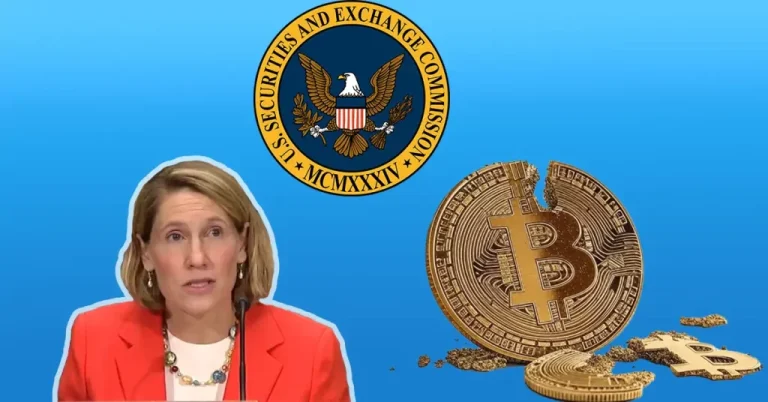
SEC Commissioner Caroline Crenshaw officially left the agency on January 2. Her departure leaves the Securities and Exchange Commission with an all-Republican panel for the first time in years.

Eleanor Terrett confirmed on X that Crenshaw’s exit creates an all-GOP lineup as 2026 begins. SEC Chair Paul Atkins, along with Commissioners Hester Peirce and Mark Uyeda, released a joint statement on her departure:

“Commissioner Caroline Crenshaw has devoted more than a decade of distinguished service to the Securities and Exchange Commission. Over those years, she has been a steadfast advocate for the agency’s mission – demonstrating clarity of purpose and generosity of spirit.”

Crenshaw’s Record on Crypto

Crenshaw consistently opposed crypto-related approvals during her time at the SEC. When the agency approved spot Bitcoin ETFs in January 2024, she was the lone dissenter.

That pattern held across the board. The SEC held 13 internal votes on crypto ETPs. All 13 passed 3-1, with Crenshaw voting against each one. She also opposed the XRP ETF approval.

Her reasoning focused on investor protection. She cited security risks, price volatility, and what she called inadequate regulatory oversight of digital assets.

What This Means for Crypto Regulation

The SEC now operates with only three commissioners instead of its usual five. Under federal law, no more than three commissioners can belong to the same political party. That means the current Republican lineup is at capacity until the Senate confirms a Democratic replacement.

With fewer commissioners, each vote on enforcement actions and policy guidance now carries more weight.

Chair Paul Atkins has previously stated that crypto regulation is a top priority for the agency. The SEC’s Crypto Task Force is currently working on how securities laws should apply to digital assets.

What Comes Next

The Senate will need to confirm a new commissioner to fill Crenshaw’s seat. Until that happens, the three remaining commissioners will drive decisions on crypto enforcement and rulemaking.

Past leadership changes at the SEC have affected how aggressively the agency pursues crypto cases. With Congress still working on digital asset legislation, the commission’s new makeup could shape how those laws get enforced.

The post PEPE, DOGE Jump as Memecoins Add Over $8B in Market Cap—Has the Memecoin Mania Begun? appeared first on Coinpedia Fintech News

Memecoins are back in focus as the crypto markets begin to thrive soon after the start of the year. Over the last 24 hours, the memecoin market added more than $8 billion in value, with several popular tokens, like PEPE and DOGE, posting double-digit gains. This shows that market confidence is improving and traders are willing to speculate again. With this, the possibility of a memecoin mania has emerged, which may further push the altcoins harder as well. 

Dogecoin Price Preparing for a Massive Upswing

Dogecoin is back in focus as memecoins regain momentum across the market. DOGE is trading near $0.142, posting a strong weekly bounce after weeks of consolidation. With risk appetite improving and Bitcoin holding key levels, traders are now watching whether Dogecoin can hold its long-term support and build a base for a larger move. The weekly chart highlights the DOGE price attempting to secure levels above the multi-year trend line. A bullish move could be imminent if the token materialises this move. 

On the weekly chart, DOGE is holding above a key demand zone around $0.10–$0.12, supported by a rising long-term trendline. Price remains below major Fibonacci resistance levels, with $0.21 (0.236) and $0.32 (0.382) acting as upside hurdles. The weekly RSI displays bullish divergence that suggests the rally is gaining momentum, while the weekly MACD shows a drop in selling pressure. Moreover, the levels are heading for a bullish crossover that may help the token to reach local highs above $0.2. 

Pepe Price Enters a Strong Bullish Range

The Pepe price broke above the consolidation and surged by more than 50% in the past couple of days. The price is trading near $0.00000598, attempting to rebound after a prolonged downtrend. The recent bounce comes with a noticeable increase in volume, suggesting short-term buying interest. With risk appetite improving, traders are now watching whether PEPE can reclaim key resistance levels or if this move remains a temporary relief rally.

On the daily chart, PEPE has bounced from a strong demand zone around $0.0000050–$0.0000055, an area that previously acted as support. Price is still below the Supertrend resistance, keeping the broader trend cautious. However, the sharp volume spike and rising Accumulation/Distribution line suggest active buying at lower levels. Immediate resistance sits near $0.0000065, while failure to hold above $0.0000055 would weaken the recovery and reopen downside risk.

What to Expect from DOGE & PEPE This Month

The recent memecoin rebound—with Dogecoin, PEPE, BONK, SHIB and others all posting double-digit gains—shows risk appetite has returned to speculative segments. For this month, traders should expect continued volatility rather than a clear, sustained mania. If Bitcoin stays stable and liquidity remains supportive, these high-beta assets can extend upside—especially near breakout and volume confirmation levels. 

However, meme coins historically move fast both ways, and this move still lacks broader structural support, meaning any sharp shift in BTC or sentiment could unwind gains quickly. In other words, we may be seeing a speculative bounce and rotation, not yet a full-blown “memecoin mania.”