Category

Economy

Category

The U.S. government could take equity stakes in more companies, potentially through an American sovereign wealth fund, according to one of President Donald Trump’s top economic advisers.

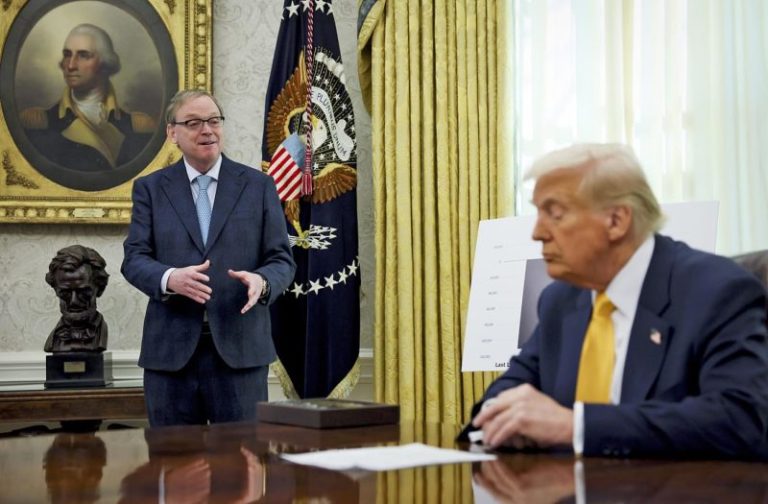
National Economic Council Director Kevin Hassett made the comments Monday, days after the United States took a nearly 10% stake in Intel. The government secured a piece of the semiconductor maker with money intended for grants as part of the CHIPS and Science Act, passed during the Biden administration.

Speaking about the new Intel position, Hassett told CNBC: “It’s like a down payment on a sovereign wealth fund, which many countries have.” Governments throughout Europe, Asia and the Middle East use such funds to invest in companies and other financial assets.

The federal government has taken ownership stakes in private companies before, but only under extraordinary circumstances, such as during the global financial crisis of 2008.

Hassett said the Intel investment was a ‘very, very special circumstance because of the massive amount of CHIPS Act spending that was coming Intel’s way.’

He added: “So I’m sure that at some point there’ll be more transactions, if not in this industry, in other industries.’

The CHIPS Act was established as a way for the government to provide financing and capital to foreign and domestic companies that manufactured semiconductors and related products in the United States.

Americans and the American economy received the benefit of more than $200 billion in private capital investments since the act was signed into law, according to the Council on Foreign Relations. Many companies also announced plans to create new U.S. manufacturing and construction jobs.

Hassett has said the money was ‘going out and disappearing into the ether.’

He has also said, ‘We’re absolutely not in the business of picking winners and losers.’ However, the United States is now Intel’s largest single shareholder. The administration has also taken a ‘golden share’ in U.S. Steel as part of approving its merger with Japan’s Nippon Steel. Trump also said he negotiated with Nvidia CEO Jensen Huang to take a 15% cut of the chipmaker’s revenue from some chips sold in China. He also has a similar deal with rival chipmaker AMD.

Later Monday, Trump said, ‘I want them to do well anyway, but I want them to do well in particular now.’

He added, ‘I hope I’m going to have many more cases like’ the Intel stake. Asked whether taking equity stakes in private companies was the new way of doing business in the United States, Trump responded: ‘So are tariffs.’

After Hassett’s interview, Trump said on Truth Social: ‘I PAID ZERO FOR INTEL, IT IS WORTH APPROXIMATELY 11 BILLION DOLLARS. All goes to the USA.’ He also said he would ‘help those companies that make such lucrative deals with the United States.’

It was unclear why Trump said the United States did not pay anything for the stake. The government purchased 433.3 million Intel shares at $20.47 each, which equates to $8.9 billion.

Trump has also pushed companies to change course on key products, such as when he pre-emptively announced that Coca-Cola would add cane sugar to an American version of its namesake product.

Trump has also threatened firms such as Amazon, Mattel, Hasbro and Walmart with retaliation for hiking prices as a result of his sweeping global tariff regime.

Trump intervention in private industry has sparked widespread criticism, some of it from Republicans. Trump’s former U.N. ambassador Nikki Haley, a former Boeing board member, said on X: ‘Intel will become a test case of what not to do.’

After the CNBC interview, NBC News asked Hassett about setting up a sovereign wealth fund.

‘As we acquire things like Intel, then there’s sort of a question of where it goes and it’s held by the U.S. Treasury. And if the U.S. Treasury has more of that stuff, that is starting to look like [a] sovereign wealth fund, whether an official sovereign wealth fund is established is another question,’ he said.

‘But it’s not unprecedented for the U.S. to own equity’ in private companies, he added.

The United States took equity stakes in private companies during the global financial meltdown of 2008 and 2009.

Then, it bought troubled assets and took equity stakes in the likes of JPMorgan, Wells Fargo, Citigroup, Bank of America, AIG and other systemically important firms to stabilize the global financial system.

Trump has expanded his power over the business world, fueled by his view that the U.S. economy is like ‘a department store, and we set the price.’

‘I meet with the companies, and then I set a fair price, what I consider to be a fair price, and they can pay it, or they don’t have to pay it,’ Trump said in an April interview.
This post appeared first on NBC NEWS

Keurig Dr Pepper said Monday it will buy Peet’s Coffee owner JDE Peet’s in a deal worth about $18 billion (15.7 billion euro).

When the acquisition is complete, the company plans to split into two separate companies, one focused on coffee and the other focused on beverages including Dr Pepper, Canada Dry, 7Up and energy drinks.

The coffee business will have about $16 billion in combined sales and the beverage business about $11 billion.

“Through the complementary combination of Keurig and JDE Peet’s, we are seizing an exceptional opportunity to create a global coffee giant,” said Tim Cofer, Keurig Dr Pepper’s CEO.

In addition to Peet’s, Amsterdam-based JDE Peet’s brands include L’OR, Jacobs, Douwe Egberts, Kenco, Pilao, OldTown, Super and Moccona.

Once the two companies are separated, Cofer will become CEO of the beverage business, which will be based in Frisco, Texas, and Keurig Dr Pepper CFO Sudhanshu Priyadarshi will lead the coffee business, which will be located in Burlington, Mass., with its international headquarters in Amsterdam.

This post appeared first on NBC NEWS

Uncle Herschel is returning to the Cracker Barrel chair.

After online outrage by conservatives who accused the country-themed restaurant chain of changing its values or going “woke” when it rolled out a new logo, the company said Tuesday that it was returning to its old branding.

‘We thank our guests for sharing your voices and love for Cracker Barrel. We said we would listen, and we have. Our new logo is going away and our ‘Old Timer’ will remain,’ Cracker Barrel said on Facebook.

‘At Cracker Barrel, it’s always been — and always will be — about serving up delicious food, warm welcomes, and the kind of country hospitality that feels like family,’ the company said. ‘As a proud American institution, our 70,000 hardworking employees look forward to welcoming you to our table soon.’

The new Cracker Barrel logo on a menu in a restaurant in Homestead, Fla., on Thursday.Joe Raedle / Getty Images file

Cracker Barrel, which has restaurants in 43 states, on Aug. 18 announced its new ‘All the More’ campaign and logo change, which removed the old man perched on a chair and the barrel from Cracker Barrel signs.

The new logo did not go over well in some spheres, and on social media, conservative critics accused the restaurant chain of abandoning its traditional values or of being ‘woke.’

President Donald Trump weighed in on the matter earlier Tuesday, writing on his social media platform, Truth Social, that the company should return to the old logo.

After Cracker Barrel announced the reversal Tuesday, Trump said on the platform: ‘Congratulations ‘Cracker Barrel’ on changing your logo back to what it was. All of your fans very much appreciate it.’ Trump also wished the company good luck.

Paul Weaver / SOPA Images/LightRocket via Getty Images

Taylor Budowich, a deputy White House chief of staff, claimed on X that he’d spoken with people at Cracker Barrel by phone Tuesday about the issue and said, ‘They thanked President Trump for weighing in on the issue of their iconic ‘original’ logo.’

Cracker Barrel did not immediately respond to a request for comment about a White House call.

Shares of Cracker Barrel jumped sharply Tuesday night after it announced the reversal. Since the debut of the new logo on Aug. 18, shares are down nearly 13%.

Cracker Barrel tried to tamp down the controversy Monday by admitting ‘we could’ve done a better job sharing who we are and who we’ll always be’ and issuing reassurances that its values had not changed.

The change was part of a “strategic transformation” that started in 2024 to revitalize the brand, CNBC reported when the new logo was introduced. The company has said that the initiative included ‘refreshing the brand identity’ and making changes to its menu.

Other companies have been met with right-wing outrage for advertising or other business decisions, including when Bud Light had a branded content partnership with transgender TikToker Dylan Mulvaney.

This post appeared first on NBC NEWS

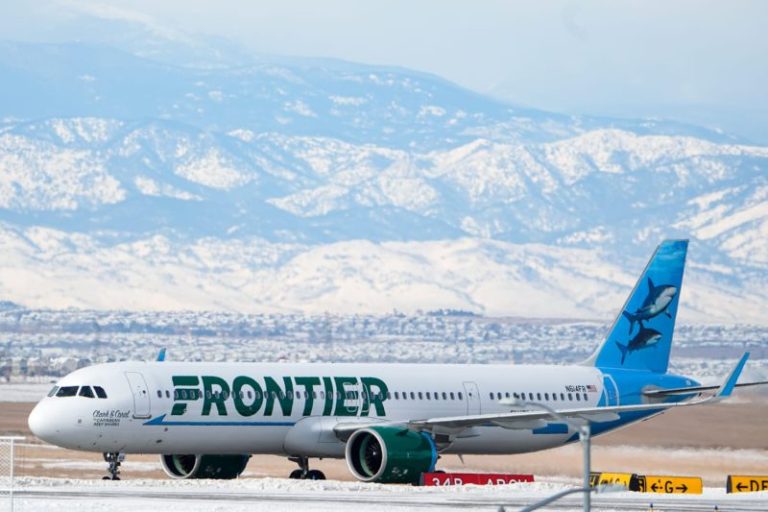
Frontier Airlines is going after customers of Spirit Airlines, whose financial footing has gotten so shaky in recent weeks that it warned earlier this month it might not be able to survive another year without more cash.

Frontier on Tuesday announced 20 routes it plans to start this winter, many of them in major Spirit markets like its base at Fort Lauderdale International Airport in Florida. Frontier overlaps with Spirit on 35% of its capacity, more than any other airline, according to a Monday note from Deutsche Bank airline analyst Michael Linenberg.

Some of Frontier’s new routes from Fort Lauderdale include flights to Detroit, Houston, Chicago and Charlotte, North Carolina. It’s also rolling out routes from Houston to New Orleans; San Pedro Sula, Honduras; and Guatemala City.

Frontier had tried and failed to merge with its budget airline rival several times since 2022.

“I’m not here to talk about M&A,” Frontier CEO Barry Biffle said in an interview with CNBC on Tuesday when asked whether Frontier would buy Spirit. Biffle said he expects that Frontier would pick up the majority of Spirit’s market share if Spirit collapsed.

Both carriers have struggled from changing customer tastes for more upmarket seats and trips abroad, an oversupply of domestic capacity, and higher labor and other costs. Spirit’s situation has become more dire however, after it emerged from four months of bankruptcy protection in March facing many of the same problems.

Ultra-low-cost airlines are also challenged by larger rivals like United Airlines, American Airline and Delta Air Lines that have rolled out their own no-frills basic economy tickets but also offer customers bigger choices of destinations and other perks onboard like snacks and beverages.

Stock prices of rival airlines surged after Spirit’s warning earlier this month.

Biffle said the carrier wants to become the country’s largest budget airline and has rolled out loyalty matching programs to grab more customers. Frontier’s capacity was slightly smaller than Spirit’s in the second quarter, through the latter had slashed its flying by nearly 24% from a year earlier, while Frontier was down only 2%.

Spirit last week said it drew down the entire $275 million of its revolver and while it reached a two-year extension on its credit card processing agreement with U.S. Bank N.A., it agreed that it would hold back up to $3 million a day from the carrier.

The airline lost $245.8 million in the second quarter. Frontier lost $70 million.

Spirit has been looking for ways to slash costs, including furloughing and demoting hundreds more pilots and cutting unprofitable routes. Hundreds of flight attendants are on unpaid leaves of absence.

Spirit CEO Dave Davis said in an Aug. 12 staff memo after its “going concern” warning that “the team and I are confident that we can build a Spirit that will continue to provide consumers the unmatched value that they have come to expect for many years to come.”

The carrier reached a deal with bondholders who agreed to convert debt to equity in its Chapter 11 bankruptcy, but it didn’t cut other costs like renegotiating aircraft leases. Leasing firms have been reaching out to rivals in recent weeks to gauge whether competitors would take any of the Airbus planes that are in Spirit’s hands, according to people familiar with the matter, who asked to speak anonymously because the talks were private.

— CNBC’s Phil LeBeau contributed to this report.

This post appeared first on NBC NEWS

Google has eliminated more than one-third of its managers overseeing small teams, an executive told employees last week, as the company continues its focus on efficiencies across the organization.

“Right now, we have 35% fewer managers, with fewer direct reports” than at this time a year ago, said Brian Welle, vice president of people analytics and performance, according to audio of an all-hands meeting reviewed by CNBC. “So a lot of fast progress there.”

At the meeting, employees asked Welle and other executives about job security, “internal barriers” and Google’s culture after several recent rounds of layoffs, buyouts and reorganizations.

Welle said the idea is to reduce bureaucracy and run the company more efficiently.

“When we look across our entire leadership population, that’s mangers, directors and VPs, we want them to be a smaller percentage of our overall workforce over time,” he said.

The 35% reduction refers to the number of managers who oversee fewer than three people, according to a person familiar with the matter. Many of those managers stayed with the company as individual contributors, said the person, who asked not to be named because the details are private.

Google CEO Sundar Pichai weighed in at the meeting, reiterating the need for the company “to be more efficient as we scale up so we don’t solve everything with headcount.”

Google eliminated about 6% of its workforce in 2023, and has implemented cuts in various divisions since then. Alphabet finance chief Anat Ashkenazi, who joined the company last year, said in October that she would push cost cuts “a little further.” Google has offered buyouts to employees since January, and the company has slowed hiring, asking employees to do more with less.

Regarding the buyouts, executives at the town hall said that a total of 10 product areas have presented “Voluntary Exit Program” offers. They’ve applied to U.S.-based employees in search, marketing, hardware and people operations teams this year.

Fiona Cicconi, Google’s chief people officer, said at last week’s meeting that between 3% and 5% of employees on those teams have accepted the buyouts.

“This has been actually quite successful,” she said, adding “I think we can continue it.”

Pichai said the company executed the voluntary buyouts after listening to employees, who said they preferred that route to blanket layoffs.

“It’s a lot of work that’s gone into implementing the VEP program, and I’m glad we’ve done it,” Pichai said. “It gives people agency, and I’m glad to see it’s worked out well.”

Cicconi said one of the main reasons employees are taking the buyouts is because they want to take time off from work.

“It’s actually quite interesting to see who’s taking a VEP, and it’s people sort of wanting a career break, sometimes to take care of family members,” she said.

CNBC previously reported that the layoffs hurt morale as the company was downsizing while at the same time issuing blowout earnings and seeing its stock price jump. Alphabet’s shares are up 10% this year after climbing 36% in 2024 and 58% the year prior.

At another point in the town hall, employees asked if Google would consider a policy similar to Meta’s “recharge,” a month-long sabbatical that employees earn after five years at the company.

“We have a lot of leaves, not least our vacation, which is there for exactly that — resting and recharging,” said Alexandra Maddison, Google’s senior director of benefits.

She said the company is not going to offer paid sabbatical.

“We’re very confident that our current offering is competitive,” Maddison said.

Meta didn’t immediately respond to a request for comment.

Other executives jumped in to compare the two companies’ benefits.

“I don’t think they have a VEP at Meta by the way,” Cicconi said.

Pichai then asked, to some laughs from the audience, “Should we incorporate all policies of Meta while we’re at it? Or should we only pick and choose the few policies we like?”

“Maybe I should try running the company with all of Meta’s policies,” he continued. “No, probably not.”

This post appeared first on NBC NEWS

The canned cocktail maker High Noon is warning customers that some of its vodka seltzers were accidentally labeled as Celsius energy drinks.

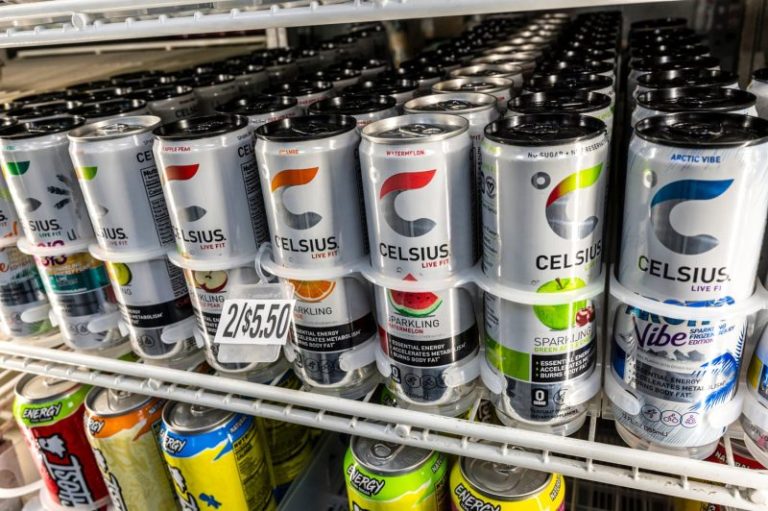
In a recall notice posted to the Food and Drug Administration’s website, High Noon said an unspecified number of its Beach Variety packs contain cans are filled with High Noon vodka seltzer alcohol but have been mislabeled as Celsius Astro Vibe energy drink, Sparkling Blue Razz Edition, with a silver top.

Celsius Astro Vibe Energy Drink, Sparkling Blue Razz Edition.Celsius

The products were shipped to retailers in Florida, New York, Ohio, South Carolina, Virginia and Wisconsin from July 21 to July 23.

The recall was initiated after High Noon discovered that a shared packaging supplier mistakenly shipped empty Celsius cans to High Noon, it said.

No illnesses have been reported to date.

This post appeared first on NBC NEWS

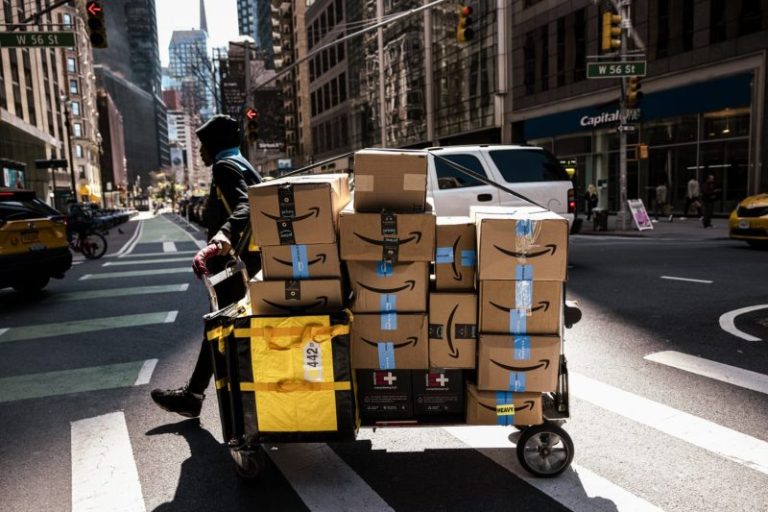
President Donald Trump on Wednesday signed an executive order ending the de minimis trade loophole for low-value packages shipped from all countries.

The order, which takes effect Aug. 29, will subject any shipments of imported goods into the U.S. worth $800 or less to duties, the White House said.

Any goods shipped through the international postal network will be subject to tariff rates based on the value of the package and its country of origin.

The move comes after Trump in May shuttered the de minimis loophole for goods from China and Hong Kong. A federal trade court on Monday declined to block Trump’s de minimis ban, even after an auto parts retailer argued the action was unlawful and threatened its business.

Use of the de minimis provision has exploded in recent years as online shopping has become more prevalent. Ultra-cheap online retailers such as Temu and Shein have used the loophole to ship packages to American shoppers directly from China duty-free.

Shares of PDD Holdings, the parent company of Temu, dipped lower following the announcement.

The Trump administration has sought to close the loophole, calling it a “big scam” that hurts U.S. businesses. Officials have said de minimis facilitates shipments of fentanyl and other illicit substances, saying the packages are less likely to be inspected by customs agents.

The volume of de minimis shipments has skyrocketed to 309 million units so far this fiscal year, up from 115 million for all of last year, the White House said.

This post appeared first on NBC NEWS

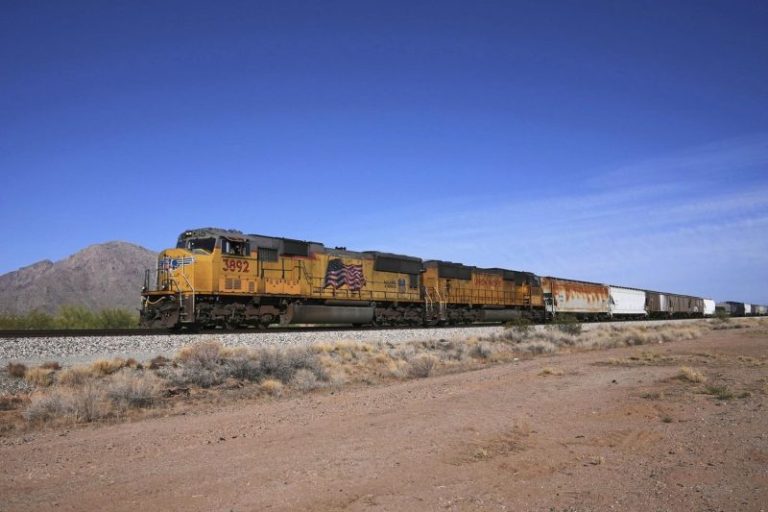
July 29 (Reuters) – Union Pacific said on Tuesday it would buy smaller rival Norfolk Southern in an $85-billion deal to create the country’s first coast-to-coast freight rail operator and reshape the movement of goods from grains to autos across the U.S.

If approved, the deal would be the largest-ever buyout in the sector and combine Union Pacific‘s stronghold in the western two-thirds of the United States with Norfolk’s 19,500-mile network that primarily spans 22 eastern states.

The two railroads are expected to have a combined enterprise value of $250 billion and would unlock about $2.75 billion in annualized synergies, the companies said.

The $320 per share price implies a premium of 18.6% for Norfolk from its close on July 17, when reports of the merger first emerged.

The companies said on Thursday they were in advanced discussions for a possible merger.

The deal will face lengthy regulatory scrutiny amid union concerns over potential rate increases, service disruptions and job losses. The 1996 merger of Union Pacific and Southern Pacific had temporarily led to severe congestion and delays across the Southwest.

The deal reflects a shift in antitrust enforcement under U.S. President Donald Trump’s administration. Executive orders aimed at removing barriers to consolidation have opened the door to mergers that were previously considered unlikely.

A Norfolk Southern freight train passes through Homestead, Pa.Gene J. Puskar / AP file

Surface Transportation Board Chairman Patrick Fuchs, appointed in January, has advocated for faster preliminary reviews and a more flexible approach to merger conditions.

Even under an expedited process, the review could take from 19 to 22 months, according to a person involved in the discussions.

Major railroad unions have long opposed consolidation, arguing that such mergers threaten jobs and risk disrupting rail service.

“We will weigh in with the STB (regulator) and with the Trump administration in every way possible,” said Jeremy Ferguson, president of the SMART-TD union‘s transport division, after the two companies said they were in advanced talks last week.

“This merger is not good for labor, the rail shipper/customer or the public at large,” he said.

The companies said they expect to file their application with the STB within six months.

The SMART-TD union‘s transport division is North America’s largest railroad operating union with more than 1,800 railroad yardmasters.

The North American rail industry has been grappling with volatile freight volumes, rising labor and fuel costs and growing pressure from shippers over service reliability, factors that could further complicate the merger.

Union Pacific‘s shares were down about 1.3%, while Norfolk fell about 3%.

The proposed deal had also prompted competitors BNSF, owned by Berkshire Hathaway BRKa.N, and CSX CSX.O, to explore merger options, people familiar with the matter said.

Agents at the STB are already conducting preparatory work, anticipating they could soon receive not just one, but two megamerger proposals, a person close to the discussions told Reuters on Thursday.

If both mergers are approved, the number of Class I railroads in North America would shrink to four from six, consolidating major freight routes and boosting pricing power for the industry.

The last major deal in the industry was the $31-billion merger of Canadian Pacific CP.TO and Kansas City Southern that created the first and only single-line rail network connecting Canada, the U.S. and Mexico.

That deal, finalized in 2023, faced heavy regulatory resistance over fears it would curb competition, cut jobs and disrupt service, but was ultimately approved.

Union Pacific is valued at nearly $136 billion, while Norfolk Southern has a market capitalization of about $65 billion, according to data from LSEG.

(Reuters reporting by Shivansh Tiwary and Sabrina Valle, additional reporting by Abhinav Parmar, Nathan Gomes and Mariam Sunny; Reuters editing by Sriraj Kalluvila, Pooja Desai, Dawn Kopecki and Cynthia Osterma)

This post appeared first on NBC NEWS

After spiraling from crisis to crisis over much of the past seven years, Boeing is stabilizing under CEO Kelly Ortberg’s leadership.

Ortberg, a longtime aerospace executive and an engineer whom the manufacturer plucked from retirement to fix the problem-addled company last year, is set this week to outline significant progress since he took the helm a year ago. Boeing reports quarterly results and gives its outlook on Tuesday.

So far, investors are liking what they’ve been seeing. Shares of the company are up more than 30% so far this year.

Wall Street analysts expect the aircraft manufacturer to halve its second-quarter losses from a year ago when it reports. Ortberg told investors in May that the manufacturer expects to generate cash in the second half of the year. Boeing’s aircraft production has increased, and its airplane deliveries just hit the highest level in 18 months.

It’s a shift for Boeing, whose successive leaders missed targets on aircraft delivery schedules, certifications, financial goals and culture changes that frustrated investors and customers alike, while rival Airbus pulled ahead.

“The general agreement is that the culture is changing after decades of self-inflicted knife wounds,” said Richard Aboulafia, managing director at AeroDynamic Advisory, an aerospace consulting firm.

Analysts expect the company to post its first annual profit since 2018 next year.

“When he got the job, I was not anywhere as near as optimistic as today,” said Douglas Harned, senior aerospace and defense analyst at Bernstein.

Ortberg’s work was already cut out for him, but the challenges multiplied when he arrived.

As the company hemorrhaged cash, Ortberg announced massive cost cuts, including laying off 10% of the company. Its machinists who make the majority of its airplanes went on strike for seven weeks until the company and the workers’ union signed a new labor deal. Ortberg also oversaw a more than $20 billion capital raise last fall, replaced the head of the defense unit and sold off its Jeppesen navigation business.

Ortberg bought a house in the Seattle area, where Boeing makes most of its planes, shortly after taking the job last August, and his presence has been positive, aerospace analysts have said.

“He’s showing up,” Aboulafia said. “You show up, you talk to people.”

Boeing declined to make Ortberg available for an interview.

Boeing’s leaders hoped for a turnaround year in 2024. But five days in, a door-plug blew out of a nearly new Boeing 737 Max 9 as it climbed out of Portland. The almost-catastrophe brought Boeing a production slowdown, renewed Federal Aviation Administration scrutiny and billions in cash burn.

Key bolts were left off the plane before it was delivered to Alaska Airlines. It was the latest in a series of quality problems at Boeing, where other defects have required time-consuming reworking.

Boeing had already been reeling from two deadly Max crashes in 2018 and 2019 that sullied the reputation of America’s largest exporter. The company in May reached an agreement with the Justice Department to avoid prosecution stemming from a battle over a previous criminal conspiracy charge tied to the crashes. Victims’ family members slammed the deal when it was announced.

For years, executives at top Boeing airline customers complained publicly about the manufacturer and its leadership as they grappled with delays. Ryanair CEO Michael O’Leary told investors in May 2022 that management needed a “reboot or boot up the arse.”

Last week, O’Leary had a different tune.

“I continue to believe Kelly Ortberg, [and Boeing Commercial Airplane unit CEO] Stephanie Pope are doing a great job,” he said on an earnings call. “I mean, there is no doubt that the quality of what is being produced, the hulls in Wichita and the aircraft in Seattle has dramatically improved.”

United Airlines CEO Scott Kirby cast doubt over the Boeing 737 Max 10 after the January 2024 door-plug accident, as the carrier prepared not to have that aircraft in its fleet plan. The plane is still not certified, but Kirby has said Boeing has been more predictability on airplane deliveries.

Still, delays for the Max 10, the largest of the Max family, and the yet-to-be certified Max 7, the smallest, are a headache for customers, especially since having too few or too many seats on a flight can determine profitability for airlines.

“They’re working the right problems. The consistency of deliveries is much better,” Southwest Airlines CEO Bob Jordan said in an interview last month. “But there’s no update on the Max 7. We’re assuming we are not flying it in 2026.”

Boeing under Ortberg still has much to fix.

The FAA capped Boeing’s production at 38 Maxes a month, a rate that it has reached. To go beyond that, to a target of 42, Boeing will need the FAA’s blessing.

Ortberg said this year that the company is stabilizing to go beyond that rate. Manufacturers get paid when aircraft are delivered, so higher production is key.

“I would suspect they would be having those discussions very soon,” Harned said. “It’s 47 [a month] that I think is the challenging break.”

He added that Boeing has a lot of inventory on hand to help increase production.

Its defense unit has also suffered. The defense unit encompasses programs like the KC-46 tanker program and Air Force One, which has drawn public ire from President Donald Trump. Trump, frustrated with delays on the two new jets meant to serve the president, turned to a used Qatari Boeing 747 to potentially use as a presidential aircraft, though insiders say that used plane could require months of reoutfitting.

Ortberg replaced the head of that unit last fall.

A strike could also be on the horizon at the defense unit after factory workers “overwhelmingly” rejected a new labor deal, according to their union, the International Association of Machinists and Aerospace Workers Local 837.

“The proposal from Boeing Defense fell short of addressing the priorities and sacrifices of the skilled IAM Union workforce,” the union said Sunday. “Our members are standing together to demand a contract that respects their work and ensures a secure future.”

There is a seven-day cooling off period before a strike would begin, if a new deal isn’t reached.

“They’re not totally out of the woods,” Harned said.

Boeing and Ortberg also need to start thinking about a new jet, some industry members said. Its best-selling 737 first debuted in 1967, and the company was looking at a midsize jetliner before the two crashes sent its attention elsewhere.

“Already there’s been a reversal from ‘read my lips, no new jet.’ I would like to see that accelerate,” Aboulafia said. “He is the guy to make that happen.”

This post appeared first on NBC NEWS

Samsung Electronics has entered into a $16.5 billion contract for supplying semiconductors to Tesla, based on a regulatory filing by the South Korean firm and Tesla CEO Elon Musk’s posts on X.

The memory chipmaker, which had not named the counterparty, mentioned in its filing that the effective start date of the contract was July 26, 2025 — receipt of orders — and its end date was Dec. 31, 2033.

However, Musk later confirmed in a reply to a post on social media platform X that Tesla was the counterparty.

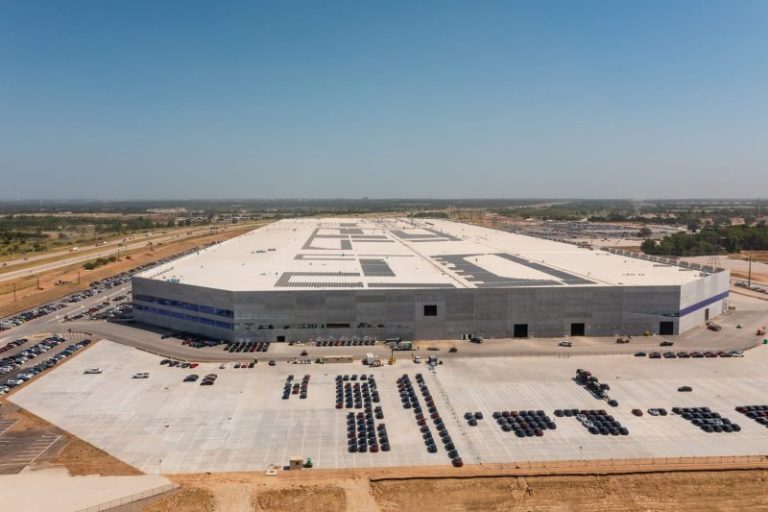
He also posted: “Samsung’s giant new Texas fab will be dedicated to making Tesla’s next-generation AI6 chip. The strategic importance of this is hard to overstate. Samsung currently makes AI4.TSMC will make AI5, which just finished design, initially in Taiwan and then Arizona.”

“Samsung agreed to allow Tesla to assist in maximizing manufacturing efficiency. This is a critical point, as I will walk the line personally to accelerate the pace of progress,” Musk said on X, and suggested that the deal with Samsung could likely be even larger than the announced $16.5 billion.

Samsung earlier said that details of the deal, including the name of the counterparty, will not be disclosed until the end of 2033, citing a request from the second party “to protect trade secrets,” according to a Google translation of the filing in Korean on Monday.

“Since the main contents of the contract have not been disclosed due to the need to maintain business confidentiality, investors are advised to invest carefully considering the possibility of changes or termination of the contract,” the company said.

The company’s shares rose over 6% in trading on Monday to reach their highest level since September 2024.

Tesla was a probable customer, Ray Wang, research director of semiconductors, supply chain and emerging technology at The Futurum Group, told CNBC before Musk’s post. Bloomberg News had earlier reported that Samsung’s deal was with Tesla, citing a source.

Samsung’s foundry service manufactures chips based on designs provided by other companies. It is the second largest provider of foundry services globally, behind Taiwan Semiconductor Manufacturing Company.

The company stated in April that it aimed to commence 2 nanometer mass production in its foundry business and secure major orders for the next-generation technology. In semiconductor technology, smaller nanometer sizes signify more compact transistor designs, which lead to greater processing power and efficiency.

Local South Korean media outlets have also reported that American chip firm Qualcomm could place an order for chips manufactured using Samsung’s 2 nanometer technology.

Samsung, which is set to deliver earnings on Thursday, expects its second-quarter profit to more than halve. An analyst previously told CNBC that the disappointing forecast was due to weak orders for its foundry business and as the company has struggled to capture AI demand for its memory business.

The company has fallen behind competitors SK Hynix and Micron in high-bandwidth memory chips — an advanced type of memory used in AI chipsets.

SK Hynix, the leader in HBM, has become the main supplier of these chips to American AI behemoth Nvidia. While Samsung has reportedly been working to get the latest version of its HBM chips certified by Nvidia, a report from a local outlet suggests these plans have been pushed back to at least September.

This post appeared first on NBC NEWS