Author

Browsing

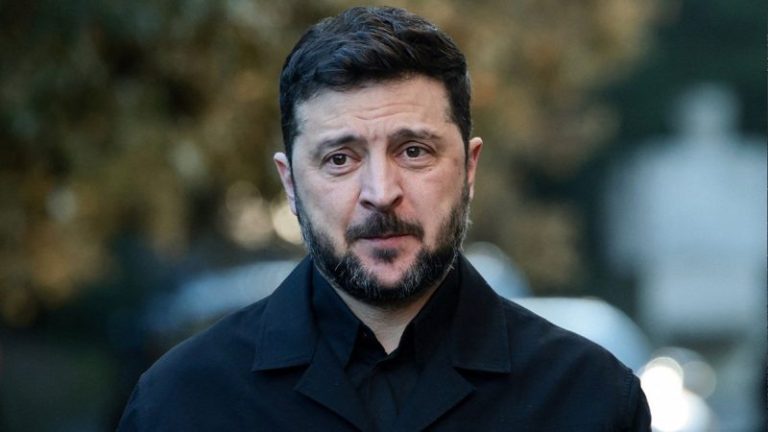
Ukrainian President Volodymyr Zelenskyy said Monday that Kyiv is nearly ready to present a refined peace plan to the United States after days of talks with European partners, even as he maintains that Ukraine cannot give up any territory to Russia.

Zelenskyy said he reviewed the results of negotiations held in London with European national security advisors and that Ukraine and its European partners had further developed their components of potential steps toward ending the war. He said Kyiv is prepared to share the updated documents with Washington and is in ‘constant contact’ with the United States as the process moves forward.

‘We are working very actively on all components of potential steps toward ending the war,’  Zelenskyy posted on X. ‘The Ukrainian and European components are now more developed, and we are ready to present them to our partners in the U.S. Together with the American side, we expect to swiftly make the potential steps as doable as possible.’ 

‘We are committed to a real peace and remain in constant contact with the United States,’ he wrote. ‘And, as our partners in the negotiating teams rightly note, everything depends on whether Russia is ready to take effective steps to stop the bloodshed and prevent the war from reigniting. In the near future, we will be ready to send the refined documents to the United States.’

The update came one day after Zelenskyy insisted his country cannot cede territory to Russia, complicating earlier peace proposals. 

‘Under our laws, under international law — and under moral law — we have no right to give anything away,’ Zelenskyy told reporters Monday, per The Washington Post. ‘That is what we are fighting for.’

Zelenskyy on Tuesday is in Brussels to meet with NATO Secretary-General Mark Rutte and European Commission President Ursula von der Leyen, after meeting in London with British, French and German leaders.

The Ukrainian leader is under growing pressure from the U.S. to accept a framework to end the war after close to four years of fighting with Russia.

An initial draft of the 28-point plan, brokered by White House envoy Steve Witkoff and President Donald Trump’s son-in-law Jared Kushner, spooked Ukrainian and European leaders who said it was too deferential to Russia’s demands. Ukrainian officials met with Witkoff and whittled the plan down. 

Zelenskyy told reporters that in European talks the ‘obvious anti-Ukrainian points were removed.’ 

Trump on Sunday accused Zelenskyy of not keeping up with the latest on peace talks.

‘I’m a little bit disappointed that President Zelenskyy hasn’t yet read the proposal, that was as of a few hours ago,’ Trump told reporters at the Kennedy Center in D.C. Sunday. ‘His people love it, but he hasn’t.’

‘Russia, I guess, would rather have the whole country when you think of it, but Russia is, I believe, fine with it, but I’m not sure that Zelenskyy is fine with it,’ Trump added.

Leaked versions of the initial deal had offered Russia swaths of Ukrainian territory, both lands it has occupied throughout the war and the Donbas region, which it has yet to seize in full.

It offered Ukraine no path to NATO but Europe and U.S.-backed security guarantees that were not definitive. 

Ukraine views NATO membership as essential to preventing a Russian attack — seeking a path to NATO is enshrined in its constitution. 

Ukraine is entering one of the hardest stretches of the nearly four-year war, giving new urgency to the negotiations. Russian troops are pushing forward in the east as Kyiv struggles with shortages of ammunition and manpower. Meanwhile, Moscow’s continued strikes on Ukraine’s power grid have left the country facing rolling blackouts and widespread outages at the start of the winter months. 

Zelenskyy said in the past week alone, Russia launched more than 1,600 drones, roughly 1,200 guided aerial bombs, and nearly 70 missiles of various types against Ukraine.

And talks are heating up in tandem with a brewing scandal in Ukraine that has already pushed out Andrii Yermak, Zelenskyy’s former chief of staff and powerful gatekeeper who was leading negotiations, along with his justice and energy ministers. 

Rustem Umerov, the secretary of Ukraine’s National Security and Defense Council, has taken over negotiations, but is rumored to be caught up in the corruption investigation. 

Fox News’ Ashley Carnahan contributed to this report. 
This post appeared first on FOX NEWS

Senate Republicans have finally landed on a plan to tackle expiring Obamacare subsidies to counter Senate Democrats, but both are likely to fail in a vote set for later this week. 

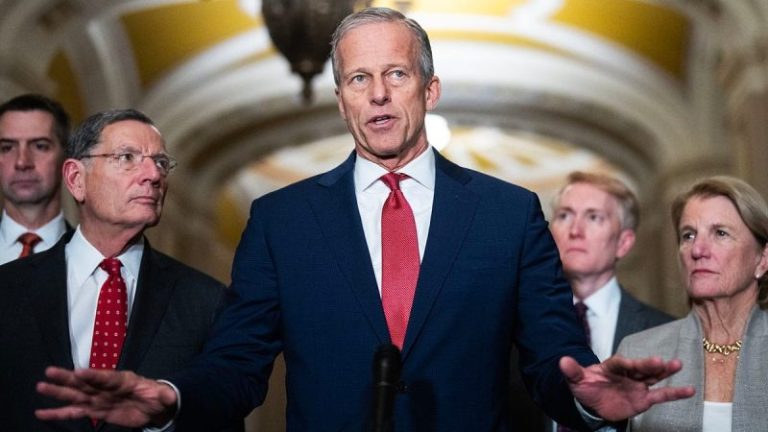
Senate Majority Leader John Thune, R-S.D., announced Tuesday that Republicans had coalesced around a proposal from Sens. Bill Cassidy, R-La., who chairs the Senate health panel, and Mike Crapo, R-Idaho, who chairs the Senate Finance Committee, to counter Democrats’ legislation. 

The Senate is set to vote on the dueling proposals on Thursday. 

Cassidy and Crapo’s plan was given the thumbs up by the majority of Republicans during the conference’s closed-door meeting Tuesday afternoon, Thune said. 

Their proposal, which was unveiled Monday night but has been in the works for weeks, would abandon the enhanced premium subsidies in favor of health savings accounts (HSAs), funneling the money that has gone directly to insurers through the program to consumers instead.

Thune argued that Senate Democrats’ plan, which was unveiled by Senate Minority Leader Chuck Schumer, D-N.Y., last week and would extend the subsidies for three years, would do little to curb the cost of healthcare in the country, and instead benefit affluent Americans and insurance companies. 

‘This program desperately needs to be reformed,’ Thune said. ‘The Democrats have decided we’re not going to do anything to reform it. And so we’ll see where the votes are on Thursday. But we will have an alternative that we will put up that reflects the views of the Republicans here in the United States Senate about how to make health insurance more affordable in this country, how to ensure that it’s not the insurance companies that are getting enriched, that it’s actually benefiting the patient.’

Republicans’ decision comes as more and more proposals were pitched among their ranks, reaching nearly half a dozen plans on the table for lawmakers to choose from. 

Cassidy and Crapo’s plan would seed HSAs with $1,000 for people ages 18 to 49 and $1,500 for those 50 to 65 for people earning up to 700% of the poverty level. In order to get the pre-funded HSA, people would have to buy a bronze or catastrophic plan on an Obamacare exchange.

The bill also includes provisions reducing federal Medicaid funding to states that cover illegal immigrants, requirements that states verify citizenship or eligible immigration status before someone can get Medicaid, a ban on federal Medicaid funding for gender transition services and nixing those services from ‘essential health benefits’ for ACA exchange plans, and inclusion of Hyde Amendment provisions to prevent taxpayer dollars from funding abortions through the new HSAs.

Both plans are likely to fail, however, given that Senate Democrats have rejected doing away with the subsidies in favor of HSAs, and Republicans contend that reforms to the credits — like income caps and more stringent enforcement on taxpayer dollars funding abortions — are must-haves for their support. 

Schumer argued that the ‘only realist path’ to preventing premiums from hiking ahead of the end of the year deadline to extend the subsidies would be for Republicans to cross the aisle and vote for their plan. He charged that the GOP’s plan was a ‘phony proposal’ that did nothing to extend the sunsetting subsidies. 

‘That’s what’s driving the price up, and they’re doing nothing about it,’ Schumer said. ‘The bill not only fails to extend the tax credits, it increases costs, adds tons of new abortion restrictions for women, expands junk fees, and permanently funds the cost-sharing reductions. Their bill is junk insurance. It’s been repudiated in the past.’

Both sides face a math problem in mustering bipartisan support for their respective proposals. And it’s unlikely that lawmakers break ranks from their party’s position, meaning both bills are doomed to fail. For some, the debate has devolved into a finger-pointing contest on which side was actually serious about addressing the growing healthcare affordability issue. 

‘It’s not a realistic plan that the Democrats have,’ Sen. Markwayne Mullin, R-Okla., said. ‘If the Democrats were actually coming to the table, I’d say, yes, we need to, but what they’re doing isn’t realistic.’ 

Before Thune’s announcement, Sen. Chris Murphy, D-Conn., said that Republicans were in charge, not Democrats. 

‘They’re in charge of putting together the votes to pass something,’ Murphy said. ‘And so far, they have done zero outreach on this issue of any significance to Democrats, as far as I can tell.’ 

This post appeared first on FOX NEWS

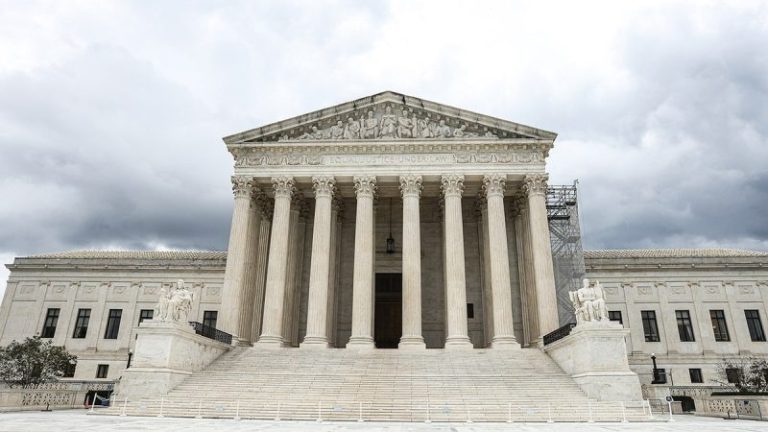
On Friday, the Supreme Court announced that it would hear challenges to President Donald Trump’s executive order to end birthright citizenship. The Fourteenth Amendment automatically makes all babies born on American territory citizens. Trump’s effort to overturn the traditional reading of the constitutional text and history should not succeed.

Ratified in 1868, the Fourteenth Amendment provided a constitutional definition of citizenship for the first time. It declares that ‘all persons born or naturalized in the United States, and subject to the jurisdiction thereof, are citizens of the United States and of the state wherein they reside.’ In antebellum America, states granted citizenship: they all followed the British rule of jus soli (citizenship determined by place of birth) rather than the European rule of jus sanguinis (citizenship determined by parental lineage). As the 18th-century English jurist William Blackstone explained: ‘the children of aliens, born here in England, are, generally speaking, natural-born subjects, and entitled to all the privileges of such.’ Upon independence, the American states incorporated the British rule into their own laws.

Congress did not draft the Fourteenth Amendment to change this practice, but to affirm it in the face of the most grievous travesty in American constitutional history: slavery. In Dred Scott v. Sandford (1857), Chief Justice Roger Taney concluded that slaves — even those born in the United States — could never become American citizens. According to Taney, the Founders believed that Black Americans could never become equal, even though the Constitution did not exclude them from citizenship nor prevent Congress or the states from protecting their rights.

The Fourteenth Amendment directly overruled Dred Scott. It forever prevents the government from depriving any ethnic, religious or political group of citizenship.

The only way to avoid this clear reading of the constitutional text is to misread the phrase ‘subject to the jurisdiction thereof.’ Claremont Institute scholars (many of whom I count as friends) laid the intellectual foundations for the Trump executive order; they argue that this phrase created an exception to jus soli. Claremont scholars Edward Erler and John Eastman argue that ‘subject to the jurisdiction thereof’ requires that a citizen not only be born on American territory, but that his parents also be legally present. Because aliens owe allegiance to another nation, they maintain, they are not ‘subject to the jurisdiction’ of the United States.

The Claremont Institute reading implausibly holds that the Reconstruction Congress simultaneously narrowed citizenship for aliens even as it dramatically expanded citizenship for freed slaves. There is little reason to understand Reconstruction — which was responsible for the greatest expansion of constitutional rights since the Bill of Rights — in this way.

This argument also misreads the text of ‘subject to the jurisdiction thereof.’ Everyone on our territory, even aliens, falls under the jurisdiction of the United States. Imagine reading the rule differently. If aliens did not fall within our jurisdiction while on our territory, they could violate the law and claim that the government had no jurisdiction to arrest, try and punish them.

Critics, however, respond that ‘subject to the jurisdiction thereof’ must refer to citizen parents or risk being redundant when being born on U.S. territory. But at the time of the Fourteenth Amendment’s ratification, domestic and international law recognized that narrow categories of people could be within American territory but not under its laws. Foreign diplomats and enemy soldiers occupying U.S. territory, for example, are immune from our domestic laws even when present on our soil. A third important category demonstrates that ‘subject to the jurisdiction thereof’ was no mere surplusage. At the time of Reconstruction, American Indians residing on tribal lands were not considered subject to U.S. jurisdiction. Once the federal government reduced tribal sovereignty in the late 19th and early 20th centuries, it extended birthright citizenship to Indians in 1924.

The Fourteenth Amendment’s drafting supports this straightforward reading. The 1866 Civil Rights Act, passed just two years before ratification of the Fourteenth Amendment, extended birthright citizenship to those born in the U.S. except those ‘subject to any foreign power’ and ‘Indians not taxed.’ The Reconstruction Congress passed the Fourteenth Amendment because of uncertainty over federal power to enact the 1866 Act. If the Amendment’s drafters had wanted ‘jurisdiction’ to exclude children of aliens, they could have simply borrowed the exact language from the 1866 Act to extend citizenship only to those born to parents with no ‘allegiance to a foreign power.’

We have few records of the Fourteenth Amendment’s ratification debates in state legislatures, which is why constitutional practice and common-law history are of such central importance. But the few instances in which Congress addressed the issue appear to support birthright citizenship. When the Fourteenth Amendment came to the floor, for example, congressional critics recognized the broad sweep of the birthright citizenship language. Pennsylvania Sen. Edgar Cowan asked supporters of the amendment: ‘Is the child of the Chinese immigrant in California a citizen? Is the child born of a Gypsy born in Pennsylvania a citizen?’ California Sen. John Conness responded in the affirmative. Conness would lose re-election due to anti-Chinese sentiment in California.

Courts have never questioned this understanding of the Fourteenth Amendment. In United States v. Wong Kim Ark (1898), the Supreme Court upheld the citizenship of a child born in San Francisco to Chinese parents. The Chinese Exclusion Acts barred the parents from citizenship, but the government could not deny citizenship to the child. The Court declared that ‘the Fourteenth Amendment affirms the ancient and fundamental rule of citizenship by birth within the territory, in the allegiance and protection of the country, including all children here born of resident aliens.’ The Court rejected the claim that aliens are not within ‘the jurisdiction’ of the United States. Critics respond that Wong Kim Ark does not apply to illegal aliens because the parents were in the United States legally. But at the time, the federal government had yet to pass comprehensive immigration laws that distinguished between legal and illegal aliens. The parents’ legal status made no difference.

President Trump is entitled to ask the Court to overturn Wong Kim Ark. But his administration must persuade the justices to disregard the plain text of the Constitution, the weight of the historical evidence from the time of the Fourteenth Amendment’s ratification and more than 140 years of unbroken government practice and judicial interpretation. 

A conservative, originalist Supreme Court is unlikely to reject the traditional American understanding of citizenship held from the time of the Founding through Reconstruction to today.

This post appeared first on FOX NEWS

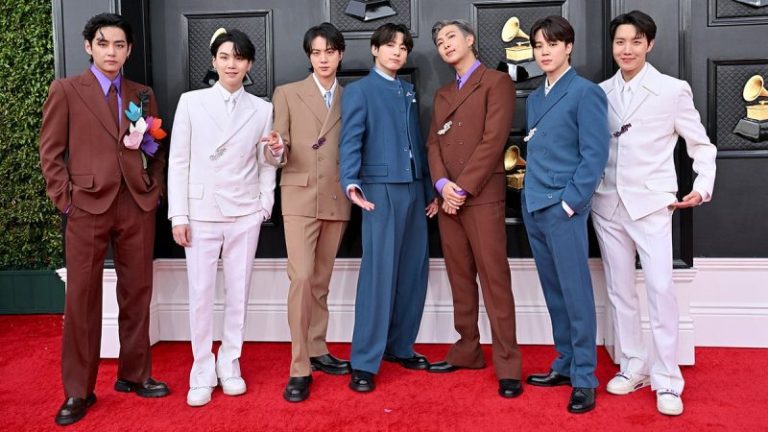
When the South Korean boy band/K-pop sensation BTS takes the stage in Seoul this June, ending a four-year touring hiatus, it will mark more than just a comeback — it will validate one of the shrewdest soft-power decisions in recent memory.  

In 2022, at the absolute apex of their global dominance, the group’s seven members chose to fulfill their mandatory military service rather than seek exemptions, which would almost certainly been granted. Their management company, HYBE, supported the decision. The world got a masterclass in how cultural power is created. 

The cynics predicted career suicide. Instead, BTS demonstrated that soft power isn’t built on avoiding obligations — it’s built on embracing them. When they reunite on stage, they’ll do so with enhanced credibility, having proven their success didn’t exempt them from the responsibilities of ordinary citizens. Americans remember Elvis taking a similar course at the height of his fame.  

The great thing about soft power is that, while generated by creative individuals and companies, it’s to the entire nation’s benefit. Like economic and martial power, soft power generates influence that can be used to bolster a nation’s standing. Examples of soft power abound from Britain’s cricket legacy and rock ’n’ roll ‘invasion’ of the 1960s to French and Italian cinema to America’s NBA, jazz music and Hollywood’s entertainment machine. Now, South Korea is stepping up.

Thus, it is almost tragic that while BTS was serving in the military, the ecosystem that made the band possible faces mounting scrutiny. South Korea has become expert at creating cultural phenomena that captivate the world — and equally expert at treating the architects of that success with suspicion once they achieve scale. This is a pattern South Korea cannot afford.   

South Korea’s cultural preeminence did not emerge from a government plan. It sprang from creative ambition, commercial ruthlessness, and just enough regulatory space for experimentation. The K-pop system requires massive capital investment, sophisticated global distribution and executives willing to bet nine figures on whether teenagers in Jakarta and São Paulo will stream the same songs. 

Yet, there’s a reflex in South Korean public life that treats popularity itself as evidence of wrongdoing. Bang Si-hyuk, the producer who built HYBE and shaped BTS into a global phenomenon, now faces legal scrutiny over stock transactions — the kind of corporate governance questions that seem to emerge almost inevitably once South Korean companies achieve sufficient scale.   

The particulars matter less than the pattern: bold risk-taking generates soft power, then invites investigation once it succeeds. 

Executives who might build the next BTS or international TV steaming sensation like, ‘Crash Landing on You,’ watch what happens to those who came before and recalibrate their ambition accordingly. In cultural soft power, this reflex is potentially fatal. 

South Korea’s competitors are watching. China has spent billions trying to manufacture soft power through state-directed enterprises. The PRC has largely failed — because audiences smell propaganda. South Korean free enterprise is succeeding in creating cultural exports that are simultaneously local and universal, specific enough to feel authentic in Seoul and accessible enough to travel across the globe.  

This is South Korea’s opportunity. Japan was given a similar window in the 1990s with anime and video games, but largely failed to capitalize on the trend because of governmental missteps. South Korea could easily repeat that mistake and lose the global influence that comes with serious national soft power. 

South Korea needs to recognize soft-power assets as strategic resources. France protects its luxury brands because Paris recognizes these companies project French taste globally in ways no government agency could. South Korea should ask: What institutional arrangements allow us to maintain standards while protecting our champions? 

South Korea’s cultural preeminence did not emerge from a government plan. It sprang from creative ambition, commercial ruthlessness, and just enough regulatory space for experimentation. 

BTS’s decision to fulfill their national military service obligations demonstrates what’s possible when artists, companies and national interest align voluntarily. HYBE supported that choice. But South Korea can’t count on such choices being made repeatedly if the system treats success as inherently suspect.

In June 2026, when BTS embarks on a global tour generating billions in economic impact and incalculable goodwill toward South Korea, remember this moment almost didn’t happen. The members could have sought exemptions. Instead, they chose service and came back stronger. 

But South Korea can’t count on such choices if the message to cultural entrepreneurs is that success invites scrutiny. The next generation is watching, deciding whether to aim for global impact or settle for domestic safety.

South Korea stumbled into becoming a cultural superpower. It doesn’t have to stumble out of it. But that requires recognizing that the bold, imperfect figures who build global cultural enterprises are assets to be protected, not problems to be managed. 

BTS made their choice — they bet on their country. Now, South Korea needs to decide if it’s going to bet on the people who create the next BTS, or put them under investigation instead. 

This post appeared first on FOX NEWS

Republican Rep. Thomas Massie of Kentucky announced on Tuesday that he had introduced a measure to remove the U.S. from the North Atlantic Treaty Organization, arguing that the decades-old alliance is obsolete, has been costly for American taxpayers and puts the nation at risk of engagement in foreign wars.

‘NATO is a Cold War relic. The United States should withdraw from NATO and use that money to defend our country, not socialist countries. Today, I introduced HR 6508 to end our NATO membership,’ Massie said in a post on X.

GOP Rep. Anna Paulina Luna of Florida shared Massie’s post and wrote, ‘Co-sponsoring this.’

‘NATO was created to counter the Soviet Union, which collapsed over thirty years ago. Since then, U.S. participation has cost taxpayers trillions of dollars and continues to risk U.S. involvement in foreign wars. Our Constitution did not authorize permanent foreign entanglements, something our Founding Fathers explicitly warned us against. America should not be the world’s security blanket—especially when wealthy countries refuse to pay for their own defense,’ Massie said, according to a press release.

Republican Sen. Mike Lee of Utah introduced the ‘Not a Trusted Organization Act,’ or ‘NATO Act’ in the Senate earlier this year — Massie is now fielding companion legislation in the House.

Article 13 of the North Atlantic Treaty stipulates that ‘After the Treaty has been in force for twenty years, any Party may cease to be a Party one year after its notice of denunciation has been given to the Government of the United States of America, which will inform the Governments of the other Parties of the deposit of each notice of denunciation.’

The proposal advanced by Lee and Massie would use this escape hatch to extract the U.S. from the longstanding NATO alliance.

‘Consistent with Article 13 of the North Atlantic Treaty, done at Washington April 4, 1949, not later than 30 days after the date of the enactment of this Act, the President shall give notice of denunciation of the North Atlantic Treaty for purposes of withdrawing the United States from the North Atlantic Treaty Organization,’ the proposal declares.

‘No funds authorized to be appropriated, appropriated, or otherwise made available by any Act may be used to fund, directly or indirectly, United States contributions to the common-funded budgets of the North Atlantic Treaty Organization, including the civil budget, the military budget, or the Security Investment Program,’ the text of the measure stipulates.

This post appeared first on FOX NEWS

Tilray stock price has slumped in the past few weeks, moving from a high of $23.15 on October 9 to $7.20 today. This crash may accelerate in the coming weeks as a death cross pattern nears.

Tilray stock price technical analysis 

The daily timeframe chart shows that the Tilray Brands stock price has been in a strong downward trend in the past few months, erasing most of the gains made a few months ago when it moved from a split-adjusted low of $3.58 in June to $23.15.

The plot has thickened in the past few weeks as it moved below all moving averages. It is now about to form a death cross, which happens when the 50-day and 200-day Exponential Moving Averages (EMA) cross each other. It is one of the most popular bearish patterns in technical analysis  

Tilray Brands share price has dropped below the important support level at $10.35, its lowest level on September 11.

At the same time, the Relative Strength Index (RSI) and the Stochastic Oscillator have continued moving downwards and are now in their oversold level.

The Average Directional Index (ADX) has continued rising, a sign that the downtrend is gaining momentum.

Therefore, the most likely scenario is that the TLRY stock price will continue falling in the near term, barring any major announcement. If this happens, the next key support level to watch being the psychological level at $5. 

On the other hand, a move above the important resistance level at $10.35 will invalidate the bearish outlook and point to more upside, potentially to the psychological level at $15.

TLRY stock chart | Source: TradingView

Tilray Brands is facing major challenges 

The ongoing Tilray stock price has mirrored the performance of the other companies in the cannabis industry.

Data shows that the popular AdvisorShares Pure US Cannabis ETF (MSOS) has crashed by 40% from its highest level in August this year. Top cannabis companies like Curaleaf, Green Thumb Industries, Trulieve, and Cresco Labs have all plunged in the same period.

The main cause for the crash is that Donald Trump has remained muted on cannabis reclassification in the United States. A few months ago, he hinted that he was close to a decision, and even shared a meme promoting CBD for senior citizens.

Tilray Brands business is also facing major headwinds, especially in its beverage business, which it has invested heavily in. 

The most recent results showed that the beverage segment made $55.7 million in revenue, down from the $56 million it made in the same period last year. 

This slowdown mirrors the performance of other companies in the beer industry, which have remained under pressure in the past few years. A closer look at its performance shows that companies like Boston Beer and Molson Coors shows that most of them have plunged in the past few months.

The slowdown in the segment was offset by a 5% increase in the cannabis business, whose revenue rose by 5% to $64.5 million. Its wellness and distribution revenues rose to $15.2 million and $74 million, respectively.

Another positive is that the company improved its balance sheet by reducing its outstanding debt by $7.7 million, a move that brought the ratio of net debt to EBITDA to 0.07, while its cash balance stood at over $268 million.

Looking ahead, the performance of the Tilray stock price will depend on Donald Trump’s statement on reclassification. A supportive policy will be bullish for the stock, while continued silence will make things worse.

READ MORE: Tilray stock: why options data is skewed to downside despite solid Q1 earnings

The post Tilray stock flirts with death cross amid Trump’s silence on cannabis reform appeared first on Invezz

Costco stock price has come under pressure in the past few months, moving from a high of $1,073 in February to the current $887, a 17% drop. 

It has dropped by 10.1% in the last 12months, underperforming the SPDR S&P Retail ETF (XRT), which has risen by 4%. Walmart stock has jumped by almost 24% this year. So, will the Costco share price rebound after earnings this week?

Costco vs XRT vs Walmart stock | Source: TradingView

Costco’s business is doing well 

The main catalyst for the Costco stock price will be its earnings, which will come out on Thursday this week.

These results are expected to show the company continues to do well as consumers used its stores to find bargains amid the government shutdown and high inflation environment.

The most recent results revealed the Costco’s net sales rose to $86.15 billion in the fourth quarter, up sharply from the $79.9 billion it made in the same period last year.

The company’s annual revenue rose to $275 billion from $254 billion, making it one of the biggest retail companies in the world.

Additionally, the company continued to add more members to its stores, with the membership fees rising to $1.72 billion, up sharply from $1.512 billion in the same period last year.

Most importantly, Costco’s profits continued growing even as Donald Trump’s tariffs affected its operations. The net income rose to $2.6 billion from $2.34 billion, with the annual figure hitting $8 billion for the first time ever. 

READ MORE: 2 reasons why the Costco stock price has collapsed this year

Costco earnings are coming 

Recent releases shows that Costco’s business continued doing well. For example, a monthly report released last week showed that its total comparable sales rose by 6.9% in November, with most of this growth coming from its international business. Its digitally enabled comparable store sales rose by 16.6%.

Wall Street analysts expect that the company’s results will show that its revenue rose by 8% in the first fiscal quarter to $67.1] billion, while its guidance for the next quarter will be $68.96 billion, up by 8.22% from the same period last year.

The company’s profitability is expected to accelerate, moving to $4.28 from the $4.04 it experienced in the same period last year.

According to Yahoo Finance, the annual revenue is expected to come in at $297 billion, up by 7.92% from the last financial year.

Most importantly, Evercore analysts believe that the management will do some more measures to boost the stock. Precisely, they expect that the company will pay a special dividend and even announce a stock split. If this happens, it will be the fourth split after the ones in 1991, 1993, and 2000. Historically, stock prices normally rise after these measures are announced.

The main concern about Costco is that its stock has been highly overvalued, with its forward price-to-earnings ratio of 44.57 being higher than the sector median of 15. It is also higher than the five-year average of 42.

Costco stock price technical analysis 

COST stock chart | Source: TradingView 

The three-day timeframe chart shows that the Costco stock price has been in a strong downward trend in the past few months. This crash happened after the stock formed a double-top pattern at $1,065 and a neckline at $870. A double-top is one of the most common bearish reversal signs in technical analysis.

On the positive side, the stock has now formed a falling wedge pattern, which is made up of two descending and converging trendlines. In most cases, this pattern often leads to a strong bullish breakout, when the two lines are about to converge.

Therefore, the most likely scenario is where the stock rebounds and possibly hits the important resistance level at $1,000, which is about 12% above the current level. 

This rebound will likely happen if the company publishes strong financial results, boosts its guidance, announces a special dividend, and a stock split.

The post Costco stock forms a bullish pattern as traders bet on a split, special dividend appeared first on Invezz

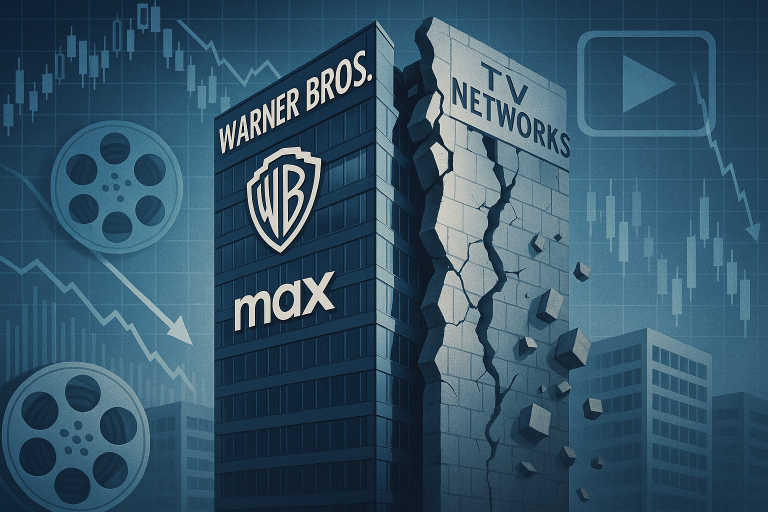
Warner Bros stock price has been in a strong bull run this year, making it the best-performing company in the Nasdaq 100 Index. It has jumped to $27, up sharply from the year-to-date low of $7.5.

Paramount and Netflix bidding war for Warner Bros 

The ongoing WBD stock price surge happened as the bidding war for the company accelerated. After reaching a deal with Netflix on Friday, Paramount Skydance made a superior offer worth $30 per share on Monday.

Paramount believes that it has a superior offer as it also buys its legacy media business. It is also about $17 billion richer than the one made by Netflix. It also believes that the offer has a higher chance of passing the regulatory situation in the US as its business is much smaller than Netflix.

There are three main probabilities going forward. First, Netflix may decide to abandon the deal and pay the separation fee. It may also decide to boost its offer and match that of Paramount.

Second, the alternative scenario is where Paramount takes the offer directly to its shareholders, who will likely approve it as it is a better offer than the one made by Netflix.

The WBD stock price is trading below Paramount’s offer price of $30 because analysts believe that it will take 1.5 years for the deal to complete, and a lot can happen in this period. 

WBD stock price has soared this year | Source: TradingView

Is Warner Bros. Discovery worth $108 billion?

The biggest issue about this deal is on Warner Bros. Discovery valuation, which mirrors the famous $182 billion  AOL-Time Warner merger in 2000. This deal also brings back memories of the $85 billion Time Warner buyout by AT&T a few years ago.

Warner Bros. Discovery is a major media company that owns some of the best-known franchises in the United States, including its studios and HBO. It also owns some traditional toxic assets like CNN, TBS, and Turner Classic Movies.

The main reason why the company makes sense for Netflix is that it would give it one of the biggest studio networks in Hollywood. It would also give it HBO, a service with millions of users. This growth would help it expand its business and create a wide moat.

On the other hand, the deal would help Paramount to grow its business and become a more formidable competitor to Netflix. Paramount also believes that it has more synergies than Netflix.

However, a closer look at Warner Bros numbers shows that the company is not worth the $108 billion that Paramount is paying for it.

The most recent annual results show that it made over $39 billion in annual revenue in 2024, down from $41 billion in the previous year. It has made $37 billion in the trailing twelve months (TTM).

Most importantly, the company is not all that profitable. It made a net loss of over $11.3 billion last year as it wrote down the value ox its networks. The company has never made an annual net profit since its Warner and Discovery merger.

The most recent quarterly results showed that the company’s business is still not doing well to warrant a forward PE ratio of 73. For example, its revenue dropped by 6% in the last quarter, with its distribution, advertising, and content revenues dropping by 4%, 16%, and 3%, respectively. Its net loss during the quarter was $148 million.

Warner Bros earnings | Source: WBD

Therefore, the most likely scenario is where the potential acquirer will ultimately write down its assets over time as we have seen with companies like Teladoc and Livongo Health, HP and Autonomy, AOL and Time Warner, and AT&T and DirecTV.

The post Why are Paramount and Netflix overpaying for Warner Bros stock? appeared first on Invezz

Cardano price held steady, reaching its highest point since November 19 as the crypto market rebounded. ADA jumped to a high of $0.4647, up by 25% from its lowest point this year. It also rebounded as Cardano launched Midnight, its zero-knowledge privacy network.

Charles Hoskinson hails Cardano Midnight launch

Cardano price remained in an upbeat tone this week, mostly because of the ongoing crypto market rally. Bitcoin has jumped to over $92,000, while the market capitalization of all tokens has jumped to over $3.1 trillion.

The coin also jumped as Cardano unveiled Midnight, a privacy-focused sidechain that balances confidentiality with regulatory compliance. In a statement after the launch, Hoskinson called it the biggest event in Cardano’s history. He said:

“Midnight is the fastest-growing project we have ever built because it is much needed. People are starting to realize that privacy is not a guarantee and is not given. It is nice to have some tools to ensure privacy in the blockchain space.”

Midnight’s token started trading on Tuesday, with the NIGHT price dropping by over 50% despite being listed by some of the biggest exchanges in the crypto space, like OKX, Bybit, Kraken, and KuCoin. 

Its market capitalization dropped to $857 million, while the fully diluted valuation (FDV) moved to $1.238 billion. According to CoinGecko, the 24-hour trading volume was over $185 million.

The next important step will happen on Wednesday when people who participated in the Glacier airdrop and the scavenger mine start claiming their tokens. This claim will happen in four stages, with the final one taking place in December next year.

The process may lead to more selling pressure on the NIGHT token price as the claimants start selling their tokens.

Still, there is a risk on whether Midnight will help to boost Cardano price and its ecosystem in the near term. For one, there exists other zero-knowledge-based networks in the crypto industry and their growth has been muted. Top examples are networks like Scroll and zkSync. 

Ecosystem growth challenges 

The Midnight launch comes at a time when Cardano’s ecosystem is growing. Data compiled by DeFi Llama shows that the network has not attracted many developers this year, with the network having just 61 dApps.

Cardano has a total value locked of over $202 million, down by over 24% in the last 30 days. The biggest players in the network are MinSwap, Liqwid, and Indigo. A $202 million TVL is a small number for a crypto project with over $16 billion.

Most notably, Cardano has a stablecoin supply of just $39 million, a tiny number in an industry with over $300 billion in assets. One reason for this performance is that Cardano lacks a major oracle network in its network.

Therefore, Charles Hoskinson hopes that the potential growth of Midnight will be bullish for Cardano as it is a Cardano asset.

At the same time, Cardano will use 70 million ADA tokens to boost its ecosystem in the coming months. The funds will go towards boosting stablecoin integrations, building institutional custody, developing tools to enable analytics in the network, and bringing in global pricing oracles.

Cardano price technical analysis 

ADA price chart | Source: TradingView

ADA price has been in a strong downward trend in the past few weeks, moving from over $1 in August to a low of $0.3730.

Cardano is now attempting to bounce back and has formed an inverse head-and-shoulders pattern, one of the most common bullish reversal signs in technical analysis.

ADA token seems to be moving towards the important resistance level at $0.5143, the lower side of the inverted cup-and-handle pattern.

This could be a sign of a break-and-retest pattern, which is a common bearish continuation sign in technical analysis.

Therefore, the most likely scenario is where Cardano retests this resistance and then resumes the downtrend, potentially to this month’s low of $0.3729.

The post Cardano price analysis as Charles Hoskinson hails Midnight launch appeared first on Invezz

Rolls-Royce share price has held steady in the past few days, moving from a low of 1,020p on November 24 to the current 1,110p. It has jumped by over 100% from its lowest level in January and is a few points below the year-to-date high of 1,195p. So, is it still safe to buy the RR stock?

Rolls-Royce share price has lost momentum 

Rolls-Royce, the giant British engine manufacturer, has been one of the best-performing companies in the FTSE 100 Index this year, helped by the robust demand of its products across its verticals like civil aviation, defense, and energy.

The company has emerged from being one of the top laggards during the pandemic into the best performer, with its stock soaring from a low of 62.15p in 2022 to the current 1,112p, a 1,527% surge that pushed its market capitalization to over $126 billion. It has become one of the biggest British companies.

The company has emerged from being a “burning platform” as the CEO described it into being a highly profitable enterprise. In a recent trading statement, the management reaffirmed its forward guidance in terms of profitability and cash flow.

It now expects its full-year operating profit to be between £3.1 billion and £3.2 billion, with its free cash flow being between £3.0 billion and £3.1 billion.

This growth happened as the company received large orders from companies like IndiGo and Malaysia Airlines, and after the active flying hours crossed the pre-pandemic levels.

READ MORE: Rolls-Royce share price forecast for December: will it rebound?

Rolls-Royce Holdings’ business has also benefited from the ongoing boom in the defense industry. For example, the German parliament will soon vote on a 50 billion spending package that will mostly benefit European defense contractors.

Meanwhile, the RR stock price has done well because of its Small Modular Reactors (SMR) business. This business has already received a large order from the United Kingdom government. Talks are underway with other countries.

The company is also aiming to expand its SMR business to the United States, where the Trump administration recently announced a $800 million deal to invest in the sector. This program will benefit states like Tennessee and Michigan.

Rolls-Royce is one of the top players in the nuclear energy industry, an area it has been in since the 1950s. As such, the company may ultimately become a formidable competitor to companies like Oklo and NuScale, which have become multi-billion-dollar entities.

Despite its strong stock performance, the company is still not all that expensive as it has a trailing P/E ratio of 16.9, much lower than the S&P 500 Index average of 22.

Rolls-Royce stock price technical analysis

RR stock price chart | Source: TradingView

The daily timeframe chart shows that the RR stock price has remained in an upbeat tone in the past few days. It jumped from a low of 1,020p in November to the current 1,112p. 

The stock has moved above the 50-day and 100-day Exponential Moving Averages (EMA). This is a sign that bulls remain in control today. 

Rolls Royce share price has also formed a megaphone pattern and a bullish flag. A bullish flag is one of the most common continuation signs in technical analysis. 

Therefore, the most likely scenario is where the stock continues rising, with the next key target to watch being at 1,195p, its highest point this year.

The post Rolls-Royce share price eyes a rebound as a bullish pattern forms appeared first on Invezz