Author

Browsing

The Qualcomm stock price continued its recent rebound in the past few days as investors bought the recent dip. The QCOM stock was trading at $175, up by over 10% from its lowest level in November, giving it a market capitalization of over $187 billion.

Qualcomm’s growth is continuing 

The Qualcomm stock price has jumped by over 47% from its lowest level in April this year as the artificial intelligence (AI) tailwinds continued.

The rally accelerated recently after the company unveiled chips, known as the Snapdragon 8 Elite Gen 5 Mobile Platform, that may compete with Nvidia in the future. 

It then continued after the company published strong financial results, which showed that its revenue rose by 10% to $11.3 billion.

More results showed that the company’s QCT’s revenue rose by 13% to $9.8 billion, while its IoT revenue rose by 7% to $1.68 billion.

The company has also boosted its forward guidance, and now expects that its first quarter revenue will be between $11.8 billion and $12.6 billion. 

Most of this growth will come from its Qualcomm CDMA Technologies (QCT) business, which it expects will make between $10.3 billion and $10.9 billion. 

The smaller Qualcomm Technology Licensing (QTL) business is expected to make between $1.14 billion and $1.16 billion. This business has an EBIT margin of between 74% and 78%, higher than QCT’s 30% to 32%.

Analysts expect its growth to slow

On the other hand, data compiled by Yahoo Finance show that the company’s revenue in the current quarter will be $12.15 billion, up by 4.11% from the same period last year. 

Analysts also expect that the annual revenue will grow by 2.92% to $45.43 billion, followed by $46 billion in the next financial year. These estimates mean that the company is not expected to benefit substantially from its AI investments. 

This slow growth explains why the company’s valuation metrics are not as fancy as those of other chip companies like Nvidia and AMD. Its forward price-to-earnings ratio has dropped to 14.43, lower than the sector median of 24. Its forward EV to EBITDA metric of 11.60 is much lower than the industry median of 19.

As such, these numbers mean that the company will need to come up with more innovative products to boost its growth. While its recently launched AI chips are good, chances are that they will not capture market share against other companies like AMD and Nvidia.

Analysts have a mild opinion about the company, with the average estimate among analysts tracked by Yahoo Finance being $191, up by 9% from the current level.

Qualcomm stock price technical analysis 

QCOM stock chart | Source: TradingView

The daily chart shows that the QCOM stock price has rebounded from a low of $118.80 in April to $175 today. It has formed an ascending channel and remained above the 50-day and 100-day Exponential Moving Averages (EMA).

The stock remains above the Supertrend indicator, a sign that the bullish trend is continuing. Therefore, the most likely scenario is where the stock continues rising, with the next level to watch being at $185, the upper side of the channel.

However, the stock has formed a head-and-shoulders pattern, a common bearish reversal sign. This means that, while the stock has more upside, there is a risk that it may retreat, potentially to $160.

The post Qualcomm stock price is sending mixed signals: is it a good buy? appeared first on Invezz

The European Commission has opened a new investigation into Google, turning its attention to how the company’s artificial intelligence services may affect competition across the digital economy.

Regulators in Brussels want to understand whether Google has shaped the AI landscape in ways that make it harder for rivals to compete and whether publishers’ material is being used to power AI features without adequate compensation.

The move adds to a long timeline of European action against the company and deepens tensions with the US, where recent EU penalties have drawn strong political criticism.

EU scrutiny shifts toward AI practices

Officials will review how Alphabet Inc. deploys AI tools across its products and whether that creates unfair conditions for content creators.

The Commission is studying AI Overviews and AI Mode to determine how publisher information is gathered, how it is displayed to users and whether payments are appropriate when web content contributes to these systems.

The inquiry also aims to assess whether the design of these features has influenced market access for competing AI developers or limited visibility for independent publishers.

Investigation follows earlier penalties

The fresh probe comes on the heels of a September decision that imposed a penalty of almost €3 billion over allegations that Google steered advertisers toward its own technology services.

That ruling triggered a strong reaction from US President Donald Trump, who called the fine discriminatory on social media.

Tensions have been rising as US officials highlight more than €9.5 billion in previous EU fines against Google and a separate requirement for Apple to repay €13 billion in taxes to Ireland.

Trump has warned that he may impose additional tariffs and tighten export controls on advanced technology unless the EU changes its regulatory stance.

Washington has also said it will not ease 50% tariffs on steel and aluminium products until progress is made.

Long history of regulatory battles

Google has faced several major EU sanctions over the past decade.

These include a €4.13 billion penalty related to Android practices, a €2.42 billion decision concerning shopping search behaviour, and a €1.49 billion AdSense ruling that was annulled last year.

Alongside these actions, Google is now subject to the Digital Markets Act, which came into effect in 2023 and places extra responsibilities on large platforms that hold significant market power.

The legislation forms part of a wider European effort to keep the tech sector competitive and transparent.

What happens next in Brussels

Under EU antitrust rules, regulators can ask companies to halt practices they consider harmful, although such demands can be challenged in Luxembourg courts.

The EU’s rulebook allows penalties of up to 10% of a company’s global annual revenue.

While fines rarely reach that threshold, the possibility strengthens the pressure on companies under investigation.

Google must now present solutions that address concerns about how its AI systems operate and how they interact with publishers, users, and competitors across Europe.

The post Brussels launches new EU challenge to Google’s expanding AI influence appeared first on Invezz

Netflix (NASDAQ: NFLX) remains in focus after rival Paramount Skydance (NASDAQ: PSKY) made an aggressive $108.4 billion bid for Warner Bros. Discovery’s (NASDAQ: WBD) assets.

Netflix had previously agreed to pay $83 billion for WBD’s film and streaming assets.

But is it going to raise that bar now to compete more fiercely with Paramount? Only time will tell.

Amidst the bidding war, however, former MTV president, Michael Wolf, says buying those assets is not optional for NFLX as many believe – it’s actually a “must do” for the streaming behemoth.

At the time of writing, Netflix stock is down nearly 30% versus its year-to-date high.

Why Netflix must acquire WBD assets

Speaking with CNBC, Wolf cited the importance of global franchises for his view that Netflix must take over WBD assets to cement its dominance in the streaming space.

“For anybody to succeed in streaming, they need global franchises that really work everywhere.”

Netflix’s reputation is built on original programming, but compared to legacy studios, it lacks the depth of universally recognized franchises that can travel across markets.

WBD brings with it iconic brands and blockbuster franchises that have proven appeal worldwide.

These franchises not only attract subscribers but also create cultural moments that reinforce brand loyalty.

In short, having recognizable, big-budget franchises will position NFLX to rival short-form video and gaming, and buying WBD assets would mean securing that pipeline of resonant content that strengthens its competitive edge.

Netflix is lagging in volume of programming

According to Wolf, Netflix needs “large volumes of programming” to remain the dominant force in streaming.

NFLX offers just 7,000 titles in total at present compared to 25,000 on Amazon and 70,000 on Fox Tubi.

Bringing the 4,000 on HBO Max under its umbrella, therefore, isn’t optional but a necessity for Netflix.

It will bolster its catalog and help it keep pace with rivals who’ve been rapidly expanding their offerings.

In fact, without WBD, the Nasdaq-listed firm risks being outpaced in terms of the overall breadth of content on its platform.

All in all, by absorbing Warner Bros. Discovery’s assets, Netflix Inc. can close the gap and ensure it remains the go-to platform for extended viewing experiences.

Why Netflix can’t afford to wait

On “Squawk Box”, Wolf agreed that “Netflix is the default” in streaming for now – but said rivals aren’t standing still either.

Amazon and YouTube are investing heavily in live sports, while Peacock and Paramount already have sports rights that Netflix lacks.

WBD’s assets won’t solve the sports gap, but they will strengthen Netflix’s position in scripted entertainment.

Wolf dismissed the view that Netflix Inc. is merely buying time through regulatory delays, stressing instead that the overlap between Netflix and HBO subscribers is relatively low – around 30% only.

This means the acquisition would expand its reach rather than cannibalize its base.

In his words, “the company that is quickly becoming the monopoly is YouTube,” not Netflix.

For Netflix, securing WBD is about future-proofing its dominance in long-form storytelling, ensuring it remains the elephant in the room even as competitors diversify.

The post WBD deal not optional but a ‘must do’ for Netflix: here’s why appeared first on Invezz

A new investment partnership between Qatar and Brookfield Asset Management Ltd is set to intensify the competition among Gulf states as they rush to secure influence in the global artificial intelligence sector.

The joint venture, announced Tuesday, highlights how rapidly the region’s priorities are shifting toward digital capabilities that can support long term economic diversification.

By focusing on AI infrastructure both within Qatar and in chosen global markets, the initiative aligns with a broader strategy pursued by the richest sovereign wealth funds in the Middle East as they seek stronger positions in key technology supply chains.

Qatar builds momentum in AI investment

The partnership will operate through Qai, a new subsidiary of Qatar Investment Authority, the country’s $524 billion sovereign wealth fund.

Both sides will supply capital to develop large-scale AI infrastructure.

Brookfield is participating using its newly created AI fund, which aims to mobilise up to $100 billion globally and has already attracted commitments from investors, including the Kuwait Investment Authority.

The firm manages about $1 trillion in assets and remains one of the most active foreign investors in the Gulf.

Global AI needs attract deep regional capital

Brookfield projects that the global AI infrastructure build-out could require around $7 trillion over the next decade.

That scale has made the region’s wealth funds central to investment plans, as they control trillions of dollars across various portfolios.

Their financial power has grown more important as AI development increasingly depends on facilities such as data centres, specialised chips and high capacity cloud services.

Gulf states see these sectors as reliable engines for future economic stability.

Neighbours intensify push for AI leadership

Across the Gulf, countries are accelerating their technology funding.

The United Arab Emirates and Saudi Arabia have created multibillion-dollar vehicles to support AI startups, while building national champions, including Abu Dhabi’s G42 and Riyadh’s Humain.

Qatar has been stepping up its own commitments by joining the $13 billion funding round for Anthropic in Silicon Valley and working with Blue Owl Capital Inc on a $3 billion data centre venture.

Its collaboration with Brookfield forms part of ongoing efforts to advance its National Vision 2030 by supporting innovation led growth.

Doha strengthens its position as a global investment destination

The new venture also reflects Doha’s attempts to attract more international investors.

The city has recently drawn attention from firms such as BlackRock Inc’s Global Infrastructure Partners and B Capital, founded by Eduardo Saverin, which are preparing to open offices there.

The latest AI partnership signals its ambition to expand its economic profile and strengthen its participation in high-growth global industries.

The post Qatar and Brookfield launch major AI infrastructure venture appeared first on Invezz

The Israel Defense Forces and Israel Security Agency have exposed what they describe as a secret Hamas money-exchange network operating in central Turkey ‘under Iran’s direction,’ according to documents and statements released this week.

According to the intelligence released by the IDF and ISA, exiled Gazans based in Turkey have used the country’s financial infrastructure to move large sums of money for Hamas, with transfers totaling hundreds of millions of dollars.

The agencies say the network operates in cooperation with the Iranian regime, transferring funds to Hamas and its senior officials and, according to Israel, helping the group rebuild its capabilities outside Gaza.

The newly exposed documents include records of currency transfers amounting to hundreds of thousands of dollars, which officials say represent only a small portion of the overall activity.

According to the Israeli security agencies, the network receives, stores, and transfers Iranian funds from within Turkey.

The IDF and ISA identified three Gazan operatives working in Turkey whom they say are central to the network: Tamer Hassan, described as a senior official in Hamas’s finance office in Turkey operating directly under Khalil al-Hayya, and currency exchangers Khalil Farwana and Farid Abu Dair.

Israel says Iran’s backing has remained constant and that Hamas continues to rebuild its operational capabilities beyond the borders of the Gaza Strip.

The timing of the IDF and ISA revelations comes amid an ongoing U.S. debate over Turkey’s regional role and its relationship with Hamas. Fox News has previously reported that Turkey has hosted Hamas figures for years and has sought a leading role in postwar Gaza, even as the Trump administration weighs whether to allow Turkish troops to participate in a U.S.-backed stabilization mission.

Sinan Ciddi, a Turkey expert at the Foundation for Defense of Democracies, told Fox News Digital that Ankara’s political protection of Hamas — paired with its hostility toward Israeli military actions — has created a permissive sanctuary that Israeli pressure alone cannot shut down. 

Ciddi argues the presence of Turkish-based operatives shows how Hamas has diversified its financial footprint to evade sanctions and border controls. Ciddi added that for Israel, ‘this is not just a financial concern but a strategic warning signal’, arguing that Iran is embedding itself deeper into Turkey’s economic ecosystem and enabling a regional proxy to regenerate and project forces. If left unchecked, he warned, ‘the network could fuel future attacks and expand Hamas’s influence across the region, undermining Israel’s war aims and long-term security.’

In a recent interview with Fox News Digital, Gonul Tol, senior fellow at the Middle East Institute and author of ‘Erdoğan’s War: A Strongman’s Struggle at Home and in Syria,’ said Turkey’s aggressive Gaza posture is deeply tied to Erdoğan’s domestic political survival and his longstanding support for Islamist movements across the region.

‘The primary goal there is domestic politics,’ she said. ‘Erdoğan has always framed himself as the champion of the Palestinian cause, and by his most conservative constituency, he’s often pushed to take a strong stance against Israel.’

But Tol noted that Erdoğan has also been pragmatic behind the scenes, particularly in his dealings with Washington. ‘People in his circle say the Hamas leadership had been asked to leave Turkey quietly. They are doing everything not to anger the Trump administration,’ she said.

She added that Erdoğan even pushed Hamas to accept Trump’s Gaza proposal, noting that it included provisions that did not favor the organization.

Israeli officials have long argued that Turkey’s permissive environment has allowed Hamas to operate external networks, including financial arms backed by Iran, and say the newly released intelligence underscores the risks of allowing Turkey deeper involvement in Gaza’s future.

In announcing the findings, the IDF and ISA warned individuals and institutions against engaging with the exposed network or any other financial arms linked to Hamas, saying such interactions risk contributing to terrorist financing and aiding Hamas’s attempts to reconstitute its infrastructure abroad.

The Turkish Embassy did not respond to Fox News Digital’s request for comment.

This post appeared first on FOX NEWS

The Senate is readying for a vote on extending expiring Obamacare premium subsidies, but the proposal on the table is all but certain to fail.

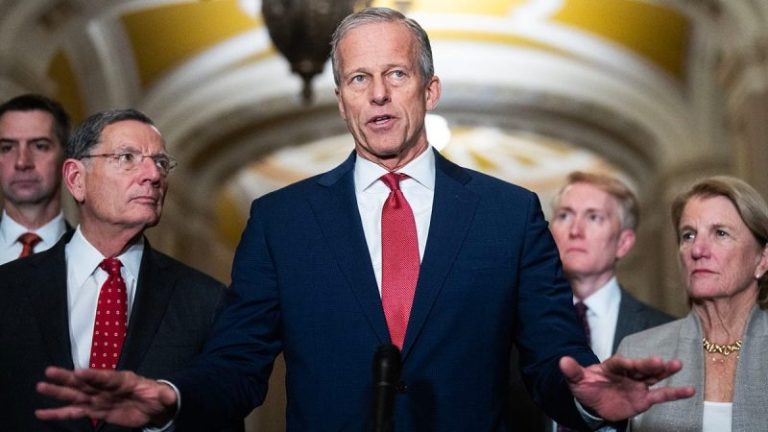
Senate Minority Leader Chuck Schumer, D-N.Y., unveiled Senate Democrats’ long-awaited plan to prevent the subsidies from lapsing, which Senate Republicans nearly universally panned. A vote on the plan is expected on Thursday.

‘I mean, it’s obviously designed to fail,’ Senate Majority Leader John Thune, R-S.D., told Fox News Digital.

Schumer’s proposal would extend the subsidies for another three years without any of the reforms demanded by the GOP. And bipartisan talks that have been ongoing since the government shutdown ended have virtually ground to a halt.

Thune said when the proposal fails, ‘if they want to have a serious conversation about a real solution, that can get underway.’

‘But, you know, we haven’t decided yet exactly what we’re going to do. But what that signals, though, and evidences, is they’re just not serious,’ he said.

Senate Republicans have not landed on their own proposal and may not before the upper chamber leaves Washington, D.C., next week until the start of the New Year.

There are several plans circulating among Republicans to choose from, but none have gained enough traction or support to hit the floor in a possible side-by-side vote.

The subsidies, which were initially passed under former President Joe Biden during the COVID-19 pandemic and then enhanced to virtually remove any income caps — one of the many sticking points for Republicans — are set to expire by the end of the year.

While the Senate struggles to find a way forward, lawmakers are quick to point the finger at who would own the subsidies’ expiration.

Senate Republicans contend that it’s Schumer and Senate Democrats who are to blame, given that they set the subsidies to sunset by the end of this year when they controlled the Senate. And Senate Democrats argue that Republicans would own the issue since they have yet to produce their own proposal.

Schumer argued that Republicans have ‘chosen to do nothing, absolutely nothing,’ as the deadline creeps closer. And he believes that Senate Democrats’ plan could succeed, despite a likely insurmountable math problem.

‘It is not a nonstarter, 13 votes could solve the problem,’ Schumer said. ‘That’s where the onus should be.’

But the plan is a nonstarter for Republicans for several reasons, including the lack of reforms, the length and that it has no inclusion of Hyde Amendment language that would prevent taxpayer dollars from funding abortions — a tricky issue that has largely derailed bipartisan negotiations.

Meanwhile, Republicans are eyeing a proposal that would send the subsidy money directly to Americans in the form of Health Savings Accounts (HSAs), a plan first pushed by Sen. Rick Scott, R-Fla., and then co-opted by President Donald Trump.

Sen. Bill Cassidy, R-La., has been working on an HSA plan that he presented, among other ideas, last week to Senate Republicans during their closed-door lunch. Still, lawmakers exited the meeting and left Washington by the end of the week, without a counteroffer to Senate Democrats’ dead-on-arrival proposal.

‘The president gave the marching orders. We’re working on it. We want to deliver it,’ Cassidy told Fox News’ Shannon Bream.

This post appeared first on FOX NEWS

President Donald Trump is poised to roll out a $12 billion farm aid package to support farmers, according to the White House. 

The aid package will provide up to $11 billion toward the U.S. Department of Agriculture’s (USDA) new Farmer Bridge Assistance Program, which is designed to provide single payments to row crop farmers, while the remaining $1 billion will go to farmers whose crops do not qualify for the program. 

Further details will be hashed out as the USDA continues to evaluate market conditions, according to the White House. 

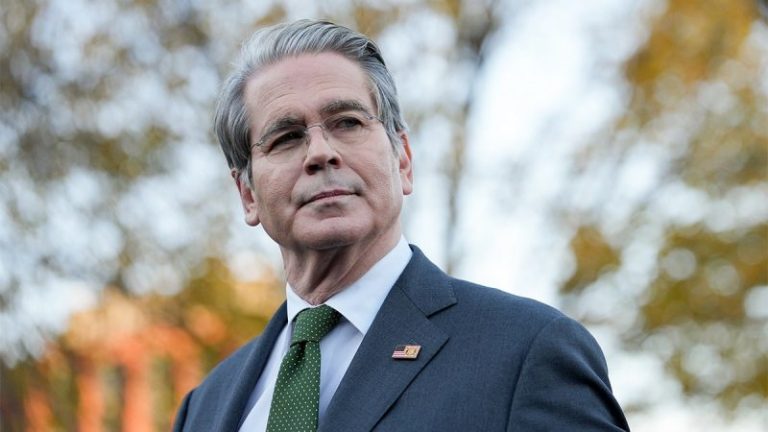
The president is expected to unveil the new aid package at a Monday roundtable at the White House. Those expected to appear at the event include Treasury Secretary Scott Bessent, Secretary of Agriculture Brooke Rollins, as well as corn, soybean, rice and other types of farmers. 

The announcement comes as the U.S. and China have gone head-to-head on trade negotiations in 2025, and after China reined in its soybean purchases from the U.S. amid ongoing tariff negotiations between Beijing and Washington, D.C. 

However, Trump and Chinese President Xi Jinping met in South Korea in October, where the two hashed out a series of agreements concerning trade. Specifically, Trump said he agreed to cut tariffs on Chinese imports by 10% — reducing the rate from 57% to 47% — because China said it would cooperate with the U.S. on addressing the U.S. fentanyl crisis.

Since those talks, China has started to boost its purchases of soybeans again. China purchased at least 840,000 metric tons of soybeans for delivery in December and January, Reuters reported in November. That purchase marked the largest shipment since at least January, Reuters reported. 

Meanwhile, Bessent said that China so far is upholding its end of the bargain on the trade deal, including provisions to buy 12 million tons of soybeans by the end of February 2026.

‘China is on track to ‍keep every ⁠part of the deal,’ Bessent said at The New ‍York Times Dealbook Summit Wednesday. 

China is the primary foreign purchaser of U.S. soybeans, and bought approximately half of U.S. soybean exports in 2024, totaling approximately $12.6 billion out of $25.8 billion in total U.S. exports, according to the U.S. Census Bureau and USDA. China also imported nearly 27 metric tons of soybeans that year. 

Trump is helping the agriculture industry by ‘negotiating new trade deals to open new export markets for our farmers and boosting the farm safety net for the first time in a decade,’ White House spokeswoman Anna Kelly said in a Monday statement to Fox News Digital.

Trump has previously issued an aid package to farmers. When Trump’s first administration rolled out tariffs, China issued their own retaliatory tariffs that cost the federal government billions of dollars in government aid to farmers.

Bloomberg News first reported the aid package Sunday. 

Fox News’ Olivianna Calmes contributed to this report. 

This post appeared first on FOX NEWS

A co-founder of the House of Representatives’ DOGE Caucus is declaring that the movement for government efficiency is still alive and well, even if the surrounding furor has died down.

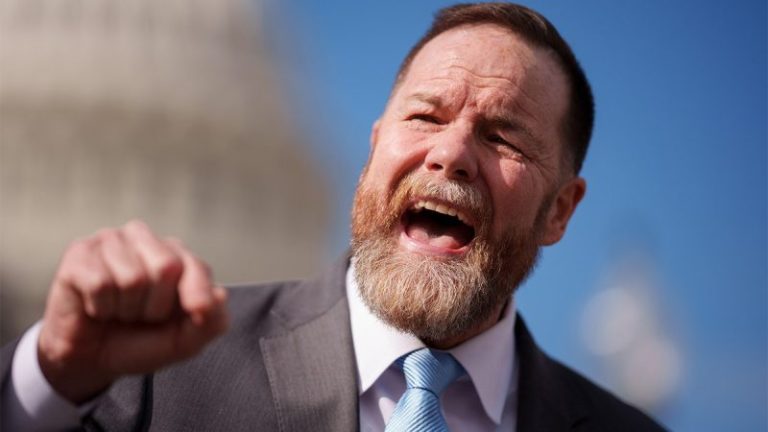
‘DOGE is alive. It certainly is not on the front burner as it needs to be. There’s still a lot of members of Congress that want to continue the battle [against] waste, fraud and abuse,’ Rep. Aaron Bean, R-Fla., co-chair of the House DOGE Caucus, told Fox News Digital.

‘We’re still $38 trillion in debt, that’s growing. So anything we can possibly do — we’re still looking to continue the DOGE efforts.’

Bean said he was hoping to soon hold more caucus meetings ‘just to let everybody know DOGE is not dead.’

The concept of ‘DOGE’ took Washington — Republicans in particular — by storm earlier this year, when President Donald Trump tapped billionaire Elon Musk to lead an initiative called the ‘Department of Government Efficiency.’

Musk said at the time that he was committed to finding as much as $2 trillion in savings for the federal government. That goal was not reached by the time Musk reached the end of his tenure, however.

The DOGE website, which has not been updated since early October, claims an estimated $214 billion in savings for the federal government.

But Bean and other Republicans have tried to keep it alive, celebrating that cutting bureaucratic red tape and bloated federal contracts was finally generating enthusiasm in the cultural zeitgeist.

Musk’s push spurred multiple similar efforts in Congress, including Bean’s caucus and a House Oversight subcommittee called ‘Delivering on Government Efficiency’ (DOGE).

The caucus, which is also co-chaired by Reps. Pete Sessions, R-Texas, and Blake Moore, R-Utah, had several meetings that saw Republicans and even some Democrats in attendance.

Those, too, have since wound down, but Bean told Fox News Digital that he’s looking to bring them back and could begin with a focus on unused office space owned by the U.S. government.

‘I’m not saying it’s mismanaged, I’m just saying it’s not the most efficient use of taxpayer dollars to maintain all this space where people still work from home or are working across the country,’ Bean said. ‘That’s something that I think we can coalesce around, save some money as well as get spending under control.’

He also said he hoped for more bipartisan participation going forward, telling Fox News Digital, ‘It shouldn’t be a partisan issue. Everybody should be on board.’

This post appeared first on FOX NEWS

A Senate Republican duo unveiled their vision for expiring Obamacare premium subsidies as the Senate hurtles toward a vote on the credits at the end of this week.

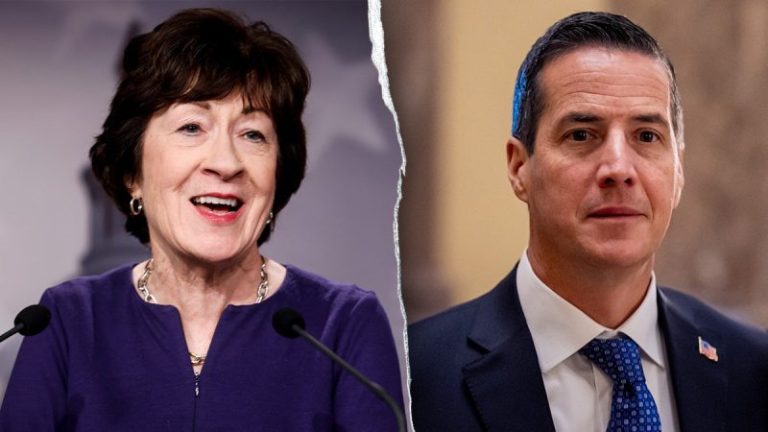
Sens. Susan Collins, R-Maine, and Bernie Moreno, R-Ohio, announced their plan to tackle the subsidies, which are set to expire at the end of this year. Their proposal, made public on Monday, would extend the subsidies for two years.

The upper chamber is set to vote on legislation dealing with the expiring subsidies on Thursday, but so far only Senate Democrats have united behind a proposal from Senate Minority Leader Chuck Schumer, D-N.Y., that would extend the credits for three years.

Schumer’s plan is likely dead on arrival, given that it lacks any of the reforms to the subsidies demanded by the GOP. And Republicans are mulling several options, but have so far not picked legislation to form up behind and put on the floor in a possible side-by-side vote.

Moreno and Collins hope that their legislation, which would also put an income cap onto the subsidies for households making up to $200,000 and eliminate zero-cost premiums as a fraud preventive measure by requiring a $25 minimum monthly payment, gets a shot.

Moreno argued that former President Barack Obama and the Democratic Party ‘created this disaster, lining the pockets of massive insurance companies while healthcare costs for everyday Americans skyrocketed.’

‘But I refuse to let the American people pay the price for the Democrats’ incompetence,’ he said in a statement. ‘I am willing to work with anyone to finally bring down costs for all Americans and hope my colleagues across the aisle will commit to doing the same.’

Collins said that lawmakers needed to ‘pursue practical solutions that increase affordability without creating sudden disruptions in coverage,’ with the expiration deadline looming. Republicans are divided on whether they want to actually extend the subsidies or allow them to sunset and be dealt with early next year.

‘This bill would help prevent unaffordable increases in health insurance premium costs for many families by extending the [Obamacare] enhanced premium tax credits for two years and putting a reasonable income cap on these subsidies to ensure they are going to the individuals who need them,’ Collins said in a statement.

Their proposal joins the ranks of public ideas and legislation floated by Republicans, but strays from the desire many in the GOP have to convert the money that flows into the subsidies directly to Americans through Health Savings Accounts (HSAs).

President Donald Trump has publicly backed converting the premiums to HSAs, but even with his support, Republicans have not nailed down a legislative move that could make it to the floor. 

It’s also unclear if Republicans will line up behind their plan, given that it extends the subsidies without additional action on taxpayer funding flowing to abortion — a key sticking point in bipartisan negotiations on the credits — and lacks the inclusion of HSAs.

This post appeared first on FOX NEWS